In an era where consumer trust has plummeted to a staggering 8%, the traditional marketing playbook of features, benefits, and logical persuasion is failing. The modern consumer isn't looking for a product that solves a problem; they are looking for a brand that matches their energy. This shift has given birth to a phenomenon known as "vibe marketing," a strategy that prioritizes cultural intuition, aesthetic moods, and emotional resonance over technical specifications. For brands looking to master their GTM strategy 2025, the focus is shifting from "what the product does" to "how the brand feels."
The Shift from Logic to Lore: Why Vibes are Winning
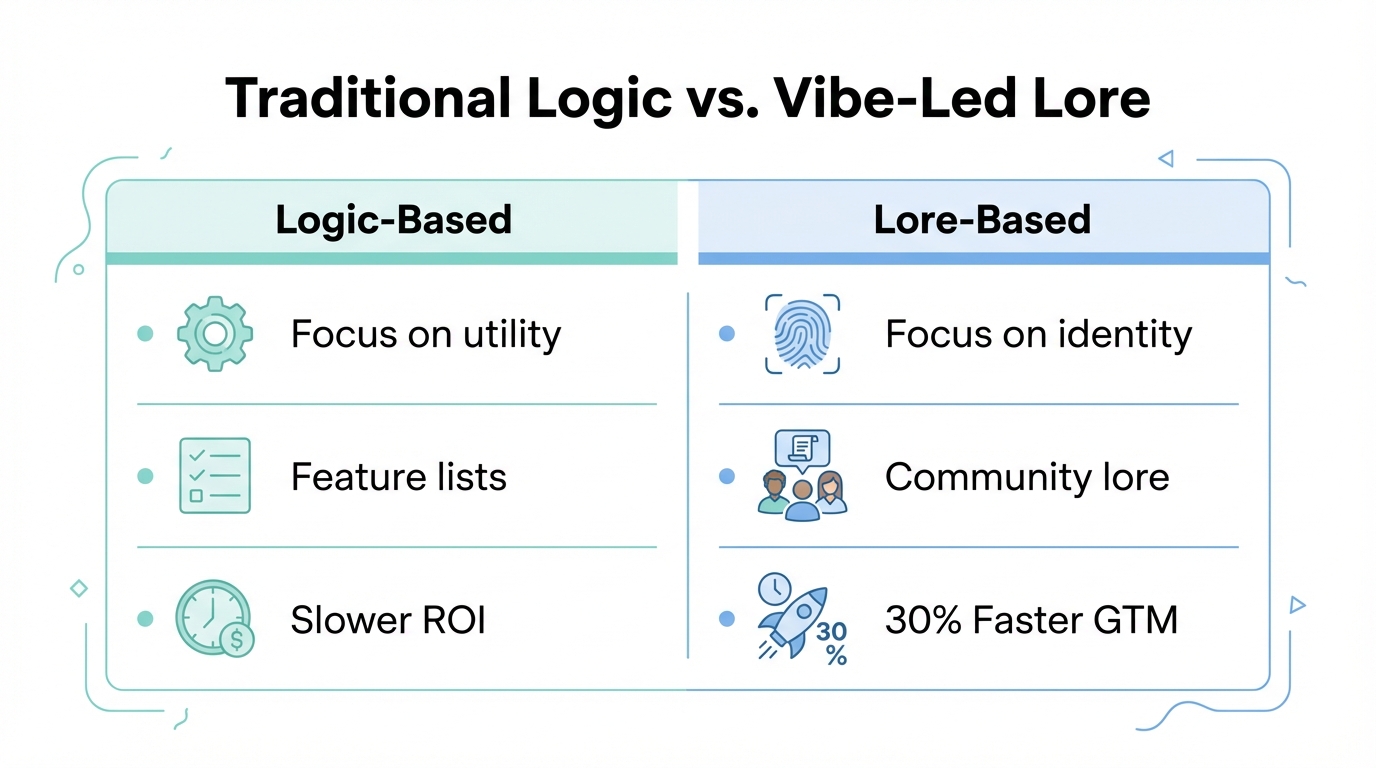
Traditional marketing is slow. It relies on 3–6 month planning cycles and massive teams to produce high-gloss campaigns that often feel sterile. Vibe marketing, however, moves at the speed of culture. According to research from DemandSage, searches for "vibe marketing" have surged by 686% in the last 12 months. This isn't just a trend; it's a fundamental restructuring of how brand building case studies are written.
| Feature | Traditional Marketing | Vibe Marketing |
|---|---|---|
| Core Focus | Functional benefits & Price | Emotional resonance & Aesthetics |
| Speed | 4–12 weeks from concept to launch | Hours or days (Real-time) |
| Team Size | Large (12–18 specialists) | Lean (2–4 AI-augmented creators) |
| Success Metric | ROI, CPA, Conversion Rate | Sentiment & Community Growth |
While traditional methods focus on the bottom line, vibe-led brands focus on the cultural conversation. By leveraging AI-driven video campaigns, companies are seeing an 82% higher ROI compared to traditional video production, mostly because they can respond to memes and cultural shifts in hours, not months. This agility is the cornerstone of viral content distribution in the modern age.
"The competitive edge in 2025 is no longer 'what you say' but the 'velocity' at which you can respond to culture."
Case Study: Liquid Death and the Power of Rebellious Vibes
Perhaps no brand exemplifies Liquid Death marketing tactics better than the canned water giant itself. In a category traditionally obsessed with pH levels, mineral content, and pristine mountain springs, Liquid Death decided to sell rebellious vibes. They don't talk about hydration; they talk about "Murdering Your Thirst."
By adopting a punk-rock aesthetic and using comedy to subvert expectations, they've built a community that feels more like a fan club than a customer base. This is the essence of vibe marketing: creating a sense of identity and belonging. They aren't just selling water; they are selling a lifestyle that rejects the corporate "wellness" polish. This "chaos marketing" approach—similar to how the Duolingo mascot participates in unhinged TikTok trends—makes the brand appear human and approachable.
Case Study: The Heinz 'AI Ketchup' Viral Loop
When Heinz launched their "AI Ketchup" campaign, they weren't just playing with new tech. They used DALL-E to prompt the AI to draw "Ketchup." The result? The AI almost exclusively generated images that looked like Heinz bottles. This campaign was a masterclass in vibe marketing for startups and established brands alike because it turned a technical experiment into a viral loop.
The campaign resulted in a 15% sales boost, proving that a well-executed "vibe" can have a direct impact on the bottom line. By positioning themselves as the archetypal definition of ketchup in the eyes of AI, Heinz reinforced their brand authority without a single mention of ingredients or taste tests. They leveraged a cultural moment—the explosion of generative AI—to create a sense of "intellectual surprise."
"Vibe marketing isn't about being cool; it's about being contextually relevant at the exact moment your audience is paying attention."
From Storytelling to 'Brand as Mosaic'
Modern branding is shifting away from one linear story toward what Wanderlust Communications calls the "Brand as Mosaic." In this model, your brand isn't a single 30-second commercial; it's a collection of aesthetic moments, memes, and interactions across multiple platforms. This requires a boundaryless approach to content.
To execute this, brands are using tools like Midjourney for consistent aesthetics and OpusClip to turn long-form content into viral snippets. The goal is to create a mood that is "unfakeable." When you source creators to help build this mosaic, platforms like Stormy AI can help source and manage UGC creators at scale, ensuring your "vibe" is reinforced by authentic human voices rather than corporate scripts.
This mosaic approach is particularly effective for mobile app marketing and app install campaigns. Instead of one "perfect" ad, you deploy dozens of different vibes—nostalgic, irreverent, dreamy—to see which one resonates with specific subcultures. This hyper-personalization at scale is only possible when you collapse the production timeline from weeks to hours.
The Vibe Stack: Real-Time Execution and Distribution
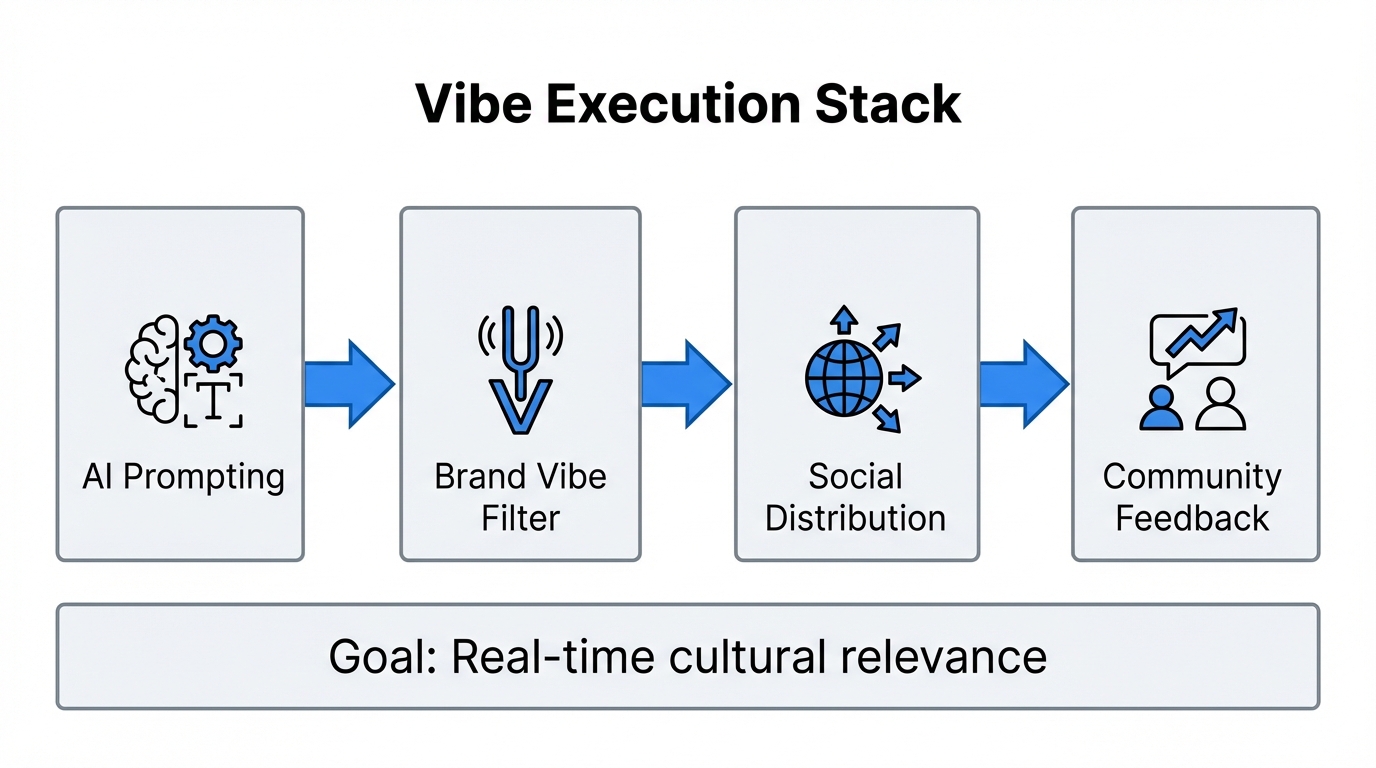
Executing a vibe-led GTM strategy 2025 requires a specific tech stack. You cannot move at the speed of culture if your distribution is bogged down by traditional buying cycles. This is where streaming TV and AI execution layers come in.
- Vibe.co: Allows brands to launch streaming TV ads with real-time data, bringing the agility of social media to the big screen.
- AdAmigo: An AI campaign execution tool that helps maintain the human "soul" of a campaign while automating the technical heavy lifting.
- Averi.ai: A dedicated AI content engine for startups that reports 30% faster time-to-market and 45% lower development costs.
By using these tools, a single "centaur" marketer—a strategist using an AI execution layer—can do the work of a 10-person team. This allows for viral content distribution that feels organic because it is tailored to the current "mood" of the internet.
The Startup Playbook: Achieving 30% Faster Time-to-Market
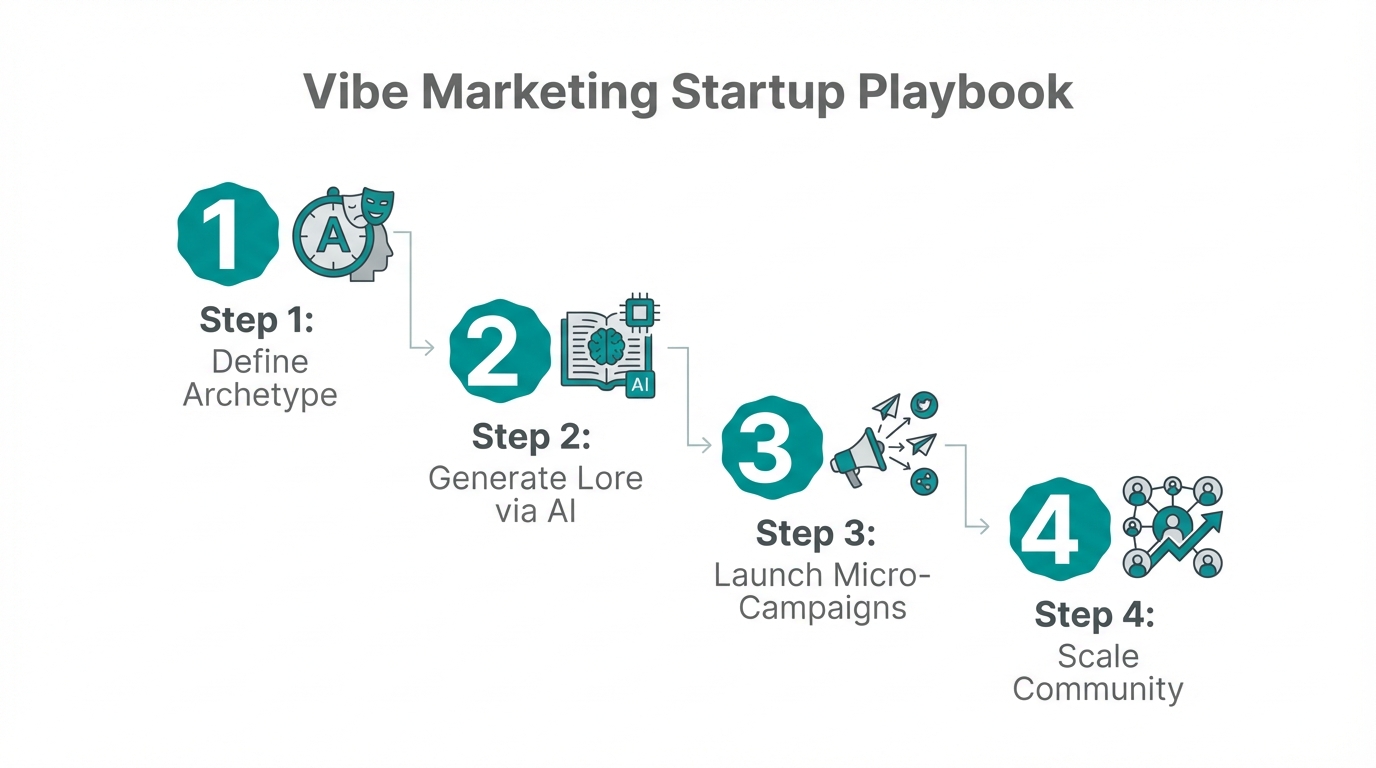
For startups, the "vibe-first" model isn't just a creative choice; it's a competitive necessity. Following this playbook can help you achieve 30% faster time-to-market by cutting out the bureaucratic bloat of traditional GTM strategies.
Step 1: Define Your "Core Vibe" Profile
Ditch the 50-page brand book. Instead, create a "Vibe Sheet" with one dominant mood (e.g., "Nostalgic") and two supporting ones (e.g., "Irreverent" and "Intellectual Surprise"). This acts as your North Star for all content creation.
Step 2: Build Your AI Execution Layer
Connect your tools using Make or n8n to automate the movement of assets. Use Runway Gen-3 for professional motion graphics and Descript for rapid video editing.
Step 3: Source and Vet Your Vibe Ambassadors
Vibes need human faces to feel authentic. Use Stormy AI to find influencers who already embody your brand's aesthetic. The AI-powered discovery engine ensures you find creators with high audience quality, avoiding the engagement fraud that kills a brand's credibility.
Step 4: Execute the VIBE Framework
- Velocity: Post within hours of a cultural event.
- Identity: Ensure every piece of content feels "unfakeable."
- Boundaryless: Distribute across TikTok, Reels, and Discord simultaneously.
- Emotions First: Always lead with the feeling, never the feature.
Step 5: Scale via Real-Time Channels
Don't wait for a monthly report. Use Vibe.co to push your high-performing social vibes onto streaming television while the trend is still hot.
"The goal is to move from 'marketing to an audience' to 'creating a vibe that an audience wants to join'."
Avoiding the "Vibe-Washing" Trap
While vibe marketing is powerful, it is also dangerous if executed poorly. The biggest risk is the "Wasteland Effect"—flooding platforms with generic, unchecked AI content that lacks a human soul. According to Averi.ai, consumers can sense "vibe-washing" a mile away.
Avoid these common pitfalls:
- Over-Automation: Removing the human from community replies destroys trust. AI should handle the production, but humans must handle the connection.
- Ignoring Foundations: A great vibe cannot save a broken product. Ensure your Meta Ads and logistical backend are solid before generating hype.
- Inconsistency: If your "rebellious vibe" stops the moment a customer hits your support chat, the illusion is broken.
The Future of GTM is Emotional
As we head into 2025, the brands that win will be those that master the balance of traditional strategy and vibe execution. By looking at brand building case studies like Liquid Death and Heinz, it's clear that the path to a 15% sales boost and 30% faster time-to-market lies in cultural resonance. Whether you are a startup or an established enterprise, your GTM strategy must prioritize the feeling your brand leaves behind. Start by defining your vibe, building your AI stack, and engaging with creators who can carry your torch into the cultural zeitgeist.