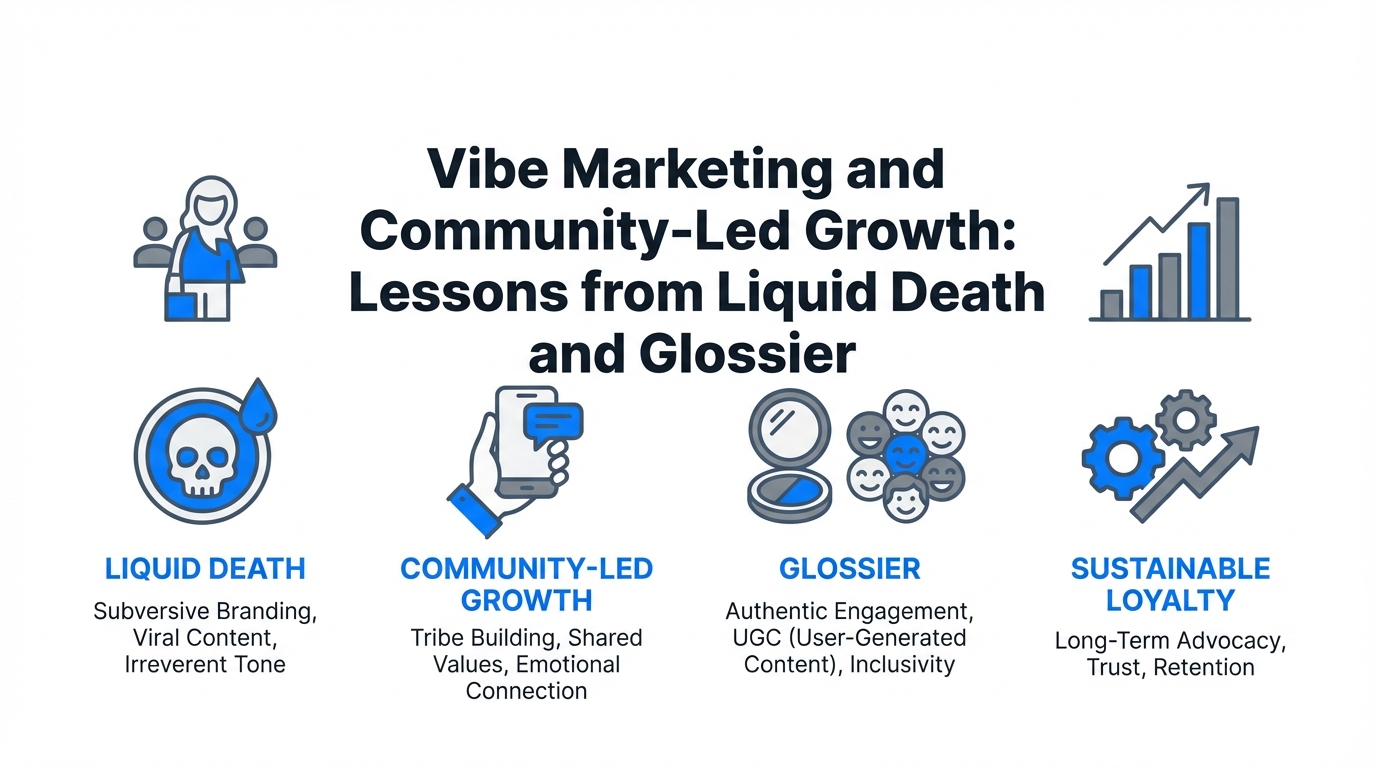
In the high-stakes world of modern branding, the traditional marketing funnel is undergoing a radical transformation. We are moving away from the era of logical, feature-based selling and into the age of Vibe Marketing. Coined as the brand equivalent of ‘vibe coding’—a term popularized by OpenAI co-founder Andrej Karpathy—this strategy prioritizes emotional resonance and cultural aesthetics over technical specifications. Today, interest in ‘vibe marketing’ has surged by 686% over the last 12 months, signaling a fundamental shift in how consumers interact with brands. This article explores how ‘unicorn’ companies like Liquid Death and Glossier have mastered community led growth to build billion-dollar empires through the power of the vibe.
The Rise of Vibe Marketing: Why Emotions Beat Logic
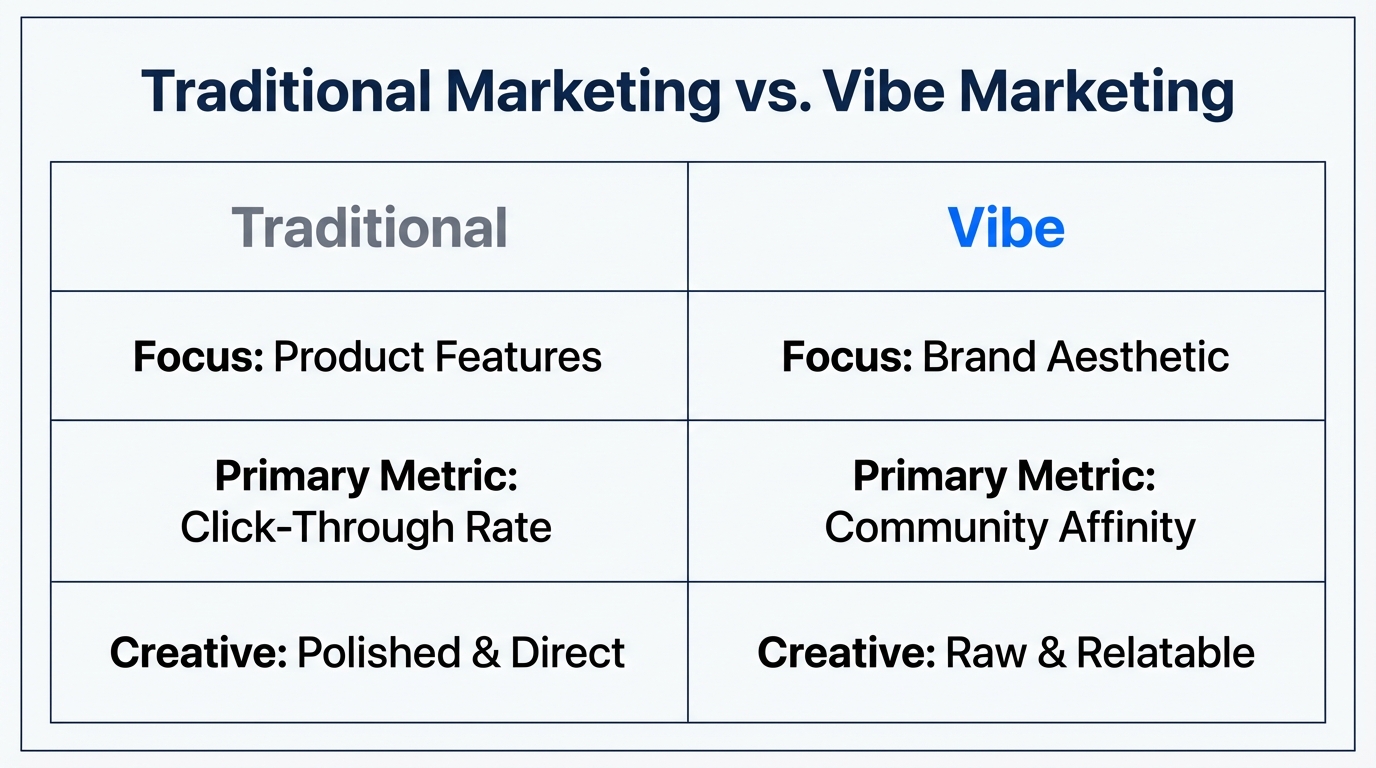
Vibe marketing is not just a buzzword; it is a high-velocity strategy that positions the marketer as a ‘strategic orchestrator.’ According to research by Startup Stash, 47% of Fortune 500 companies had already adopted vibe-first strategies by the third quarter of 2024. The logic is simple: 70% of consumers are more likely to buy from brands they feel emotionally connected to, and 88% prioritize authenticity in their purchasing decisions. In a world saturated with generic content, brands that can curate a specific ‘feeling’ win the battle for attention.
This shift is largely driven by efficiency. Brands using AI-powered vibe workflows report an 81% reduction in campaign creation time and significantly lower production costs. By using AI to handle the ‘messy execution,’ marketers can focus on the ‘human truth’ that Marc Pritchard, Chief Brand Officer at P&G, argues is the foundation of content resonance.
Liquid Death Case Study: The $1.4B Entertainment Machine
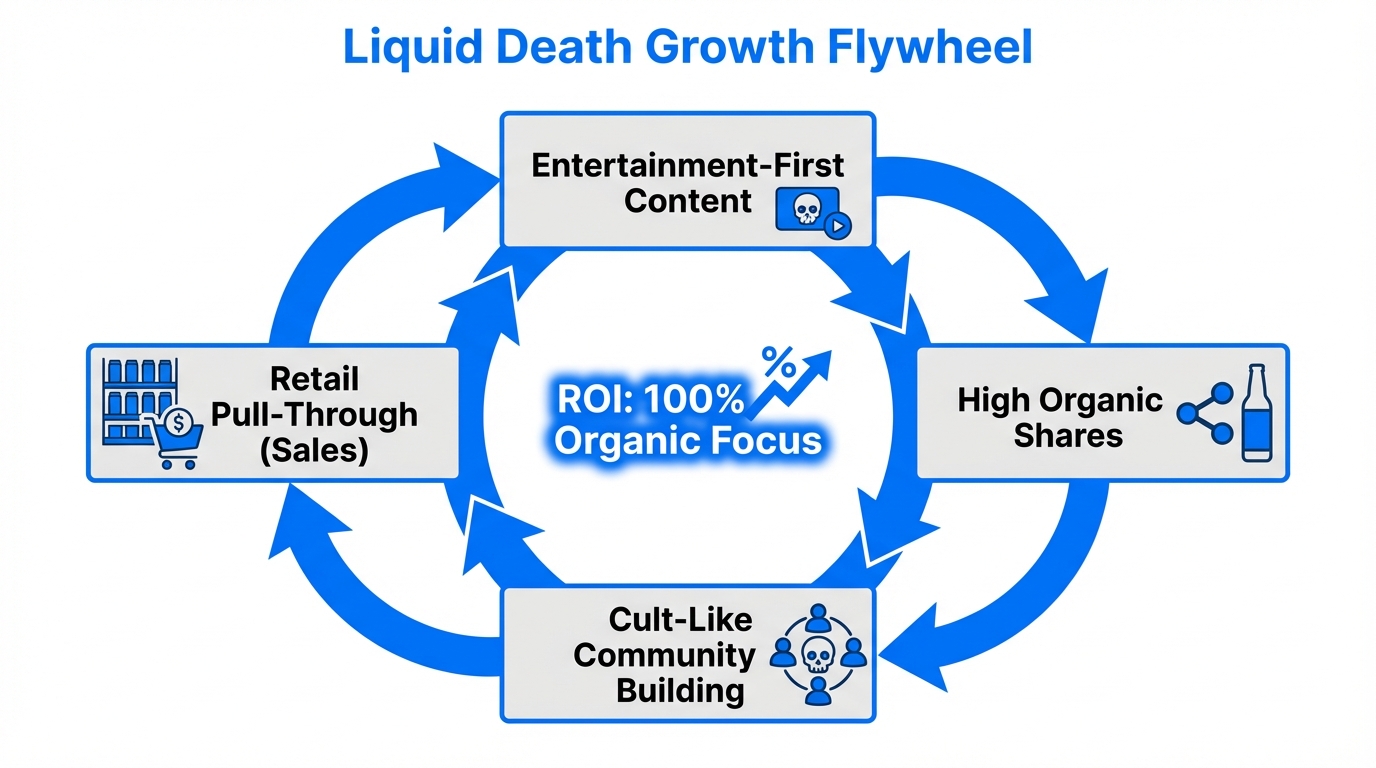
How do you sell water? For decades, the answer was purity, mountains, and pH levels. The Liquid Death marketing strategy turned this on its head by treating a beverage brand as an entertainment machine. By leaning into a rock-and-roll, ‘murder your thirst’ aesthetic, Liquid Death reached a $1.4 billion valuation, growing its revenue from $130M to $263M in just one year.
CEO Mike Cessario argues that the ultimate conversion tool isn’t a discount code; it is true curiosity. If a brand can make someone curious enough to ask questions, the conversion naturally follows. Liquid Death doesn’t just sell water; they sell an invitation to a subculture. This is a prime example of how brand identity case studies often highlight that disrupting expectations is the fastest path to growth.
"If you can make someone curious enough to have questions, the conversion follows. True disruption comes from true curiosity." — Mike Cessario, Liquid DeathLiquid Death’s success relies on consistency across every touchpoint, from their chaotic social media presence to their ‘unhinged’ mascots. This personification of identity helps build parasocial relationships with Gen Z, a tactic that Jumper Media notes is essential for modern community building.
The Glossier Blueprint: $2B Through Community-Led Growth
If Liquid Death is the ‘unhinged’ outlier, the Glossier brand strategy is the gold standard for community led growth. Glossier didn’t start with a product; it started with a community (the blog ‘Into The Gloss’). This community-first approach allowed them to build a $2 billion empire where 70% of online sales come from peer referrals rather than traditional paid advertising.
Glossier’s aesthetic consistency—famously known as ‘Glossier Pink’—created a visual language that users wanted to inhabit. Their strategy turns customers into creators. Every time a user posts a photo of their pink bubble-wrap pouch, they are participating in a vibe-first community that drives organic reach. This is a masterclass in dtc growth strategies: move your marketing budget from Facebook ads to community experiences hosted on platforms like Shopify.
| Brand | Valuation | Primary Growth Engine | Aesthetic / Vibe |
|---|---|---|---|
| Liquid Death | $1.4B | Entertainment / Curiosity | Punk / Heavy Metal |
| Glossier | $2.0B | Community / Referrals | Minimalist / ‘Glossier Pink’ |
| Duolingo | $4.0B+ | Mascot-Led / Chaos | Playful / Unhinged |
As brands scale, maintaining this community feel becomes harder. This is where modern marketers use the ‘Pilot’ model. Instead of being a technical executor of SEO or copy, the marketer guides AI agents to handle the execution while preserving the brand’s soul. For instance, platforms like Stormy AI allow brands to discover and vet UGC creators who naturally fit their community’s vibe, ensuring that influencer discovery remains authentic and data-backed rather than a shot in the dark.
Sonic Branding and the Psychology of Vibe
A ‘vibe’ isn’t just visual. In 2026, sensory branding—including sonic logos and tactile packaging—will be a primary differentiator for DTC brands. VIZIT predicts that sonic branding will become as essential as a visual logo for establishing brand identity.
Spotify is a pioneer in this space with its AI DJ. By using voice cloning and hyper-personalization, Spotify creates a daily ‘vibe’ for its users, increasing retention through emotional attachment to the DJ’s personality. This isn’t just a feature; it’s an emotional retention engine. People don’t just use the app to hear music; they use it to experience a mood curated specifically for them.
"People love brands with personality. Too many brands are scared to step out and grab one, but the ones who do it well reap the benefits." — Professor Matt Williams, William & MaryTo implement this, marketing leaders are adopting the VIBE Framework, as defined by Averi AI:
- Velocity: Moving at the speed of culture.
- Identity: Aspirational and consistent design.
- Boundaryless: Breaking down silos between marketing and product.
- Emotions first: Prioritizing the ‘feeling’ in every campaign.
The Vibe-First Playbook: Turningreferrals into Growth
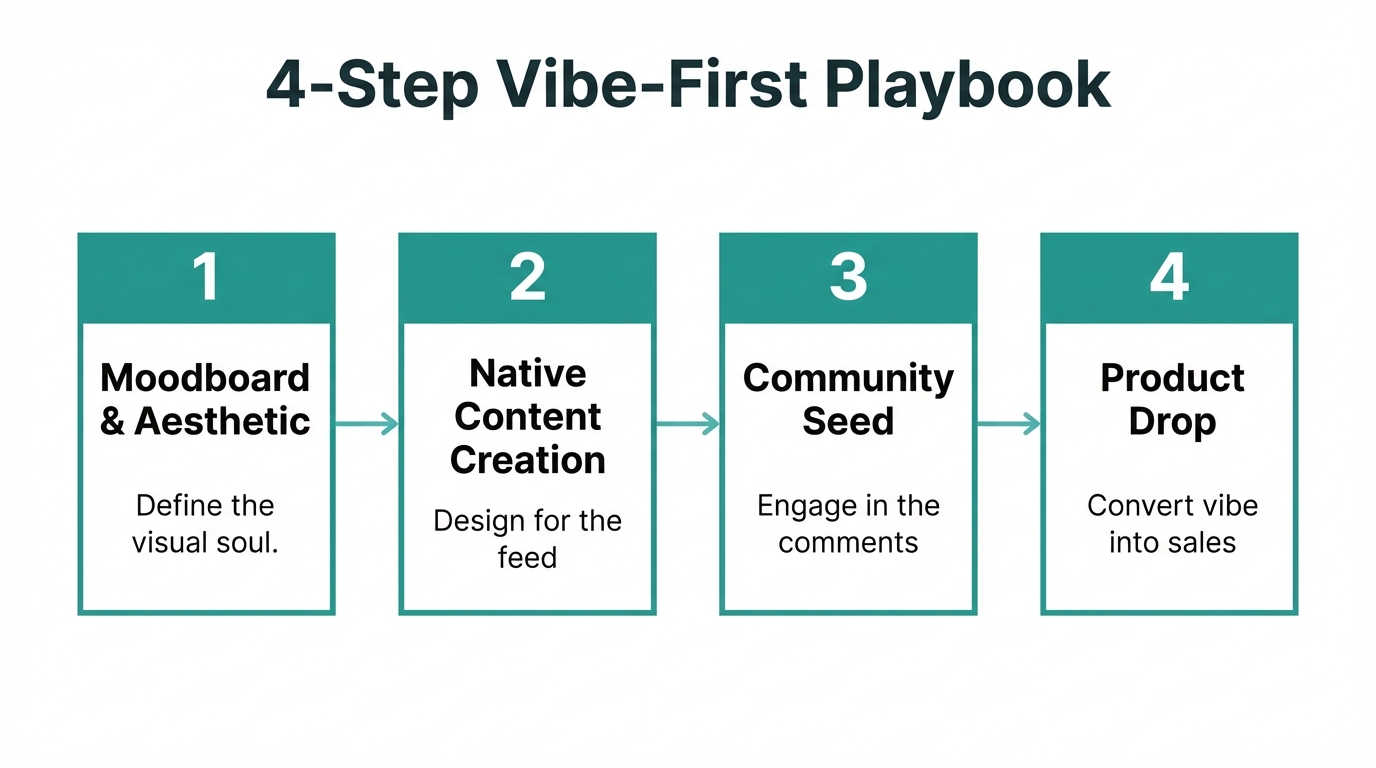
Building a brand that thrives on community led growth requires a shift from static playbooks to adaptive loops. Here is how to build a vibe-first growth engine:
Step 1: Define Your ‘Vibe Brief’
Instead of a 20-page technical spec, define the *feeling* of your brand. Use generative AI tools like Midjourney to create visual mood boards and ChatGPT to establish a non-corporate, distinct brand voice. Your brief should answer: ‘If our brand were a song, what would it sound like?’
Step 2: Source Authentic Creators
Community growth relies on real people. Modern platforms like Stormy AI streamline the process of finding creators who already resonate with your brand’s aesthetic. By using AI to vet for audience quality and engagement fraud, you ensure your vibe-first community is built on a foundation of genuine human connection.
Step 3: Automate Execution, Not Intent
Use automation tools like Zapier or Make to connect social listening to content generation. When a cultural moment occurs, your system should be ready to draft content variants for approval in minutes. The goal is to be fast enough to catch the wave without sacrificing the human ‘intent.’
Step 4: Repurpose for ‘Feeling’
Don’t just blast the same video everywhere. Use Opus Clip to turn one high-vibe long-form video into 15+ platform-specific clips. Each clip should be optimized for the specific ‘vibe’ of the platform, whether it’s the chaos of TikTok or the professionalism of LinkedIn.
Common Mistakes: Avoiding the ‘AI Slop’
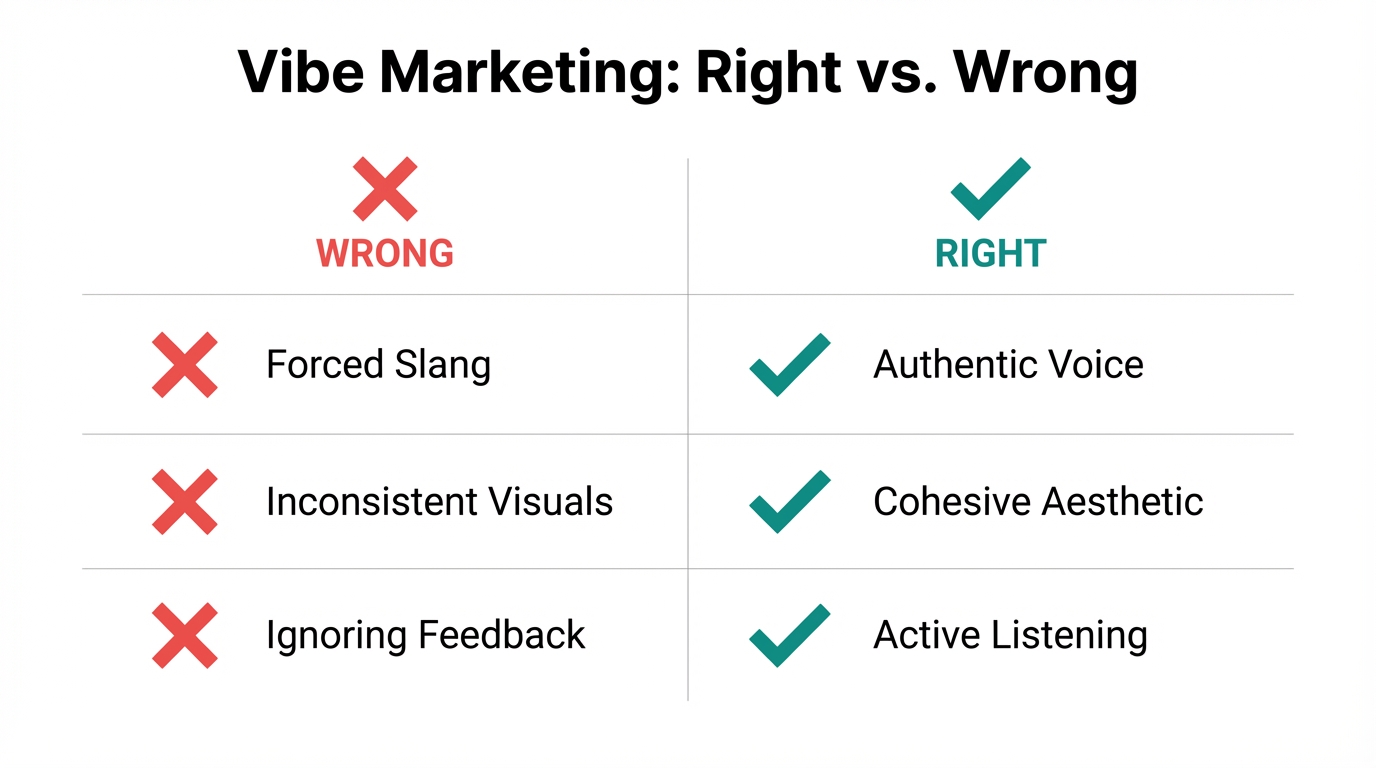
While AI is a powerful tool for vibe marketing, it comes with risks. The most common pitfall is over-automation, often resulting in what critics call ‘AI slop.’ Publishing boilerplate content without a human review layer kills trust immediately.
Another critical error is ignoring SEO basics. Vibe marketing is excellent for capturing attention, but if you neglect keyword research and search intent, that attention won’t lead to discovery. Productive Blogging highlights that ‘thin content’ that lacks substance is a major SEO killer, even if it ‘looks cool.’ Finally, ensure you are not measuring the wrong KPIs. Don’t just look at likes; look at sentiment analysis and long-term brand affinity as measured by tools like Vibe.co.
Conclusion: The Future is Felt, Not Told
The success of Liquid Death and Glossier proves that the most valuable asset a brand can own in 2025 is a distinct vibe supported by a passionate community. By prioritizing emotional truth and leveraging AI to handle the scale of execution, brands can move beyond the noise of traditional advertising. Whether you are selling water or skincare, the lesson is clear: Community led growth is the byproduct of a brand that people don’t just buy, but *feel* a part of. To start building your own creator-led vibe, explore how AI can assist your sourcing and outreach, and begin turning curiosity into your most powerful growth engine.