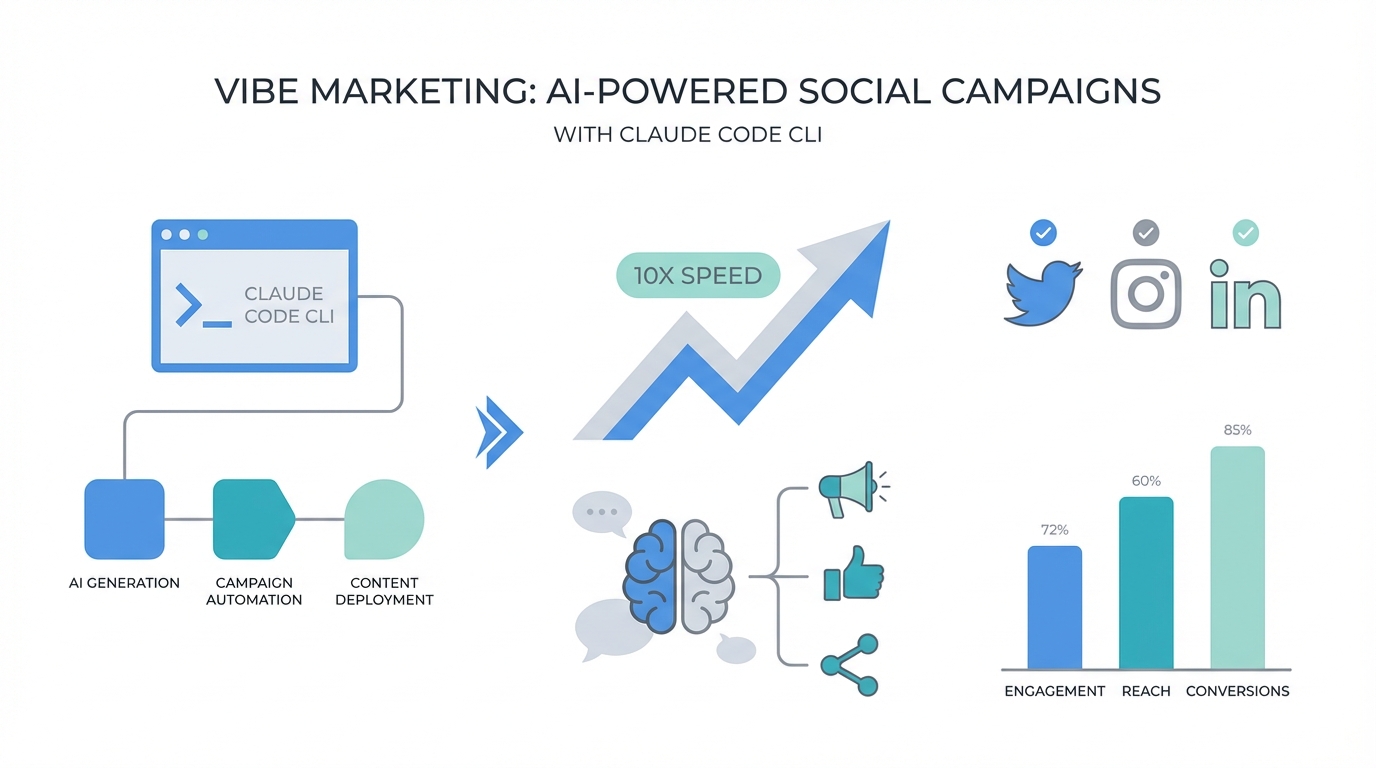
For marketing teams entering 2025, the era of copy-pasting prompts into a browser window is rapidly ending. We are moving from "Chat AI" to "Action AI," where the terminal becomes the primary interface for campaign execution. This shift is best exemplified by the rise of Claude Code, a command-line interface (CLI) that allows marketing engineers to treat social media campaigns like a software codebase. By adopting a Vibe Marketing strategy, brands are no longer just creating content; they are deploying entire ecosystems of automated ad sequences at 10x speed.
Defining Vibe Marketing: The Shift to CLI-Driven Campaigns
Vibe Marketing is a methodology derived from "Vibe Coding," where high-level creative direction (the "vibe") is translated into complex execution via autonomous AI agents. Instead of manually setting up individual posts, a marketer uses the Claude Code CLI to orchestrate multi-platform distribution from a single terminal. This approach is essential as the global influencer marketing industry is projected to reach $32.55 billion by 2025, according to data from indaHash.
The core philosophy is simple: move away from UI-heavy tools that slow you down and move toward scriptable workflows. When you treat your marketing as code, you can version-control your brand voice, automate your outreach, and scale your AI content distribution without increasing your headcount. Research shows that 63% of marketing professionals are already planning to integrate AI and Machine Learning into their creator strategies by 2025 to keep up with this pace, as reported by Artsmart.ai.
The Modern Tech Stack: Claude Code and MCPs
To execute a high-speed Vibe Marketing strategy, you need more than just a large language model. You need an environment that connects to the real world. This is where the Model Context Protocol (MCP) comes in. Claude Code uses MCPs to act as "bridges" between the AI and your marketing data. For example, using the Stripe MCP, Claude can generate invoices and track creator payments directly from the command line, bypassing the need for manual financial admin.
For data extraction and social listening, tools like Firecrawl allow Claude to convert any creator portfolio or landing page into clean Markdown. This data is then analyzed using an Apify MCP to scrape real-time engagement data from TikTok and Instagram. By building this automated infrastructure, teams have reported a 40% reduction in campaign production time, while simultaneously increasing marketing campaign speed and asset consistency, according to Hashmeta.
Scaling Brand Voice with Style Reference Skills
One of the biggest hurdles in AI content distribution is maintaining a consistent brand voice across 1,000+ assets. Standard prompting often leads to "robotic" or generic output. To solve this, Vibe Marketers use "Style Reference" skills—specific, reusable instructions that act as a brand bible for the CLI. These skills ensure that every automated ad sequence or email follow-up sounds human and aligned with the company's identity.
Without these references, brands often fall into the trap of producing "AI slop" that creators and audiences ignore. Experts at LinkNow Media emphasize that while automation is powerful, keeping a human-in-the-loop (HITL) for the final creative polish is vital. By using style references, you can increase content output consistency scores by 18%, ensuring that your high-speed execution doesn't come at the cost of quality. This methodology is often refined through training in communities like the GenAI Skills Academy.
Integrating n8n and Make.com for Distribution
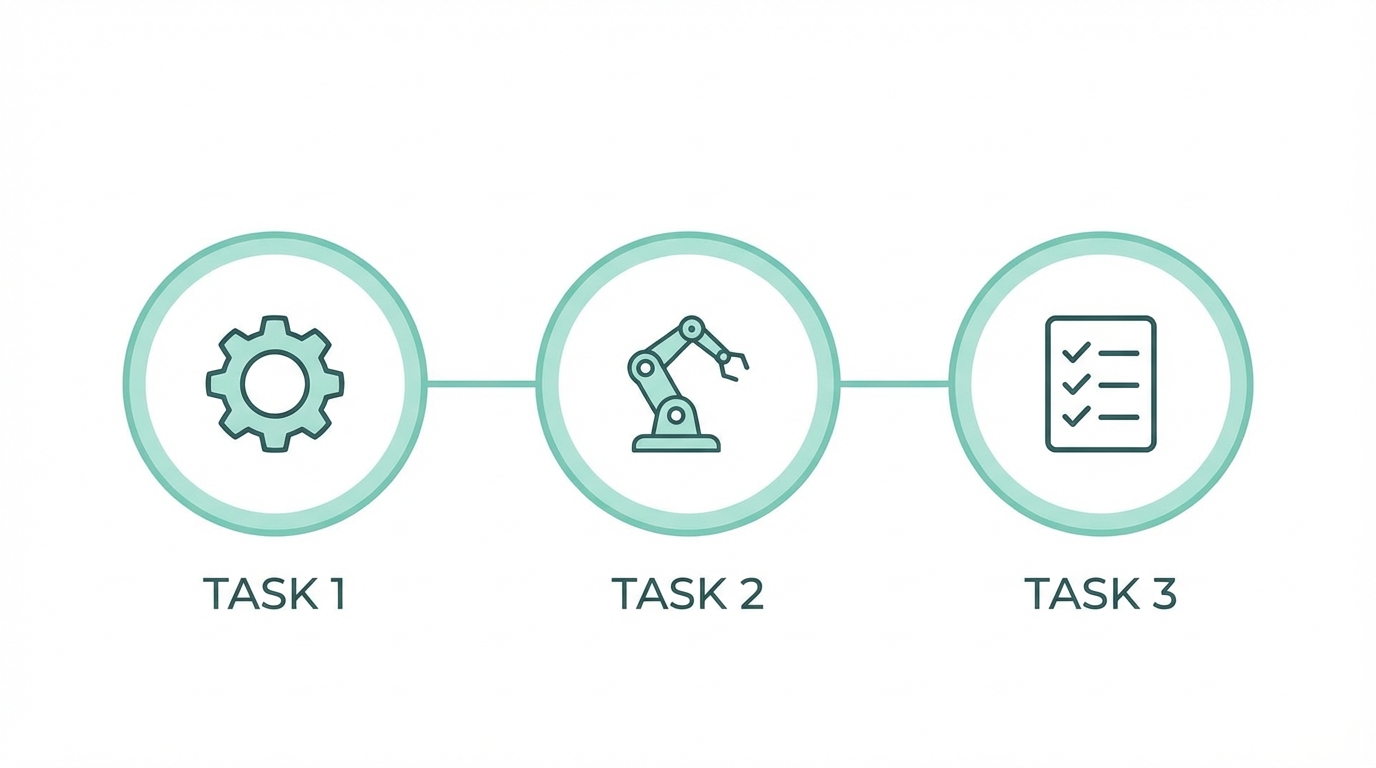
While Claude Code handles the logic and creation, platforms like n8n and Make.com handle the "pipes." A successful automated ad sequence requires a trigger-action workflow. For instance, once Claude Code generates a set of 50 ad variations for a mobile app campaign, an n8n workflow can automatically push those assets to Meta Ads Manager or TikTok Ads.
This level of integration allows brands to behave like software companies. Zapier, for example, has deployed over 800 internal Claude-driven agents to automate multi-platform social media distribution. This isn't just about saving time; it's about performance. Brands using AI-driven matching and automated distribution report a 25–30% lift in Return on Ad Spend (RoAS), as documented by The Cirqle.
Practical Playbook: Launching a Campaign from the Terminal
To launch a campaign at 10x speed, follow this step-by-step engineering approach to marketing. This process bypasses traditional agency bottlenecks and puts the power of AI content distribution directly in the hands of your growth team.
Step 1: Scrape and Vet Creators
Use an Apify actor to gather engagement data on a list of 100 potential creators. Feed this raw JSON into Claude Code with a command like claude analyze-creators --file data.json. Claude will then use a sentiment analysis script to score each creator based on how their audience interacts with them. To streamline this process, Stormy AI provides an all-in-one search and discovery engine that feeds directly into these automated pipelines, allowing you to find the perfect UGC creators with natural-language prompts.

Step 2: Generate Contextual Briefs
Instead of a generic PDF, use Claude to generate hyper-personalized briefs for each creator. By referencing their recent videos (extracted via Firecrawl), the AI can suggest specific hooks that fit their unique style. This significantly increases response rates, as creators feel the brand has actually watched their content.
Step 3: Deploy Ad Sequences
Once content is received, use a terminal script to generate 10 variations of ad copy for each video. These are then pushed to Meta Ads Manager or Apple Search Ads via an API connection. This rapid iteration allows you to find winning creative combinations in hours, not weeks.
Vetting and Analytics: Beyond Vanity Metrics
In the world of Vibe Marketing, follower count is a legacy metric. Smart marketers use Claude to calculate "Engagement Quality" by analyzing the sentiment of the last 50 comments on a post. This identifies whether an audience is genuinely interested in the content or if the engagement is driven by bots. According to Afluencer, relying on vanity metrics is one of the most common mistakes in modern influencer marketing.
By using Claude Code CLI, you can build an "Escrow Agent" using platforms like Latenode. This agent monitors social feeds; when it detects a live post from a contracted creator, it verifies the post against the campaign brief (checking for specific tags and links) and triggers a payment via Stripe. This level of automation was recently showcased when Stormy AI demonstrated building a $450,000 marketing campaign in just 4 hours using these exact methodologies.
Common Pitfalls in High-Speed AI Marketing
Speed is a double-edged sword. When using a Vibe Marketing strategy, the risk of misaligned content is high if your input data is fragmented. AI Marketing Labs points out that AI models are only as good as their context. If you feed Claude outdated brand guidelines or incorrect creator handles, the resulting automated ad sequences will be ineffective.
Furthermore, avoid over-automation in the outreach phase. While tools can handle the research, a human should always review the final message sent to a high-value creator. This prevents the "uncanny valley" effect where messages feel slightly off, leading to lower conversion rates. Legacy telecom giant TELUS successfully navigated this by building over 13,000 internal AI tools that act as assistants to employees rather than total replacements, saving over 500,000 staff hours.
Conclusion: The Future of the Marketing Engineer
The convergence of CLI tools like Claude Code and robust automation platforms like n8n is creating a new category of professional: the Marketing Engineer. By focusing on marketing campaign speed and leveraging AI content distribution, these professionals are outperforming traditional teams by massive margins. Whether it is sourcing UGC creators through Stormy AI or managing thousands of ad assets via a terminal, the goal remains the same: scaling the "vibe" of a brand through the precision of code. Start small by automating one part of your pipeline—like creator vetting or payment tracking—and watch as your execution speed transforms your bottom line.