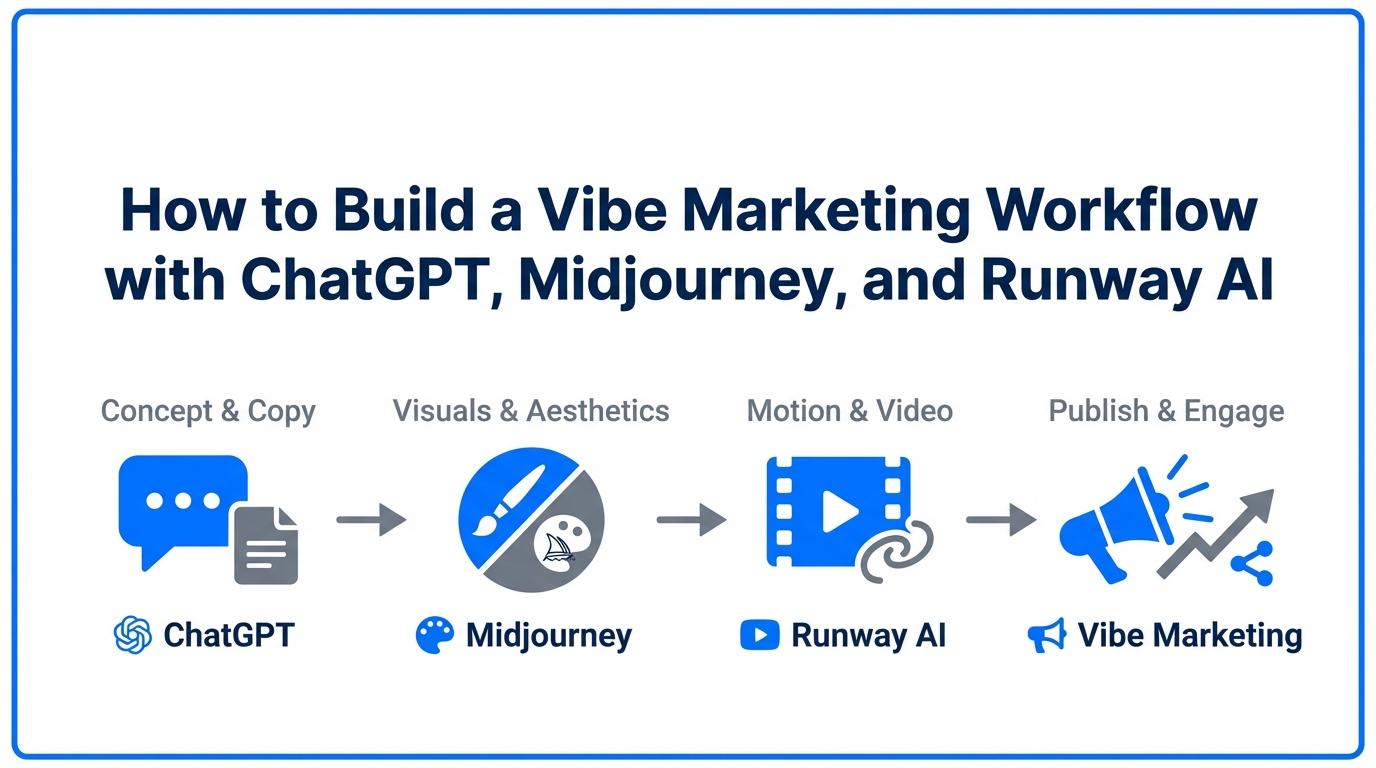
In 2024, the digital landscape underwent a seismic shift from logical selling to emotional resonance. OpenAI co-founder Andrej Karpathy recently popularized the term "vibe coding," suggesting that the future of technical work involves humans providing the "vibe" or intention in natural language while AI handles the technical heavy lifting. This philosophy has rapidly migrated to growth marketing, birthing what we now call Vibe Marketing. It is a high-velocity strategy that prioritizes cultural aesthetics and marketing automation over traditional product feature lists. According to Exploding Topics, interest in vibe marketing has surged by 686% over the last year, signaling a major transition in how brands connect with modern audiences.
The VIBE Framework: Why Emotional Resonance Wins
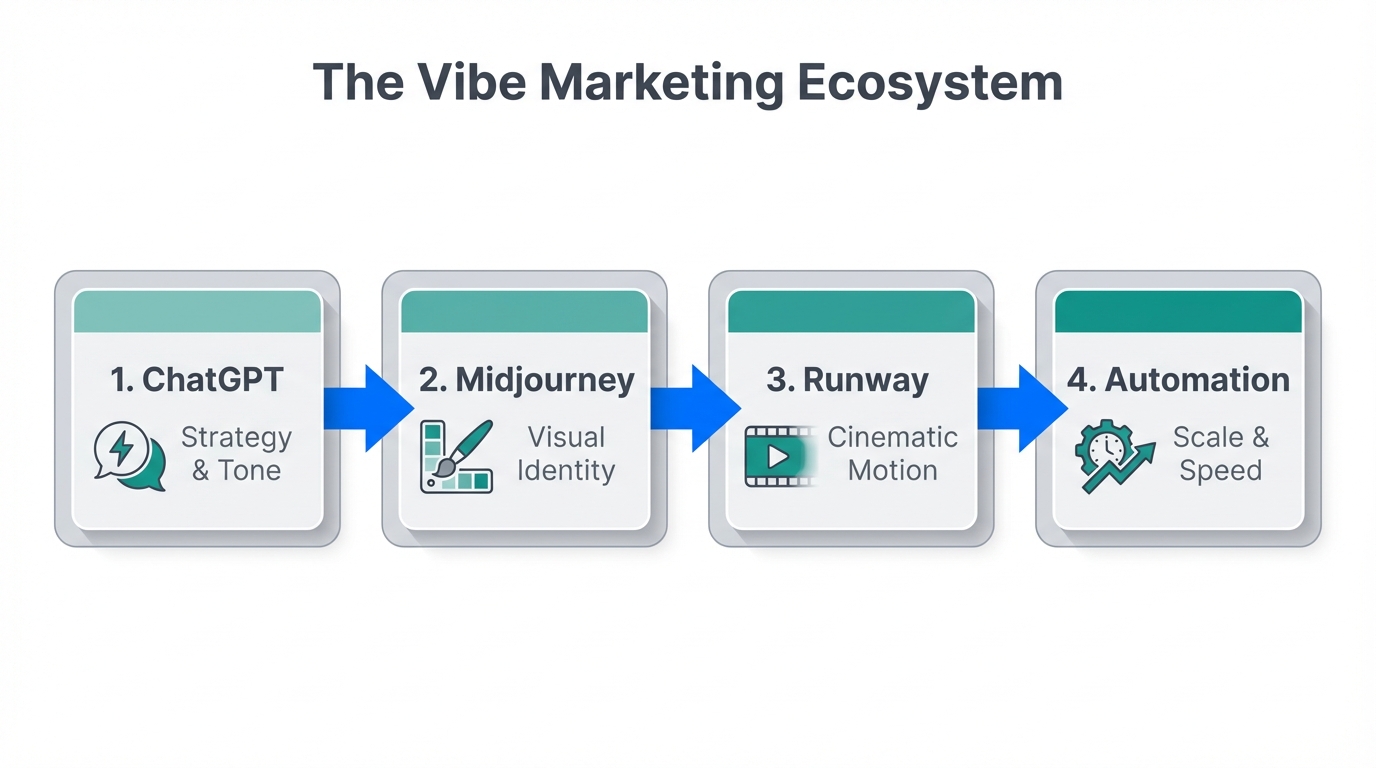
Traditional marketing often feels like a clinical dissection of features and benefits. Vibe marketing, however, treats the brand as an "entertainment machine." Research shows that 70% of consumers are more likely to buy from brands they feel emotionally connected to, and 88% prioritize authenticity in their purchasing decisions, as reported by DemandSage. To succeed, modern marketers are adopting the VIBE acronym developed by industry leaders at Averi AI:
- Velocity: Moving at the speed of culture.
- Identity: Aspirational and distinct design.
- Boundaryless: Breaking down silos between creative and technical teams.
- Emotions First: Leading with a feeling rather than a sales pitch.
Step 1: Defining the "Vibe Brief" with ChatGPT
The first step in any ai marketing workflow is defining the intent. Instead of a 20-page technical specification, vibe-first marketers create a "Vibe Brief." This document outlines the emotional "truth" of the brand. As Marc Pritchard, Chief Brand Officer at P&G, notes in research by Zappi, while behavior is measurable, the emotional truth is what makes content truly resonate.
Use ChatGPT to translate your brand values into a distinct, non-corporate voice. Avoid generic prompts. Instead, feed the AI examples of "unhinged" or high-personality brands like Liquid Death or Duolingo. According to Brand24, Duolingo's TikTok strategy relies on chaotic humor rather than educational value, resulting in a 4.03% average engagement rate.
"People love brands with personality. Too many brands are scared to step out and grab one, but the ones who do it well reap the benefits." — Professor Matt Williams, William & Mary
Step 2: Visual Storytelling and Mood Boards with Midjourney
Once you have your voice, you need an aesthetic. Vibe marketing relies heavily on "sensory branding." VIZIT predicts that sonic and tactile elements will be primary differentiators for DTC brands by 2026. Midjourney is the gold standard for generative ai for branding, allowing marketers to create atmospheric mood boards in seconds.
To execute this, move away from literal product shots. If you are selling a productivity app, don't just generate a person looking at a phone. Generate a feeling: "A lo-fi, grain-heavy, midnight blue workspace with neon accents, cinematic lighting, 35mm film aesthetic." This creates a world for your brand to live in. Brands like Glossier have built $2B empires through community-led growth and a specific "Glossier Pink" aesthetic, with 70% of online sales coming from peer referrals, according to Enrich Labs.
Step 3: Generating Atmospheric B-Roll with Runway AI
Static images are no longer enough. To truly sell a mood, you need motion. Generative AI for branding has evolved to include cinematic video tools like Runway AI. Instead of high-gloss commercial production, vibe marketing uses "atmospheric B-roll"—short, evocative clips that emphasize texture, light, and motion.
In your ai marketing workflow, Runway AI should be used to generate the "background noise" of your brand. Think of the Spotify AI DJ; Spotify uses hyper-personalization to create a daily vibe, increasing retention through emotional attachment. Your video content should do the same: sell the lifestyle, not the widget. Use Opus Clip to then take these vibe-heavy videos and instantly turn them into 15+ platform-specific clips for TikTok and Reels.
| Strategy Component | Traditional Marketing | Vibe Marketing |
|---|---|---|
| Primary Goal | Feature Education | Emotional Resonance |
| Content Style | Corporate/Polished | Authentic/Atmospheric |
| Creation Speed | Weeks/Months | Minutes/Hours |
| Key Metric | Conversion Rate | Brand Affinity & Sentiment |
Step 4: Implementing Adaptive Loops with Zapier and Make
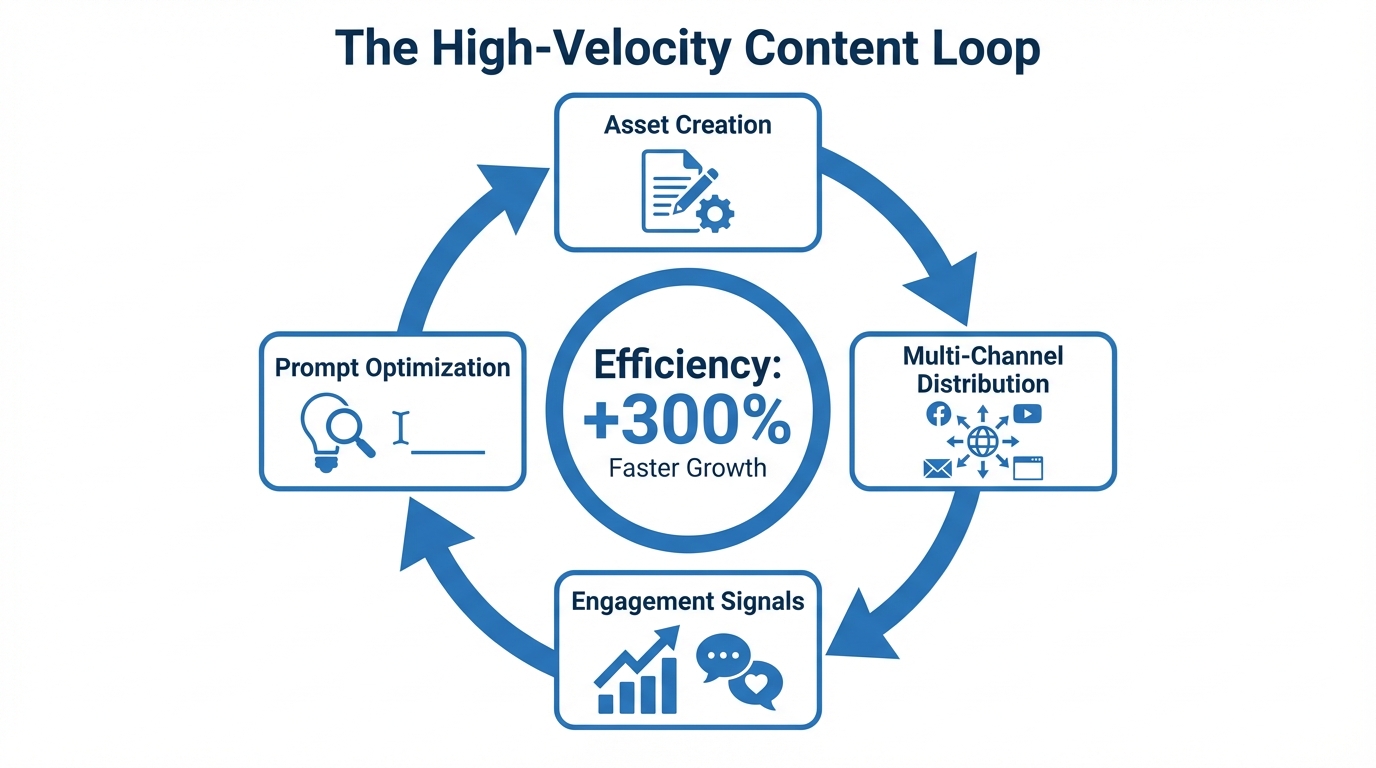
The "Velocity" in VIBE comes from marketing automation. You cannot wait for a weekly creative meeting to react to a cultural trend. By using tools like Zapier or Make, you can connect social listening triggers to your content generation stack.
For example, when a specific keyword trends on X/Twitter, an automated loop can trigger ChatGPT to draft three "on-vibe" post variants. However, AI cannot do everything. To bridge the gap between AI generation and human authenticity, platforms like Stormy AI streamline creator sourcing and outreach for real UGC creators who can provide the "human layer" that AI sometimes lacks. While AI generates the mood, human creators provide the social proof that builds long-term trust.
"True disruption comes from true curiosity. If a brand can make someone curious enough to have questions, the conversion follows." — Mike Cessario, CEO of Liquid Death, via The Harris Poll
Avoiding "AI Slop": The Human Review Layer
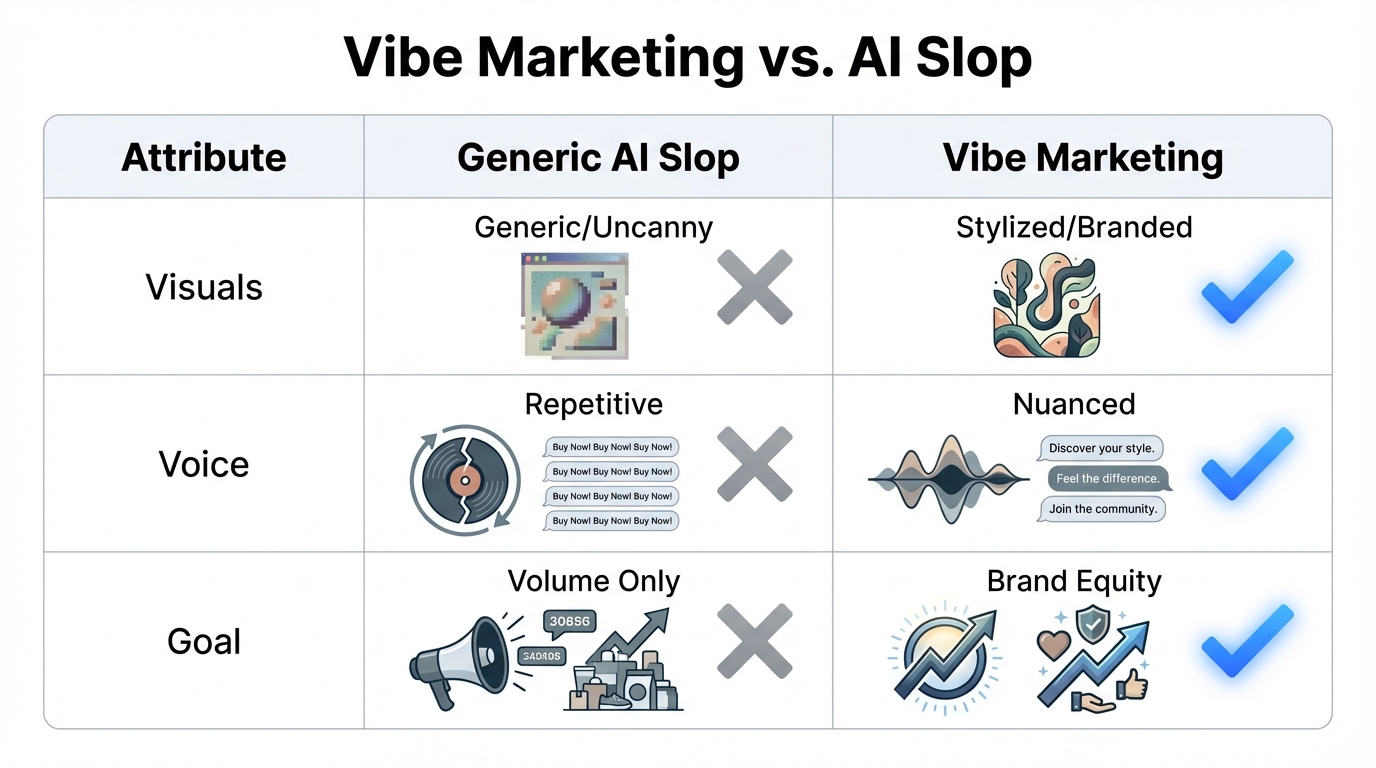
One of the biggest risks in an ai marketing workflow is "AI Slop"—generic, uninspired content that audiences can spot instantly. Project Seven warns that publishing boilerplate content kills trust. The marketer must act as a "Pilot," guiding the AI while maintaining final creative control. This is the core of the "Marketer as Pilot" trend highlighted by MarTech.
To maintain high standards, your workflow should include:
- Sentiment Filtering: Ensure the AI isn't chasing a trend that contradicts your brand identity.
- Quality Vetting: Use an AI-powered influencer platform like Stormy AI to ensure that any human creators you bring in to support your "vibe" have real, engaged audiences and aren't just boosting vanity metrics.
- Mobile Optimization: As Productive Blogging points out, neglecting mobile-first SEO and speed will render even the best "vibe" invisible to search engines.
Conclusion: From Technical Executor to Strategic Orchestrator
Vibe marketing execution is not about replacing humans; it is about elevating them. By building an ai marketing workflow using chatgpt for marketers, Midjourney for aesthetics, and Runway for atmospheric video, you can scale emotional resonance at a fraction of the cost. Authenticity is the new currency of the creator economy, and those who use AI to amplify their brand's "human truth" will be the ones who win the next decade of digital growth.