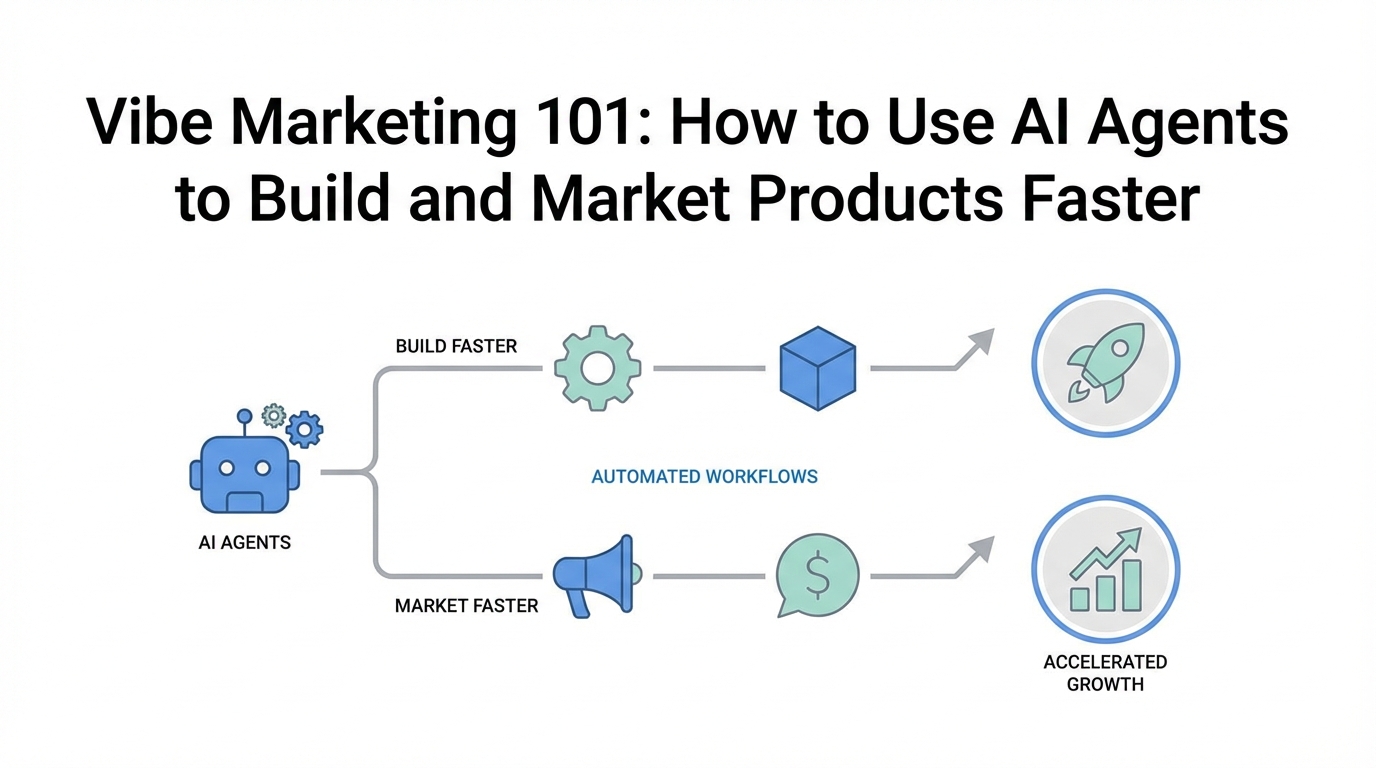
The traditional wall between product development and marketing execution is crumbling. For decades, the workflow was linear: engineers built the product in an IDE, then tossed it over the fence to a marketing team that lived in spreadsheets and ad managers. This siloed approach is slow, expensive, and often results in a brand message that feels disconnected from the product’s soul. Enter vibe marketing—a new philosophy for the future of marketing 2025 that treats growth as an extension of the codebase. By leveraging AI marketing agents directly within your development environment, you can now build and market at the exact same speed.
What is Vibe Marketing? The New Build-and-Market Environment
At its core, vibe marketing is the intersection of product building and marketing execution within the same environment, typically an Integrated Development Environment (IDE) like Cursor, VS Code, or via tools like Claude Code. It is the marketing equivalent of 'vibe coding'—the process of using natural language and AI agents to ship functional software without manually writing every line of code.
In a vibe marketing workflow, you aren't just writing a blog post or designing an ad in a vacuum. You are invoking agentic skills that have access to your entire codebase, your research docs, and your brand voice. This allows you to generate high-fidelity marketing systems—landing pages, ad creatives, and email sequences—that are technically sound and strategically aligned in minutes rather than weeks.
Moving from Deterministic to Agentic Workflows
To understand why vibe marketing is transformative, we must look at how marketing automation strategies have evolved. For the last few years, growth hackers relied on deterministic workflows. These are rigid 'if-this-then-that' sequences (often built in tools like Zapier or n8n) that follow a fixed path. While efficient, they lack 'taste' and adaptability. If a lead’s response doesn't fit the predefined logic, the automation fails or feels robotic.
Agentic workflows, however, are powered by AI growth marketing agents that can reason. Instead of following a script, an agent is given a goal (e.g., 'Research the competitive landscape for HVAC companies and find a positioning gap'). The agent then uses tools—called Model Context Protocols (MCPs)—to browse the web, take screenshots, and analyze data before making a strategic recommendation. This shift allows for higher speed and massive scale without sacrificing the nuance required for high-conversion marketing.
The Philosophy of 'Downloading Your Brain' Into AI Skills
The biggest fear in AI marketing is 'slop'—generic, soul-less content that research shows users are increasingly ignoring. Vibe marketing solves this through Skills. A skill is essentially an instruction manual or a specialized persona that you 'train' your AI agent to use. By creating a custom skill, you are downloading your human taste into a reusable asset.
For example, if you are a world-class copywriter, you can codify your specific frameworks (like the 'Transformation' framework or 'Direct Response' triggers) into a .md file within your project. When the agent writes a landing page, it doesn't just use generic AI knowledge; it follows your specific rules. This allows you to scale your artistic intuition with scientific precision. You are no longer doing the work; you are orchestrating agents that work with your level of expertise.
Case Study: Building a Complete Marketing System in 60 Minutes

How do you go from zero to a live funnel in an hour? By stacking MCPs and skills. The following playbook demonstrates how AI marketing agents handle the heavy lifting while you provide the strategic direction.
Step 1: Deep Research with Perplexity MCP
Most marketers skip research because it's boring. In a vibe marketing workflow, you start by narrating your goals into a tool like Perplexity via an MCP. You can command the agent to: 'Find the main players in the AI agency space and identify the emotional gaps in their messaging.' Within seconds, the agent crawls the web, identifies competitors, and notes what’s missing—such as 'transparency in pricing' or 'speed of implementation.'
Step 2: Defining Positioning Angles
Using the research data, you invoke a Positioning Skill. This skill takes the raw data and filters it through classic marketing frameworks. It might suggest an 'Anti-Agency' angle for a service business, highlighting that traditional agencies take months while your AI-powered system delivers results in days. This gives you a unique mechanism that stands out in a crowded Meta Ads Manager environment.
Step 3: Conversion-Optimized Landing Pages
Instead of hiring a designer, you use a Front-end Design Skill. By feeding the agent screenshots of high-performing competitors (captured via the Playwright MCP), the agent can generate a custom landing page in React or HTML. This isn't just a template; it’s a page built specifically to match your positioning and brand voice, complete with conversion-focused copy generated by your 'Downloaded Brain' skill.
Step 4: Programmable Ad Creative
Vibe marketing extends to video. Tools like Remotion allow you to create programmatic video ads directly from the terminal. You can prompt the agent to: 'Create 20 variations of a square video ad for Instagram using our brand colors and the "Boring Money" hook.' The agent generates the code, renders the video, and prepares it for testing. You’ve just become a one-person creative agency.
From Artistic Guesswork to Scientific Success
In the past, marketing was viewed as an 'art'—you launched a campaign and hoped it resonated. Vibe marketing shifts the needle toward science. Because you can generate 100 landing pages or 50 ad variations in the time it used to take to make one, you can treat growth as a high-probability game.
This is especially critical for mobile app developers and SaaS founders. By creating hyper-targeted funnels for every niche—for example, one landing page specifically for plumbers and another for electricians—you increase the relevance of your ads, which lowers your Customer Acquisition Cost (CAC) on platforms like Google Ads.
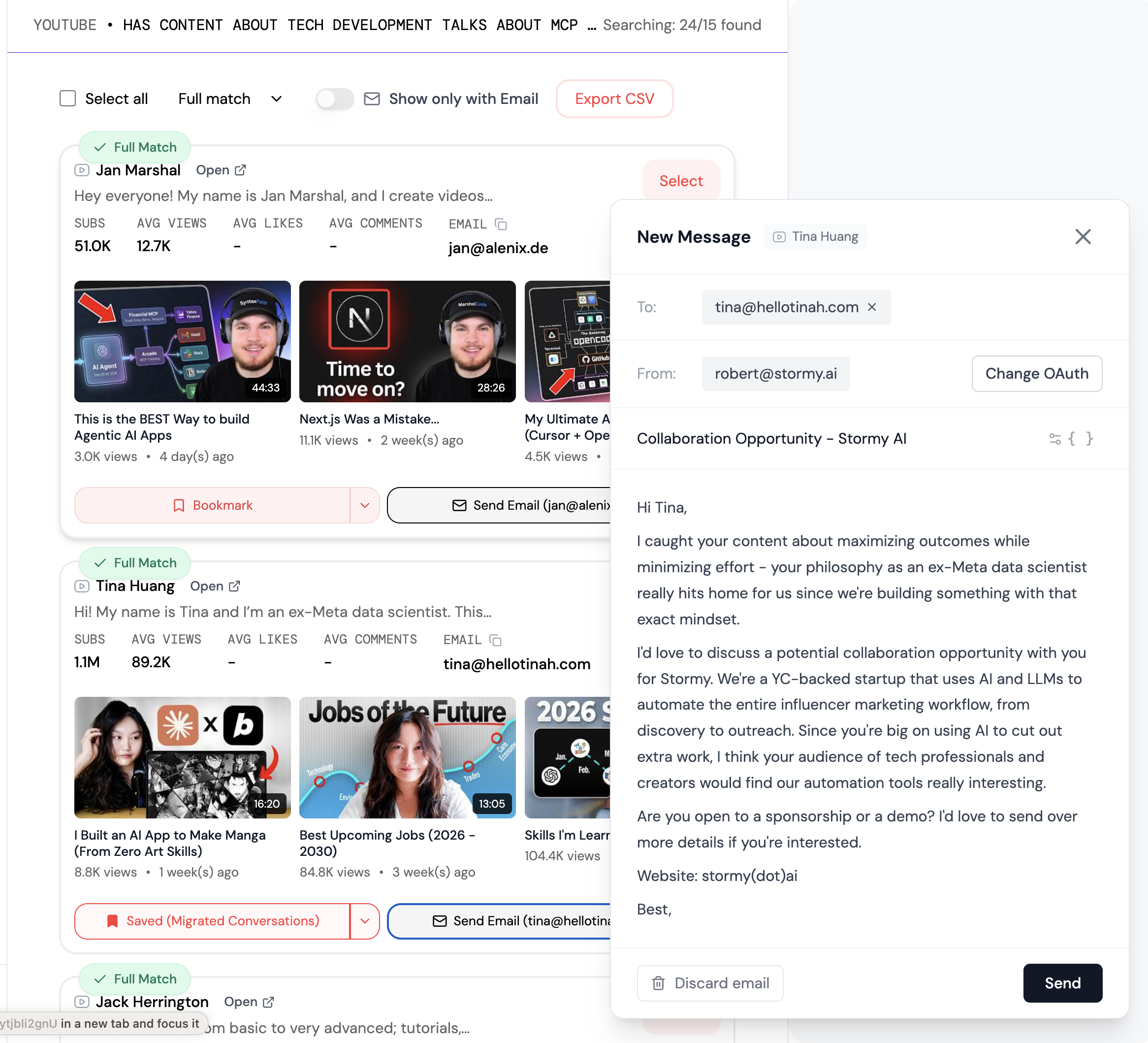
However, while AI can build the structure, the highest-converting content still requires a human touch. For instance, platforms like Stormy AI can help source and manage UGC creators at scale to provide the authentic video testimonials that AI-generated funnels need to build trust. Once you have that 'human vibe' in the form of raw UGC, your AI agents can package it into hundreds of different ad formats programmatically.
The Role of the Orchestrator Skill
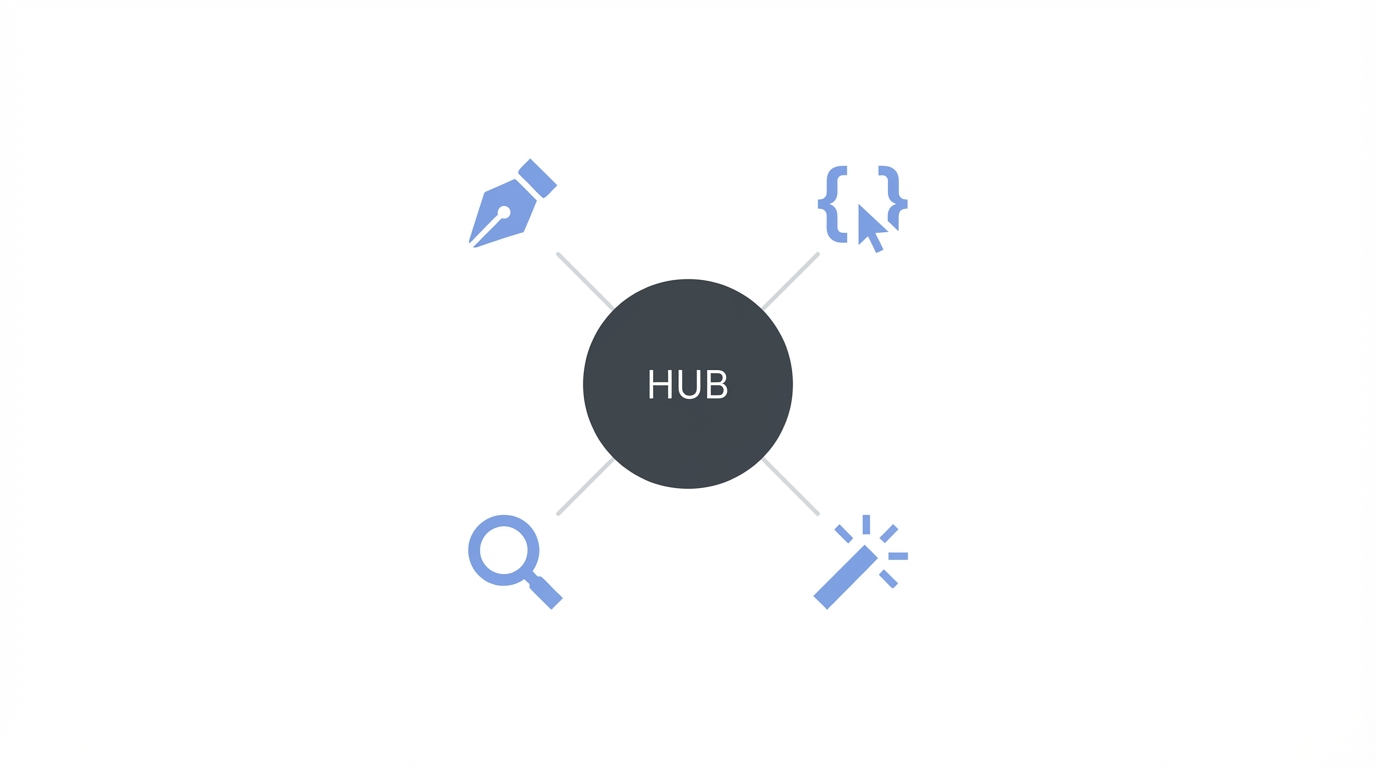
As you build out these systems, you might find yourself overwhelmed by the number of agents and skills available. This is where the Orchestrator Skill comes in. This is a master agent that analyzes your current project state and tells you what’s missing.
If you have a landing page but no lead magnet, the Orchestrator will flag it: 'You have a high-traffic page but no way to capture emails. Should I run the Lead Magnet Skill to generate a 5-minute audit tool?' This level of autonomous strategy is what separates a basic chatbot from a true vibe marketing environment. It ensures that no part of your funnel is left to chance.
Conclusion: Start Vibing or Get Left Behind
The future of marketing 2025 isn't about better slogans; it's about infrastructure. By adopting vibe marketing, you are building a system that can research, position, build, and market products with minimal friction. You are moving from a world of expensive manual labor to one of infinite agentic scale.
Key Takeaways for Your Vibe Marketing Playbook:
- Stop Siloing: Bring your marketing assets into your IDE so your agents have full context.
- Build Your Skill Library: Don't just prompt; codify your best frameworks into 'Skills' that represent your unique taste.
- Leverage MCPs: Use tools like Perplexity for research and Playwright for competitive intelligence to feed your agents real-world data.
- Test at Scale: Use programmatic tools like Re-motion to create dozens of creative variations for your campaigns.
Whether you are a solo founder or leading a growth team, the goal is the same: reduce the distance between an idea and a live, revenue-generating funnel. If you can manage your creator relationships and UGC sourcing with a platform like Stormy AI while handling the technical funnel builds in your IDE, you will be able to out-pace and out-market any competitor still stuck in the deterministic past.