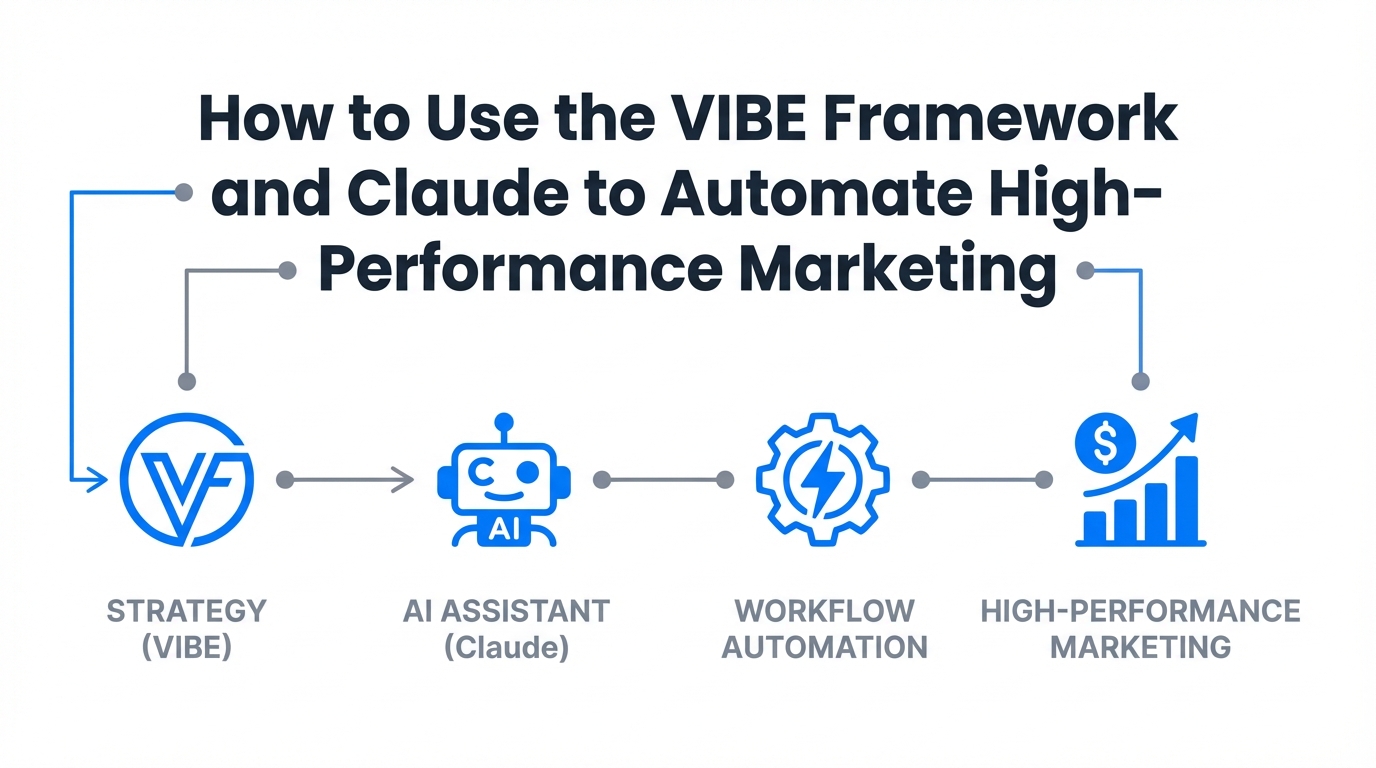
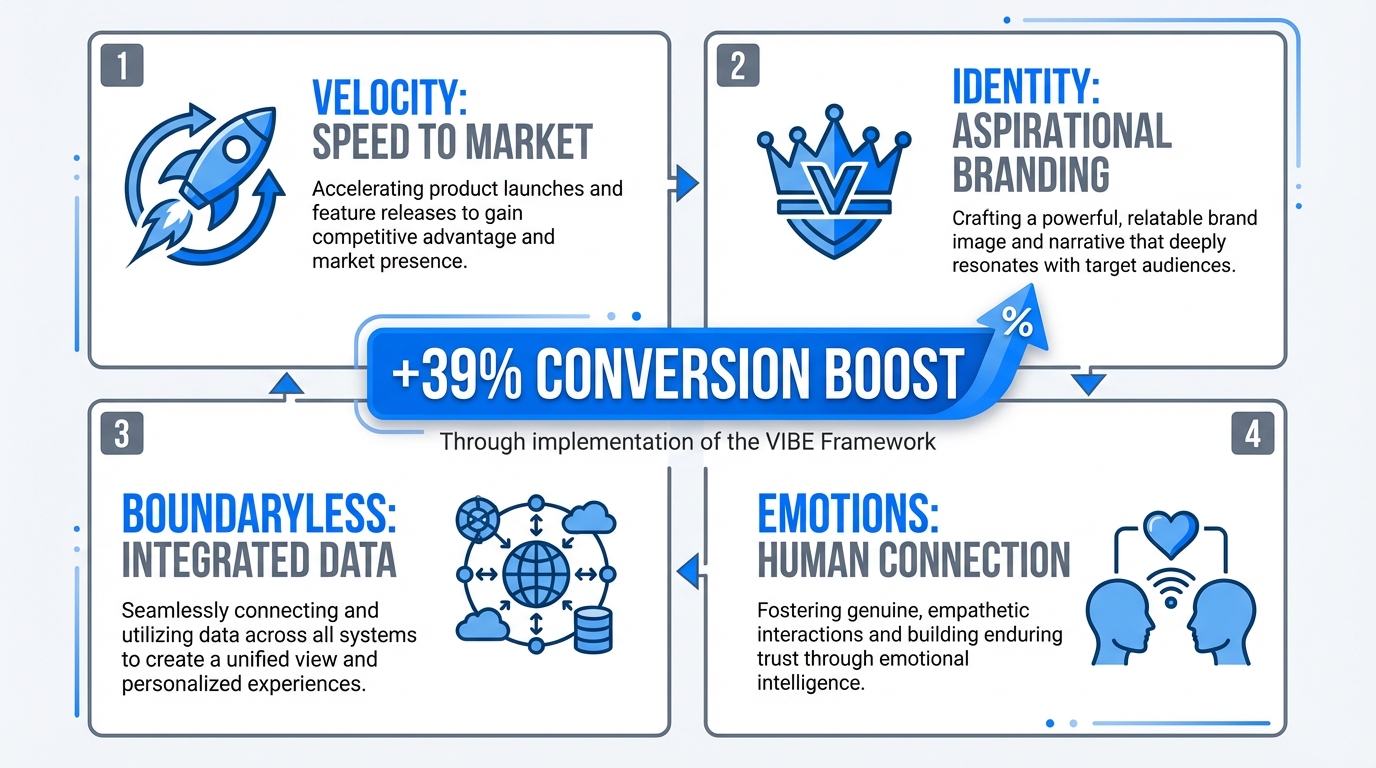
In the rapidly shifting landscape of digital consumerism, the word "vibe" has transcended its origins as internet slang to become a measurable pillar of high-growth business strategy. Interest in vibe marketing has surged by a staggering 686% over the past year, signaling a pivot away from sterile, feature-heavy advertisements toward curated moods and sensory signals. As established by marketing thinkers like Greg Isenberg, the traditional marketing funnel is being replaced by the VIBE framework: Velocity, Identity, Boundaryless, and Emotions.
By leveraging an AI growth stack—centered around powerful large language models like Claude—brands are no longer just participating in culture; they are moving at the speed of it. This playbook outlines how to deploy the VIBE framework using agentic marketing workflows to achieve the same 39% higher conversion rates reported by early adopters in the Fortune 500.
Velocity: Moving at the Speed of Culture
Traditional marketing cycles often take weeks, if not months, to move from ideation to launch. In the era of velocity marketing strategy, that delay is a death sentence for relevance. Velocity is the ability to identify a cultural trend and launch a high-fidelity campaign within 24 hours. Research indicates that vibe-led workflows can reduce campaign production time by 50%–75%, effectively allowing a single marketer to do the work of a five-person team.
Using Claude paired with automation tools like Zapier or n8n, you can create an autonomous trend-response engine. Claude excels at understanding nuance and tone, making it the ideal "brain" for a velocity-first marketing stack. When a topic trends on TikTok or X, your AI agent can scrape the context, generate a brand-aligned response, and draft creative assets for approval before your competitors have even finished their morning stand-up.
"The future of marketing isn't about the best product; it's about which brand can maintain the highest velocity of cultural relevance without losing its soul."
Identity & Emotions: Designing for Aspiration
The "I" and "E" of the VIBE framework—Identity and Emotions—represent the shift from selling utility to selling a feeling. Modern consumers, particularly Gen Z and Millennials, buy into brands that reflect who they aspire to be. Success stories like Liquid Death demonstrate this perfectly; they don't sell water; they sell a heavy-metal, anti-corporate identity.
To implement this via Claude marketing automation, your prompting must move beyond "write an ad for water." Instead, use Claude to define a sensory identity. Ask the AI to describe the brand's sound, scent, and aesthetic before writing a single word of copy. Multi-sensory branding has been shown by ScentAir to improve brand recall by up to 70%. Use Claude to architect these "mood boards" in text form, which can then be fed into image generators like Midjourney.
Furthermore, when sourcing creators who naturally embody your brand's aesthetic, tools like Stormy AI can help source and manage UGC creators at scale, ensuring the discovery process moves as fast as the AI-generated creative. By finding influencers whose existing "vibe" matches your aspirational identity, you bypass the friction of forced endorsements.
Boundaryless Operations: Breaking Down Silos
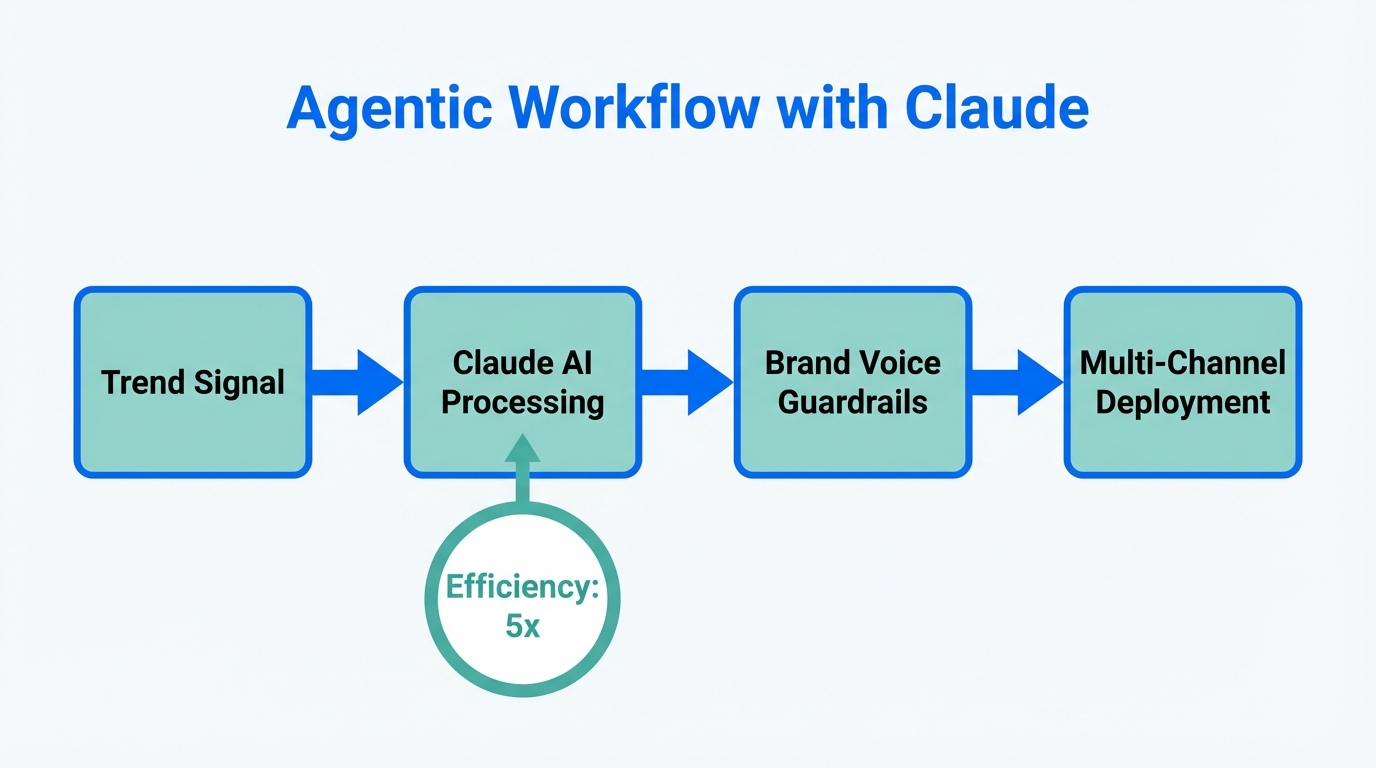
The "B" in VIBE stands for Boundaryless. In a traditional firm, the creative team, the data analysts, and the social media managers live in separate silos. This friction kills vibes. A boundaryless operation uses AI agents to act as the connective tissue between these departments. Tools like Averi AI or Manus AI handle research, A/B testing, and optimization autonomously, feeding insights back to the creative team in real-time.
This approach allows for agentic marketing, where the AI doesn't just suggest changes but actively manages the campaign. For instance, an AI agent can monitor Meta Ads Manager performance, identify which "vibe" is resonating with the audience, and automatically trigger Canva AI to generate more assets in that specific style. This creates a Gut-Check Feedback Loop where data dictates the creative direction without manual intervention.
| Framework Component | Traditional Approach | VIBE Approach (AI-Driven) |
|---|---|---|
| Velocity | 3-week approval cycles | 24-hour cultural launch |
| Identity | Solving a pain point | Fulfilling an aspiration |
| Operations | Siloed teams | Boundaryless AI agents |
| Strategy | Features-first | Emotions-first |
The 'Vibe Stack' Playbook: Step-by-Step Setup
To implement these strategies, you need a cohesive AI growth stack. Follow this playbook to set up your own automated marketing engine.
Step 1: Define the Emotional North Star
Use Claude to build a brand persona document. Instead of listing features, list emotions, colors, and sounds. Use the research from SoundOut to determine what audio frequencies align with your brand's mood. This document becomes the master prompt for all future AI interactions.
Step 2: Automate Discovery and Outreach
Vibe marketing relies heavily on User-Generated Content (UGC) and creator partnerships. Platforms like Stormy AI streamline creator sourcing and outreach by using AI to find influencers who already match your target vibe. Connect these discoveries to a centralized Creator CRM to track the emotional impact and deal stages of each collaboration.
Step 3: Deploy Generative Creative Loops
Set up an n8n workflow that triggers when a new trending topic is identified. The workflow should:
- Prompt Claude for a culturally relevant hook.
- Use Runway or Midjourney to generate visuals.
- Edit the video using Descript for a "lo-fi" or "chaotic" aesthetic.
Step 4: Real-Time Optimization
Use Vibelets.ai to manage social media operations. These tools can automatically post content and use AI-driven A/B testing to let the audience's engagement—the "vibe check"—dictate which content stays live.
"The most successful brands of 2025 will be those that treat their AI stack as a member of the creative team, not just a tool for efficiency."
Avoiding 'Vibe Washing' and Maintaining Authenticity
As brands rush to adopt this framework, many fall into the trap of "Vibe Washing"—chasing trends like "cottagecore" or "brat" without authentic alignment. This is a critical error, as 62% of Gen Z consumers state they will stop buying from brands that feel disingenuous. Automated workflows must still be guided by human taste.
According to The Cranky Creative, AI democratizes the "how," but humans must provide the "what" and the "why." If your AI output feels middle-of-the-road or generic, you are failing the vibe check. Authenticity is the only hedge against AI-generated noise. Avoid the mistake of measuring only "clicks"; instead, focus on metrics like emotional recall and dwell time, which more accurately reflect brand health in a vibe-first world.
The Future of Agentic Marketing
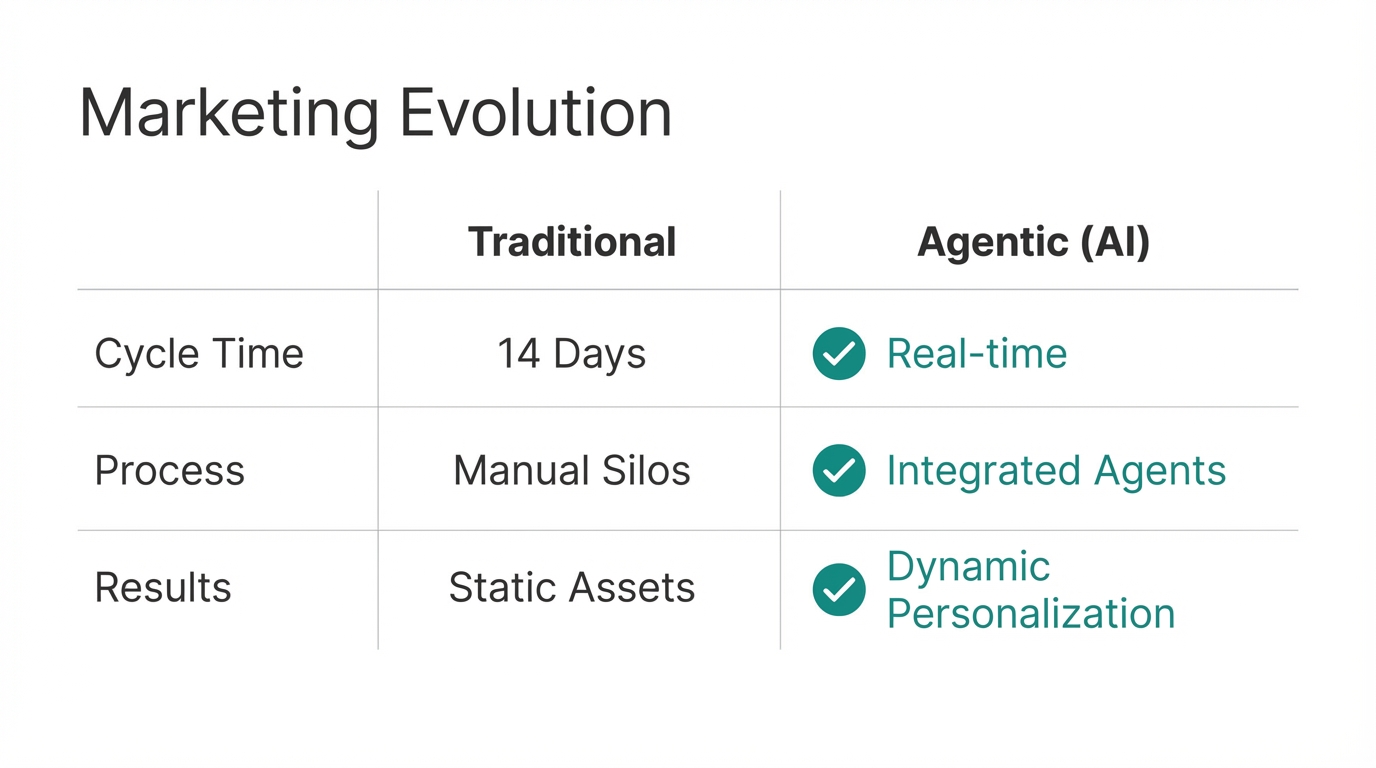
We are moving from AI-assisted marketing to AI-led (agentic) marketing. This doesn't mean marketers are being replaced; it means they are evolving into vibe orchestrators. By mastering the VIBE framework and tools like Claude, you can build a marketing engine that is self-correcting, emotionally resonant, and incredibly fast.
Brands like Duolingo and Marc Jacobs have already proven that leaning into the "beautifully unhinged" lo-fi aesthetic leads to massive growth. By ditching airbrushed perfection for authentic, AI-accelerated creativity, your brand can achieve the same 60% greater revenue growth seen by industry leaders.
The transition is simple: Stop selling features, start selling vibes. Use Serotonin-inducing aesthetics and Claude-powered automation to build a brand that people don't just use, but one they feel a part of. Start building your vibe stack today and move your marketing from the slow lane to the speed of culture.