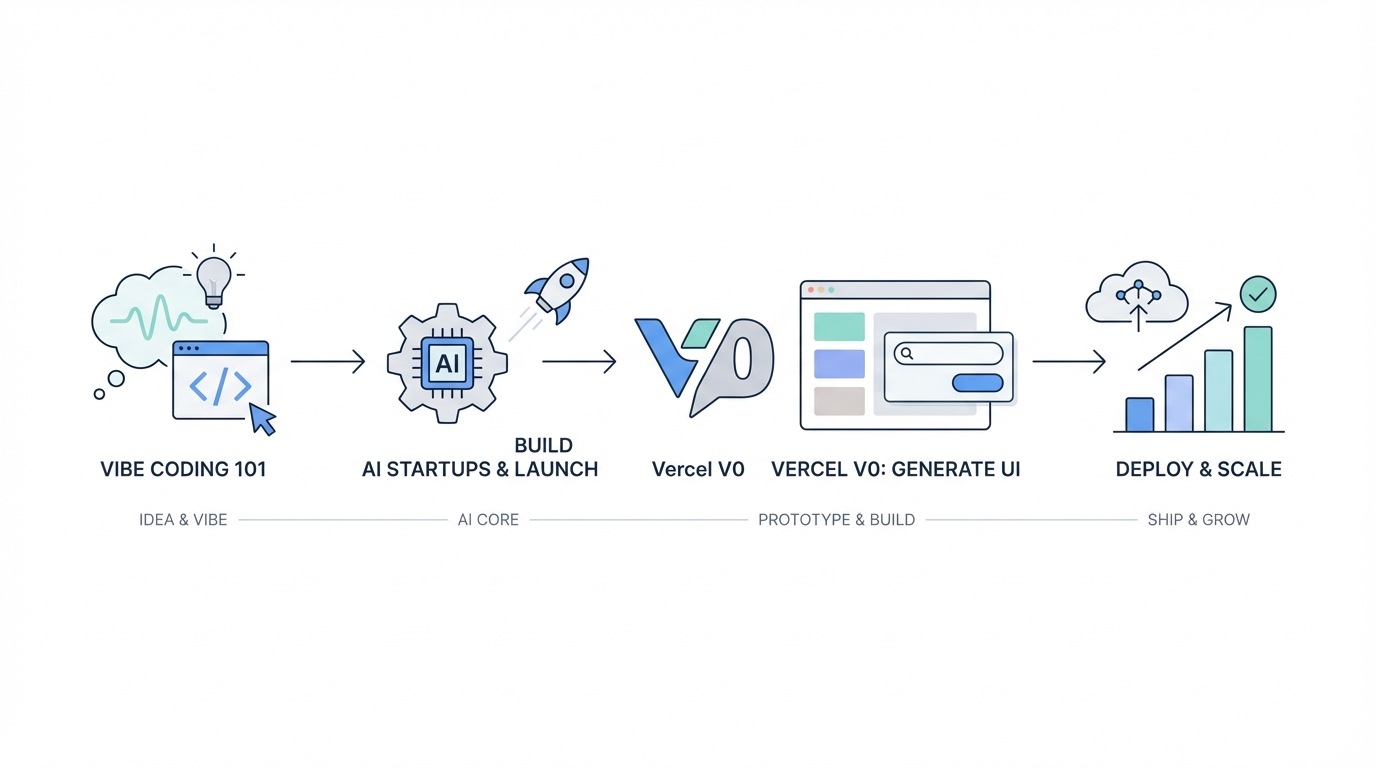
The era of manual syntax and tedious boilerplate coding is rapidly evolving into a new paradigm: vibe coding. This isn't just a catchy name for low-code development; it represents a fundamental shift in how entrepreneurs translate vision into functional software. Instead of getting bogged down in the intricacies of CSS or state management, founders are now using natural language to 'vibe' their way into high-fidelity prototypes. At the forefront of this movement is Guillermo Rauch, the CEO of Vercel, a company that has redefined the web development lifecycle. By leveraging tools like Vercel V0, anyone with a clear vision can now build and deploy production-ready AI applications in the time it takes to eat lunch. In this vibe coding tutorial, we will break down the methodology used by the industry's best to go from a simple prompt to a viral startup.
Defining Vibe Coding: Vision over Syntax

At its core, vibe coding is the process of using natural language prompts and AI models to generate high-fidelity UI and functional code. As Guillermo Rauch explains, the barrier to entry for software development has shifted from knowing where to put a semicolon to knowing how to describe a product's 'vibe' with precision. It is about high-fidelity vision-based prompting. When you are vibe coding, you aren't just telling the AI to 'build a website'; you are using metaphors, referencing existing design patterns, and iterating until the output matches the internal image in your head.
This methodology relies heavily on having good taste and an eye for detail. To succeed with a Vercel V0 guide approach, you need to accumulate 'exposure hours' to great products. This means studying how apps like Instagram or Apple handle borders, gradients, and micro-interactions. Vibe coding allows you to skip the manual implementation of these details, but it still requires you to recognize when they are right. It is a transition from being a 'builder' to being an 'orchestrator' of AI capabilities.
The Step-by-Step Workflow: Using V0 and the AI SDK
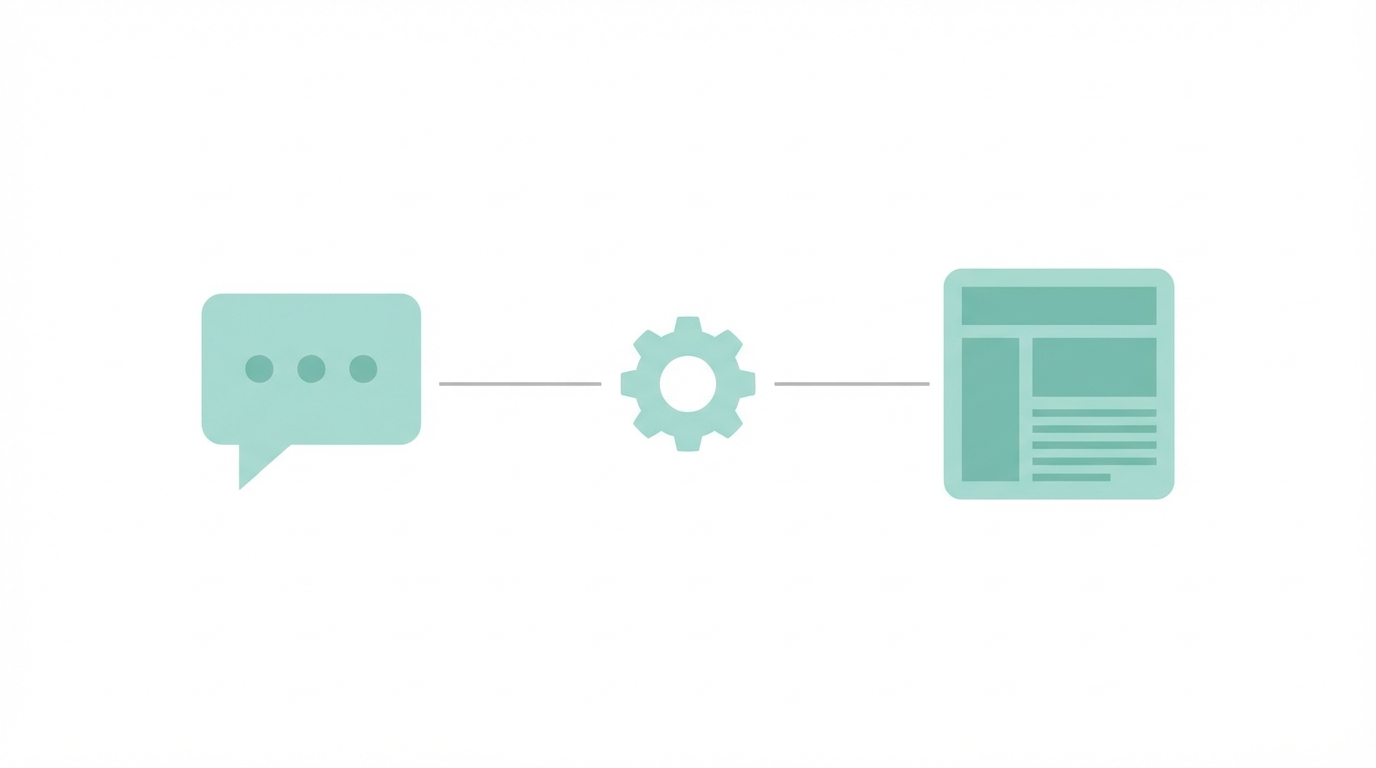
To effectively build AI apps without coding, you must master the two-pillar workflow: UI generation with Vercel V0 and logic handling with the Vercel AI SDK. This combination allows you to create applications that don't just look good but actually work. Here is the standard playbook for launching a new project.
Step 1: Prompting the UI in V0
Begin by describing your interface to V0. Rauch suggests starting with the 'primitives' of your idea. If you are building a tool for data visualization, don't just ask for a dashboard; ask for a 'fluid compute visualization that uses particle effects to represent data flow.' Use the Vercel V0 community templates to find starting points. Whether you need a landing page, a game, or a complex CRM, someone has likely already 'vibe coded' a foundation that you can duplicate and iterate upon.
Step 2: Refining with Natural Language
Once V0 gives you a first pass, the real vibe coding begins. You might notice the chat interface is too dominant or the buttons are too large. You can simply prompt: 'Hide the chat by default and make the content full-screen' or 'Add a subtle gradient to the background that feels like liquid glass.' V0 is smart enough to handle these refinements across the entire codebase instantly.
Step 3: Implementing Logic with the AI SDK
After the UI is polished, you need to connect it to an LLM. This is where the Vercel AI SDK comes in. It acts as the 'React for AI,' providing a universal developer experience for integrating models from providers like OpenAI, Anthropic, or Groq. If you want to build a conversational interface, the AI SDK allows you to implement 'generative UI'—where the AI doesn't just respond with text, but with actual UI components (like a weather widget or a custom chart) directly in the chat stream.
Mobile-First AI Design: The Power of Fewer Pixels

One of the most critical AI startup ideas discussed by Rauch is the necessity of mobile-first design. In the AI era, users have less patience and shorter attention spans. If your app requires ten clicks to reach a result, it has already failed. Rauch champions the 'fewer pixels' philosophy. By reducing the amount of UI, you force the AI to deliver the most relevant information immediately. This is particularly important for mobile devices, where the screen real estate is limited.
A successful AI product often feels like a native app even when it is a web app. By using Vercel V0 to build responsive layouts, you can ensure your startup looks professional on an iPhone Air or a desktop monitor. The goal is to create a 'unique entry point' for a specific problem. Even if a giant like Google or OpenAI offers a general tool, a dedicated, mobile-friendly interface for a specific niche—like a specialized UGC creator discovery engine—will always find a loyal audience because it reduces friction.
Case Study: Deconstructing the Banana Cam
To understand the power of vibe coding, look no further than the Banana Cam. This viral AI photo app was built during a lunch break in San Francisco. The concept was simple: a camera app where the photo is an input, not an output. Every photo taken goes through an LLM to be filtered into different styles (like 'Kill Bill' or 'Solarpunk') using models like Nano Banana. You can see the live version at v0-bananacam.vercel.app.
The build process relied on a few key vibe coding principles:
- Reference Metaphors: The team used the iPhone camera app as a design reference, ensuring the borders and buttons felt familiar to users.
- Prompt Iteration: When the first versions were too complex, they prompted the AI to 'trim the UI' and focus entirely on the selfie.
- Model Chaining: The app doesn't just use one model; it uses the vision of one model to critique the photo and another to generate the filtered result.
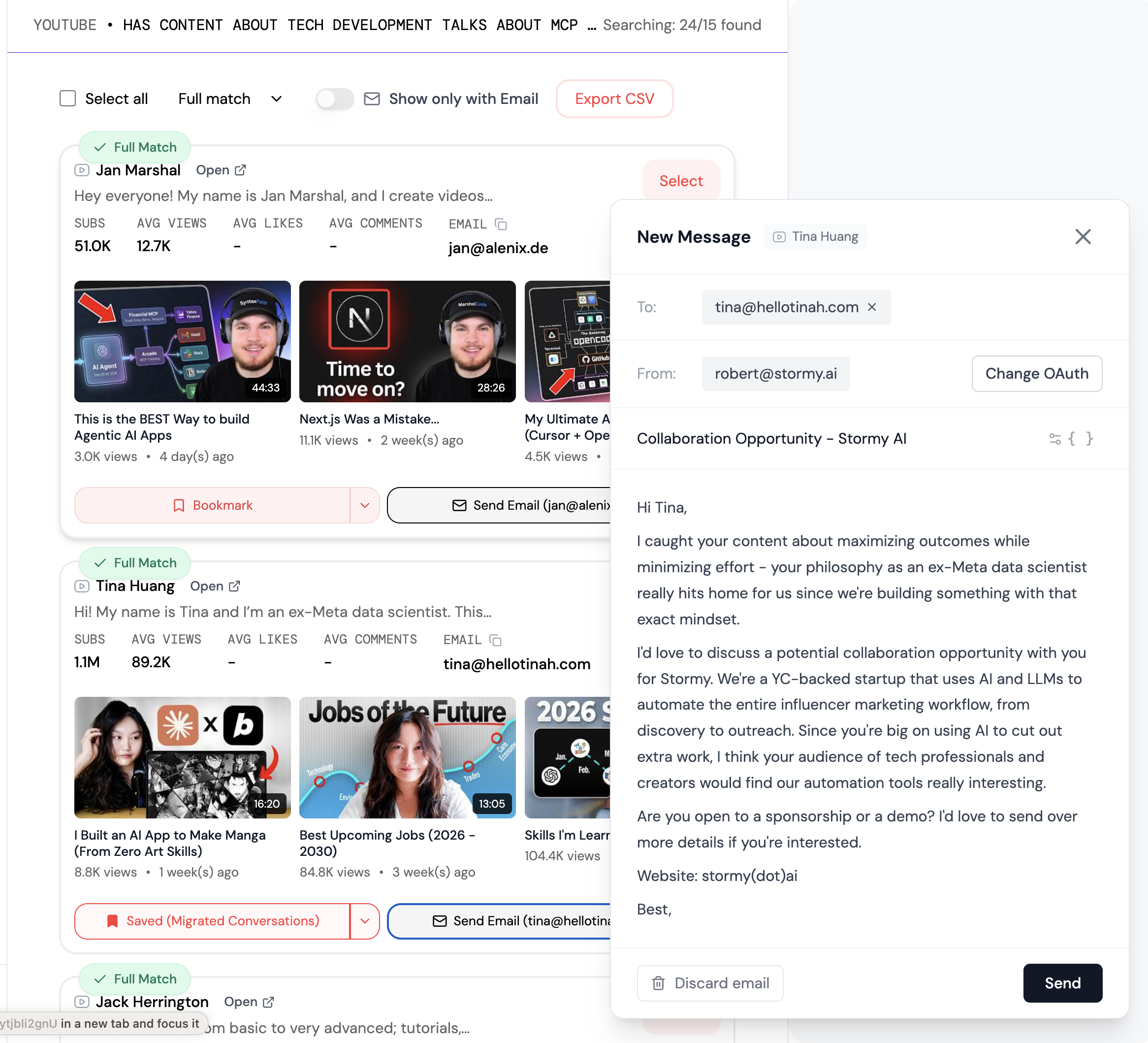
The success of Banana Cam highlights that you don't need a year of development to create a viral consumer product. You need a strong vision and the right tools to execute that vision at the speed of thought. For developers looking to market such apps, tools like Stormy AI can help source and manage UGC creators at scale to generate the initial social proof needed for a viral launch.
The 'Delete, Delete, Delete' Philosophy

A common mistake when using a Vercel V0 guide is over-complicating the interface. Because AI can generate so much code so quickly, it is tempting to add every feature possible. Rauch advises the exact opposite: Delete, delete, delete. Every button, link, and line of text is a potential point of friction for the user.
When you are vibe coding, your primary job is often trimming. If a feature doesn't contribute directly to the 'vibe' or the core utility of the app, it should be removed. This minimalism is what allows products like Typeform to succeed—they take a daunting task (filling out a form) and reduce it to one single question at a time. In the AI world, your app should strive to be the fastest path from a user's intent to a finished result.
3 High-Potential AI Startup Ideas to Vibe Code
If you are looking for AI startup ideas to build with V0 today, Guillermo Rauch suggests focusing on 'primitives' that are ripe for disruption. Here are three concepts you can prototype right now:
1. Conversational Sales Forms
Traditional forms are a 'fundamental particle' of the internet, but they are often boring and high-friction. An AI-native form builder could use conversational AI to gather data. Instead of a static list of 100 questions, the AI asks one question at a time, adapting its follow-ups based on the user's previous answers. You can start this by prompting V0 to 'build a chat interface that acts as a lead qualification form for an enterprise SaaS product.'
2. The AI Vibes Radar
There is a massive opportunity in tracking the 'biases' and 'opinions' of different AI models. A 'Vibes Radar' could periodically ask models like GPT-4, Claude, and Gemini for their rankings on things like 'the best burger in SF' or 'the best investment strategy.' This creates a 'free content generation engine' that is highly shareable on platforms like X (Twitter). You can use Vercel's ISR (Incremental Static Regeneration) to cache these responses and serve them at high speed.
3. Deepest Research Tool
Most users find themselves opening tabs for Perplexity, ChatGPT, and Claude simultaneously to cross-reference facts. A 'Deepest Research' startup would aggregate intelligence from every available model to produce a single, comprehensive report that highlights contradictions and edge cases. By focusing on a high-utility niche (like financial or competitive research), you can out-compete the general-purpose giants who have to cater to everyone.
Conclusion: Launching Your Vibe
Vibe coding is more than a trend; it is the democratization of software creation. By using a Vercel V0 guide and the Vercel AI SDK, the distance between an idea and a live URL has shrunk to nearly zero. The most successful founders of the next decade won't be those who write the cleanest manual code, but those who have the best taste, the clearest vision, and the discipline to delete the unnecessary.
Whether you are building the next viral photo app or a complex creator CRM, the methodology remains the same: start with a strong metaphor, prompt for high-fidelity UI, and iterate with an obsession for simplicity. Now is the time to stop planning and start vibe coding. Pick an idea, open V0.dev, and see what you can build before the day is over.