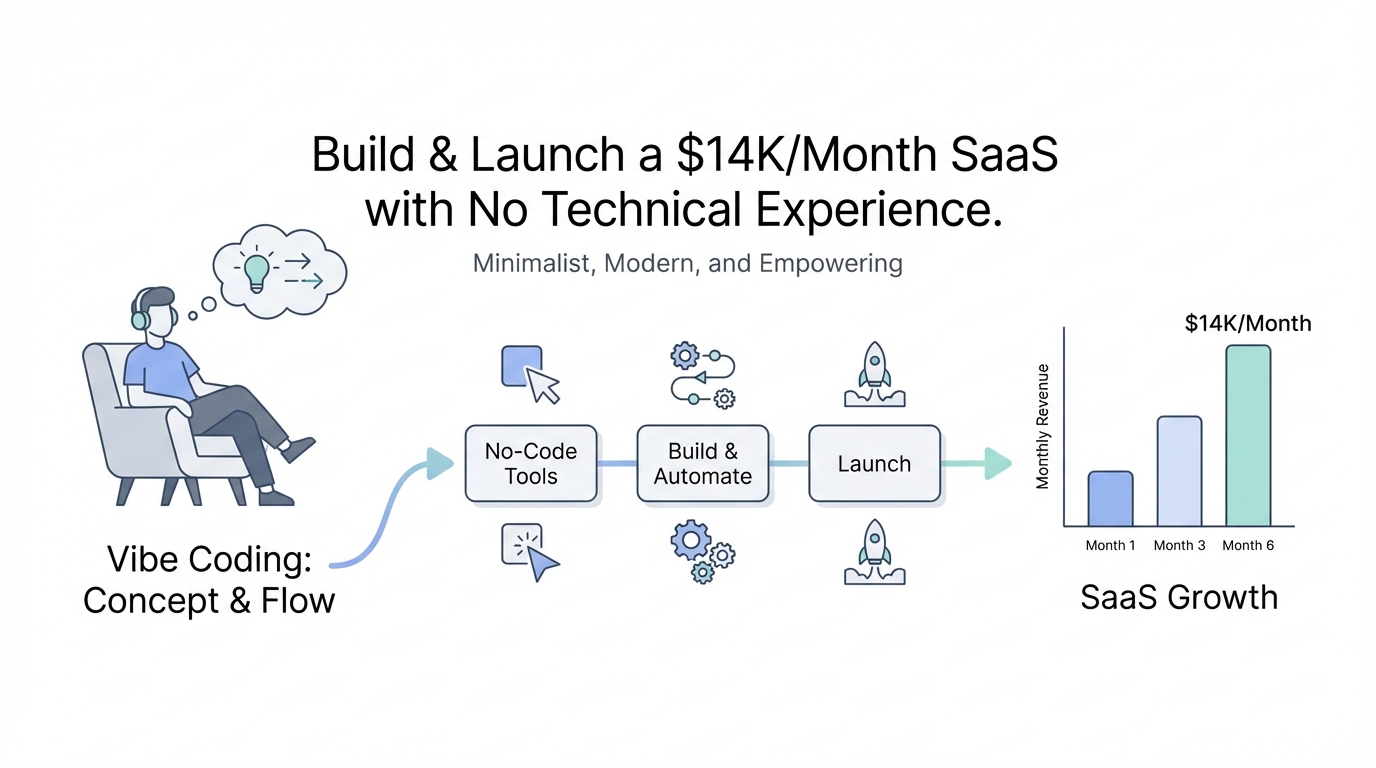
Imagine building a software business that generates $14,000 in monthly recurring revenue and serves over 10,000 users, all without writing a single line of traditional code. This isn't a futuristic fantasy—it is the reality for Sam, a university student who used the power of vibe coding to launch his startup, Algrow, in just six months. By leveraging high-level AI tools and tapping into niche communities on Discord, Sam bypassed the traditional years of computer science education to build a high-growth product. In this guide, we will break down the exact playbook you can use to build saas without coding, focusing on the tactical stack and the mindset required to ship an MVP that scales.
What is 'Vibe Coding'? Moving from Concepts to Production
At its core, vibe coding is the process of building software where the human provides the intent, the vision, and the "vibe," while artificial intelligence handles the syntax and technical execution. Instead of getting bogged down in the intricacies of Python or JavaScript, founders now use natural language to describe features to Google Gemini or other Large Language Models. This shift in ai software development means the barrier to entry for technical entrepreneurship has effectively vanished.
Sam’s journey started not in a lab, but by simply "blurting out" his entire idea into a notepad and using voice-to-text to generate initial code snippets. Platforms like Stormy AI follow a similar logic in the marketing world, using an AI search engine across TikTok, YouTube, and Instagram to help brands discover creators instantly through natural-language prompts. For the vibe coder, the goal isn't to become a developer; it's to become an architect of outcomes. By focusing on mvp development guide principles, you can take a raw idea and turn it into a functional tool like Algrow, which helps creators find viral formats and trending YouTube channels.
To succeed with vibe coding, you must shift your mindset from "how do I build this?" to "what should the user experience feel like?" When you focus on the user flow, tools like Cursor AI can interpret your instructions to build databases, front-end interfaces, and complex API integrations. This allows non-technical founders to compete with established engineering teams by moving 10x faster and spending 100x less on initial development costs.
The Non-Technical Founder's Tech Stack: Cursor AI and Rapid Deployment

Success in ai software development requires the right tools. Sam’s evolution from copying code into a basic notepad to using a professional environment is a masterclass in modern efficiency. If you want to follow his lead, your primary workstation should be Visual Studio Code (VS Code), which serves as the foundation for most modern development. However, the real magic happens when you integrate Cursor AI, an AI-powered code editor that acts as a pair programmer.
Here is the essential stack for a cursor ai tutorial for founders looking to launch quickly:
- Development: Cursor AI (Sam upgraded from the $20/month plan to the $200/month plan for higher compute limits).
- Hosting: Heroku (Reliable, simple deployment that costs around $100/month at scale).
- AI Intelligence: Google Gemini (Used for complex logic and compute, costing between $300 to $500 per month).
- Generation: Nano Banana for AI image generation ($100/month) and Sora for video features ($200/month).
- Marketing & Retention: MailerLite for email automation (approximately $80/month).
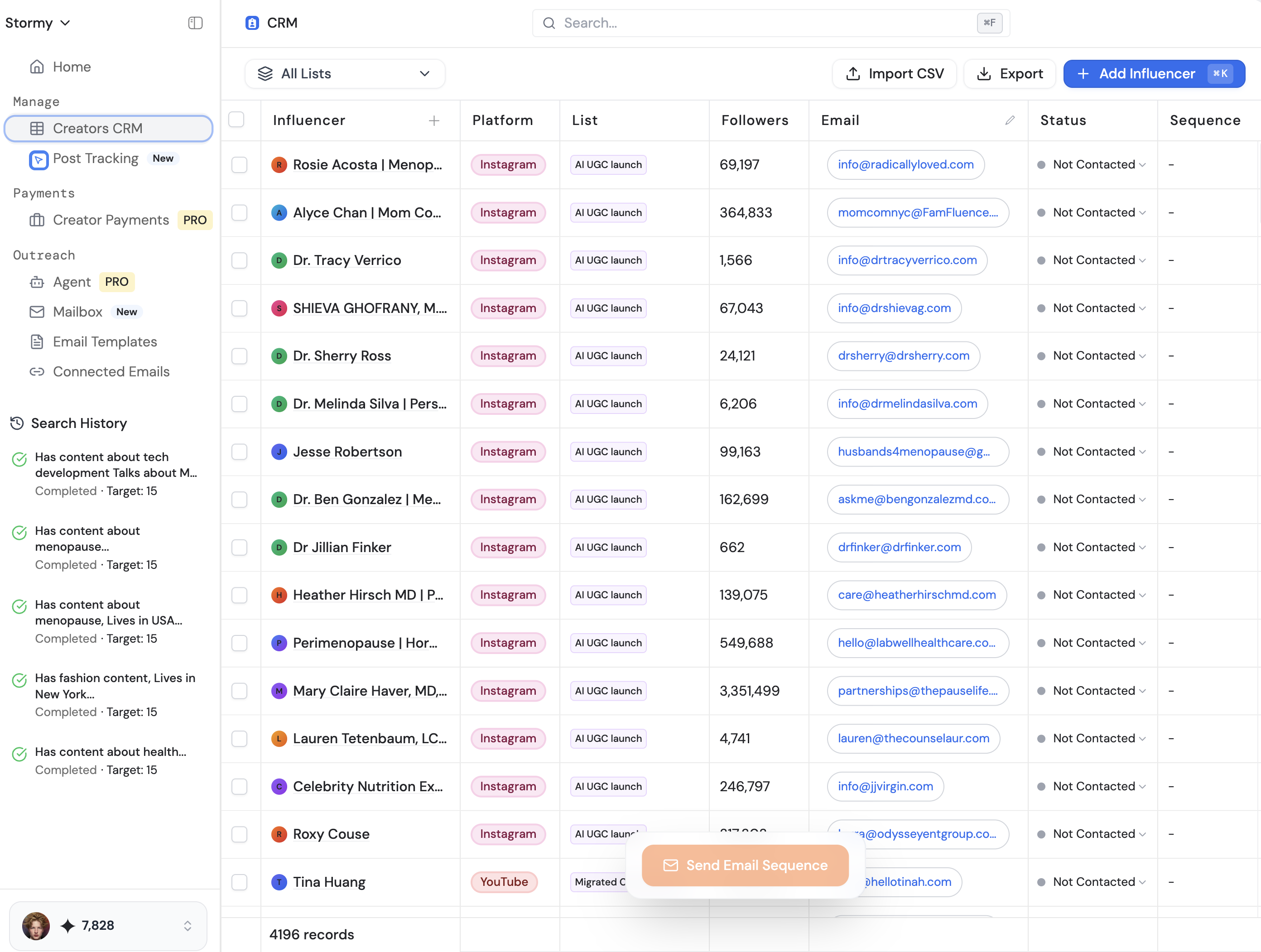
For founders focused on app marketing campaigns, using Stormy AI to find and vet UGC creators can complement this technical stack by providing the creative assets and audience quality analysis needed for growth. While the technical side is handled by AI, the human founder must still handle the distribution and creative direction. By hosting on Heroku, you ensure that as your build saas without coding project gains traction, the infrastructure can handle the load without you needing to manage private servers or complex dev-ops.
Shipping a 'Broken MVP': Why Solving Pain Points Beats Perfection

One of the most significant hurdles for new founders is the fear of bugs. Sam’s first launch of Algrow was technically "broken"—his first user even received a Heroku application error immediately upon trying the site. However, the user didn't leave. Why? Because the core feature—finding viral YouTube niches—actually worked. This is the heart of a successful mvp development guide: the value must outweigh the friction.
If you are building a tool for mobile app marketing or trying to optimize your presence on Apple Search Ads, your first version doesn't need a perfect UI. It needs to solve a burning problem. Sam's users were so desperate to find profitable niches that they were willing to navigate a buggy interface. You should aim to launch as soon as the "happy path" (the primary successful user journey) is functional. The AI can help you squash bugs later; it cannot help you find a market if one doesn't exist.
When you use ai software development tools, you can iterate on these bugs in real-time. Instead of waiting weeks for a developer to fix a crash, you can paste the error log into Cursor AI and have a fix ready in seconds. This rapid feedback loop is what allowed Algrow to grow to 10,000 users in just six months despite its humble, notepad-based beginnings.
The Discord Distribution Playbook: Finding Your First 100 Customers
Many founders make the mistake of launching on Google Ads or Meta Ads Manager too early. Sam took a different approach by going where his audience lived: Discord. By using Disboard to find niche communities, he was able to validate his idea without spending a dime on traditional advertising.
Step 1: Locate Your Ideal Customer Profile (ICP)
Start by identifying the keywords your target audience uses. If you are building a tool for mobile app developers, look for servers related to iOS development or App Store Optimization. Sam looked for "money-making" and "YouTube automation" servers. Use Disboard to join every relevant community and observe the conversations.
Step 2: Listen and Analyze Pain Points with AI
Before you pitch, you must listen. A pro-tip from Sam's playbook is to copy days of chat history and feed it into Gemini. Ask the AI: "What are the recurring frustrations and pain points in these messages?" This allows you to build saas without coding that addresses real, documented needs. In Sam's case, he saw people constantly asking "how do I find a niche?"—which became the foundation of Algrow.
Step 3: Validate Through Passive Demonstration
Instead of spamming links (which leads to being banned), Sam joined voice channels and shared his screen while using his own tool. He didn't say a word. Naturally, people began asking, "What is that tool you're using?" This organic interest is more powerful than any paid ad on Google Ads. It builds immediate trust and rapport within the community.
For those looking to scale this approach, finding influential voices in these communities is key. Stormy AI is an all-in-one AI platform for creator discovery and outreach that can help you identify influencers and set up an autonomous AI agent to contact them on a schedule while you sleep, allowing you to move from manual Discord chats to broader app marketing campaigns.
How to Prompt AI to Build for 100,000 Users
A common mistake in vibe coding is asking the AI to build just for "one user." To build a sustainable business, you must instruct the AI to build for scale from day one. When using a cursor ai tutorial for founders, always include a "scaling persona" in your prompts. Tell the AI: "I am building this for 100,000 concurrent users. Use robust database frameworks and scalable architecture."
This simple shift in prompting changes how the AI structures your code. It will move away from "quick fixes" and toward professional-grade systems that won't break when you get featured by a major YouTuber or reach the top of Disboard rankings. Sam emphasizes that betting on yourself and your future scale saves massive amounts of time and money in the long run. By the time you reach $14,000/month, your code should be ready for the next 10x growth spurt.
Budgeting for AI: Estimating Your Monthly Operating Costs
While build saas without coding reduces payroll costs, it increases "compute" costs. You are essentially trading developer salaries for API credits. Here is what a realistic budget looks like for a growing SaaS in 2024, based on Sam’s actual expenditures:
- High-End AI Editor: $200/month (Cursor)
- Cloud Hosting: $100/month (Heroku)
- LLM & Processing: $300-$500/month (Gemini)
- Marketing Tools: $80/month (MailerLite)
- Creative Assets: $300/month (Image and Video generation APIs)
This brings the total operating cost to roughly $1,000 to $1,200 per month to support a business doing $14,000 in revenue. The margins remain incredibly high—nearly 90%—because you don't have the overhead of a traditional dev team. This lean model is perfect for founders who want to reinvest their profits into app install campaigns or influencer discovery and post tracking via Stormy AI.
Final Takeaways: Your Vibe Coding Roadmap
Sam’s success with Algrow proves that ai software development has leveled the playing field. To start your own journey, begin by finding a niche community on Discord and listening to their struggles. Use Cursor AI to build a "broken but useful" MVP that addresses those specific pains. Don't be afraid to charge for your value; Sam’s $25 to $80 monthly plans show that users are happy to pay for tools that save them time and help them make money.
Whether you are building a tool for mobile app marketing, a creator platform, or a niche utility, the vibe coding methodology allows you to move from idea to $14k/month with unprecedented speed. Start by downloading Cursor AI, join a few servers, and start sharing your screen. Your first 10,000 users are waiting for you to build the solution they've been talking about in the chat for years.