The barrier between a great idea and a functional software product has officially dissolved. As Sam Altman, co-founder of OpenAI, recently stated, we have entered the "era of the idea guy." In 2025, you no longer need a computer science degree or a six-figure engineering budget to bring a SaaS vision to life. This shift is powered by vibe coding—a new paradigm where natural language becomes the primary programming syntax. By leveraging agentic IDEs and advanced LLMs like Claude 4.5 Opus and Gemini 3 Pro, non-technical founders are building, prototyping, and deploying production-ready applications in hours, not months. This guide provides the definitive vibe coding tutorial for anyone ready to build an MVP using the latest AI startup tools.
Step 1: The AI-First Tech Stack for 2025
Before you write your first line of "vibe," you need a foundation that plays well with AI. The goal is vertical integration and minimal friction. Traditional setups often involve complex configuration that confuses AI agents; however, the 2025 vibe coding stack is designed for speed. For your database, Neon is the gold standard because it offers serverless PostgreSQL that scales instantly. For authentication, Clerk allows you to spin up OAuth and secure login flows with just a few prompts. Finally, Vercel remains the best choice for deployment, providing a seamless bridge from your local environment to a live URL.
By using these tools, you ensure that your AI agent—whether it is Cursor or Anti-Gravity—can easily hook into APIs without getting stuck in "dependency hell." Neon, Clerk, and Vercel represent a ecosystem where the "boring" infrastructure is automated, leaving you to focus on the user experience and logic.
Step 2: Ideation and Market Research with AI
The most common mistake is building something nobody wants. To avoid this, successful vibe coders use data-driven ideation tools. Platforms like Idea Browser provide a daily feed of startup concepts backed by real-time search trends. For instance, consider the "Estate Clear" concept—a real-time family dashboard for probate executors. It solves a specific, high-friction problem: anxious relatives calling executors for updates. Before coding, use the Perplexity MCP within your workflow to research competitors and find a unique angle. As seen on The Vibe Marketer, high-quality data ensures you aren't just building a "cool app," but a viable business.
Step 3: Generating High-Fidelity Mockups with Nano Banana
Before jumping into the IDE, you should visualize your application. Google's Nano Banana Pro (Imagen 3) has revolutionized this phase. Unlike previous image generators, Nano Banana Pro handles text and UI elements with incredible precision. You can prompt it to create a high-fidelity visual mockup of your dashboard. This serves as a "north star" for your AI coding agent. Tools like Glyph can further help you refine these prompts to ensure your design doesn't look like a generic template. Mockup generation is a critical step in the AI startup tools 2025 workflow because it allows you to "one-shot" the front-end design later in the process.
Step 4: Cursor AI vs. Anti-Gravity: Which Agentic IDE Wins?
Choosing the right environment is where vibe coding truly happens. Currently, the market is split between Cursor and Google's Anti-Gravity. Both are VS Code forks, but they offer distinct advantages for building an MVP with AI agents.
The Case for Cursor AI
Cursor is the current favorite for its deep integration with Claude 4.5 Opus. Its strength lies in its ability to understand the entire codebase context. When you use Claude 4.5 Opus within Cursor, you can "vibe" your way through complex logic. It excels at production-grade interfaces and maintaining aesthetic consistency across multiple files. If you want a clickable prototype that feels like a finished product, Cursor is often the superior choice.
The Case for Google's Anti-Gravity
Anti-Gravity is Google's agentic IDE that leverages Gemini 3 Pro. Its "killer feature" is its tight browser integration via a Chrome extension. This allows the AI to see the Document Object Model (DOM) and access the console programmatically. If you are struggling with a bug, Anti-Gravity can "look" at your local deployment and diagnose the issue without you needing to copy-paste error logs. Furthermore, Anti-Gravity can call Nano Banana as a tool directly within the workflow to generate assets on the fly.
Step 5: Squashing Complex Bugs with "Ultra Think" and Sub-Agents
Even in the era of vibe coding, you will hit roadblocks. When your application breaks, standard prompting might not suffice. This is where Ultra Think and the Sub-Agent strategy come into play. In Claude 4.5 Opus, "Ultra Think" allocates more reasoning power to a specific problem. If a bug persists, you can instruct the AI to "spin up specialized sub-agents." For example, tell the model: "Create a QA tester agent and a senior systems engineer agent to identify the root cause of this API failure." This creates a collaborative debugging environment within your chat, often leading to a comprehensive analysis and a step-by-step fix.
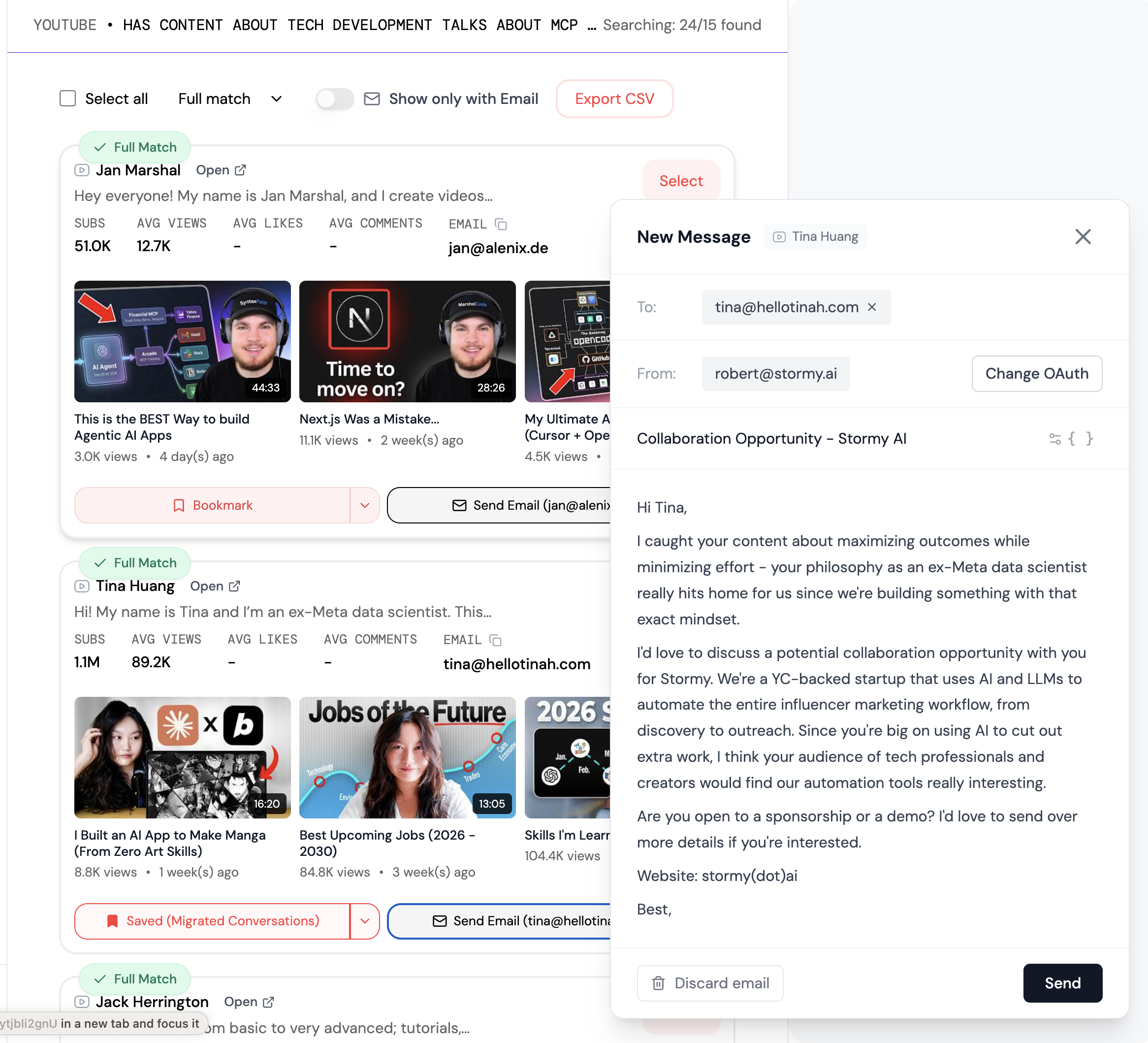
For founders managing these processes, keeping track of tasks and creator relationships becomes vital. Tools like Stormy AI can help source and manage UGC creators at scale once the technical build is complete, ensuring your marketing engine is as automated as your codebase. Managing your initial outreach and growth through a Creator CRM is a smart way to maintain the "lean" startup philosophy.
Step 6: Transitioning to a Production-Ready App with Claude Skills
The secret to getting professional results from Claude 4.5 Opus is setting up "Skills." A skill is a persistent set of instructions that the model references for specific tasks. For instance, installing the Front-end Design Skill via the Anthropic plugin marketplace prevents your app from looking like "typical AI design." It instructs Claude to avoid generic gradients and instead use production-grade spacing, typography, and color theory.
Equally important is the "Elevated Direct Response" skill. This ensures your app’s copy isn’t "empty brand speak." By feeding Claude examples of high-converting copy from leaders like Alex Hormozi or Cody Sanchez, you can generate conversion-optimized landing pages in a single shot. Remember: vibe coding is not just about the code; it is about the copy, the design, and the user journey coming together as one cohesive "vibe."
Step 7: Scaling with UGC and Creator Partnerships
Once your MVP is live on Vercel, the focus shifts to user acquisition. In 2025, User-Generated Content (UGC) is the fastest way to build trust and drive installs. Instead of spending weeks manually emailing influencers, you can use an AI search engine across TikTok and Instagram to find matching creators. Platforms like Stormy AI allow you to discover creators in any niche using natural language prompts, instantly vetting them for fake followers. This matches the vibe coding workflow—using AI to handle the manual labor while you focus on the high-level strategy and App Store Optimization (ASO).

Conclusion: The Future of the Non-Technical Founder
The vibe coding tutorial for 2025 is clear: Research, Mockup, Vibe, and Automate. By using Neon for your backend, Cursor or Anti-Gravity for your build, and Claude 4.5 Opus for your logic, you can launch a SaaS without ever touching a traditional compiler. The barriers are gone. Whether you are building an estate dashboard or a niche B2B tool, the AI agents are ready to do the heavy lifting. The only thing left to do is start building.