We have officially entered the era where "technical founder" is becoming a choice rather than a requirement. A new movement, dubbed vibe coding, is allowing non-technical entrepreneurs to bypass traditional engineering bottlenecks by using high-context AI agents to generate production-ready code. Instead of spending months learning syntax, founders are now using their "taste" as the primary development tool. By combining platforms like Cursor and Lovable, you can move from a loose idea to a design-forward, functional app in less than 48 hours. This article provides the definitive playbook for a vibe coding for founders strategy, focusing on rapid product development and a modern AI startup growth strategy.
Defining Vibe Coding: The End of the Engineering Bottleneck
Vibe coding isn't just about using ChatGPT to write a snippet of code; it is an entirely new rapid product development paradigm. It involves using AI agents that understand the "vibe" or the intent of the product rather than just the logical instructions. In this workflow, the founder acts as a high-level creative director, guiding the AI through iterations until the output matches their vision.
As discussed in recent creator circles, the difference between a generic AI-generated app and a "pro-level" one comes down to taste. Most AI tools default to standard templates like Shadcn, which results in a sea of identical-looking SaaS products. Vibe coding requires you to expand your vocabulary in typography, layout, and animation to direct the AI toward uniqueness. When founders lean into vibe coding for founders, they are essentially using AI to bridge the gap between imagination and execution without the friction of learning to code from scratch.
"Taste is what makes us human and unique from AI. The goal is to prompt in a way that communicates thoughtfulness and carefulness, elicits the right emotions, and makes the user trust the product instantly."
The Pro-Level Tech Stack: Cursor, Lovable, and Bolt
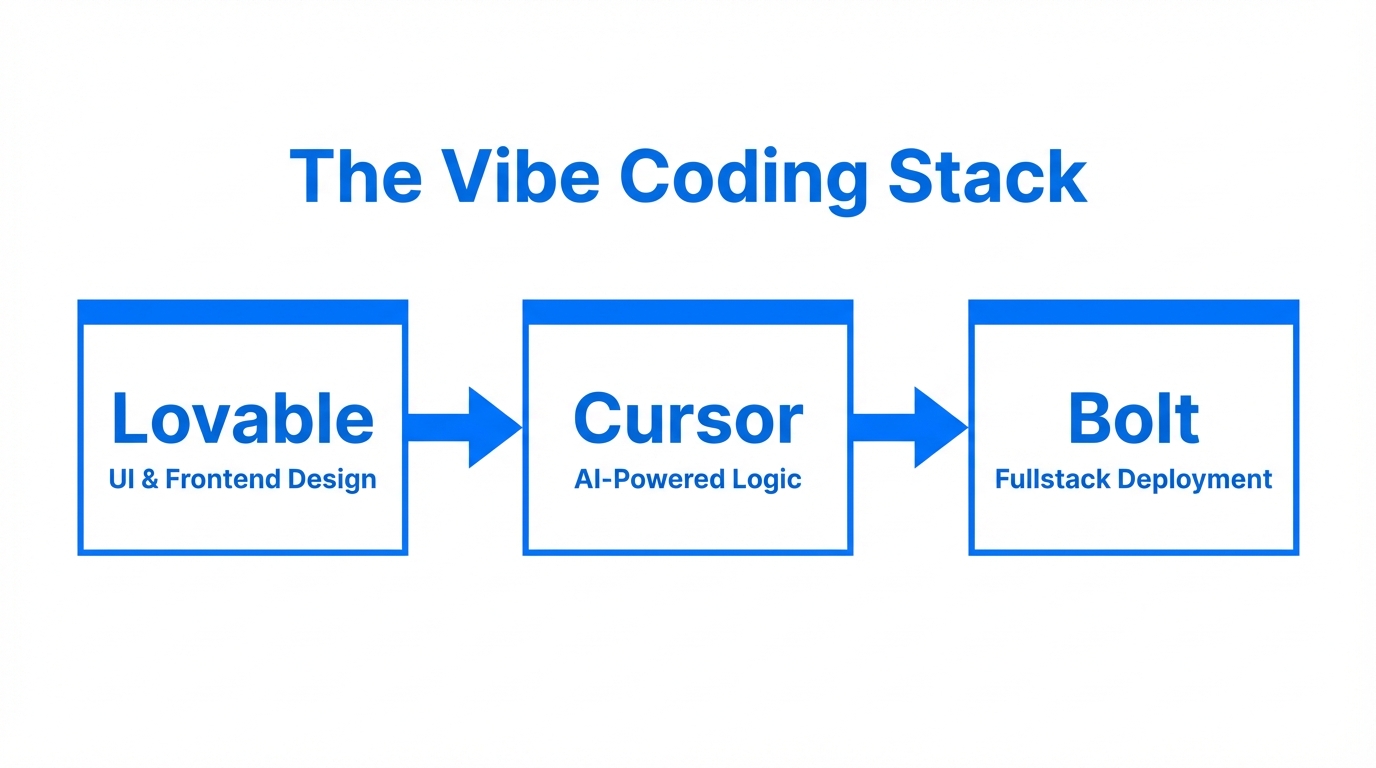
To launch in a weekend, you need a stack that favors speed and design fidelity. While legacy development relied on local environments and complex dependencies, modern vibe coding uses browser-based or AI-native IDEs that handle the heavy lifting.
| Tool | Category | Best For |
|---|---|---|
| Cursor | AI Code Editor | Iterative coding and complex logic updates. |
| Lovable | Full-stack AI Builder | High-end UI/UX design and rapid front-end prototyping. |
| Bolt.new | Web-based IDE | Instant deployment and scaffolding projects in seconds. |
| v0 | UI Generator | Quick component generation for developer-centric flows. |
The no-code to pro-code transition happens when you move from simple drag-and-drop builders to these AI-driven environments. Lovable, for instance, is often preferred by those with a design eye because it handles shadows, gradients, and layouts with more sophistication than the more developer-centric v0. Meanwhile, Bolt.new provides a seamless playground to test ideas before they ever touch a production server.
Integrating Open-Source 'Special Sauce'
To ensure your app doesn't look like every other AI-generated project, you must leverage the open-source community. This is where you find the "special sauce" that provides a competitive edge. Tools like 21st.dev offer curated UI components that go beyond basic standards. You can find unique animations, loaders, and layout structures that you can simply copy and paste into your AI prompt context.
Another incredible resource is React Bits, which provides specialized text animations, blur effects, and particle backgrounds. By attaching the code for a specific animation from a site like CodePen or React Bits into your Cursor chat, you can tell the AI: "Implement this specific scroll animation on my landing page." This level of granularity is what separates a weekend project from a pro-level application.
"Don't just depend on generic templates. Use resources like 21st.dev to bring unique code into your project, hand-holding the AI to ensure your design is truly one-of-one."
The Weekend Launch Playbook: Step-by-Step
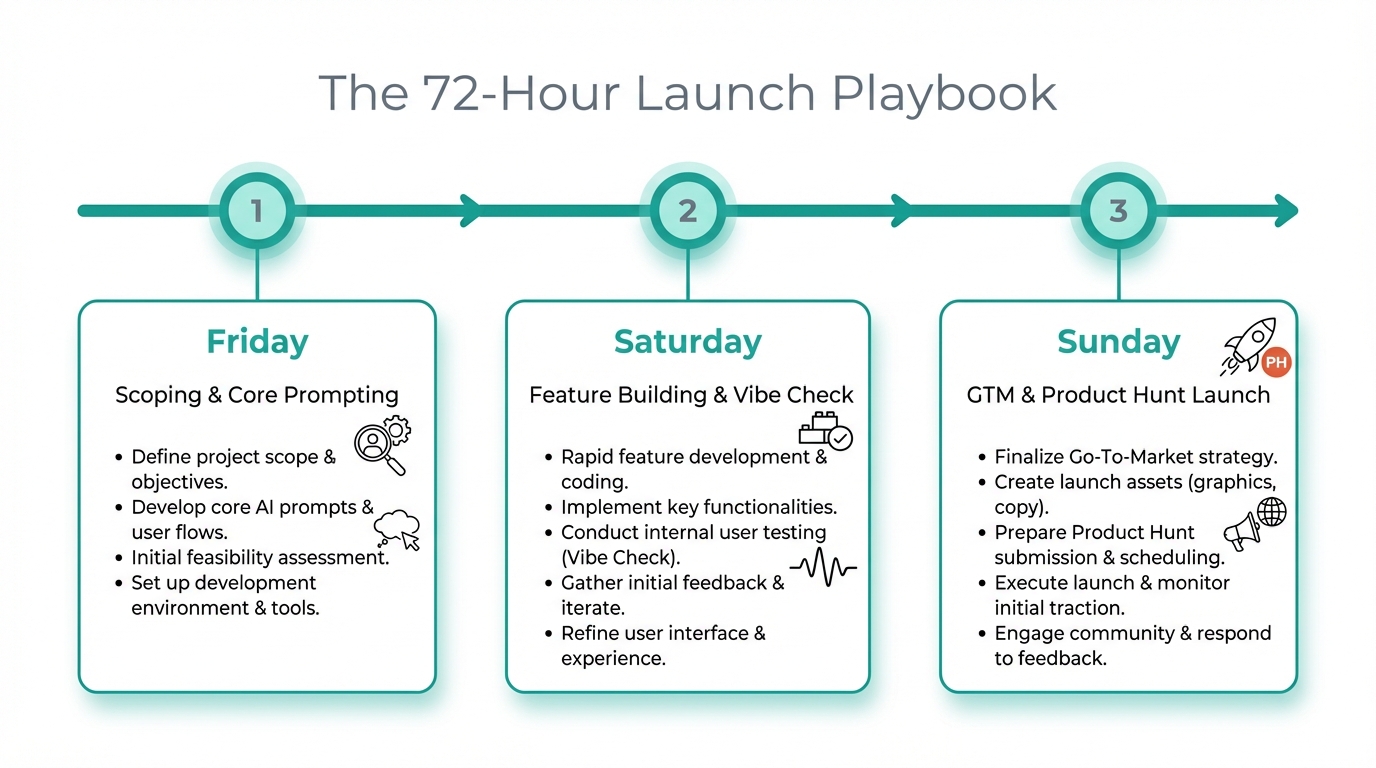
A successful weekend launch is 80% preparation and 20% execution. Follow this sequence to move from concept to a live product with a GTM strategy for AI apps that works.
Step 1: Define the Problem You Solve
The most successful vibe-coded apps start with the founder as the first customer. Solve your own problem. Whether it's a tool for weekly goal setting or an AI-powered design generator like Aura, starting with a personal pain point ensures the product has immediate utility.
Step 2: Scaffolding and UI Scoping
Use Bolt.new or Lovable to generate the initial architecture. Don't worry about complexity yet; focus on the core user flow. Use high-fidelity prompts that mention specific design systems or fonts. For example, instead of asking for "a landing page," ask for a "Bento-grid layout using Manrope typography with subtle iOS-style drop shadows."
Step 3: Vibe Refinement with Cursor
Once the foundation is set, move the code into Cursor for deeper logic and custom styling. This is where you integrate your "special sauce" components from 21st.dev. Use the AI to fix errors and refine animations. Remember, code can be unforgiving, but modern AI models like OpenAI o3 or Claude 3.5 Sonnet are excellent at debugging contextually if you provide clear feedback.
Step 4: Design-Led Distribution
Marketing starts the moment you have a functional UI. Launching on Twitter (X) or YouTube with "build-in-public" style content is the most effective AI startup growth strategy today. People are attracted to the aesthetics of a product as much as its function. Share screen recordings of the product in action, focusing on those unique animations and "pro" design touches.
Scaling Visibility and Outreach
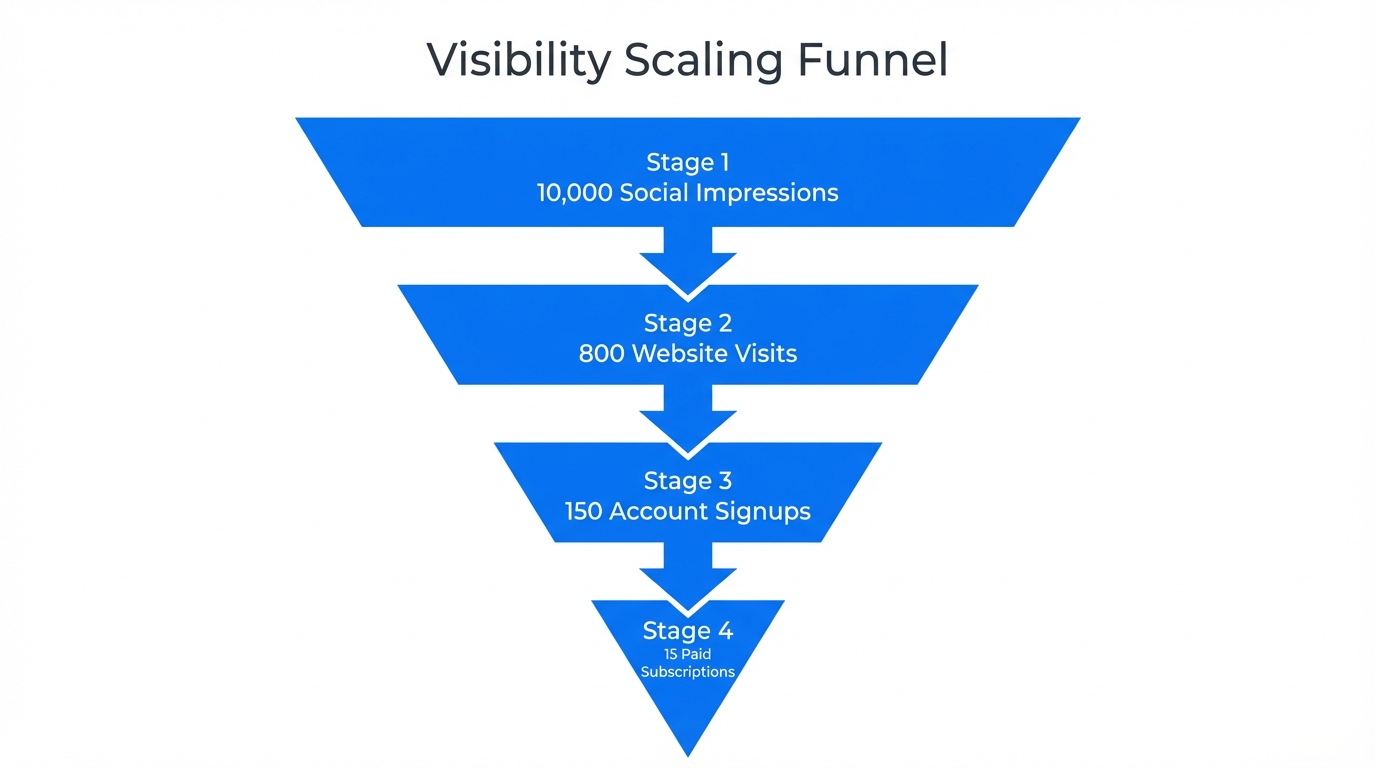
Once your app has "the vibe" and is live on a platform like Netlify or Vercel, you need to transition from building to distribution. While design-led content on social media drives initial interest, scaling requires proactive outreach to creators and users who can champion your tool.
For founders managing this themselves, platforms like Stormy AI can help source UGC creators and influencers at scale. By finding creators who already align with your app's aesthetic and niche, you can generate authentic content that showcases your product's UI in action. This is particularly effective for mobile app marketing or specialized AI SaaS tools where visual appeal is a primary selling point. Integrating a platform like Stormy AI allows you to automate the discovery and outreach process, letting you focus on the next sprint while the AI handles creator management.
The Power of the Pivot: Adapting in Real-Time
The beauty of vibe coding for founders is the speed at which you can pivot. Mang, the founder of Aura, originally started with a Mac app for voice-to-text prompting. When he realized that web-based generation was more accessible, he pivoted the entire product to an HTML generator in a single week. Because the cost of development (in both time and money) is so low, you aren't "married" to your first version.
Use analytics tools like PostHog or Mixpanel to see where users are dropping off. If a feature isn't working, vibe code a new one over the weekend. This level of agility is your unfair advantage against established companies that move at the speed of a corporate hierarchy.
"The last thing you want is to be a dinosaur. AI gives you the opportunity to set yourself apart by being faster, more design-oriented, and more responsive to user feedback than any legacy company could ever be."
Conclusion: From Vibe to Venture
Vibe coding is not a shortcut to skip hard work; it is a force multiplier for your taste and vision. By mastering the vibe coding stack—combining Cursor, Lovable, and specialized resources like 21st.dev—you can launch pro-level apps that command higher trust and better conversion rates.
As you scale, remember to focus on the distribution hacks that matter: design-led content, community engagement, and leveraging creator partnerships. Whether you use TikTok Ads to drive traffic or manage your creator relationships through Stormy AI, the goal remains the same: move fast, obsess over the details, and let your "vibe" be your most valuable asset. Stop planning your app and start vibe coding it this weekend.