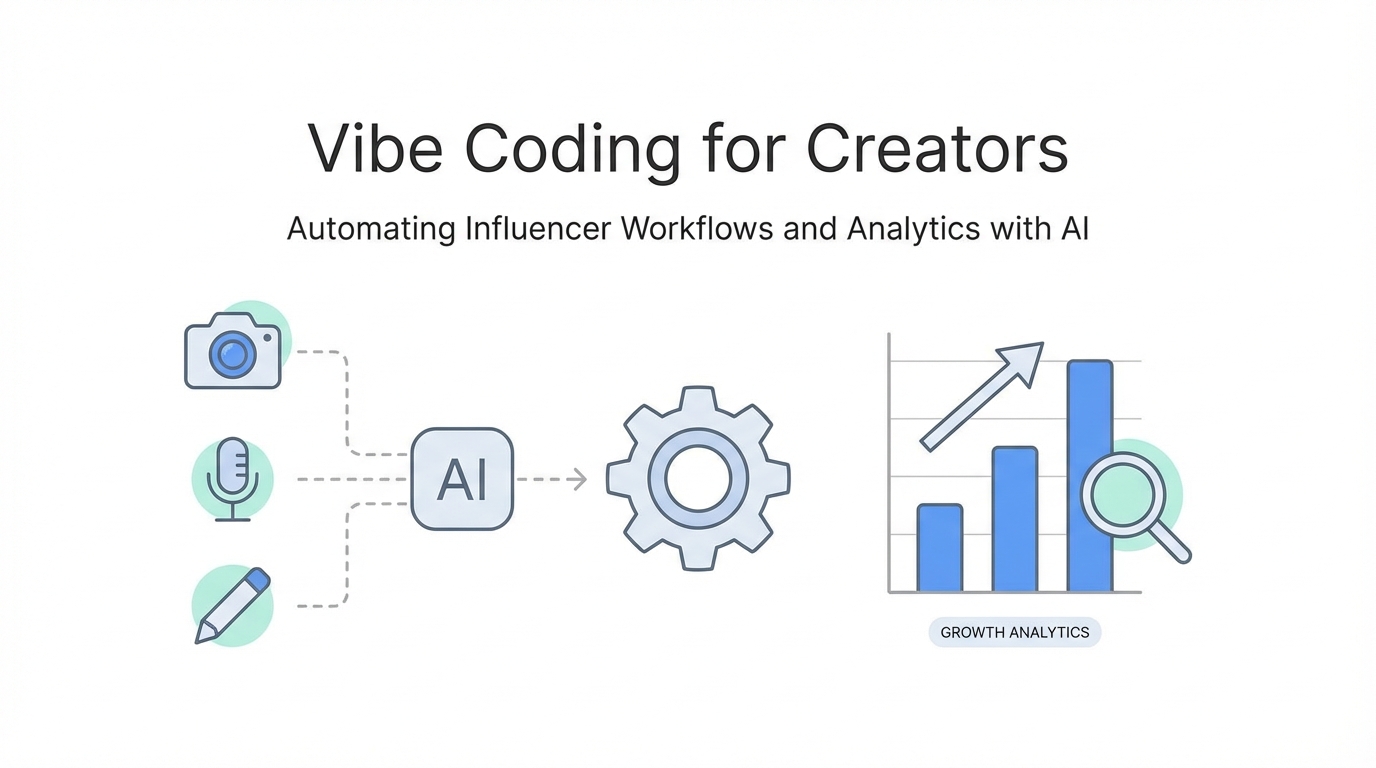
The era of the "technical founder" is shifting. In the creator economy, we are entering the age of Vibe Coding. Coined by Andrej Karpathy, vibe coding refers to the process of building complex software applications not by writing line-by-line syntax, but by "vibing" with an AI agent—describing a vision, refining the output, and letting the machine handle the underlying logic.
For creators and influencer marketing managers, this is a superpower. You no longer need a dedicated engineering team to build custom dashboards, automated outreach scripts, or proprietary analytics tools. With modern AI tools, you can build your own creator-tech stack in an afternoon.
What is Vibe Coding?
Vibe coding is the ultimate abstraction of software development. Tools like Cursor, Replit Agent, and v0.dev allow users to prompt their way into fully functional applications. Instead of worrying about Python libraries or CSS frameworks, you focus on the flow of data and the user experience. According to research by Gartner, AI-driven development is expected to significantly augment the productivity of non-technical builders by 2027.
For an influencer manager, this means moving beyond static spreadsheets. You can "vibe" into existence a custom web app that pulls real-time data from the TikTok Research API or tracks campaign sentiment across YouTube comments.
Automating the Sourcing Phase
Sourcing influencers used to be a manual slog. You’d spend hours on Instagram or LinkedIn looking for the right fit. While legacy platforms like Julius or Tagger provided databases, they often felt clunky and lacked real-time adaptability.
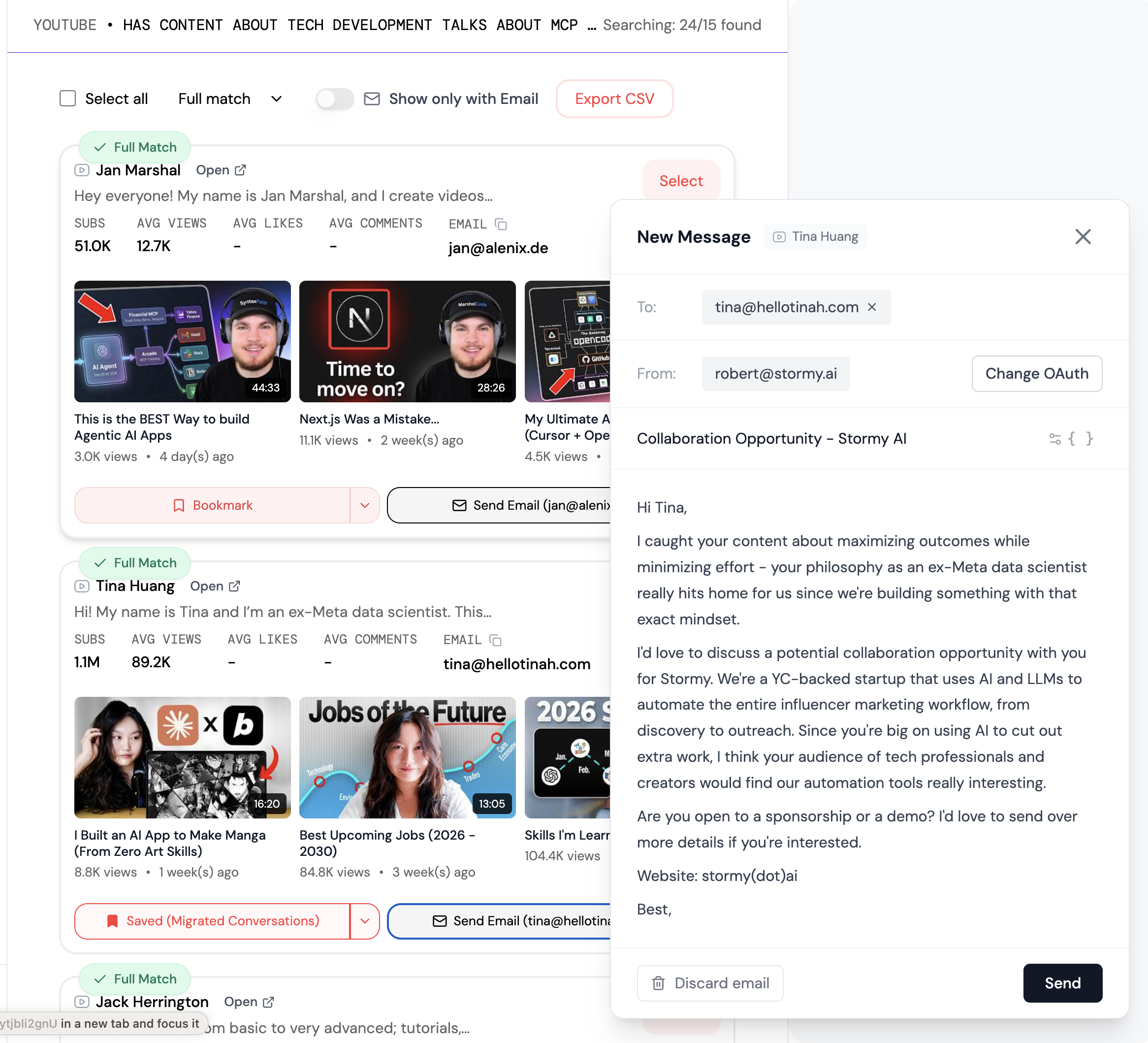
With vibe coding, you can build a custom scraper or use Lovable.dev to create a front-end that visualizes creator data. However, for those who want the power of AI without building the infrastructure from scratch, modern platforms like Stormy AI provide an AI-native search engine that understands natural language queries, effectively bringing the "vibe coding" philosophy to influencer discovery.

Building Your Own Analytics Dashboard
One of the biggest pain points for creators is centralizing analytics. Often, data is scattered across YouTube Studio, TikTok Analytics, and Meta Ads Manager.
Using a tool like Bolt.new, you can prompt a full-stack dashboard that connects these various sources. By feeding the AI the Instagram Graph API documentation, it can write the code to fetch your latest post metrics and display them in a clean, personalized interface. This level of customization was previously reserved for agencies with high-six-figure budgets.
Personalized Outreach at Scale
The "vibe" of your outreach determines your response rate. Automated templates are easily spotted and ignored by top-tier creators. Vibe coding allows you to build workflows that integrate LLMs like GPT-4 to analyze a creator’s last five videos and draft a hyper-personalized email.
If building this yourself via Zapier or Make.com feels too technical, Stormy AI offers built-in AI-personalized outreach that automates the follow-up process while maintaining a human feel. It’s essentially a pre-built "vibe coded" agent for your inbox.
The Future: AI Agents as Your Marketing Team
As we move further into 2025, the distinction between "user" and "developer" will continue to blur. GitHub reports that AI is now involved in the majority of new software projects, and for creators, this means total control over their data and workflows.
Whether you are building your own tools or using AI-first platforms designed for the modern era, the goal of vibe coding is the same: spending less time on the "how" and more time on the "what." By automating the repetitive parts of influencer marketing—sourcing, vetting, and tracking—you free up your creative energy to build better campaigns and stronger relationships.