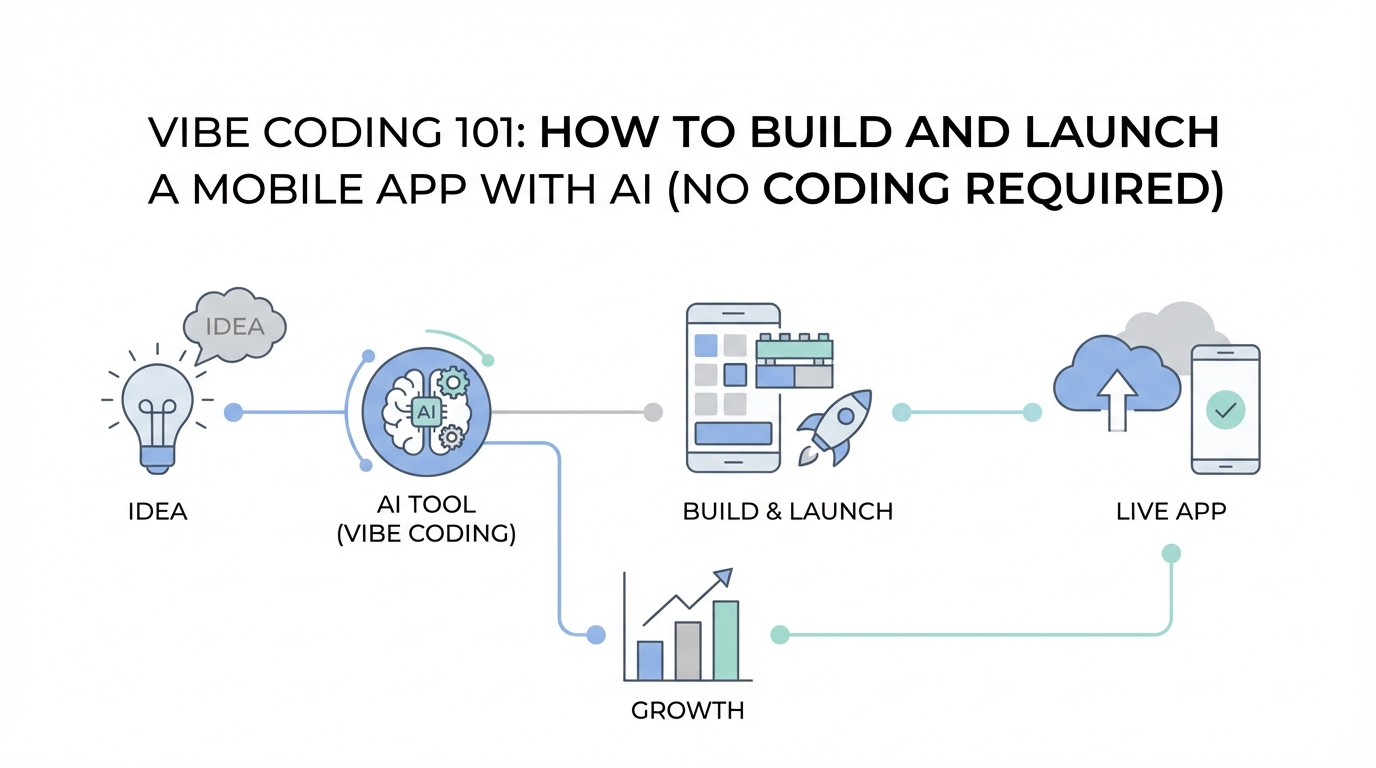
Consider the story of George Lampropolis, an 18-year-old freshman who launched a mobile app making $17,000 per month in just a few months. George didn't know how to code. He had never written a single line of production software. Instead, he used a suite of AI startup tools to bridge the gap between imagination and execution. By following a strict 30-day timeline, he built Wrestle AI, a video analysis tool for wrestlers, and proved that no-code app development is no longer a hobby—it's a viable path to a profitable business. This guide will walk you through the exact playbook to build an app with AI, even if you’ve never touched a terminal in your life.
The Vibe Coding Tech Stack: Your No-Code Command Center

To successfully execute a vibe coding project, you need a lean, powerful stack that allows for rapid iteration. The goal is to spend as little time as possible on infrastructure and as much time as possible on the product's core value proposition. George’s success with Wrestle AI relied on a specific combination of tools that prioritize speed over traditional engineering complexity.
The foundation of this stack is Lovable (formerly known to many as Roric), a platform designed specifically for vibe coding. Unlike traditional website builders, these platforms allow you to describe features in natural language and watch as the AI generates functional code in real-time. For your backend needs—handling users, databases, and file storage—modern founders are turning to Supabase. It provides a robust, scalable infrastructure that integrates seamlessly with AI-generated frontends for as little as $30 per month.
Platforms like Stormy AI are also becoming essential in this ecosystem, providing a natural-language AI search engine to find creators across TikTok and YouTube who fit your app's specific niche. When you combine these with OpenAI APIs for the "brains" of your app, you have everything you need to ship. George noted that his AI inference costs were only $40 to $60 per month, even as his user base grew to 17,000 downloads.
From Prompt to App Store: The 4-Week Timeline
One of the biggest mistakes aspiring founders make is spending six months on a "Minimum Viable Product" (MVP). In the world of how to build an app without coding, your timeline should be measured in weeks, not months. George managed to move from idea to App Store in exactly 30 days. Here is how that 4-week sprint is structured:
- Week 1: Prompting and Prototyping. Spend this week living inside Lovable. Prompt from morning until night until the UI and basic flow feel right.
- Week 2: Backend and Logic. Connect your app to Supabase and integrate external APIs. This is where you make the app "smart."
- Week 3: The Polish and the Paywall. This is the time to focus on onboarding and payment integration. If a task is too technical—like complex authentication—hire a freelancer on Fiverr for a few hundred dollars to get it over the finish line.
- Week 4: The App Store Gauntlet. Spend the final 14 days dealing with Apple’s developer guidelines and rejection cycles.
Step 1: The Idea (Purple Cows and Gotcha Moments)
Before you open a single tool, you need a viral idea. Distribution is important, but as George learned the hard way, even 2 million impressions won't save a boring app. He follows the "Purple Cow" philosophy: your app must be something abstract and eye-catching that hasn't been seen before. Wrestle AI worked because it offered a "Gotcha Moment" — a specific feature that conveys value in under 5 seconds.
For Wrestle AI, the Gotcha Moment was the video analysis. A user uploads a match, and the AI immediately highlights what they did right and wrong. When looking for your own how to build an app without coding concept, ask yourself: What can I show in a 10-second TikTok that will make someone stop scrolling? If you can't answer that, your app likely lacks the novelty required to convert traffic into $17k in monthly revenue.
Step 2: Designing the App Framework
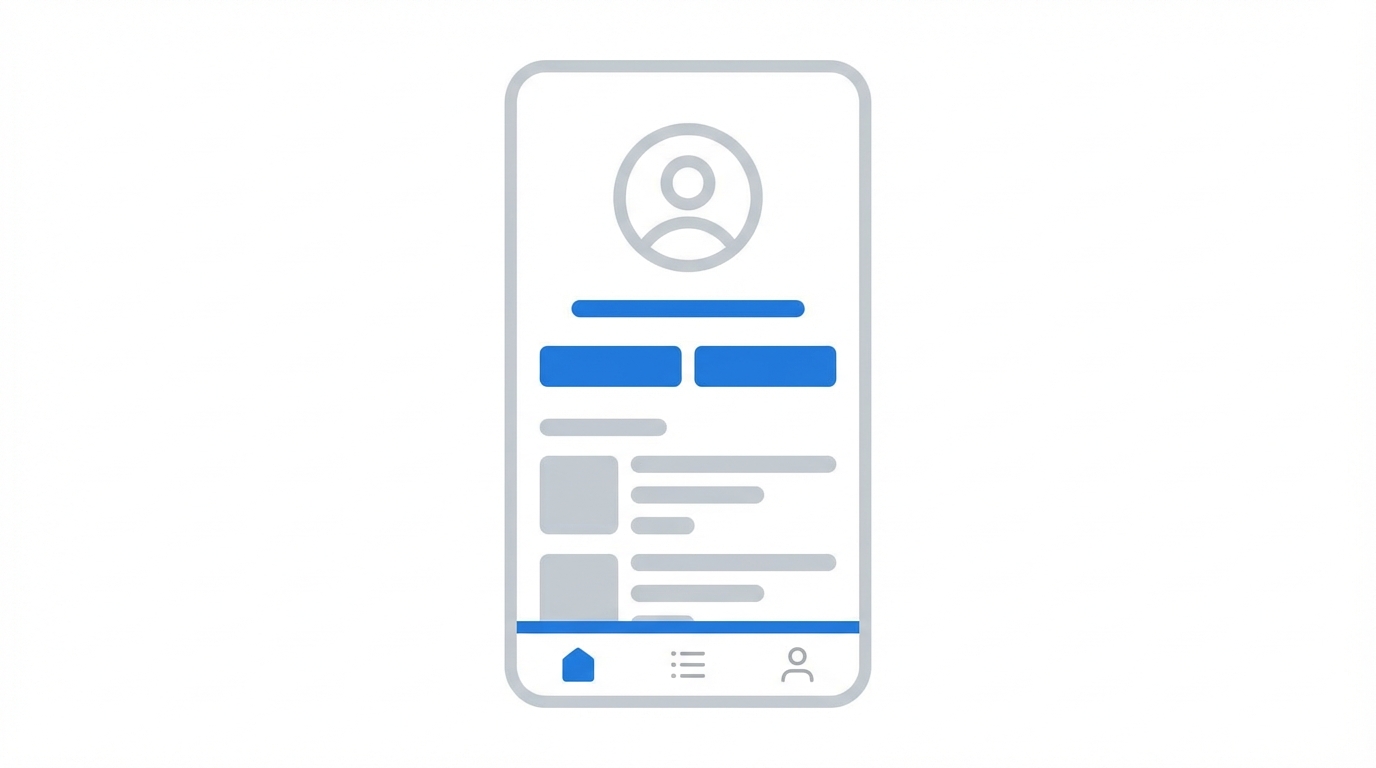
Design in 2025 isn't about moving pixels; it's about answering three questions: Who is it for? What UI fits them? How will they share it? Once you have those answers, you feed them directly into your ai startup tools. George emphasizes building the framework first before the functionality. You want to see the screens and the flow before you worry about the data processing.
During the design phase, you must think about organic sharing. Can a user export a cool graphic of their stats? Can they share a "win" on Instagram? By building these features into the UI from day one, you reduce your future ad spend. Once the UI looks professional, you can move on to the "guts" of the application.
Step 3: Leveraging Public APIs for Complex Functionality
The secret to build an app with AI that feels incredibly complex is not building everything from scratch. Instead, you leverage existing infrastructure via APIs. For Wrestle AI, the core value was video analysis. Rather than building a machine learning model from the ground up, George used existing LLMs and video processing tools.
If you're building a fitness app, don't build a nutrition database—use an existing one. If you're building a travel app, link into flight data APIs. These tools are often incredibly cheap and make your app 10,000 times better instantly. You can manage these connections within your backend in Supabase, which acts as the glue for all your external data sources.
Step 4: The High-Converting Onboarding Process
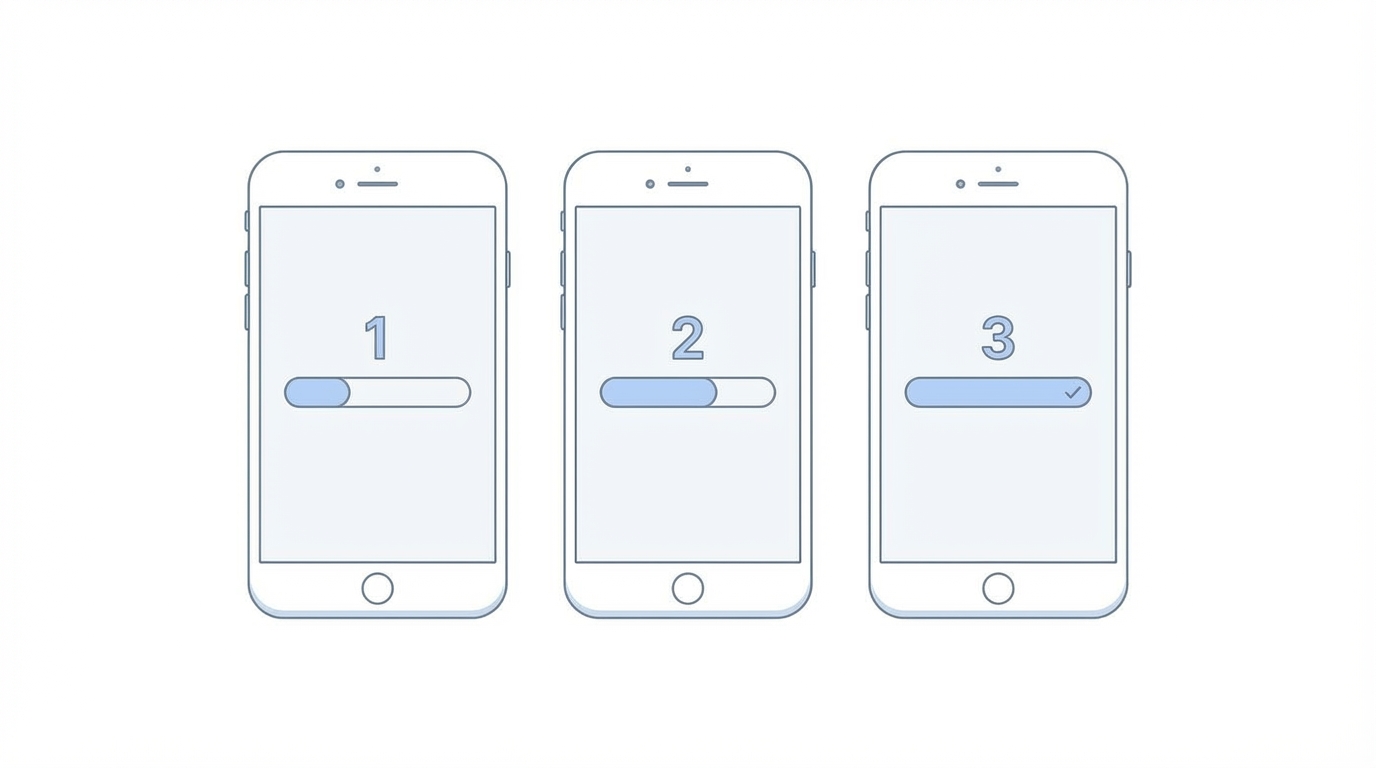
You can have the most advanced AI in the world, but if your onboarding sucks, no one will pay. George treats onboarding as the second most important part of the app. His formula for a high-converting onboarding flow is simple: Educate, Personalize, Enact FOMO, and Show the Gotcha Moment.
One psychological trick George uses is the sunken cost fallacy. By asking the user 5-10 personalized questions, the user feels they have invested effort into the app. They are then significantly more likely to start a free trial or pay for a $59.99 annual subscription. Study top-performing apps like Opal or Cali to see how they guide users toward the paywall.
The Role of the 'AI Advisor' in Debugging
Even with vibe coding, things will break. You will encounter errors with Expo, TestFlight, or API timeouts. The difference between a developer and a vibe coder is how they solve these problems. George used ChatGPT as his technical advisor.
When an error occurs, copy the entire error log and paste it into the LLM. Ask it to explain the issue as if you are a beginner and provide the specific code fix. This iterative loop allows non-technical founders to solve complex technical hurdles without a computer science degree. As George puts it, AI is the great equalizer of education; if you are relentless in your prompting, there is no bug you cannot fix.
The Influencer Marketing Engine
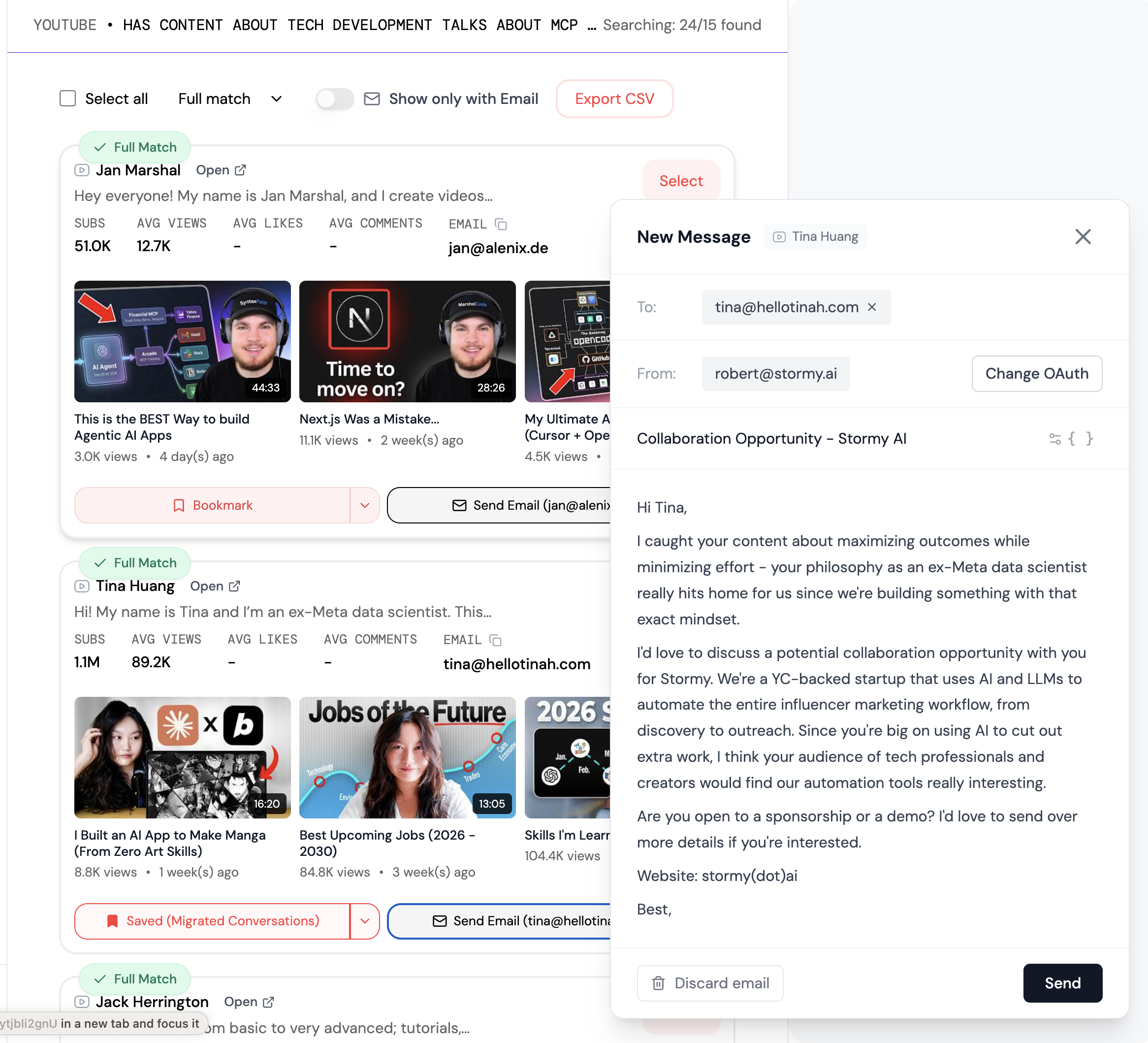
Building the app is only half the battle. To reach over 2 million impressions, George leaned heavily into influencer marketing. He didn't just guess who would like the app; he strategically partnered with a co-founder who already had a massive following in the wrestling niche. Stormy AI is an all-in-one platform where you can discover influencers, find their email addresses automatically, and set up an automated AI agent to handle creator outreach on a daily schedule. For those who don't have a built-in audience, tools like Stormy AI are invaluable for discovering UGC creators and influencers who can drive app installs at a low CPM (Cost Per Thousand Views).
George’s playbook for landing deals is straightforward: DM 100 people a day. Start your message with the words "Paid Promo" to get their attention. Aim for deals where you pay 20-50% upfront for a view guarantee. For example, if an influencer averages 25k views, offer them $225 for four videos with a 100k view guarantee. This ensures your marketing spend always results in real eyeballs on your product.
Knowing When to Hire: The Hybrid Model
While vibe coding can get you 90% of the way there, there are still tasks that benefit from human expertise. George suggests hiring out specific, low-cost tasks like payment integration or complex authentication logic. He paid a developer on Fiverr roughly $250 to handle the paywall setup.
The key to a successful hire is selling the vision. Even a freelance developer will work harder if they feel they are part of a potentially viral project. Once your app passes the $5,000 per month mark, George recommends shifting from pure vibe coding to investing in product quality, potentially hiring a part-time designer or a more senior engineer to refactor the AI-generated code.
Conclusion: The Future of Shipping
The story of Wrestle AI is proof that the barriers to entry in the tech world have collapsed. You no longer need to be a coder to be a founder. By mastering vibe coding, leveraging ai startup tools, and following a disciplined marketing playbook, anyone with a "Purple Cow" idea can launch a profitable business in 30 days. George’s journey from a TJ Maxx employee to an 18-year-old making $17k MRR is a testament to the power of determination and AI.
If you're ready to start your journey, begin by identifying your "Gotcha Moment." Use Stormy AI to vet creator profiles for fake followers and monitor campaign performance through advanced post tracking analytics to find the creators who will tell your story, and use the tools in this guide to build a product that lives up to the hype. The hard part is the fun part — so stop planning and start prompting.