In the hyper-competitive landscape of 2026, the era of the "jack-of-all-trades" agency is officially over. As global talent pools become more accessible and AI tools commoditize basic creative tasks, generalist firms are finding themselves trapped in a brutal race to the bottom. To survive and thrive this year, savvy agency owners are pivoting toward a vertical marketing strategy—specializing in high-value, underserved niches within the creator economy business models that others are too broad to notice. By narrowing your focus, you don't just reduce competition; you increase your perceived value, simplify your operations, and create a referral engine that scales on a $0 marketing budget.
Why Generalist Agencies are Dying and How to Pivot
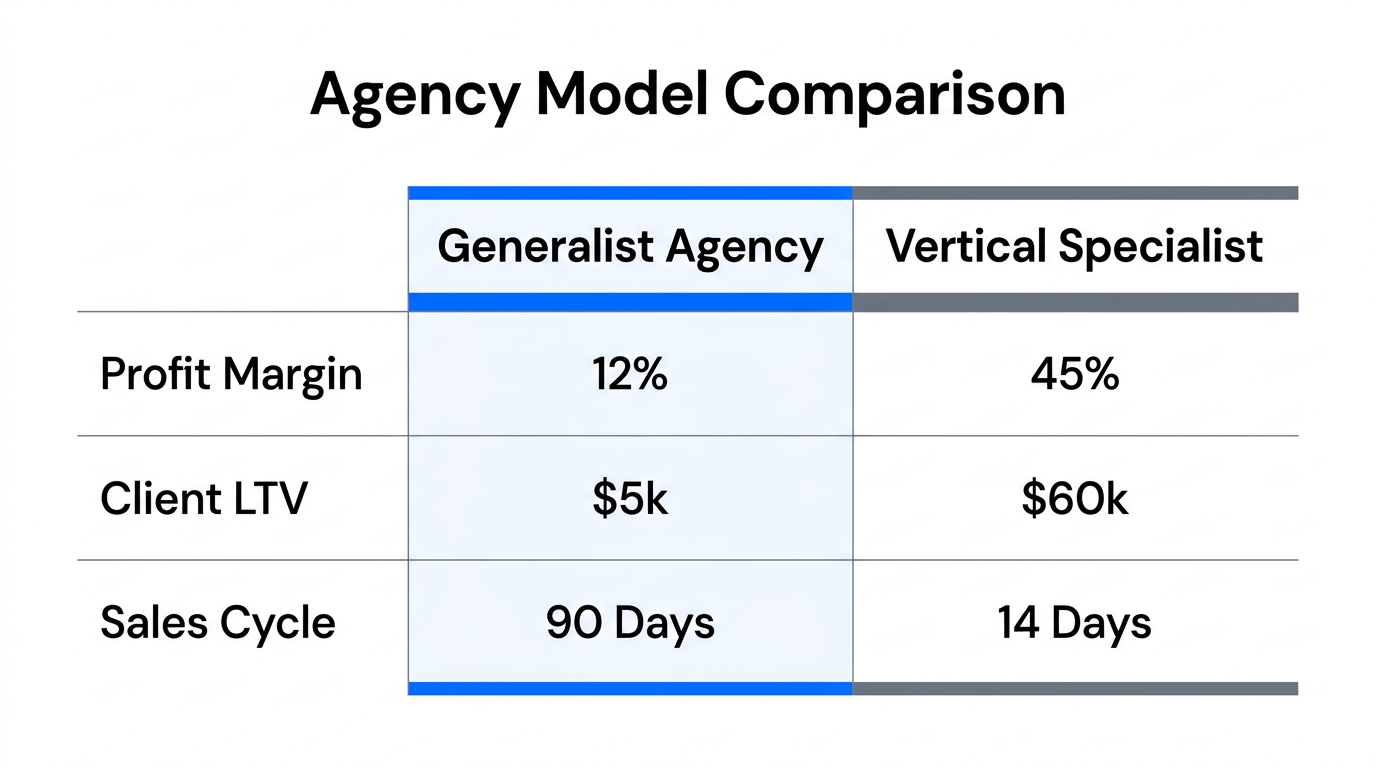
By 2026, the market has matured to the point where "digital marketing" or "content creation" are no longer specific enough to command premium rates. Clients are no longer looking for a firm that does everything; they are looking for a firm that solves their specific problem with surgical precision. When you attempt to serve everyone, your marketing becomes diluted, and your operational complexity skyrockets. This is where the vertical marketing strategy comes into play.
As noted by Ian Myers, founder of Oceans, the secret to scaling from zero to $15 million in revenue within three years wasn't about being the biggest; it was about offering high-skill operational outsourcing that matched global talent with specific business needs. The shift in 2026 is toward micro-specialization. Whether it is specialized video editing for SaaS or architectural CAD design for eco-friendly firms, the money is in the niche.
| Feature | Generalist Agency | Specialized (Vertical) Agency |
|---|---|---|
| Client Acquisition | Expensive Ads / Cold Outreach | Word of Mouth / Referrals |
| Profit Margins | Low (Price War) | High (Value-Based) |
| Operations | Fragmented & Complex | Systematized & Repeatable |
| Market Authority | Low (One of many) | High (Category Leader) |
Step-by-Step: Identifying Underserved Niches in the Creator Economy
Learn how identifying offshore talent pools opened doors to new niche market opportunities.
Scaling a specialized agency requires more than just picking a random industry. You need to find the intersection of high demand and low competition. In 2026, the creator economy has birthed several highly profitable verticals that are still underserved by traditional agencies.
- High-Performance UGC for Mobile Apps: With the rise of TikTok Ads and specialized app marketing, brands are desperate for creators who understand conversion psychology, not just aesthetics.
- Specialized B2B Video: Companies on LinkedIn need technical video editors who can turn complex data into 60-second viral insights.
- Offshore Technical Operations: As remote work became the global standard, businesses started looking for high-skill talent in non-traditional hubs like Sri Lanka or South Africa to handle specialized roles like financial controllers or systems architects.
"The light bulb moment is finding something that people already want and doing it differently or better. That is the equation for a successful business in 2026."
When you focus on niche market acquisition, you should look for categories where the existing players are stagnant. If you are targeting the creator space, platforms like Stormy AI can help you identify which types of creators are currently trending in specific niches, allowing you to build an agency around the talent that brands are actually searching for right now.
The 'Better, Not Just Different' Framework
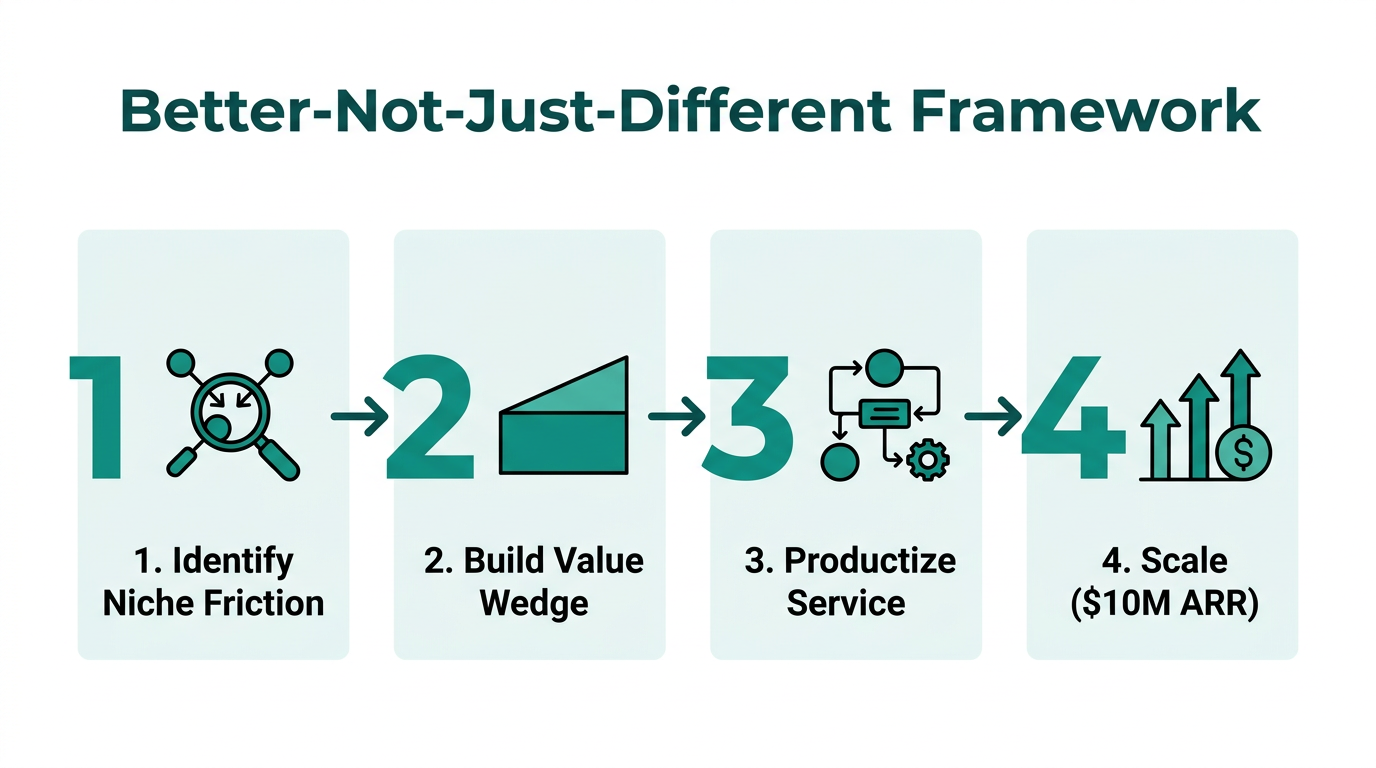
Many entrepreneurs make the mistake of trying to be "unique" for the sake of uniqueness. In a vertical marketing strategy, uniqueness is secondary to superiority. You don't need to reinvent the wheel; you need to make the wheel roll smoother, faster, and cheaper for a specific subset of people.
According to research from Starter Story, the most successful service businesses in 2026 focus on operational excellence. This means your competitive positioning should be built on three pillars:
- Speed of Response: In a world of instant gratification, getting back to a client in 5 minutes vs. 5 hours is a massive competitive advantage.
- Talent Vetting: Instead of hiring general VAs, hire people with unique operational backgrounds—like former teachers or camp coordinators—who have the "soft skills" to manage complex founder-led workflows.
- Deep Integration: Your service shouldn't feel like an external vendor; it should feel like a part of the client's internal team, sitting in their Slack and attending their All-Hands meetings.
Distribution Strategies: Scaling with $0 Marketing Spend
Explore the internal marketing funnel and engine used to drive consistent business growth.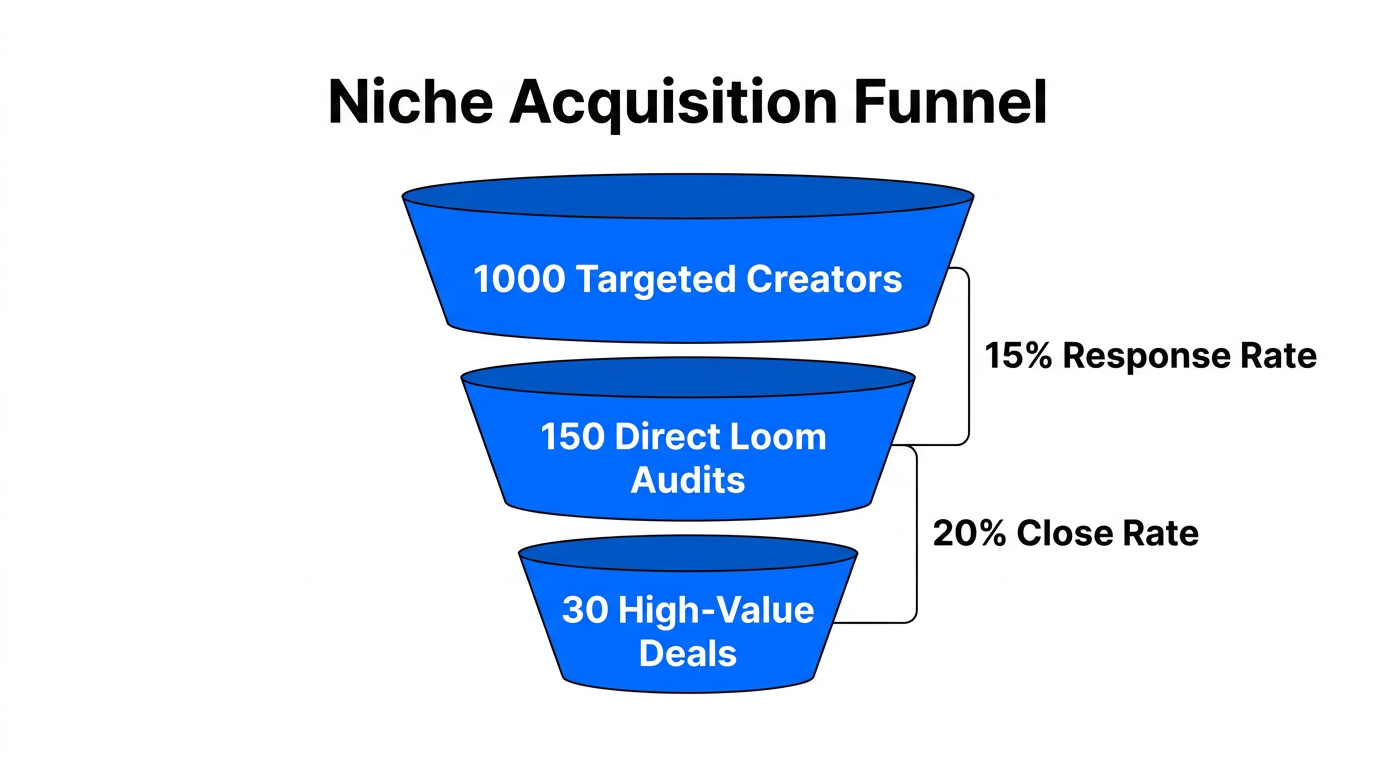
If you have picked the right vertical, your marketing spend should eventually trend toward zero. Why? Because niche communities are tight-knit. When you solve a painful problem for one architecture firm or one Shopify brand, they will tell their peers. This word-of-mouth engine is the most powerful tool for scaling a specialized agency.
To kickstart this, you must put your customers in the position to be a "hero" to their friends. If a client is struggling with hiring or content production, and your service saves them 20 hours a week, they will naturally recommend you during their networking calls or in their private newsletter circles. This organic growth is only possible if the service quality is exceptional from day one.
"If you have a great service business, they usually grow through word of mouth. Nobody is going to recommend a service that sucks."
For those in the creator management space, leverage tools that automate the manual parts of the job. For example, Stormy AI allows you to discover and outreach to thousands of creators automatically, meaning you can focus your human energy on high-level strategy and client relations rather than manual data entry.
From Founder-Led to Process-Driven: Scaling Operations
Discover the operational shift from a small team to a full-scale organization model.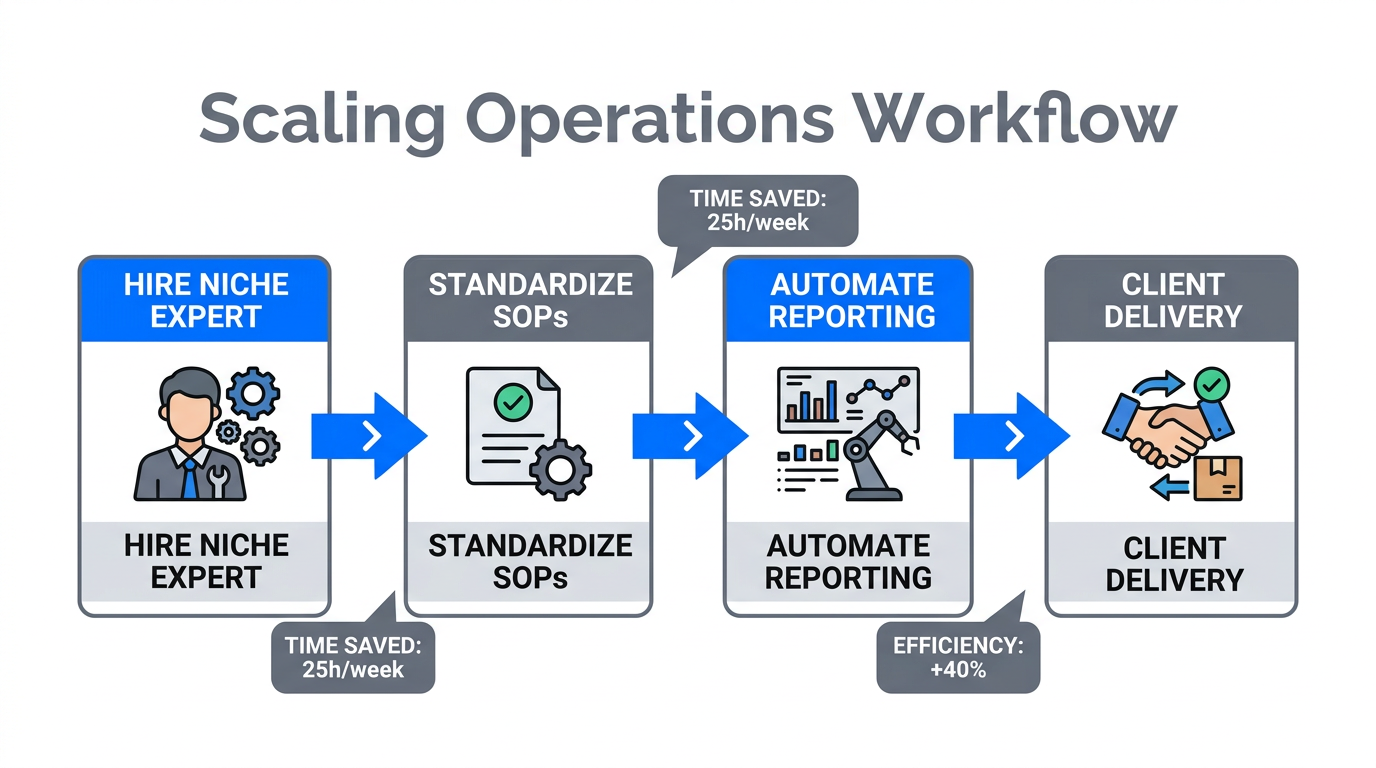
The biggest bottleneck in creator economy business models is the founder's head. When you grow from 5 to 50 employees, the knowledge that lived in your brain must be codified into repeatable processes. Without this, your specialized agency will collapse under its own weight.
In 2026, the modern agency stack is lean. Successful founders use tools like Notion for internal wikis and Stormy AI for Creator CRM management. The goal is to make your agency "talent-agnostic"—meaning any smart, motivated person can step into a role and succeed because the training and systems are so robust. As Ian Myers suggests, don't just hire for experience; hire for intelligence and adaptability, then train them on your specific verticalized system.
Case Study: How Oceans Hit $15M via Vertical Specialization
Meet the founder who quit his job to build a successful agency business.The story of Oceans serves as the perfect blueprint for 2026 entrepreneurs. Ian Myers transitioned from the "treadmill" of venture capital to building a profitable service business that focused on high-skill offshore talent. By identifying that businesses were finally comfortable with remote, global teams post-COVID, he built a model that charges $3,000 to $4,000 per month per headcount while paying competitive wages to talent in Sri Lanka.
The results were staggering: $650,000 in revenue in year one and over $15 million by year three. This was achieved not through massive ad spend, but by tapping into personal networks initially and then letting the quality of the service drive a referral loop that never stopped. It proves that in the 2026 economy, freedom and profitability come from building a business that solves a genuine, recurring problem for a specific group of people.
"You don't have to be a billionaire to live the life you want. You just need a profitable business that runs without you being there 24/7."
Conclusion: Your 2026 Growth Roadmap
Dominating a niche market in 2026 requires the courage to say "no" to generalist opportunities so you can say "yes" to becoming a category leader. By adopting a vertical marketing strategy, you simplify your sales process, increase your margins, and build a business that actually serves your life rather than consuming it. Start by identifying a high-growth niche—perhaps by leveraging Stormy AI to find gaps in the creator market—and commit to being better, not just different. The future of the agency world belongs to those who own the niche.