In the high-stakes world of finance and private equity, the person who gets rich isn’t always the one making the trades; it’s the one selling the information. Take Michael Bloomberg, for example. Often cited as the wealthiest person in New York, Bloomberg’s fortune wasn't built on hedge fund management or private equity buyouts, but by selling the "picks and shovels"—the data and terminal access—that every other financier needs to function. This is the ultimate information business, where alternative asset managers, known for being rational and price-insensitive, are willing to pay a premium for data that arrives with urgency and provides a definitive edge.
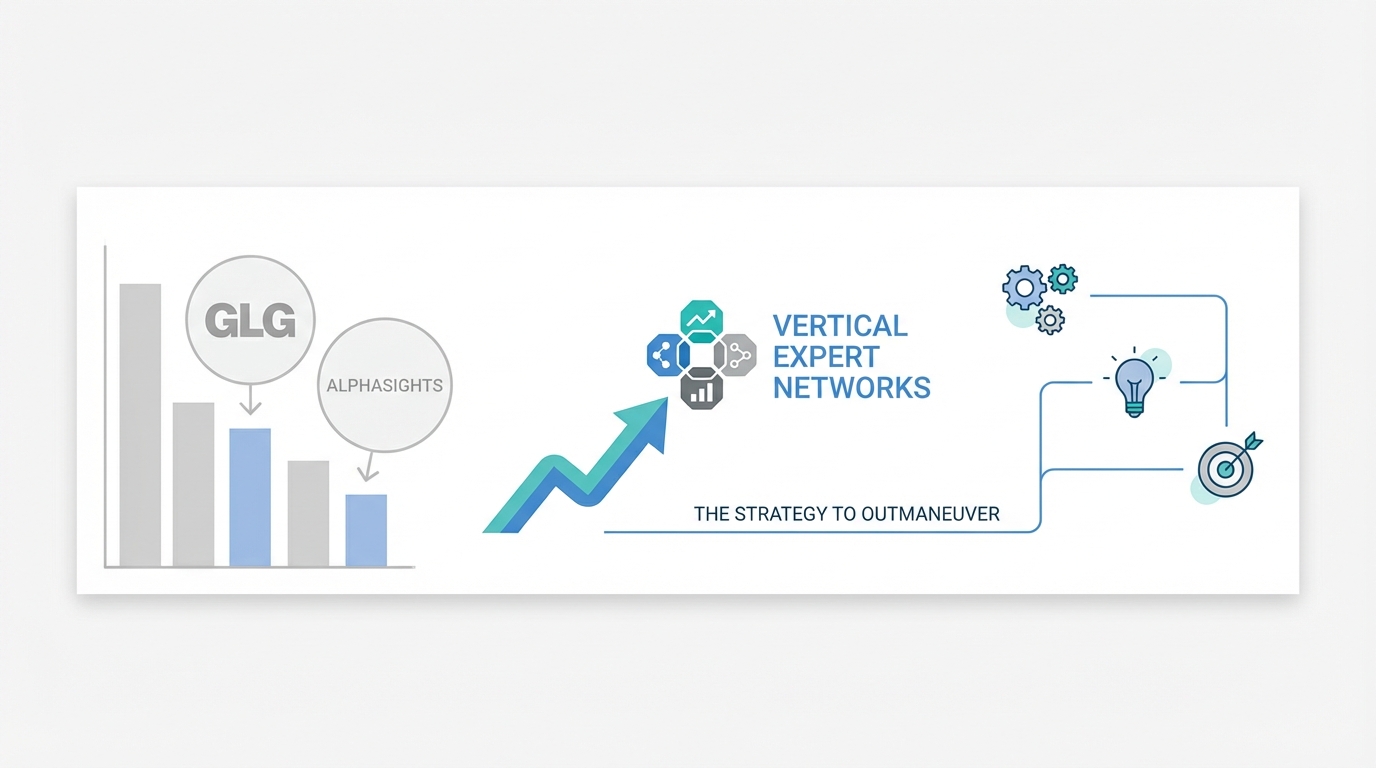
For decades, the expert network business model has been dominated by massive horizontal players like GLG and Alphasights. These companies are the "Cheesecake Factories" of information: they have everything on the menu, from trucking logistics to semiconductor manufacturing. But in 2024, a massive opportunity has emerged for entrepreneurs to build a niche consulting startup by unbundling these giants. By focusing on a specific vertical and leveraging modern AI data enrichment, new entrants can offer deeper, faster, and more specialized insights that generalist platforms simply cannot match.
The Expert Network Business Model: Why Specialization Wins

The traditional expert network model relies on connecting high-paying clients—usually hedge funds, private equity firms, or strategy consultants—with subject matter experts for hourly phone calls. As markets become more granular, the value of a generalist network diminishes. If a hedge fund manager has a $200 million position in Meta, they don't want to talk to a general marketing consultant. They want to talk to the person running $100 million in ad spend right now who can tell them if CPMs are rising or if conversion rates are dipping in real-time.
Specialization creates a natural differentiation. When you pitch a verticalized network, your value proposition is simple: "This is all we do." Whether it’s healthcare, automotive, or AI, a specialized network is naturally better positioned to recruit the highest-tier experts. This shift is similar to the evolution of CRM software; while Salesforce remains the giant, there are now dozens of successful vertical CRMs for real estate, construction, and legal services. The same unbundling is happening to GLG alternatives.
Marketing-Centric Networks: A Case Study in Verticalization
Consider the marketing vertical. Large investment firms are desperate to understand the performance of the world’s biggest public companies like Google, Amazon, and Meta. A specialized network could survey agencies and brands responsible for $5 billion in aggregate ad spend. By collecting quarterly data on whether these brands are spending more or less and what their internal metrics look like, you create a proprietary data set that is worth millions to the investment world.
This information is so valuable that experts can often command $2,500 per hour with no drop-off in volume. For a hedge fund manager, paying five figures for a few hours of conversation is a rounding error if it prevents a multi-million dollar mistake or confirms a bullish thesis. First-movers in this space can even use a reverse auction pricing model, limiting access to the data to only 20 firms to ensure the information maintains its "alpha" status. This is easily a $10 million EBITDA business if executed within a single high-growth vertical like Amazon Ads or social commerce.
Business Model Innovation: The Tegus Playbook
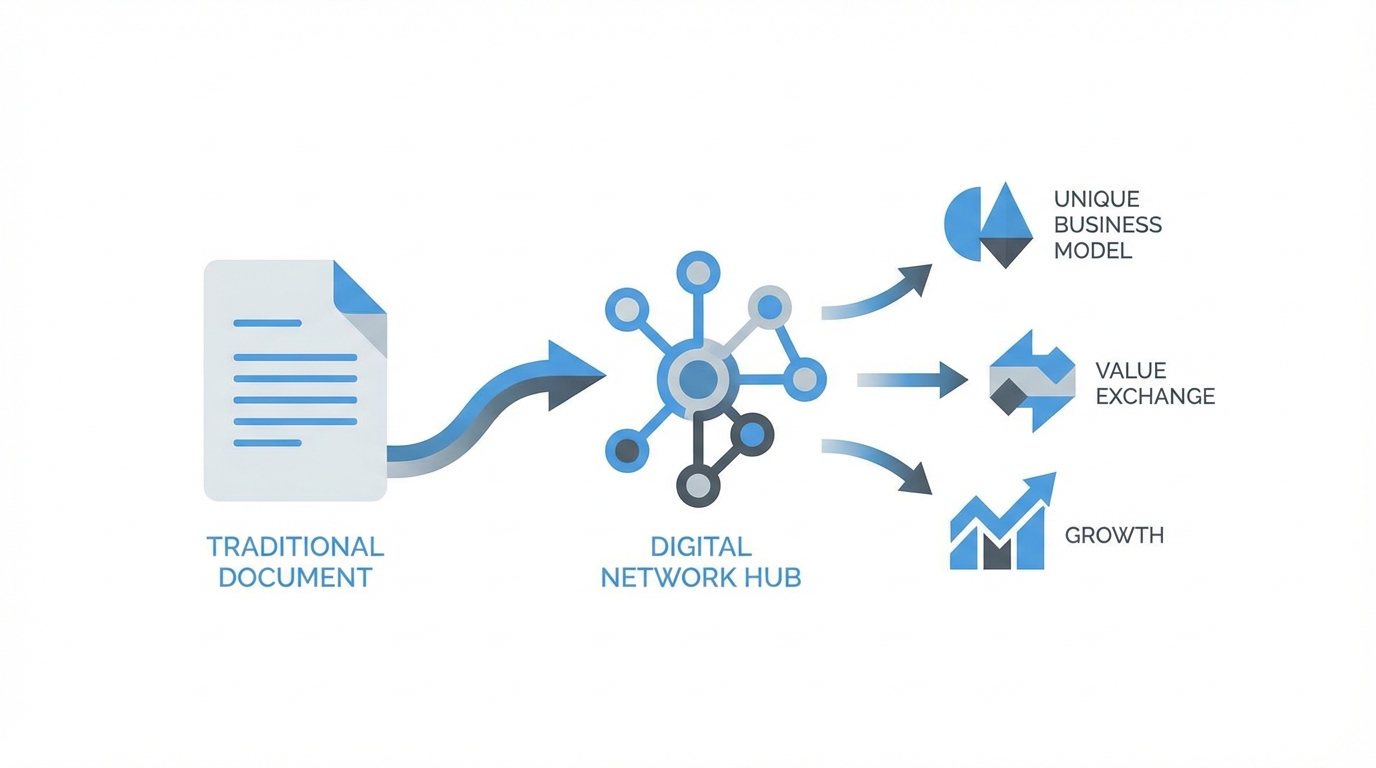
Building a successful industry expert platform isn't just about who you know; it’s about how you leverage the data generated by those connections. A prime example of business model innovation in this space is Tegus. Instead of just acting as a middleman for one-off calls, Tegus records and transcribes every conversation. After a 90-day period, these transcripts are added to a searchable database available to all subscribers.
By doing this, Tegus transformed from a service business into a data aggregation platform. They created a permanent library of expert insights that becomes more valuable with every new call. For a new specialized consulting network, incorporating AI-driven transcription and searchability is no longer optional—it is the baseline. According to industry research, the expert network market continues to expand as AI-driven platforms allow lean teams to manage networks that would have previously required hundreds of employees at a legacy firm like GLG.
Leveraging Your "Unfair Advantage"

The most common hurdle for entrepreneurs is the "cold start" problem: how do you get hedge funds to take your call if you didn't go to the Wharton School or work at Goldman Sachs? While an elite pedigree provides a "step up" in networking, it isn't the only way to build an unfair advantage. Your edge is your specific world—the people you already know and the problems they face.
If you work in construction, don't try to sell to hedge funds immediately. Build a network of construction experts and sell that data to the firms investing in Caterpillar or John Deere. If you are a digital marketer, your advantage lies in your proximity to spend data. Tools like Stormy AI can help source and manage UGC creators and niche influencers who act as the front-line experts for social media trends. By identifying these creators through Stormy's AI search, you can build a proprietary database of experts who understand exactly how platform algorithms are shifting in real-time—data that is gold to a private equity firm looking at consumer brands.
The "Hat in Hand" Networking Approach
If you truly have no connections in your target vertical, the most effective strategy is the "Hat in Hand" approach. Instead of pitching or selling, you reach out to senior executives with radical honesty. You explain that you are building something new, you aren't sure if it’s a good idea yet, and you are looking for 15 minutes of their perspective to help you understand the market better.
Humans are naturally wired to help those who come with an authentic, learning-oriented mindset. When you drop the "salesperson" persona and ask for guidance, people are far more likely to open their Rolodex. This method can help you secure meetings with partners at firms like Blackstone or Apollo, provided you follow up diligently and demonstrate that you’ve actually listened to their advice. Use platforms like The Org to map out team structures and identify the right decision-makers before reaching out.
Scaling Through Modern Distribution

Once you have your first 10 experts and a few pilot customers, scaling a specialized consulting network requires a blend of cold outreach and content marketing. LinkedIn is the primary battleground here. You can use the "mutual introduction" system—sleuthing through board members or C-level executives to find a warm path to your target.
Simultaneously, you should be building an audience by sharing informational value. If you are building a network for the automotive industry, publish deep-dives on EV supply chains or dealership margin trends. Tag the people you want to notice you. When they engage with the content, reach out immediately. The goal is to move from a service-based "headhunter" model to a platform-based model where customers come to you for the depth of your vertical expertise.
Step-by-Step Execution Playbook
- Pick a High-GDP Vertical: Healthcare, IT, Auto, or Marketing. Ensure it’s a sector with significant public company interest.
- Identify the Experts: Use AI tools like Stormy AI and social discovery to find the people with the actual "hands-on" data.
- Build the MVP: Create a simple brand and a database. You can even start by white-labeling expert calls.
- Season the Pixel: If running ads to recruit experts, start with basic static creative to help algorithms like Meta's learn your niche audience.
- Capture the Data: Record every call, transcribe it, and build your proprietary library from day one.
Conclusion: The Future of Niche Consulting
The age of the generalist expert network is ending. As investment firms and corporations demand more specific, real-time data, the expert network business model will continue to fracture into thousands of specialized platforms. By focusing on a vertical you understand, leveraging AI for data enrichment, and using authentic networking techniques, you can build a high-margin information business that outmaneuvers the giants.
Whether you are helping private equity firms vet a Shopify app acquisition or providing hedge funds with the latest TikTok Shop spend metrics, the key is to own the niche. In the information economy, the specialist doesn't just survive—they set the price.