The first wave of the AI revolution was defined by horizontal giants—monolithic tools like OpenAI's ChatGPT or Google Gemini that aim to do everything for everyone. But as the market matures, we are witnessing a decisive shift toward vertical AI. This new era is defined by hyper-niche utilities designed to solve one specific problem for one specific group of people. For marketers and founders, this shift represents a golden opportunity in influencer marketing for apps. By niching down into categories like vinyl collecting, sermon note-taking, or 3D body scanning, developers are finding that they can achieve significantly lower customer acquisition costs (CAC) and higher engagement rates than general productivity tools ever could.
The Shift to Vertical AI: Moving Beyond the Generalist

In the current AI marketing trends, the most successful new entrants in the app store aren't trying to be the next all-purpose assistant. Instead, they are winning by being the best possible tool for a micro-segment of the population. Take, for example, the recent surge in apps like Vinyl Snap, a dedicated utility for vinyl record collectors. While a general AI could technically identify a record from a photo, Vinyl Snap provides a premium insight: it scans the sleeve, assesses the condition, and provides an instant market valuation based on real-time data from platforms like Discogs. This specificity creates a recurring behavior loop that generalists can't match.
This trend is powered by what industry insiders call the "Vibe Coding" era. With AI-assisted development through tools like Cursor or Replit, the technical barrier to building a high-quality app has plummeted. Founders are no longer limited by their coding ability; they are limited only by their ability to identify a repetitive pain point in a high-intent niche. For creator economy startups, this means the focus has shifted from "how do we build this?" to "who is the exact community that needs this?" and "which influencers already own that audience?"
Identity-Based Apps and the Psychology of Niche Marketing
Why does a Bible note-taking app like Praise Notes often outperform general productivity tools in terms of ROI? The answer lies in the psychology of identity. When an app aligns with a user's core identity—whether that is their religion, their profession, or a deep-seated hobby—the app becomes more than just a tool; it becomes part of a ritual. For the billion-plus Christians worldwide, a sermon note-taking app isn't just a digital notebook; it is a way to reflect on their faith and engage with their community on a weekly basis.
This identity-driven utility makes influencer marketing for apps far more effective. It is much easier (and cheaper) to convert a user when you are presenting them with a tool specifically designed for their lifestyle. A gardening influencer on TikTok demonstrating a vertical AI tool that diagnoses leaf diseases will see much higher conversion rates than a general tech influencer talking about a new note-taking app. This is because the intent-to-buy is baked into the niche itself. The audience is already primed; they are just waiting for a solution to a problem they face every day.
The Vibe Coding Era: Influencers as Founders
We are entering a period where the line between creator and founder is blurring. In the "Vibe Coding" era, influencers are no longer just the face of a brand; they are building and launching their own vertical AI utilities. Because creators already have a deep understanding of their audience’s pain points, they are perfectly positioned to build the "missing piece" of software for their community. Whether it's a fitness creator launching a 3D body scanner like Zozo Fit or a language coach building an AI tutor, the distribution is already solved.
By leveraging platforms like Shopify for commerce or Stripe for subscription management, creators can turn their social following into a software-as-a-service (SaaS) business. This shift is one of the most significant AI marketing trends of the year. Instead of selling a one-time course or a physical product with low margins, influencers can offer a high-margin AI utility that provides ongoing value. The key is to find a single high-intent input—like a photo of a meal or a video of a golf swing—and use AI to unlock an insight that was previously expensive or time-consuming to obtain.
Using Niche Social Media Analytics to Scale Discovery


The challenge for most app developers is not building the AI—it’s finding the right creators to promote it. Traditional influencer marketing often fails because brands target creators with massive followings but low topical relevance. To succeed with vertical AI, you need niche social media analytics that go beyond follower counts. You need to identify creators who are the authoritative voices in micro-communities, whether that's the world of vintage toy collecting or medical English for professionals.
This is where modern discovery tools become essential. Using an AI-powered search engine like Stormy AI, developers can filter through millions of profiles on TikTok, YouTube, and Instagram using natural language prompts. For example, instead of searching for "fitness influencers," a developer could search for "creators who talk about 3D body composition and posture correction in LA." This level of granularity allows brands to find the exact "nerves" their app targets. Once discovered, managing these hyper-niche relationships requires a dedicated creator CRM to track outreach, handle automated follow-ups, and monitor campaign performance across multiple platforms in real-time.
The 50K MRR Framework for Niche AI Apps
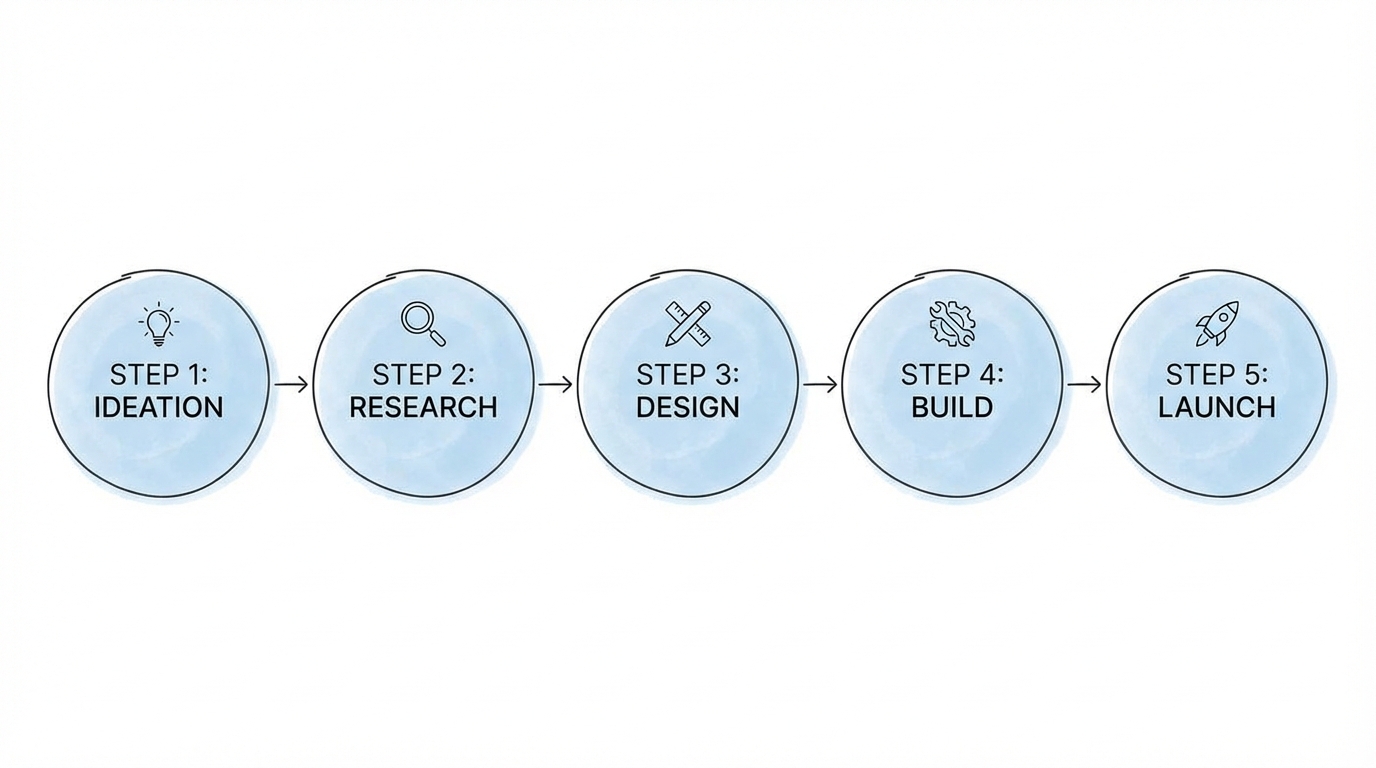
If you are looking to build or market a vertical AI app, you can follow a proven playbook to reach high monthly recurring revenue (MRR). The most successful apps in this space—those making $50,000 to $300,000 per month—usually follow this specific framework according to Indie Hackers case studies:
Step 1: Identify a High-Value Niche
Look for a group that already spends money, has a repeating problem, and values accuracy. This could be anything from collectors of rare books to professionals needing specialized document summaries.
Step 2: Start with a Nerve
Don't start with a market; start with a pain point. Find a repetitive task that users would pay to make disappear. The more urgency and stakes involved, the more likely the user is to subscribe. For instance, an AI tool that helps used car buyers identify repair risks from a VIN via Carfax and photos has high stakes and immediate urgency.
Step 3: Focus on a Single Job
Avoid feature creep. The best apps do one job brutally well. Whether it's "tell me what this vinyl is worth" or "show me how to fix this garden plant," the interface should be simple and the outcome should be immediate.
Step 4: Leverage High-Intent Inputs
The most successful vertical AI apps use inputs that are high-signal, such as photos, videos, or specific addresses. When a user uploads a photo of their room to an AI home decor app like RoomAI, they are signaling a very high intent to redesign or purchase furniture, making them extremely valuable to advertisers and partners.
Step 5: Partner with Identity-Specific Influencers
Use niche social media analytics to find creators who share the same identity as your target users. A demo on Meta Ads Manager or TikTok featuring a trusted niche voice is worth more than any general celebrity endorsement.
High-ROI Opportunities: The Future of Vertical AI
As we look toward 2026, several niches are prime for vertical AI disruption. These categories are currently underserved by general AI but have massive, passionate communities ready to adopt specialized tools. For example, the AI golf swing coach market is exploding, with tools often reviewed by authorities like Golf Digest. By using a smartphone's camera to provide biomechanical corrections, these apps provide value that used to require an expensive in-person tutor. Similarly, pet health scanners that use computer vision to detect early-stage skin issues represent a multi-billion dollar opportunity in the pet care industry.
Other areas to watch include AI auction strategists for collectibles, closet stylists for sustainable fashion enthusiasts, and used car analyzers for the secondary market. In each of these cases, the winning strategy involves combining a deep understanding of the niche with aggressive influencer marketing for apps. By finding the "identity leaders" in these spaces using platforms like Stormy AI, app developers can build sustainable, high-growth businesses that are insulated from the competition of general AI models.
Conclusion: Building for the Niche
The future of the app economy isn't about being everything to everyone; it's about being indispensable to a specific group. Vertical AI allows developers to build high-margin products that solve real-world problems for collectors, hobbyists, and professionals. By leveraging identity-based marketing and partnering with the right creators, you can bypass the noise of the general AI market and build a loyal, high-LTV user base. Whether you are vibe coding your first utility or scaling an established brand, the path to 50K MRR starts with finding your niche and owning the conversation within it.