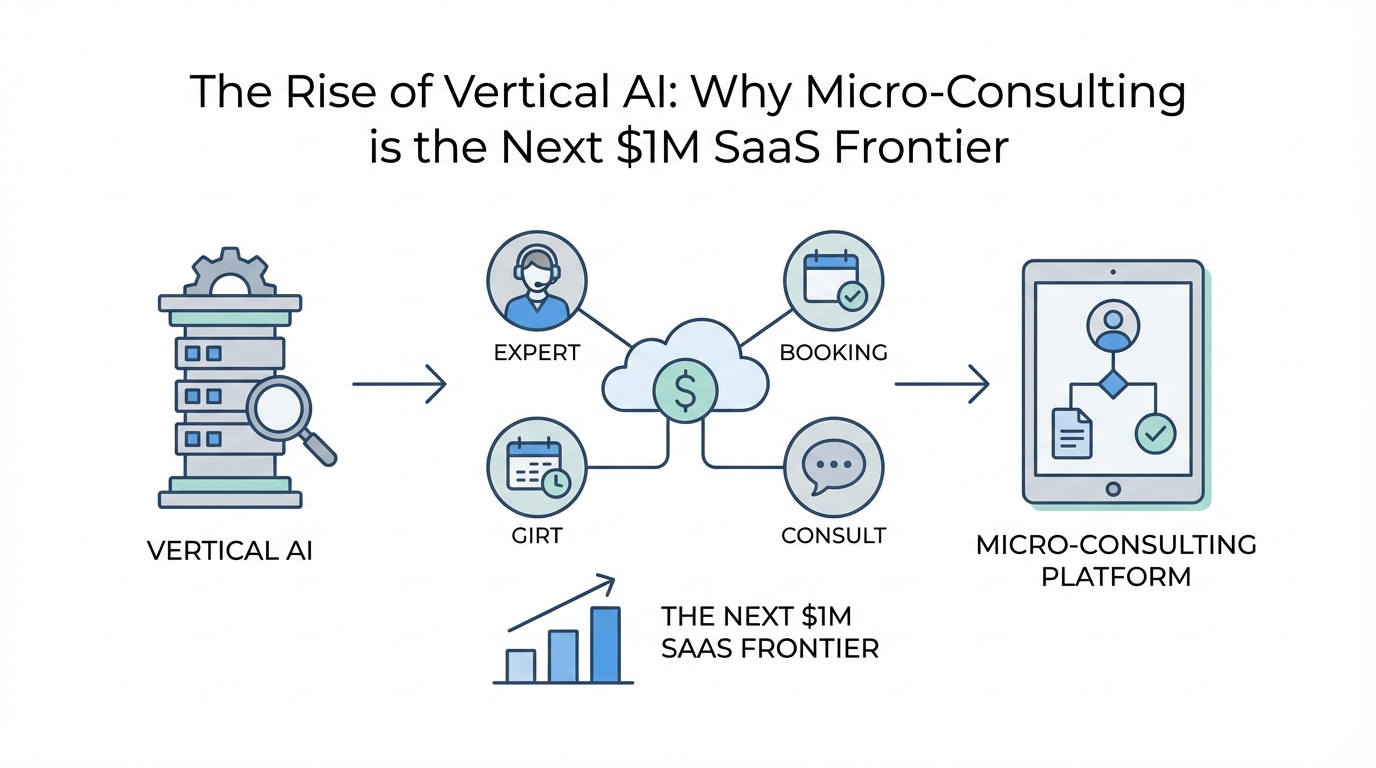
The era of the "generic chatbot" is rapidly closing. While the initial wave of artificial intelligence was defined by massive, all-purpose Large Language Models (LLMs) that could write a poem or summarize a meeting, the second wave is far more focused—and significantly more profitable. We are entering the age of Vertical AI, where specialized, industry-specific solutions are replacing the broad strokes of general AI tools. For entrepreneurs, this shift represents a golden opportunity: the micro-consulting business model. By moving away from the traditional hourly consulting trap and toward a flat-fee subscription for specialized AI agents, it is now possible to scale a B2B service business to $1 million in Annual Recurring Revenue (ARR) in as little as 18 months.
The Shift from General to Vertical AI


In the early days of any technological revolution, the winners are usually the horizontal platforms. However, as the technology matures, value accrues to those who can solve specific, high-stakes problems. According to recent data from the Y Combinator Request for Startups, there is a massive surge in vertical AI startups focusing on industries with historically limited AI penetration. We are no longer just looking at "AI for writing"; we are looking at AI for legal discovery, AI for construction compliance, and AI for healthcare revenue cycle management.
Generic tools like ChatGPT or Claude are powerful, but they lack the "last mile" of utility. They don't understand the specific regulatory nuances of a local building code or the precise billing requirements of a private medical practice. This gap is where the micro-consulting business model thrives. Small and medium-sized businesses (SMBs) are increasingly vocal about their frustrations on platforms like r/smallbusiness, where owners complain that generic AI doesn't understand industry-specific challenges. By building specialized AI agents that act as "digital employees" for these niches, you provide a level of expertise that horizontal tools simply cannot match.
The "Design Pickle" Model for AI Agents
To reach $1M ARR quickly, you must abandon the hourly billing model. Traditional consulting is notoriously difficult to scale because it relies on human hours. Instead, the most successful b2b ai solutions are adopting what we call the "Design Pickle" model. Design Pickle revolutionized the creative industry by offering flat-fee, unlimited graphic design. In the AI world, this looks like flat-fee AI agent subscriptions.
Imagine offering an SMB owner a "Financial Strategy Agent" for a flat $499 per month. For the owner, this is a steal compared to the $150 to $500 per hour they might pay a human consultant. For the entrepreneur, this is a highly scalable SaaS-lite model. You aren't selling hours; you are selling outcomes and accessibility. As documented in various Salesforce industry reports, SMBs are eager for AI integration but lack the technical expertise to do it themselves. Your business becomes the bridge—the AI-powered micro-consulting platform that handles the "how" while the owner focuses on the "what."
Why Regulated Industries are the Most Profitable Niches
If you want to build a high-margin vertical AI startup, you must look where the regulations are thickest. Legal, Healthcare, and Construction are the "Holy Trinity" of AI niches. Why? Because the cost of error is high, and the complexity of staying compliant is a constant drain on resources. Research from McKinsey suggests that AI's ability to track and synthesize regulatory changes is one of the highest value-add activities in the modern economy.
In these industries, "information overload" isn't just a nuisance; it's a liability. Small firms in these sectors often struggle to keep up with changing laws, safety protocols, or insurance requirements. A specialized AI agent can scan thousands of pages of US Census Bureau data or local regulatory filings in seconds, delivering a summary of what actually matters to the business owner. This "Why Now" factor—the convergence of LLM capabilities and increasing regulatory complexity—creates a massive tailwind for specialized AI agents that handle compliance as a service.
Developing "AI Consulting Agents" for Business Functions
When building your MVP, don't try to build a general "business AI." Instead, build a suite of agents that handle specific, painful business functions. This makes your value proposition concrete and undeniable. Your product should feel like a department, not a software tool. Key functions to target include:
- Marketing & Lead Gen Agents: These agents don't just write posts; they analyze market trends and suggest high-conversion hooks. For businesses looking to scale their creator partnerships, platforms like Stormy AI streamline creator sourcing and outreach automatically.
- Operations & Logistics Agents: Ideal for construction or retail, these agents optimize schedules and track supply chain disruptions using a multi-agent framework.
- Financial Strategy Agents: These go beyond bookkeeping to provide predictive cash flow analysis and tax-saving recommendations.
Leveraging UGC and Influencers for B2B Growth
One of the most overlooked strategies for ai for small business is the use of User-Generated Content (UGC) and niche influencer marketing. Small business owners trust other small business owners. If you are selling a legal AI agent, a testimonial from a respected boutique law firm owner is worth more than a million-dollar ad campaign on Meta Ads Manager.
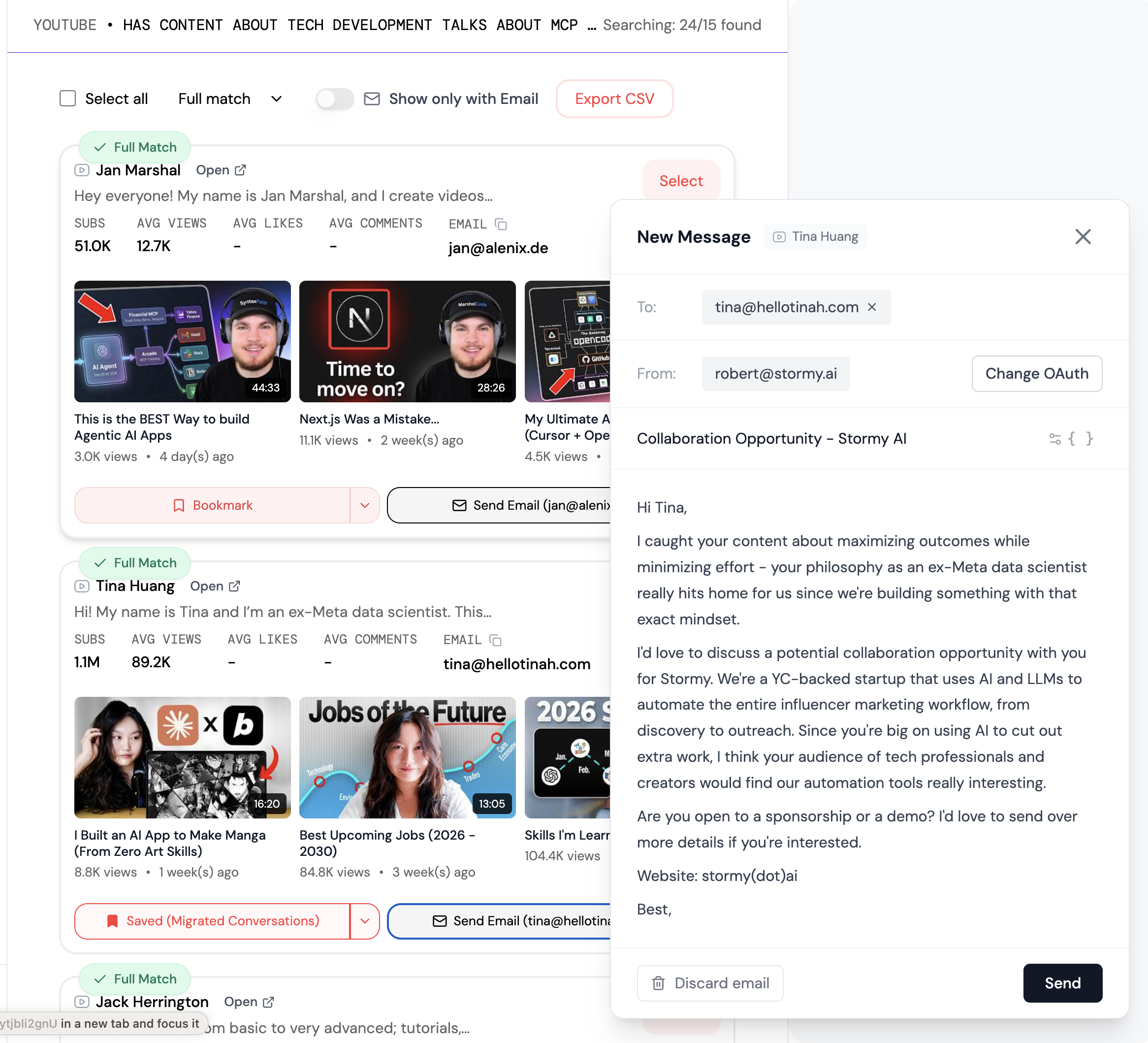
To scale your user base, you need to find these voices. Modern platforms like Stormy AI allow you to search for creators by niche, engagement, and even audience quality. By finding 10-20 "micro-influencers" in the construction or medical space and having them demonstrate how your AI agent saves them 10 hours a week, you create a trust loop that drives organic growth. In the B2B world, AI-personalized outreach is the key to getting these influencers on board without spending months in negotiations. Using an AI agent that outreaches to creators on your behalf ensures that your top-of-funnel growth never stops while you are focused on product development.
The 18-Month Playbook to $1M ARR

Scaling a micro-consulting business model requires a disciplined approach to both product and sales. Here is the step-by-step playbook to reaching the seven-figure mark.
Step 1: Identify the "Friction Point"
Go to r/entrepreneur or industry-specific subreddits and look for the phrase "I hate doing [X]" or "I can't afford a [Y]." This is your niche. If you find a recurring complaint about the cost of specialized labor (like a junior financial analyst or a compliance officer), you have found your product.
Step 2: Build the Vertical "Last Mile"
Use a multi-agent framework to build your agent. Your agent should not just be a wrapper for an LLM; it should have access to a proprietary database of industry knowledge or a specific browser capability to check real-time regulatory updates. Your MVP should do one thing perfectly, like "AI-Powered Safety Compliance for HVAC Companies."
Step 3: Implement the Subscription Model
Set a price point that is an "impulse buy" for an SMB but provides enough margin for scale. Generally, $99 to $499 per month is the sweet spot. Ensure you have a clear lead magnet—such as a "Free AI Business Audit"—to capture emails and build your CRM. Managing these relationships is critical, and tools like Stripe make it easy to manage recurring billing at scale.
Step 4: Automate the Outreach
Don't cold call. Use AI-personalized emails to reach out to potential partners and clients. By the 12-month mark, you should have an automated system that finds potential leads, vets them, and sends hyper-personalized messages. This is how you move from $10k to $80k in monthly revenue without hiring a massive sales team.
Conclusion: The Future of Work
The rise of specialized AI agents is fundamentally changing the economics of expertise. The barrier to entry for high-level consulting has dropped, allowing entrepreneurs to provide "Fortune 500 level" insights to the local plumber or boutique law firm. By focusing on vertical ai startups and mastering the micro-consulting business model, you are not just building a software company—you are building the infrastructure for the next generation of small business growth. The tools are ready, the market is hungry, and the $1M ARR milestone is closer than ever for those willing to get specific.