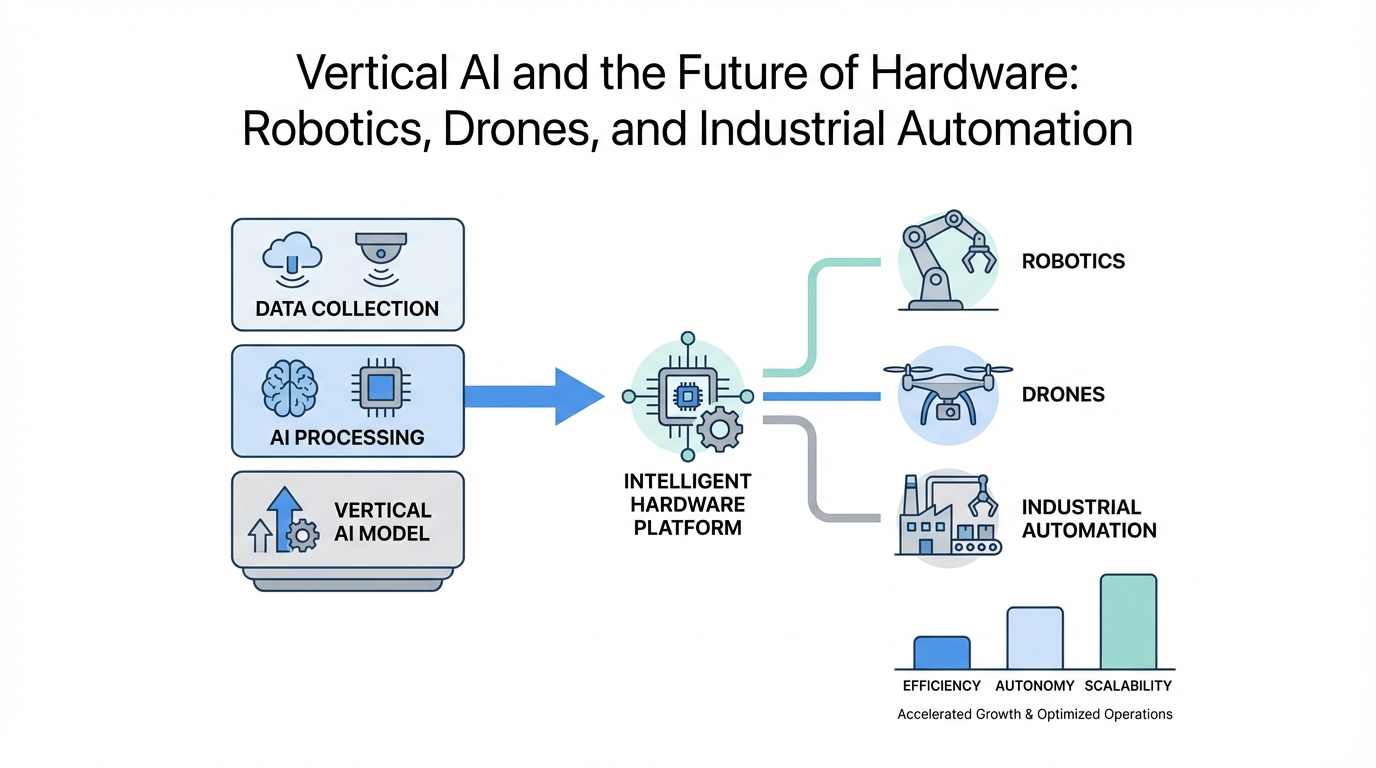
The San Francisco air currently carries a specific kind of electricity, one fueled by the promise of a $50 trillion AI Gold Rush. While much of the public conversation remains tethered to chatbots and digital art, a massive, quieter shift is happening in the world of physical atoms. We are entering the era of Vertical AI, where software no longer just lives on our screens but inhabits the machines that build, move, and protect our world. From humanoid robots being trained in virtual reality to 3D-printed drones securing eight-figure defense contracts, the future of AI hardware is moving faster than most legacy industries can track.
The Convergence of VR, AI, and Humanoid Robotics
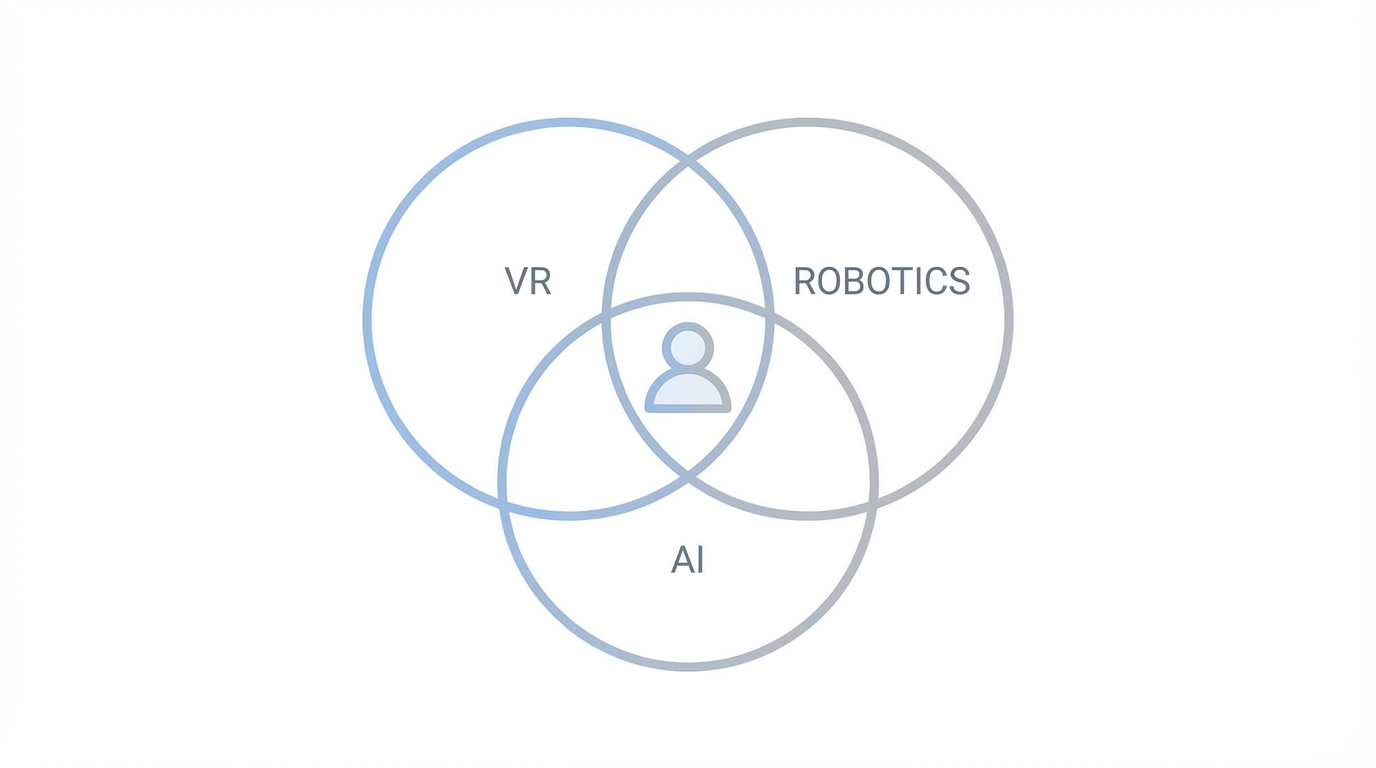
For decades, the idea of a humanoid robot was relegated to science fiction or high-budget research labs. Today, that has changed due to a fascinating convergence of technologies: AI in robotics, high-fidelity Virtual Reality (VR), and advanced motion capture. Founders in San Francisco's "Garage" spaces are now building what they describe as "metal humans"—robots like those from Figure AI that stand six feet tall and weigh 200 pounds, designed not just for repetitive tasks but for complex physical interaction. The breakthrough isn't just in the hardware; it’s in how these machines are taught.
Instead of manual coding for every movement, these humanoid robots for business are being trained using motion capture data. This creates a bridge where human experts can perform a task in a VR environment, such as NVIDIA Isaac Sim, and the AI translates that fluid human motion into robotic commands. This crossover between the gaming world and industrial application is reducing the technical barriers to entry. As physics challenges in VR mirror the technical challenges in robotics, we are seeing a world where specialized AI models can control complex humanoid forms with unprecedented grace. This is more than just a novelty; it’s a foundational shift in industrial automation trends that will eventually see robots in military, police, and specialized service capacities.
Vertical AI Startups in ‘Blue Collar’ Sectors

The most lucrative opportunities in the current market aren't necessarily in the "sexiest" consumer apps. Instead, vertical AI startups are finding massive success by solving unsexy, trillion-dollar problems in the blue-collar world. Consider the logistics industry: the demand for industrial automation trends has led to the creation of the "Waymo for forklifts" by companies like Fox Robotics. These systems utilize high-throughput autonomy to manage warehouses more reliably than human-operated fleets, addressing labor shortages and safety concerns simultaneously.
We are also seeing this disruption in high-precision manufacturing. Startups are now offering single-run, quick-turn metal casting through platforms like Xometry, making it easier for hardware builders to get access to custom parts in days rather than months. By applying AI to the design and casting process, these companies are effectively democratizing hardware development. Even in the toy industry, AI hardware is making waves—creating interactive, AI-powered toys like Miko that can converse, tell jokes, and learn from their environment. These aren't just gadgets; they are sophisticated edge-computing devices that signal a new era of interactive physical products.
The Defense Tech Renaissance: 3D-Printed Drones
Perhaps the most critical sector being reshaped by AI is defense. In an environment where cost-efficiency is becoming a matter of national security, new startups are leveraging 3D printing to create military-grade hardware at a fraction of traditional costs. One of the most striking examples is the work being done at Anduril Industries and other drone startups that produce 3D-printed military drones—including the latches and structural components—that are 100 times cheaper than comparable legacy systems.
By radically lowering the cost of production, these future of AI hardware companies are positioned to close eight-figure contracts with the Department of Defense. This move toward "disposable" or high-volume hardware represents a shift in military strategy, moving away from a few ultra-expensive assets toward swarms of low-cost, AI-enabled units. For companies operating in this space, the integration of specialized AI for navigation and target recognition is what separates a simple toy from a sophisticated defense asset. Brands and developers in this niche often need to manage complex relationships with specialized creators and stakeholders; tools like Stormy AI can help source and manage UGC creators who can showcase these complex technologies in an accessible way for broader industry adoption.
Why US Founders are Pivoting to Hardware to Compete Globally
There is an unfortunate reality in the robotics world: currently, international competitors—specifically China—control a significant portion of the humanoid and drone market. In fact, many estimates suggest that China holds a dominant position in the humanoid robot market, often bolstered by direct government subsidies. To remain competitive, US founders are increasingly moving away from pure software to build integrated hardware-software solutions that are harder to replicate.
The dominance of companies like DJI in the drone space has served as a wake-up call for the American tech ecosystem. Founders are now realizing that to win the next decade, they must master the manufacturing of physical goods. This has led to the rise of specialized "hack spaces" and residencies like HF0 and Founders Inc Garage, where hardware engineers are given the resources—and the extreme focus—necessary to iterate on physical prototypes at software-like speeds. These environments are modeled after meditation retreats, subtracting every distraction so that founders can live and breathe their projects for weeks at a time, unlocking the "excess brainpower" needed for trillion-dollar breakthroughs.
The Investment Landscape: What VCs Look For in Physical Tech
The venture capital world is matching this enthusiasm. Firms like Andreessen Horowitz (A16Z) are betting heavily on AI as a fundamental platform shift—comparable to the birth of the internet or the mobile wave. With over $42 billion under management, A16Z is looking for startups that bridge the gap between AI infrastructure and real-world application. Specifically, they are interested in two main areas: AI productivity tools and AI entertainment/creativity.
In the context of hardware, this means VCs are looking for companies that don't just build a better robot, but build a platform for robotic intelligence. They want to see "Speedrun" startups that can iterate quickly, find their first 100 industrial customers, and scale their manufacturing processes. The bar for entry is high—VCs are looking for founders who can manage the "toxic soup" of hardware logistics, biological complexities (in the case of longevity AI), and engineering talent. Success stories like Stripe have shown that even "boring" infrastructure like payments can be a massive win; the next version of that will be the infrastructure for the physical world.
Playbook for Identifying ‘Unsexy’ Industrial Problems
If you are looking to enter the vertical AI startups space, you need a strategy to identify problems that are ripe for disruption but ignored by the masses. Here is a clear playbook for spotting these opportunities:
Step 1: Look for Manual Executive Function Tasks
Identify industries where human workers are spending significant "executive function" on repetitive physical tasks. If a human has to constantly adjust a machine, monitor a screen for errors, or manually coordinate logistics, there is an AI opportunity. The goal is to move from manual control to "command-level" oversight, where the AI handles the micro-decisions.
Step 2: Follow the Regulatory and Subsidy Trail
Look at where the government is spending money or where regulations are tightening. Defense, longevity/health diagnostics, and green energy are all sectors with massive capital tailwinds. For example, AI diagnostics that measure biological age organ-by-organ are tapping into a massive healthcare shift toward preventative longevity.
Step 3: Analyze the 'Flow' of Physical Goods
Walk through a warehouse, a shipyard, or a factory. Anywhere you see a bottleneck in the movement of goods is a potential multi-billion dollar business. This is how the "Waymo for forklifts" was born—by identifying that moving boxes in a warehouse is a high-throughput problem that doesn't require a human's full cognitive ability but does require high reliability.
Step 4: Leverage Modern Prototyping Tools
Don't wait for a factory. Use 3D printing, metal casting services, and AI-powered coding tools like Bolt.new to build your MVP. Even if you aren't a traditional coder, modern AI tools allow non-technical founders to build the software layers that control physical hardware, effectively decentralizing the power of innovation.
Marketing the Future of Hardware and Industrial Tech

Building the hardware is only half the battle; the other half is convincing traditional industries to adopt it. This is where AI-powered creator discovery becomes essential. For industrial tech companies, finding the right influencers—those who specialize in engineering, manufacturing, or defense tech—is crucial for building trust. Modern platforms like Stormy AI allow these hardware companies to search for creators in specific niches using natural language, vetting them for audience quality, and managing the outreach process automatically. In an era where a 12-year-old can build an app and a 17-year-old can skip exams to fly to SF for a hackathon, the way we market physical tech must be as agile as the technology itself.
Conclusion: The Era of the Trillion-Dollar Hardware Company
The future of AI hardware is no longer just about building faster computers; it is about giving AI a body. Whether it’s through humanoid robots for business that can learn from human motion or 3D-printed drones that disrupt the defense industry, the most significant value in the next decade will be created where AI meets the physical world. Founders are no longer aiming for billion-dollar companies; they are aiming for trillion-dollar companies that redefine how humanity lives, ages, and works. By focusing on "unsexy" industrial problems and utilizing high-intensity residencies to find flow, the next generation of builders is ensuring that the AI Gold Rush leaves a permanent mark on the physical world. The land is shaky, but for those willing to build with atoms, the opportunity is limitless.