In the hyper-competitive landscape of 2026, the traditional moats of brand recognition and capital reserves are being bypassed by a new breed of agile competitors. As AI-powered software development commoditizes technical implementation, the ultimate competitive advantage has shifted from what you build to how fast you can learn from your users. This is the core philosophy behind the success of Vercel, a platform that has redefined the modern web by prioritizing iteration velocity above all else.
By studying the growth trajectory of Vercel and its founder, Guillermo Rauch, marketing and product leaders can unlock a playbook for dominating their markets through rapid product experimentation. The goal isn't just to ship features; it's to reduce the gap between a hypothesis and a live URL that a customer can interact with. In an era where Stormy AI allows brands to find and activate influencers in seconds, your internal product cycles must keep pace with the speed of social distribution.
The Formula 1 Pit Crew Analogy: Shaving Milliseconds Off Your GTM Strategy
How the F1 pit crew model illustrates the critical need for iteration speed.
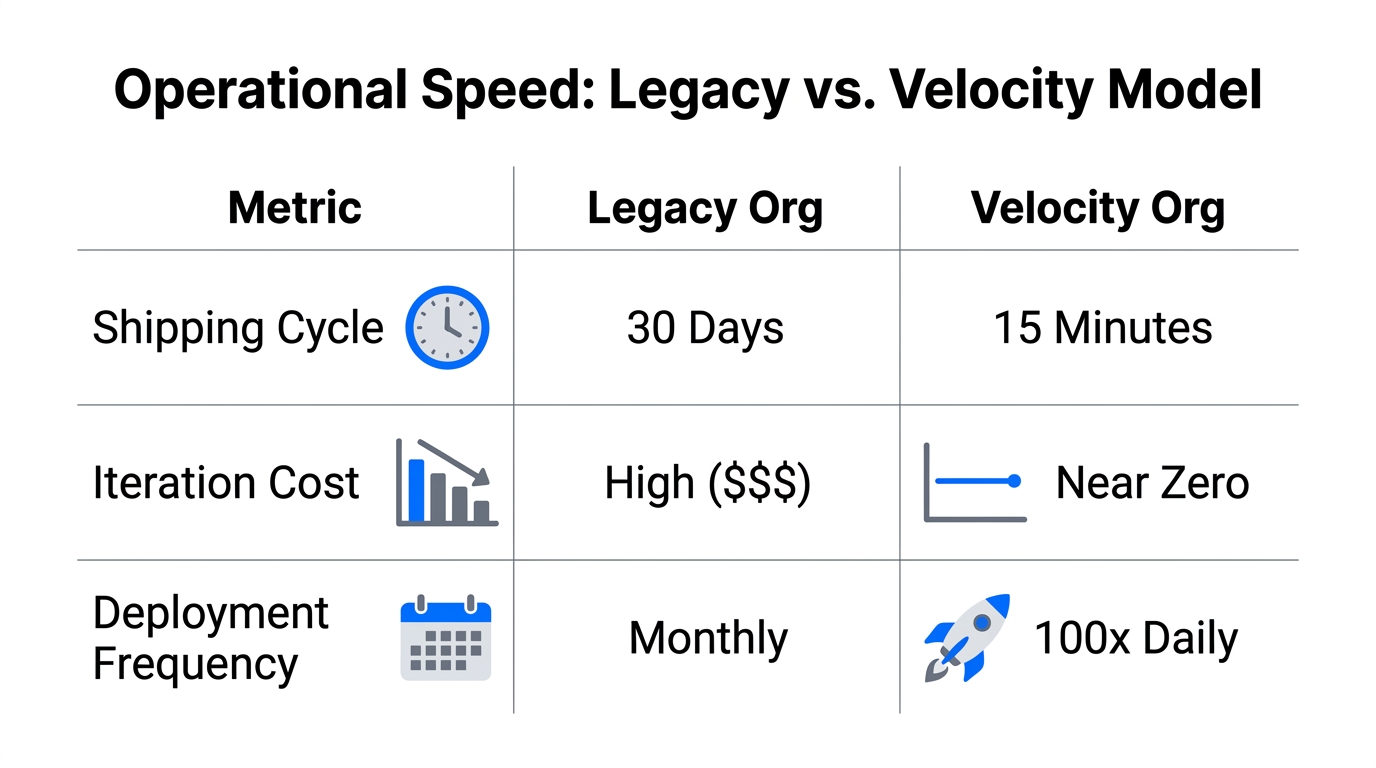
Guillermo Rauch often compares the modern development pipeline to a Formula 1 pit crew. In racing, the gap between a 2-second pit stop and a 6-hour pit stop isn't just a matter of convenience—it's the difference between winning and losing the race. In business, this "pit stop" represents the time it takes to go from a product idea to a sharable artifact. Most companies are operating with 20th-century pit crews, where shipping a simple landing page or a new feature takes weeks of internal approvals, IT tickets, and manual deployments.
This obsession with iteration velocity led Vercel to create Next.js, an open-source framework that effectively functions as a pre-assembled chassis for the Formula 1 car. Instead of engineers spending weeks procuring wheels, engines, and parts—the "PhD-level work" of early React development—Next.js provides a production-grade foundation out of the box. This allows teams to focus entirely on the user experience and the conversion logic, much like how a modern marketing team might use TikTok Ads Manager to iterate on creative rather than building their own ad network from scratch.
"The most important principle for me when I work on a project is that we're going to be able to ship fast and iterate fast. We need our pit crew to not take 6 hours to change the tires; we need to get back on the road for the next lap immediately."
Shipping 100 Times a Day: The Culture of Micro-Adjustments
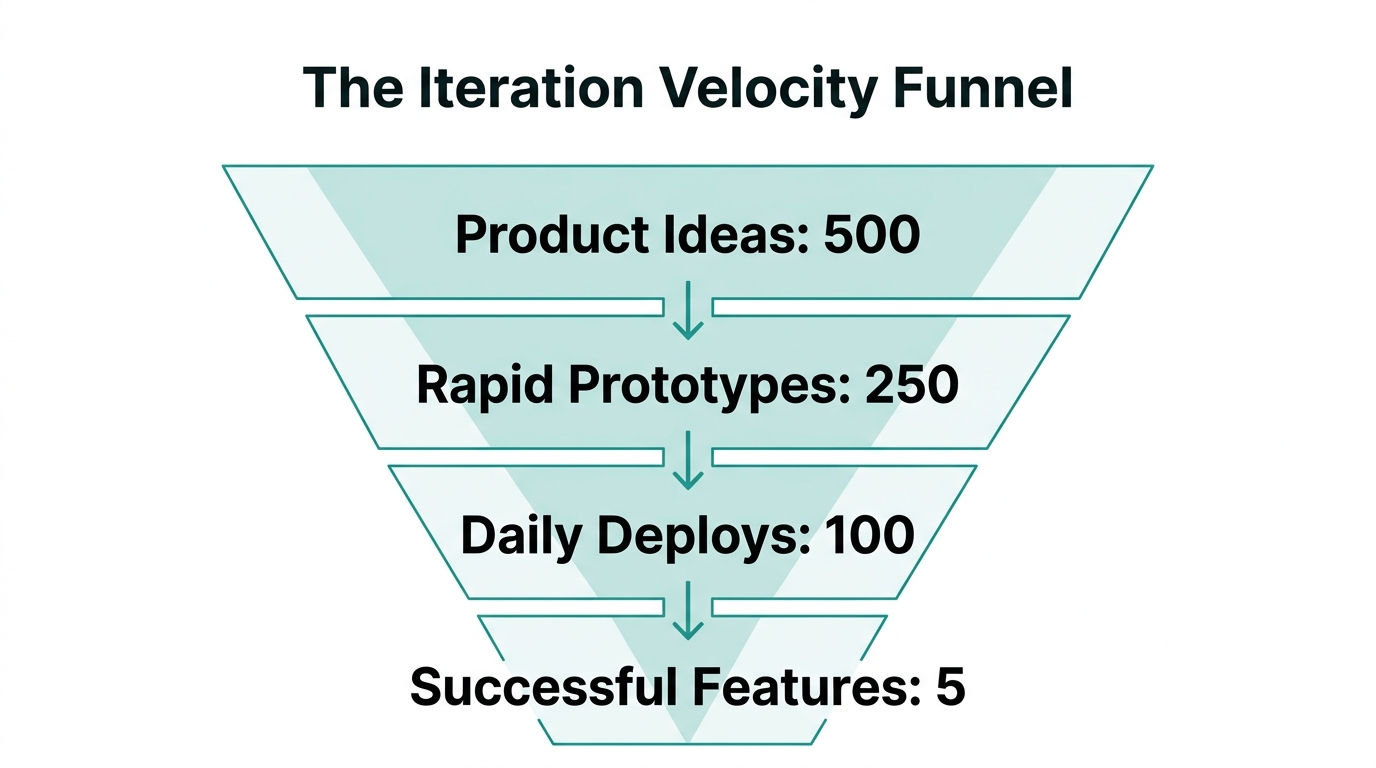
Many growth leads fear that high shipping frequency leads to lower quality. However, the Vercel playbook argues the opposite: higher frequency reduces risk. When you ship 100 times a day, every change is tiny. If something breaks, the blast radius is minimal, and the rollback is instantaneous. This is a radical departure from the "Big Bang" release cycles that still plague enterprise companies. When you use tools like Linear to track tasks, you should be looking for the smallest possible units of value that can be deployed today.
| Metric | Traditional GTM Strategy | High-Velocity Vercel Playbook |
|---|---|---|
| Release Cadence | Weekly or Monthly | Multiple times per hour |
| Deployment Risk | High (Massive code merges) | Low (Micro-changes) |
| Feedback Loop | Weeks (User research reports) | Minutes (Real-time analytics) |
| Developer Bottleneck | High (Manual QA and DevOps) | Zero (Automated CI/CD pipelines) |
To implement this, marketing teams must stop thinking of the website as a static brochure and start treating it as a living laboratory. For example, when testing a new GTM strategy in 2026, a growth lead shouldn't wait for a full redesign. They should use feature flags and edge middleware to show different versions of a value proposition to 5% of their traffic. This mirrors how platforms like Stormy AI allow marketers to test hundreds of creator collaborations simultaneously rather than betting on a single "hero" influencer.
Why 'Worse is Better': Evolution Over Intelligent Design
Explore how the 'worse is better' paradigm shaped early software and product evolution.The history of the web is littered with "perfect" technologies that failed because they were too complex to adopt. Guillermo Rauch points to JavaScript as the ultimate example of the "Worse is Better" paradigm. Early on, experts dismissed JavaScript as a "toy" language. It wasn't as fast as C++, as typed as Java, or as robust as Python. But it had one asymmetric advantage: it was the only language the browser understood. It was minimalist and embeddable.
This Darwinian approach to technology suggests that the simplest version of a product that solves a problem will always out-evolve the more complete but complex alternative. In the startup world, this is often called the "Narrow Wedge" strategy. Look at the early days of Airbnb or Uber; they didn't launch with global platforms. They launched with basic HTML pages and simple payment flows. They focused on the essentials of the transaction and iterated from there.
"Sometimes the success of technologies or startups can be best understood through the lens of evolution and natural selection rather than intelligent design. Start with a piece of DNA that can evolve."
For growth teams, this means resisting the urge to "over-engineer" the first version of a product. If you're launching an influencer marketing campaign, don't build a custom portal for creators on day one. Use a Typeform and an Instantly.ai sequence to validate the demand. If the workflow works manually, then you have the signal to build the software 1.0 version.
Reducing Friction: A Step-by-Step Guide for Growth Leads
Discover how reducing friction from idea to live deployment accelerates modern engineering teams.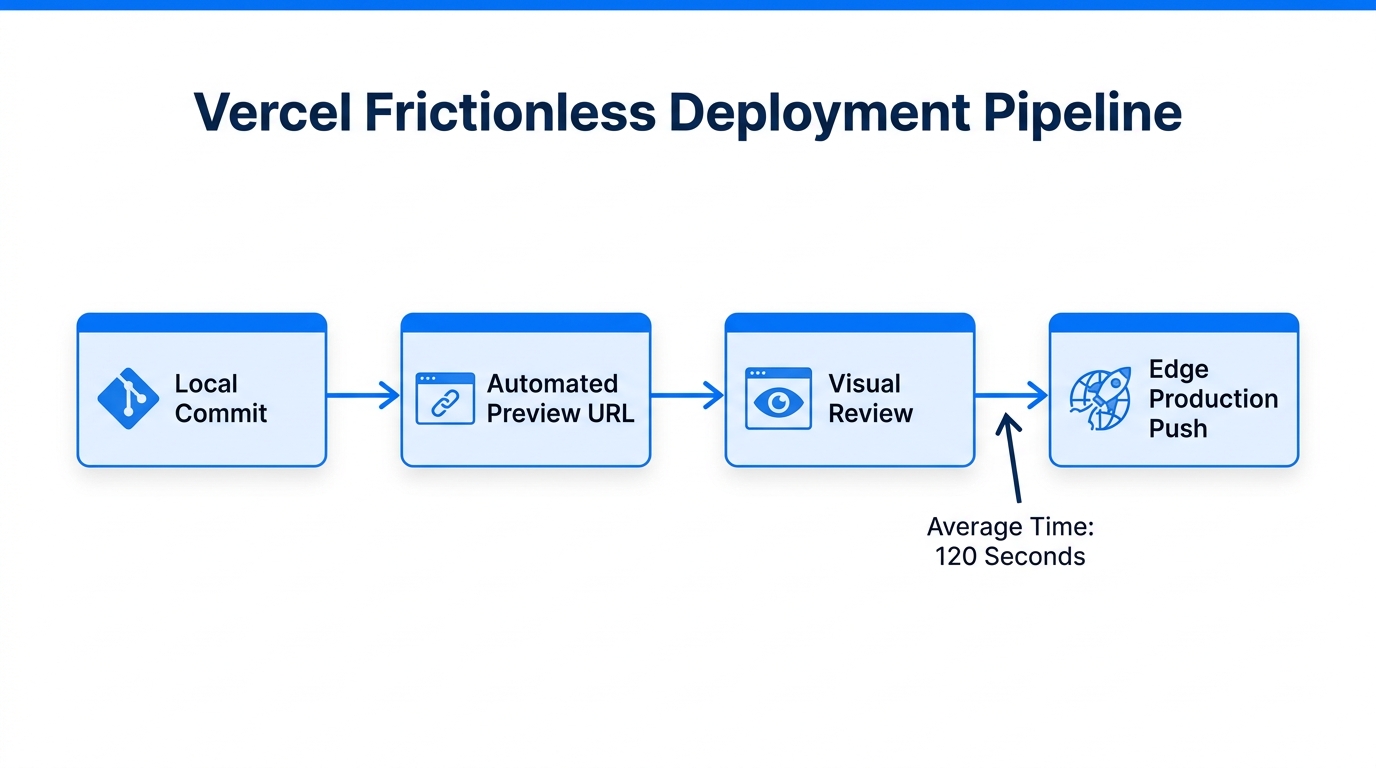
To achieve high iteration velocity for business, growth leads must systematically remove the hurdles between an idea and a production deployment. Here is the playbook for streamlining your deployment pipeline in 2026:
- Democratize Content with Headless CMS: Stop making marketers wait for engineers to change a headline. Use a headless CMS like Contentful or Sanity so the growth team can ship copy and image changes instantly.
- Adopt Automated Preview Deployments: Every pull request should generate a unique URL. This allows the marketing, design, and product teams to review the change in a real browser environment before it ever hits the main site.
- Utilize Edge Functions for Personalization: Use edge computing to personalize the user experience based on geography or referral source (e.g., a visitor coming from TikTok sees a different landing page than one from LinkedIn) without adding latency.
- Integrate Real-Time Analytics: Move away from delayed reporting. Use tools like PostHog or Mixpanel to see how users interact with a new feature within minutes of deployment.
Software 2.0: The AI Agent Era of Growth
Analyzing the transition to Software 2.0 and how AI models are rewriting programming.We are currently transitioning from Software 1.0 (deterministic code written by humans) to Software 2.0 (stochastic systems driven by data and AI models). Guillermo Rauch highlights that the next wave of successful platforms will be "AI-first" from the ground up. Vercel's v0.dev is a prime example; it allows users to describe a web interface in plain English and instantly generates the code. This unbundling of ChatGPT into vertical-specific agents is where the greatest opportunities lie in 2026.
Imagine a version of Stormy AI that doesn't just find influencers but autonomously negotiates deals, generates custom landing pages for each creator, and optimizes the ad spend in real-time. This is the power of Software 2.0. By combining the deterministic reliability of traditional software with the probabilistic intelligence of AI, brands can achieve a scale of rapid product experimentation that was previously impossible.
"The makers of the models don't even know what's possible yet. We are all discovering the latent space together. The winners will be those who combine AI with highly opinionated workflows."
Conclusion: The Velocity Mandate
In 2026, the delta between a market leader and a laggard is measured in seconds of deployment time. Vercel's growth playbook proves that by optimizing for iteration velocity, companies can out-learn, out-ship, and out-compete anyone in their category. Whether you are building the next $3B developer platform or scaling a mobile app via UGC creators, the principle remains the same: Ship fast, reduce friction, and embrace the evolution.
Start by auditing your "Time to URL." If it's more than a few minutes, your first growth project should be fixing your pit crew. Pair high-velocity deployment tools like Vercel with AI-powered discovery platforms like Stormy AI to ensure your brand moves at the speed of culture.