In 2026, the barrier between professional brand photography and casual social posting has officially dissolved. We are no longer in the era of filters and presets; we have entered the era of generative reality. Influencers and brands are moving away from simply capturing what is in front of them to prompting the exact visual output they need to maintain total brand coherence. At the heart of this shift is the "AI Camera" concept—a vision popularized by Vercel CEO Guillermo Rauch—which is set to become the most important of all creator economy tools this year. This isn't just about better photos; it’s about the total automation of influencer brand consistency through software that understands aesthetics as deeply as a human creative director.
The AI Camera Disruption: From Capture to Prompt
 48:07
48:07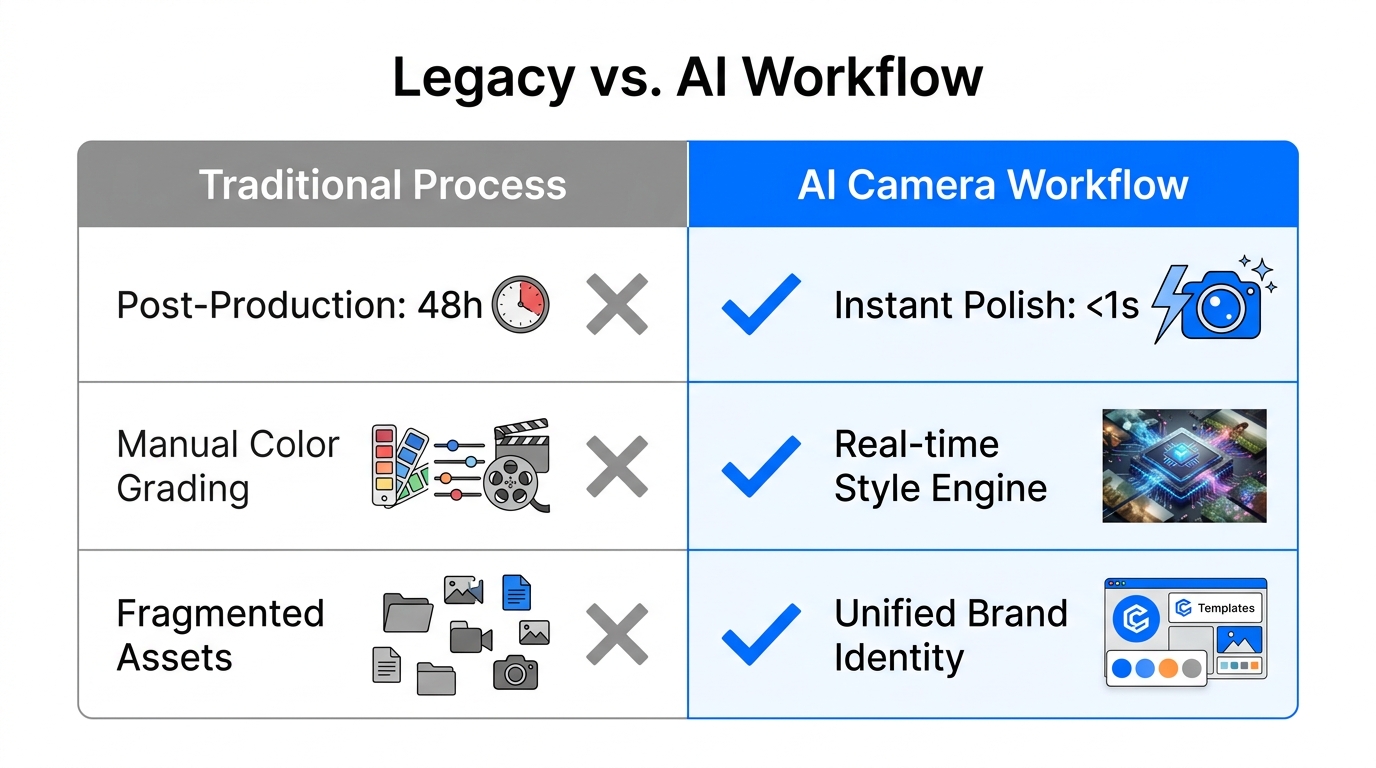
For decades, the camera was a passive observer. You pointed it at a subject, clicked a button, and hoped the lighting was right. Even with high-end mirrorless setups, the output was limited by the physical environment. In 2026, the AI camera apps 2026 landscape has flipped this script. Instead of the shutter being the end of the process, it is now the input for a prompt. As Guillermo Rauch notes, the goal is to "embrace the fact that models are phenomenal."
When an influencer takes a photo at a busy event, they shouldn't be worried about tourists in the background or a stray shadow. The AI camera understands the intent. It knows the influencer’s specific brand guidelines—the exact color hex codes, the preferred lighting style, and the required facial expressions. It doesn't just record the pixels; it reconstructs the scene to match a pre-defined "Aesthetic Engine."
"Think of the click of the camera as the input into the prompt rather than the final output. The AI knows what good looks like, and it reconstructs reality to meet that standard."
Software 2.0: The Rise of Probabilistic Influencer Marketing
28:54To understand why this is happening now, we have to look at the transition from Software 1.0 to Software 2.0. In traditional software (1.0), everything is deterministic. If you press a button, you get a specific result. However, 2026 marketing is powered by Software 2.0—systems that are stochastic and probabilistic. These models, often deployed using frameworks like Next.js, don't follow rigid rules; they learn patterns from data.
For a creator, this means their tech stack can now "learn" their style. By using tools built on Vercel for creators, influencers can deploy their own custom models that act as a visual twin. This allows for infinite content production without the need for infinite photo shoots. You provide the "latent space" of your brand, and the AI fills in the rest.
| Feature | Software 1.0 (Old School) | Software 2.0 (2026 AI Native) |
|---|---|---|
| Content Creation | Manual editing and filters | Generative prompting and reconstruction |
| Consistency | Human-checked presets | Automated Aesthetic Engines |
| Scalability | Limited by physical time | Exponential and autonomous |
| Distribution | Static posts | Hydrated, interactive web experiences |
A Playbook for Building Your Custom "Aesthetic Engine"
32:31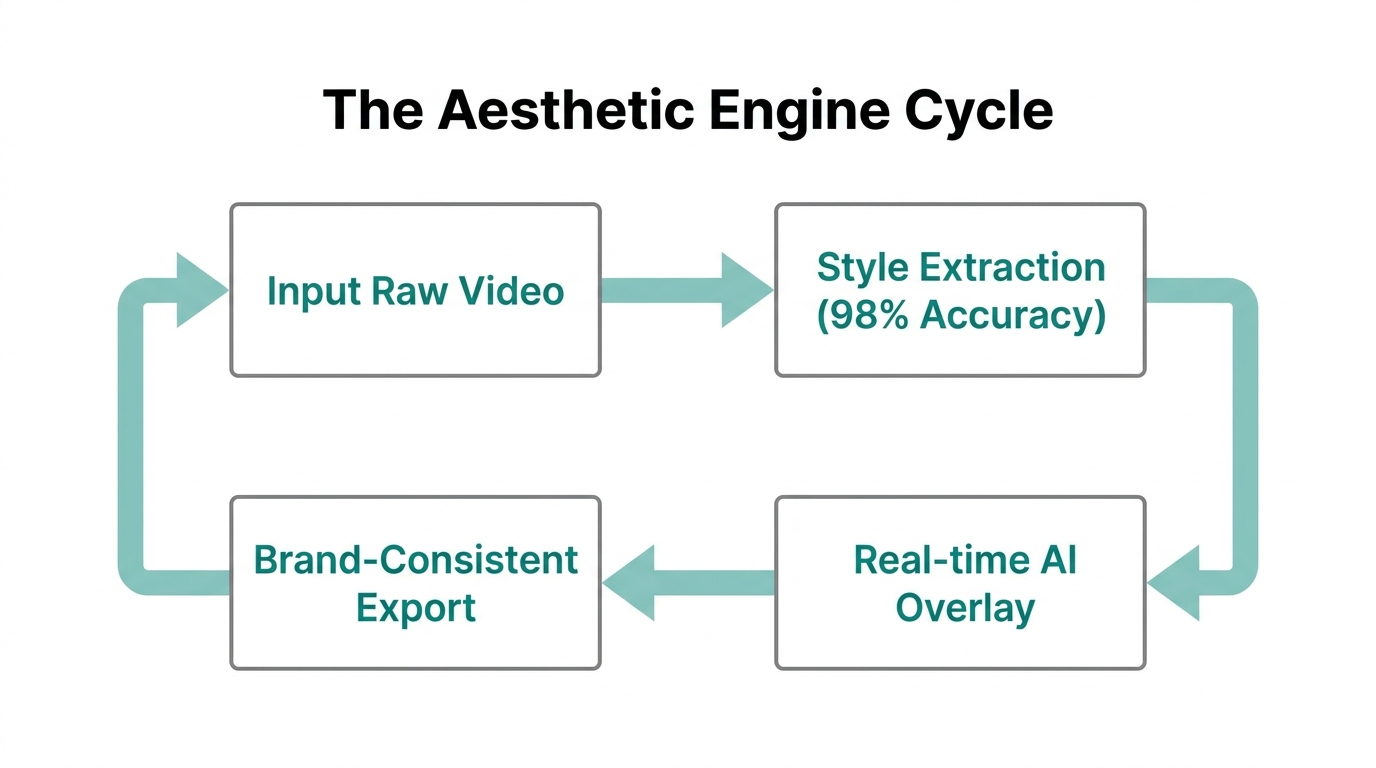
If you are an influencer or a brand manager in 2026, you cannot rely on generic AI tools. You need a proprietary Aesthetic Engine. This is a specialized pipeline that combines various AI models to produce a unique, uncopiable look. Platforms like Stormy AI are already helping brands identify which creators have the strongest visual signatures to build these engines around.
Step 1: Define the Latent Space
Start by aggregating your best-performing content from the last year. Use a model like Midjourney to analyze the common threads in your lighting, composition, and color theory. This becomes your brand's "DNA" that the AI will replicate.
Step 2: Set Up Your Infrastructure
The most successful creators are now "Creative Engineers." They don't just use apps; they build them. Using v0.dev, you can chat-to-build custom web interfaces that allow your team to upload raw footage and have it instantly "re-skinned" into your brand's aesthetic. This is the power of Vercel: moving from an idea to a live, brand-consistent URL in seconds.
Step 3: Multi-Modal Integration
A true brand is more than just visuals. Integrate ElevenLabs for voice cloning to ensure your video narration always hits the right tone, and use OpenAI's latest models to handle the "absurdly smart autocomplete" for your captions and engagement responses.
"The future belongs to the 'Reducer'—the creator who deletes the friction between a raw idea and a production-grade deployment."
Creative Engineering: The Key to Viral Growth in 2026
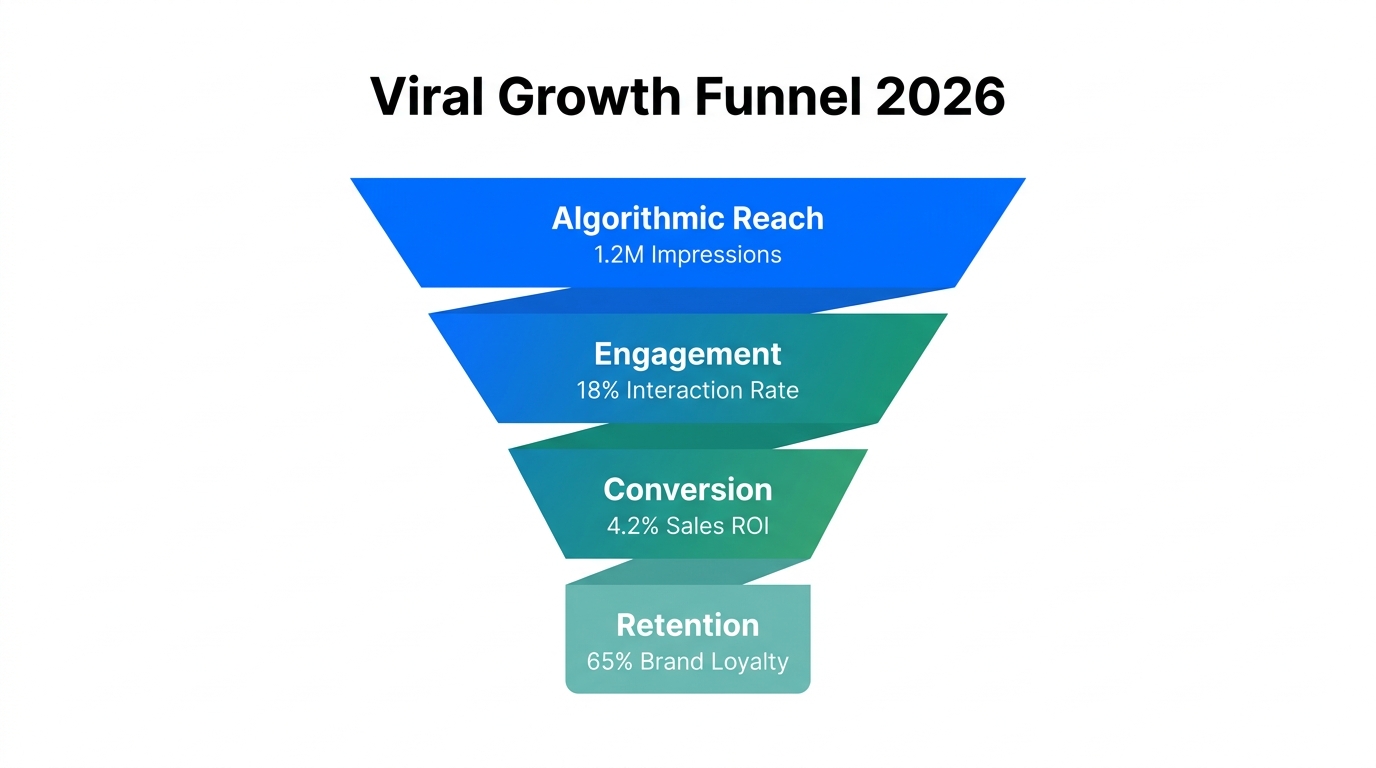
The concept of "anyone can cook" has never been more true than in the 2026 creator economy. Creative engineering is the practice of combining disparate AI APIs into a cohesive brand experience. For example, look at how the AI camera apps 2026 movement is being used by travel influencers. They are no longer just posting photos; they are building interactive, hydrated web artifacts.
Instead of a static Instagram post, a creator might ship a mini-app that lets followers "enter" the photo, change the time of day, or interact with AI-generated guides. This level of engagement is only possible when you treat your brand as software. By using backend tools like Supabase to store user preferences and Vercel to deploy, creators are becoming tech founders in their own right.
Why the Next Billion-Dollar App is a Camera (Again)
50:45It has been over a decade since the last major camera innovation (Snapchat and Instagram). The window has reopened. The next billion-dollar social app will be an AI Camera that doesn't just add dog ears to your face, but solves the fundamental problem of human visual fallibility. It will remove the "awkwardness" of taking photos by ensuring every shot is a masterpiece.
This app will likely leverage the same "asymmetry" that made Coinbase or Somewhere.com successful—finding a wedge in a massive market and applying a new technical standard. For influencers, this app will be the central hub of their operations, connecting their physical presence to their digital "Aesthetic Engine" in real-time.
Conclusion: Embracing the Future of Creator Brands
As we navigate 2026, the creators who win will be those who stop acting like 1.0 photographers and start acting like 2.0 engineers. By adopting the Vercel AI camera philosophy, you can ensure influencer brand consistency across every platform while reducing your production time from days to seconds. The tools are here—from v0.dev for app generation to Typeform for dynamic data collection—and the winners are already using them to build the next generation of billion-dollar brands. It's time to stop taking photos and start prompting your reality.