In the high-stakes world of mobile app development, the traditional 'build it and they will come' philosophy has officially been retired. By the time 2026 rolled around, the market became too crowded for guesswork. Founders like Caleb Dean are proving that the fastest way to a six-figure exit isn't through months of quiet coding, but through aggressive, early validation. Caleb managed to sell his app, Runify, for a substantial multiple after only 26 days of revenue. Not 26 months—26 days. This wasn't a stroke of luck; it was a carefully engineered app store pre-order strategy that turned a simple fitness concept into a viral acquisition target before the first line of production code was even finalized.
The 'Smoke Test' Framework: Proving Intent Before Production
Caleb explains using a simple landing page and Stripe link to validate demand.
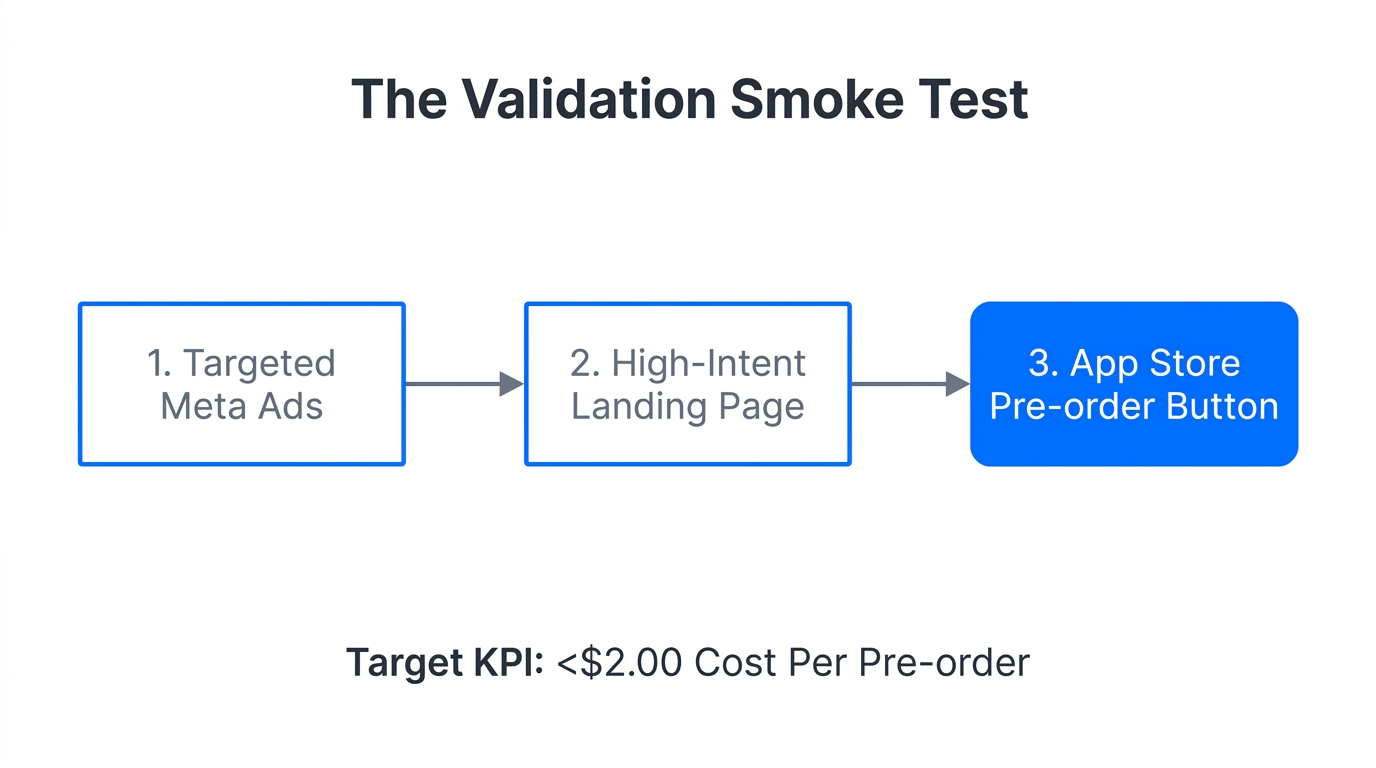
Most developers waste thousands of dollars building features nobody wants. The Runify playbook starts with a 'Smoke Test'—a low-fidelity validation method designed to prove that users are willing to open their wallets. Before committing to a CTO or a development sprint, Caleb identified a gap in the market by analyzing existing successes. He looked at Sensor Tower data for Liftoff, a gamified fitness app generating over $200,000 per month, and realized that while gym-goers had 'ranked' workouts, runners were left behind.
To validate this, he didn't build a prototype. Instead, he used ChatGPT to generate a simple HTML landing page. The page featured just a few sentences of copy and a direct Stripe payment link. He offered a $5 'early adopter' lifetime deal for an app that didn't exist yet. The result? 2,000 waitlist signups and 90 people who paid cold hard cash. This provided the ultimate signal of product market fit validation: financial commitment from strangers.
"If you can't get 50 people to pay you $5 for a landing page, you shouldn't spend $50,000 building the app."Seeding the Social Graph: Solving the 'Empty Room' Problem
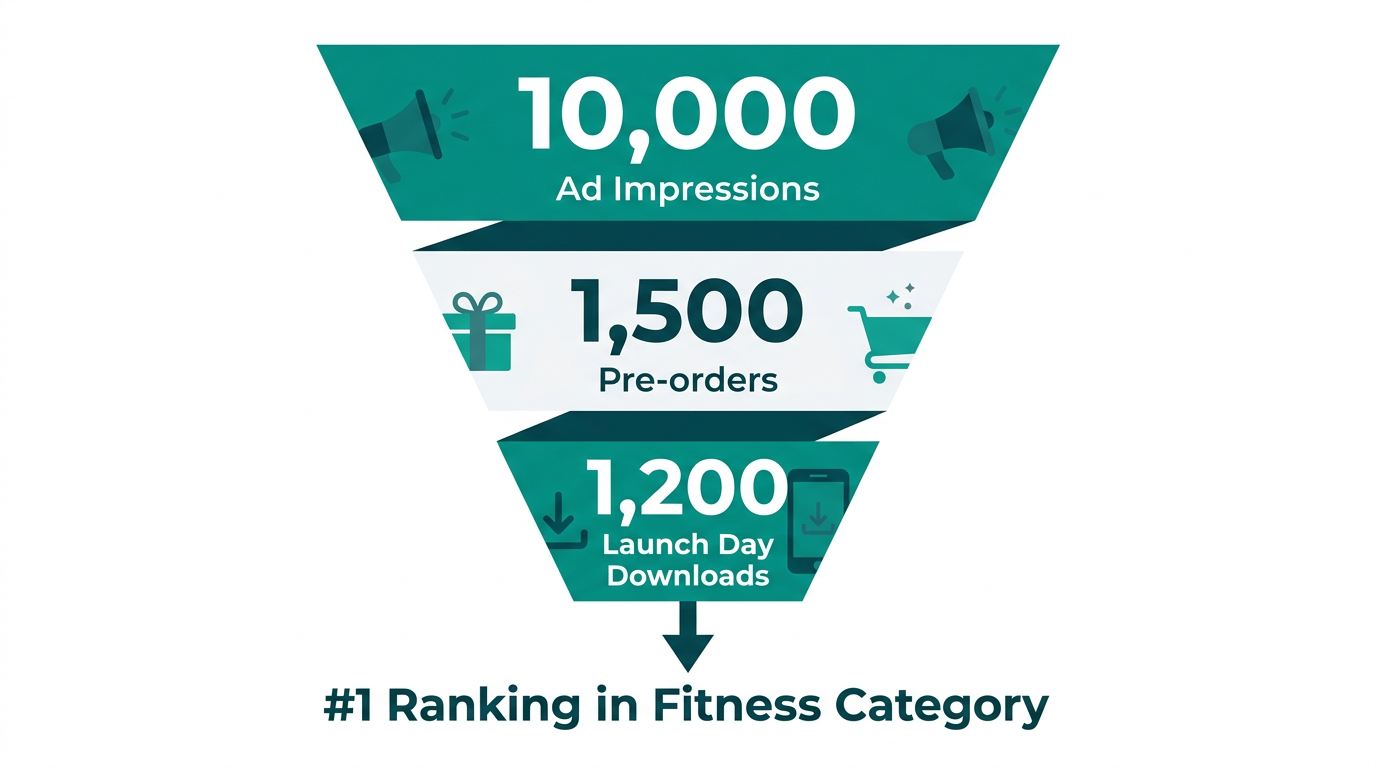
How the App Store pre-order strategy seeds your leaderboard before the official launch.For social or competitive apps, the biggest hurdle is the 'empty room' problem. If a user downloads a ranking app like Runify and sees a leaderboard with zero participants, they churn instantly. Caleb solved this by leveraging the App Store's pre-order mechanics. By getting a bare-bones version of the app approved early, he could list it for pre-order while the full version was still in development.
When an app is on pre-order, users can 'buy' it (even if free), and the moment the founder hits 'Release,' the app automatically downloads to every single device that pre-ordered it. Simultaneously, Apple sends a push notification and an email to those users. For Runify, this meant launching with 3,000 simultaneous users on day one. The leaderboard didn't just have names; it was overflowing within the first hour of launch. This immediate density is a critical user acquisition strategy for 2026, as it creates an instant feeling of community and social proof.
| Strategy | Waitlist (Email) | App Store Pre-order |
|---|---|---|
| Conversion Rate | Low (Spam/Ghosting) | High (Auto-download) |
| Day 1 Friction | User must click link and download | Zero (App appears on home screen) |
| Notification | Email only | Email + Push + Home Screen placement |
| Social Seeding | Delayed arrival | Instant mass-onboarding |
Distribution at Scale: 9 Reels a Day
Validation requires traffic, and in 2026, organic short-form video remains the king of low-cost distribution. Caleb's strategy involved extreme volume. He discovered that while TikTok might penalize over-posting, Instagram generally does not. At one point, the Runify team was posting nine Reels per day.
To sustain this, his CTO built an internal tool capable of generating 10,000 variations of a proven video format in under a minute. By slightly altering captions and background data, they achieved 5 million views in a single month. For founders who don't have an internal video engine, using an AI-powered search tool like Stormy AI allows you to instantly find influencers who already have the 'runner' or 'fitness' audience and partner with them to replicate these high-volume strategies. This mobile app launch plan 2026 relies on saturation; you want to be unmissable in your niche's feed.
"Instagram doesn't punish quantity if the quality meets a baseline. We treated every Reel like a lottery ticket—eventually, one hits for 500k views."Managing App Store Connect: The Release Date Hack
Discover the risks of managing App Store pre-order dates and handling launch complaints.A common mistake in the Runify growth playbook is a technical one: mismanaging the release date. Apple requires you to set a specific launch date for pre-orders. If you are still squashing bugs but the date arrives, Apple will launch your app automatically. Caleb actually experienced an 'accidental' launch because he forgot to push the date back during a 15-hour coding sprint.
To avoid this, maintain a strict buffer of at least 7 days in Apple Store Connect. Set your internal deadline a week before the public date. This ensures that when your 3,000 pre-order users finally get that 'Runify is Live' notification, they are entering a polished environment, not a buggy beta. Using tools like AppsFlyer during this period can help you track where your pre-order traffic is coming from, allowing you to double down on the right social channels.
The 'S-Tier' Feedback Loop: WhatsApp and Personal Outreach
The 90 people who paid $5 for a non-existent app weren't just customers; they were 'S-tier' validators. Caleb didn't just send them an automated thank-you note. He reached out personally, often moving the conversation to WhatsApp. By building direct lines to his most committed users, he could send TestFlight links and get real-time bug reports.
This level of product market fit validation is what allowed Runify to integrate with complex APIs like Strava and Garmin successfully. The users told him exactly what they wanted: "I don't just want a leaderboard; I want it to sync with my Apple Watch automatically." Because he had their direct contact info, he could iterate in days rather than months.
The 26-Day Exit: How Runify Sold So Fast
Learn how twenty-six days of revenue led to a successful six-figure app acquisition.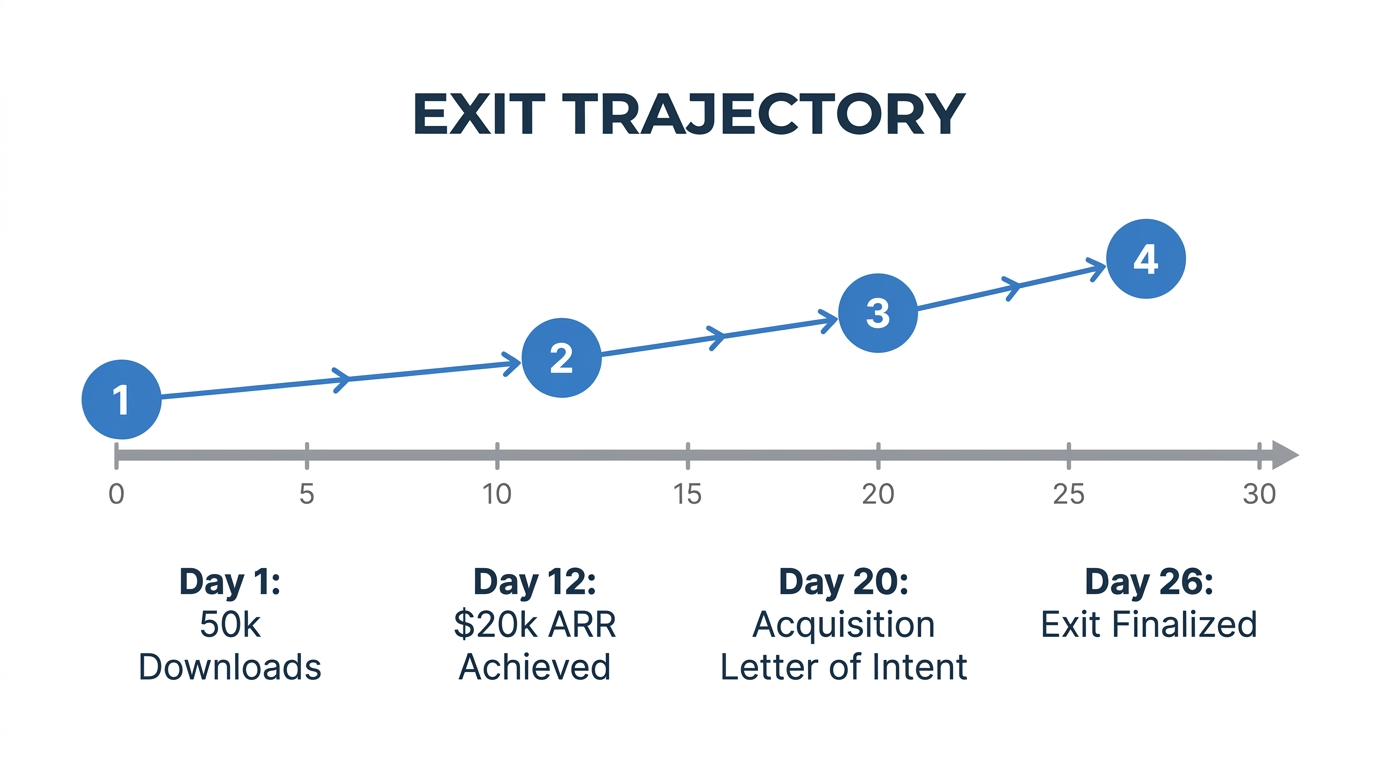
Why would a buyer pay a 5x ARR multiple for an app with less than a month of revenue? The answer lies in the transparency and confidence Caleb showed on social media. By 'yapping' about his progress on X (Twitter), he caught the attention of an app studio looking to expand into the wellness niche. Even though he only had 200 followers at the time, his posts about hitting $3,000 MRR and showing his 30% conversion rates were enough to trigger a cold DM.
The buyer wasn't just buying the code; they were buying a validated distribution engine. They saw that Runify had a social graph, a working content loop, and a pre-order strategy that could be replicated across other apps in their portfolio. For founders looking to scale their own creator outreach to achieve similar results, platforms like Stormy AI streamline the process of finding the right partners to fuel that initial pre-order fire.
"A buyer pays for the future, not just the past. If you can prove your distribution is a machine, the timeline of your revenue matters less than its trajectory."Conclusion: Your 2026 Launch Playbook
The success of Runify proves that the 'zero to acquisition' timeline can be compressed from years into weeks if you prioritize validation over perfection. To win in 2026, your launch plan must include a 'smoke test' to capture buyer intent, a high-volume content strategy to drive awareness, and the strategic use of App Store pre-orders to ensure your social graph is alive on day one. By the time you write your first line of code, you should already have a list of paying users waiting for their devices to buzz. That is the secret to a viral launch and a swift, lucrative exit.