In the fast-moving landscape of 2026, the traditional path of startup validation—spending months on customer interviews, landing page tests, and manual research—is officially obsolete. The rise of agentic AI has fundamentally shifted how founders identify opportunities. Leading this charge is Manus AI, a powerful multi-agent system that doesn't just answer questions; it executes entire business workflows. From scraping X (formerly Twitter) to building fully functional prototypes like a "DocuSign killer," Manus is proving to be the ultimate research partner for the modern entrepreneur.
The Shift from the 'AI Cocktail' to Agentic Validation
Until recently, founders relied on what marketing strategist Greg Isenberg calls the "AI cocktail approach." This involved hopping between tools: using ChatGPT for ideation, v0.dev for design, and Cursor for coding. While effective, this workflow required significant manual intervention and "copy-paste" fatigue.
Manus AI changes this by operating as a multi-agent framework. Under the hood, it utilizes a planner and an executor that manage a virtual sandbox. As Min Choi noted in a recent breakdown, Manus is the next evolution of early agentic experiments like BabyAGI, but with far more robust capabilities. It can run a browser via Puppeteer, execute command-line tasks, and even reflect on its own errors to self-correct in real-time. The goal in 2026 is no longer just to generate text, but to automate the entire process of building.
"We are getting closer and closer to a glimpse of what AGI looks like—where the AI can actually go in, run tasks, and use tools autonomously."
Step 1: Scraping X and YouTube for Underserved Pain Points
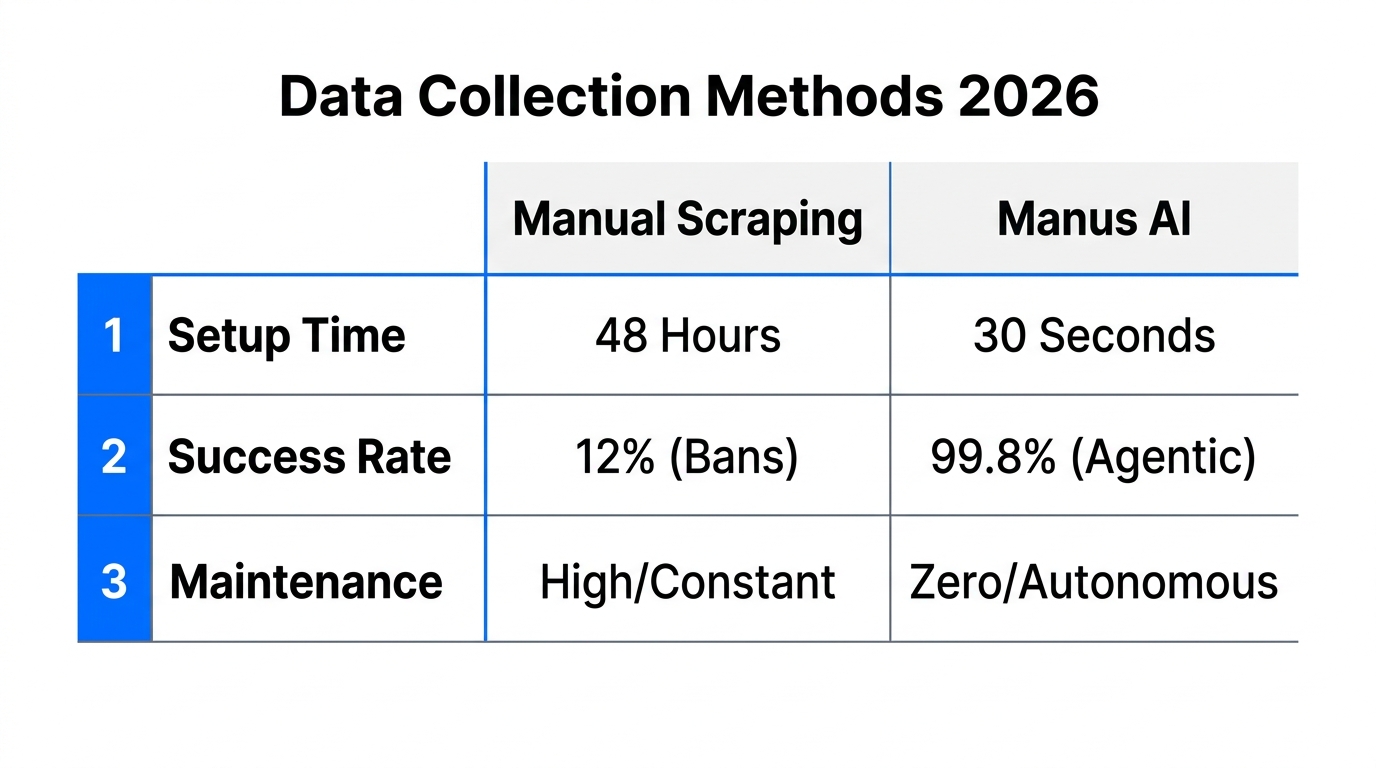
The foundation of any viral niche is a deeply felt pain point. In 2026, those pain points are voiced daily on social platforms. Manus AI can be tasked with a broad objective: "Scrape Greg Isenberg's X feed and YouTube comments to find the top three startup ideas with the highest probability of success."
Using automation tools like Puppeteer, Manus navigates to specific profiles, reads bios, and analyzes content engagement. For example, it might identify that users are frustrated with the high cost of enterprise software like DocuSign. It doesn't just list the idea; it analyzes the why. It looks for "feature bloat" in existing tools and identifies where a lean, AI-native alternative could capture $1,000 per day in revenue by offering core features (like e-signatures) for free or at a massive discount.
| Feature | Manual Research (2024) | Manus AI Research (2026) |
|---|---|---|
| Data Collection | Manual scrolling and note-taking | Automated browser scraping via Puppeteer |
| Synthesis | Subjective human analysis | Multi-agent planning and cross-referencing |
| Speed | Days or weeks | Under 15 minutes |
Step 2: Validating 'Billion-Dollar' Ideas Through Market Simulation
 4:12
4:12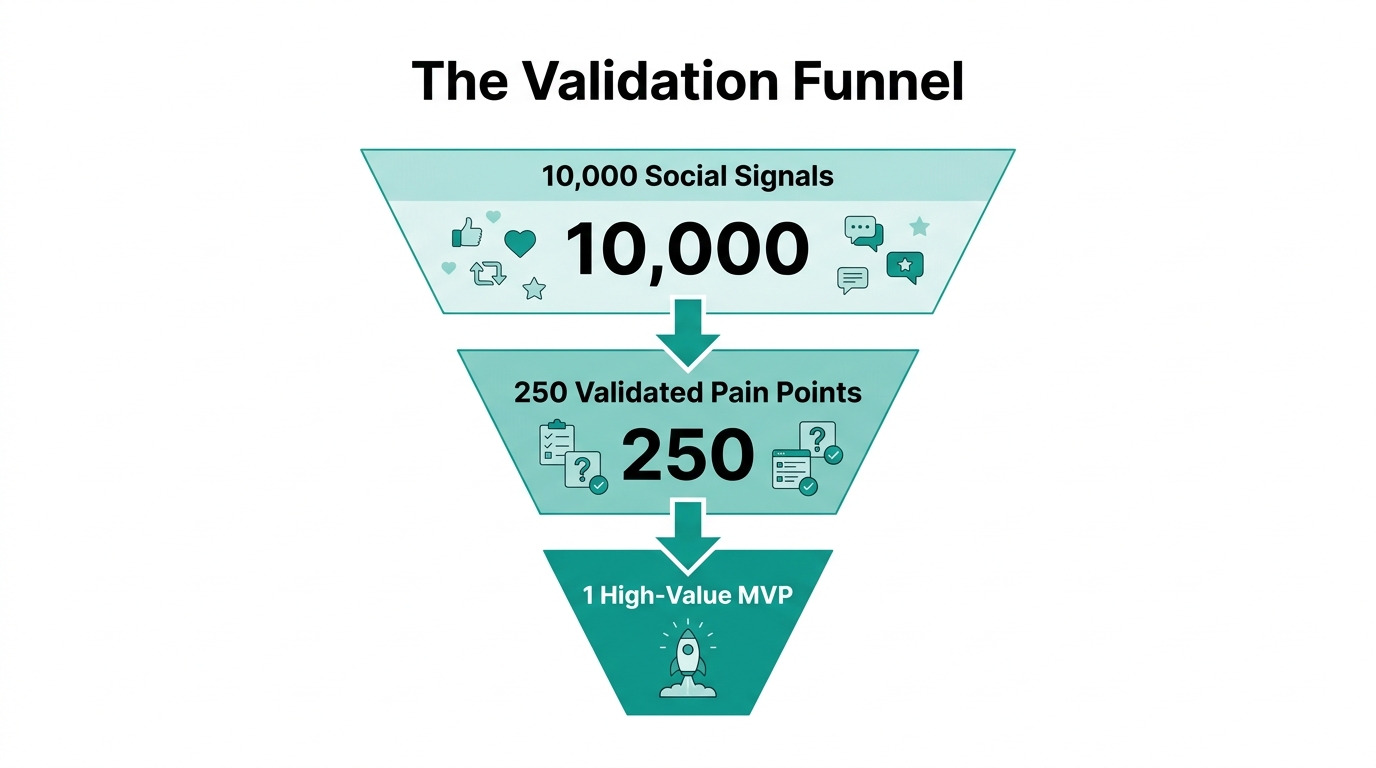
Once a niche is identified, Manus moves into the validation phase. It can research a competitor's core features to identify exactly what is necessary for a Minimum Viable Product (MVP). When Greg Isenberg suggested building a DocuSign killer, Manus didn't just agree; it went to the DocuSign website, identified the core e-signature user flows, and documented the technical requirements.
Crucially, human-in-the-loop interaction allows you to narrow the scope. If the AI starts planning a massive suite of products, you can interrupt it and say, "Only focus on the e-signature key functionalities." Manus will acknowledge the change and replan its project structure instantly. This iterative feedback loop ensures that the validation remains grounded in market reality rather than AI hallucinations.
"The ability to interrupt an agent in mid-progress to readjust the plan is the ultimate power move for a non-technical founder."
Step 3: Auditing Founder-Market Fit
A great idea is worthless without the right founder to execute it. In 2026, Manus AI can audit your personal digital footprint to see if you are the right person for a specific niche. By analyzing your LinkedIn, X, and personal site, the AI can determine your "founder-market fit."
If you're trying to launch a design agency like Late Checkout Agency, Manus can critique your current presence. It can ask: "Do you have the authority in this space? Are executives from AI-first companies finding you?" It can then propose an SEO strategy to attract high-value clients, such as decision-makers at Salesforce or Slack, ensuring your niche discovery aligns with your personal brand.
Step 4: Rapid Prototyping—From Report to Live Landing Page
9:31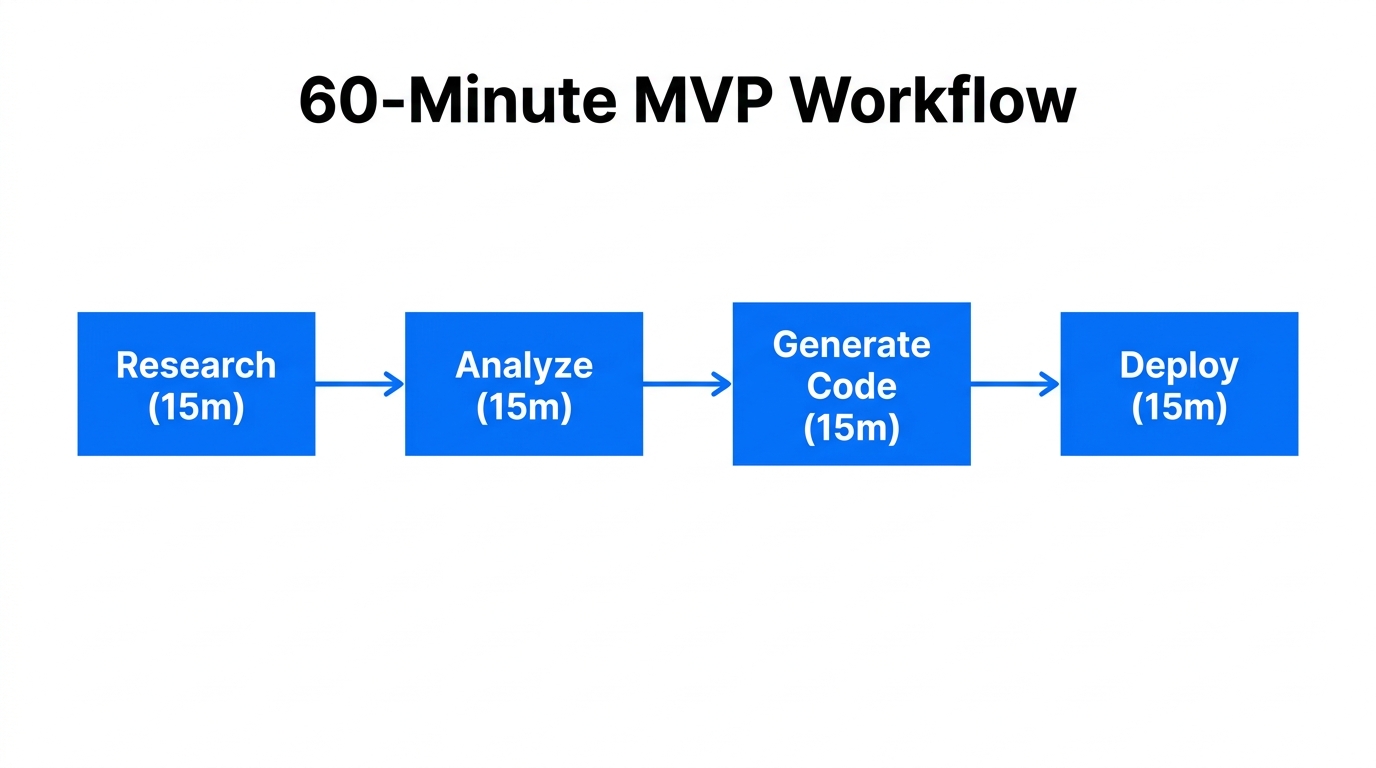
The most impressive feat of Manus AI is its ability to move from research to code. Once a niche is validated, you can prompt: "Build and deploy a Next.js app for this e-signature service."
Manus will then:
- Set up the project structure (routes, middleware, and database schemas) using frameworks like Next.js.
- Generate the frontend code (Login pages, document management interfaces).
- Attempt to deploy to a public network, providing a live URL.
While the tool is still in beta and occasionally encounters "terminal errors" or zipping issues, the workflow is clear. In under 60 minutes, you can have a functional prototype like a flight simulator (inspired by FlyPeter) or a SaaS landing page live for testing.
The Reality Check: Privacy, Scale, and Context
62:22Despite its viral success, Manus AI is not without its hurdles. Founders in 2026 must navigate three primary limitations:
- Context Windows: Extremely long sessions can lead to performance declines. If a task becomes too complex, the agent may require a session reset.
- Privacy Concerns: As a tool originating from China, some users are hesitant to share proprietary data. The best practice is to keep prompts vague and avoid sharing personal keys.
- System Stress: During viral peaks, the system can hit usage limits or encounter "critical issues" that require manual reboots.
For founders looking to scale their marketing after validation, platforms like Stormy AI are essential. While Manus handles the build and the core research, Stormy AI excels at finding the specific creators and influencers needed to make that new niche go viral on TikTok and YouTube. Pairing an autonomous builder like Manus with an autonomous outreach agent like Stormy creates a formidable growth engine.
"You don't need a co-founder in 2026; you need a suite of agents working while you sleep."
Conclusion: The Era of the Autonomous Founder
The experiment conducted by Greg Isenberg and Min Choi proves that the barrier to entry for building a "billion-dollar" software product is collapsing. Manus AI market research allows you to find underserved niches in minutes, while its agentic execution allows you to build the solution in hours.
To succeed in 2026, don't just ask AI for ideas. Use it to audit your skills, scrape the competition, and deploy your first version before your competitors even finish their morning coffee. The future belongs to the operators who can manage an army of AI agents to turn thoughts into automated businesses.
Ready to find the creators who will launch your validated idea? Start your influencer discovery on Stormy AI today and automate your growth alongside your build.