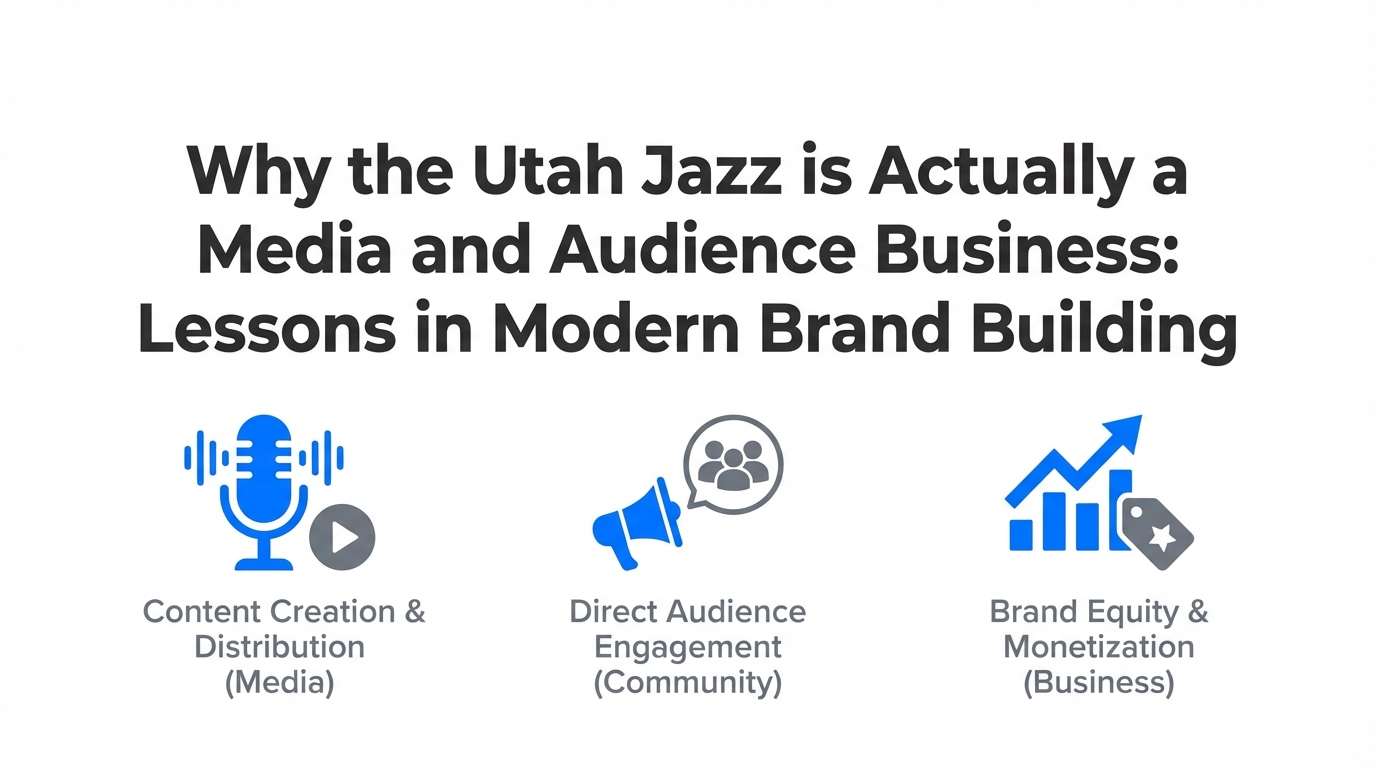
When Ryan Smith, the founder of the $10 billion experience management giant Qualtrics, purchased the Utah Jazz, the sports world viewed it as a billionaire's homecoming. But for growth leaders and marketers, it was something far more significant: a masterclass in modern brand architecture. In the digital age, a professional sports team is no longer just a group of athletes playing a game; it is a sophisticated engine for audience acquisition, digital media distribution, and cross-industry monetization. By treating a sports franchise as the ultimate top-of-funnel for a ecosystem of businesses, Smith is rewriting the playbook for how a modern brand survives and thrives in a fragmented attention economy.
The Pain Threshold and the Long Game: Bootstrapping a Legacy
Before the private jets and NBA courts, Ryan Smith built his empire from a basement. This history of bootstrapping isn't just a feel-good origin story; it is the foundation of his brand building strategy. Smith often remarks that success is directly correlated with your pain threshold. In a world of venture-backed shortcuts, the ability to endure the slow, grinding process of building a brand "brick by brick" is a competitive advantage that cannot be bought.
When you look at the trajectory of successful entrepreneurs—from Travis Kalanick at Uber to elite athletes like LeBron James and his work with The SpringHill Company—there is a recurring theme of cross-domain mastery. These individuals don't just win in one area; they bring a high-performance methodology to everything they touch. For Smith, purchasing the Jazz wasn't a pivot away from software; it was an expansion of his distribution capabilities. Whether you are running a SaaS company or an NBA team, the core challenge remains the same: How much pain can you handle to play the long game?
"Your success is directly correlated with your pain threshold. Can you handle the pain of going through it? Everyone sees the success, but they don't see the years of iteration when everything was wrong at first."
The Sum of All Businesses: Sports as a Top-of-Funnel
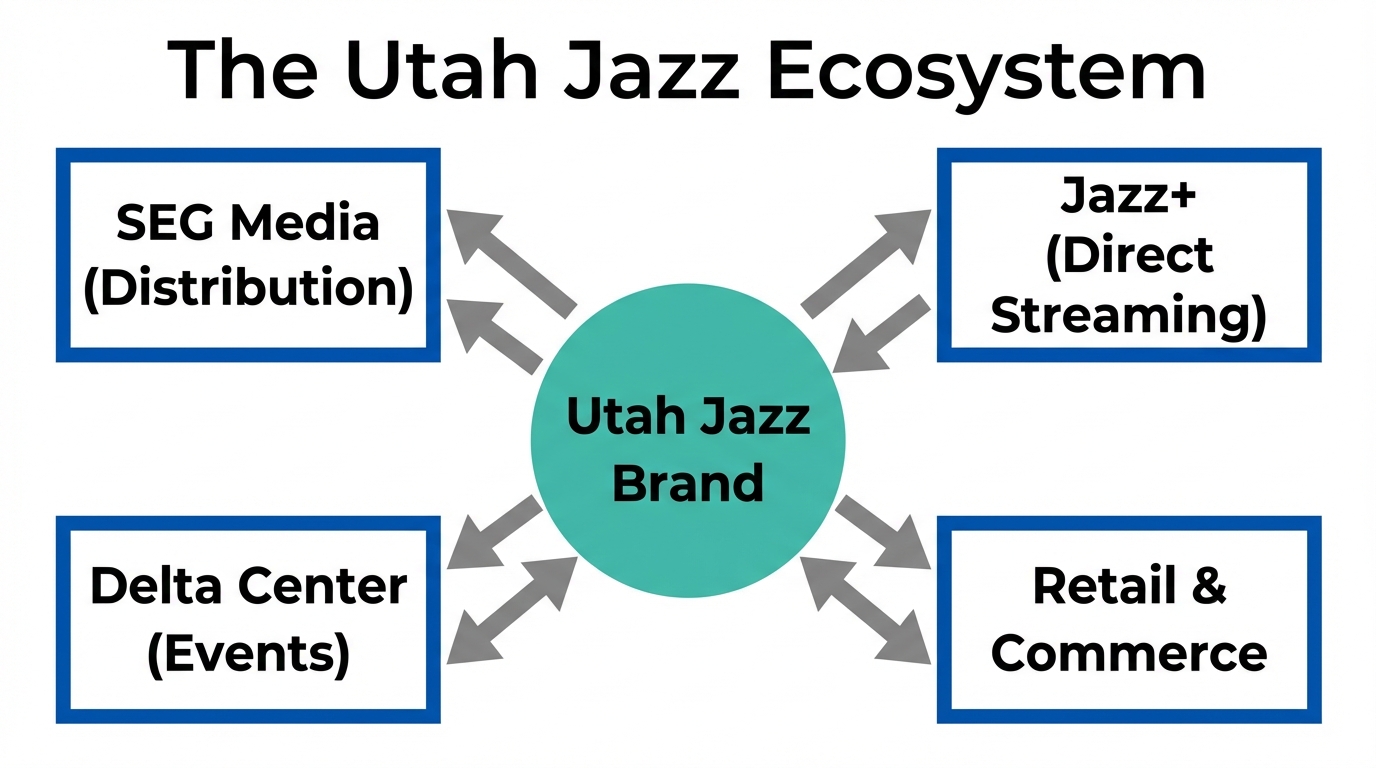
A common mistake in traditional marketing is viewing a product in isolation. Smith views the Utah Jazz as the "sum of all these businesses." When you step into the Delta Center, you aren't just a basketball fan; you are an active participant in a diversified media and services ecosystem. Smith understands that to lead in the modern economy, you must become an expert in every adjacent business your brand touches.
Consider the logistical layers required to run a sports franchise. You are simultaneously operating:
- A Payments Company: Managing thousands of transactions across ticketing, concessions, and merchandise, often integrated via platforms like Stripe.
- A Security Company: Ensuring the safety of thousands of fans through physical and digital infrastructure.
- An Events and Music Business: The arena isn't just for basketball; it’s a premier stop for global touring acts where the business is about "touring, not just streaming."
- A Media and Social Brand: Producing thousands of hours of content across YouTube, TikTok, and regional broadcasts.
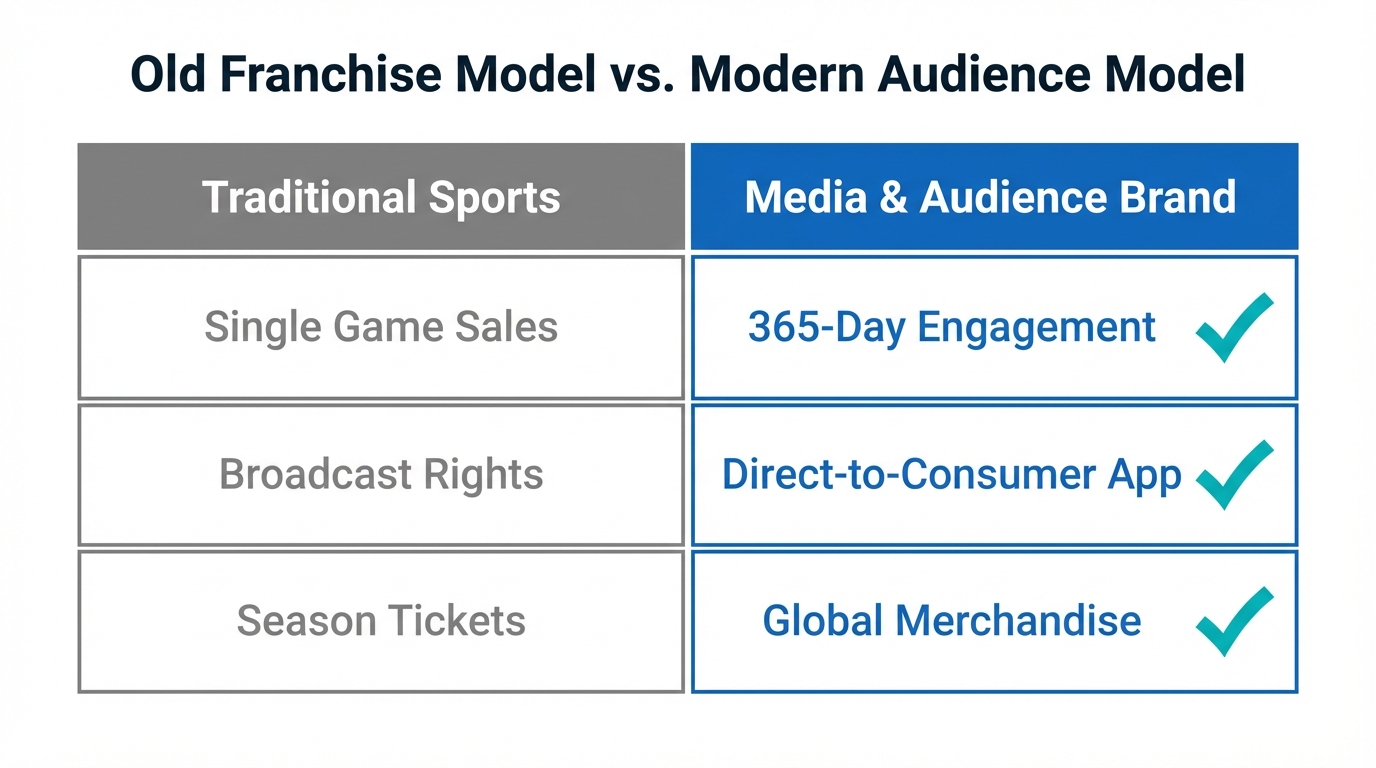
| Business Pillar | Traditional View | Modern Brand View (The Jazz Way) |
|---|---|---|
| Revenue Source | Ticket Sales | Audience Monetization (Payments, Hospitality) |
| Distribution | Local TV Deals | Digital Media Distribution (Social, Global Apps) |
| Brand Asset | The Players | The Experience (Core Memories, Retro Culture) |
| Engagement | Game Day Only | 24/7 Creator Economy (Behind-the-scenes, Lifestyle) |
The Convergence of Content and Commerce
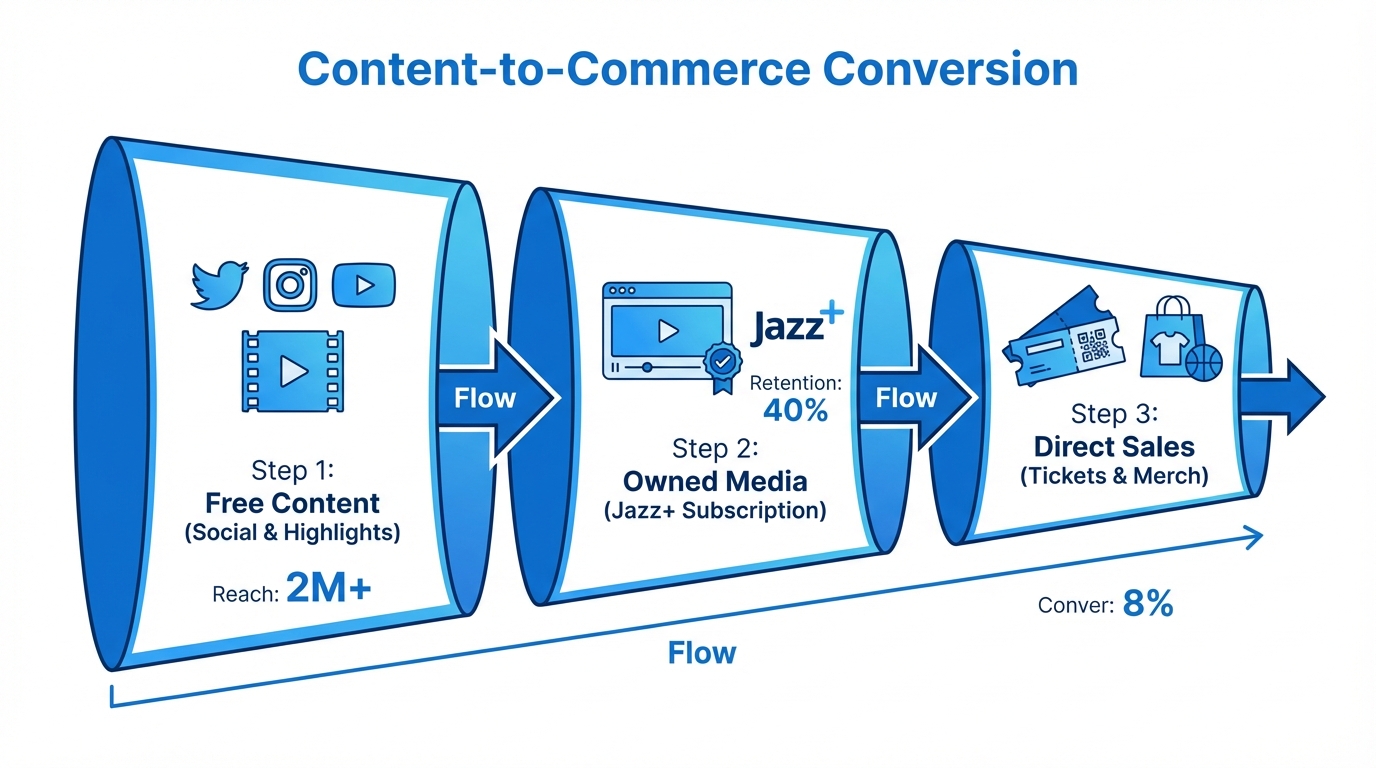
In the creator economy for business, the distinction between a "media company" and a "product company" has completely dissolved. The Utah Jazz is essentially a high-budget production studio that happens to have a basketball team as its primary subject. By leveraging tools like TikTok Ads Manager and organic social strategies, they maintain a digital brand moat that keeps fans engaged even when the team is in a rebuilding phase.
This approach mirrors how modern tech companies should operate. Instead of simply buying traffic through Google Ads, brands should be building their own audience aggregators. When you own the audience, you own the data, the narrative, and the ultimate distribution channel. This is why platforms like Stormy AI are becoming essential for brands; they allow businesses to discover and manage the creators who can authentically speak to these aggregated audiences at scale.
"You’ve got to become an expert in every business that you’re a part of... You are actually the sum of all these businesses. You are an audience for a lot of them."
Transitioning to the Experience Economy: Creating Core Memories
One of the most profound insights from Ryan Smith’s leadership is the focus on the Experience Economy. In a world where anything can be ordered with a click on Shopify, physical and emotional experiences have become the ultimate luxury. Smith focuses on creating "core memories" for fans and partners alike—whether that’s through the food prepared by world-class chefs at the practice facility or the nostalgia of bringing back vintage 1990s purple jerseys.
For a business, this means moving beyond the transactional. It’s about the emotional resonance of the brand, a concept explored deeply in the Harvard Business Review. When Sean from the "Behind the Pod" series visited Smith, the highlight wasn't just the interview; it was the 6:00 a.m. basketball game, the shared meal, and the feeling of being part of the team's culture. This is modern brand architecture in action: building a community that people want to belong to, not just a product they want to use.
The Secret Weapon: Relentless Digital Distribution and Outreach
Building a media empire requires more than just a vision; it requires the persistence to get that vision in front of the right people. A telling moment in the research reveals that it took nine follow-up emails to secure the interview with Smith. Most people quit after the second or third attempt. In the world of audience acquisition, the difference between a missed opportunity and a game-changing collaboration is often just a matter of follow-up. For teams managing hundreds of creator relationships, using an AI-powered agent like Stormy AI can automate this persistence, ensuring that outreach and follow-ups happen on a daily schedule without manual fatigue. Whether you are using Instantly for cold email or managing a complex CRM, the lesson from the Jazz is clear: the modern brand is built on the relentless pursuit of attention.