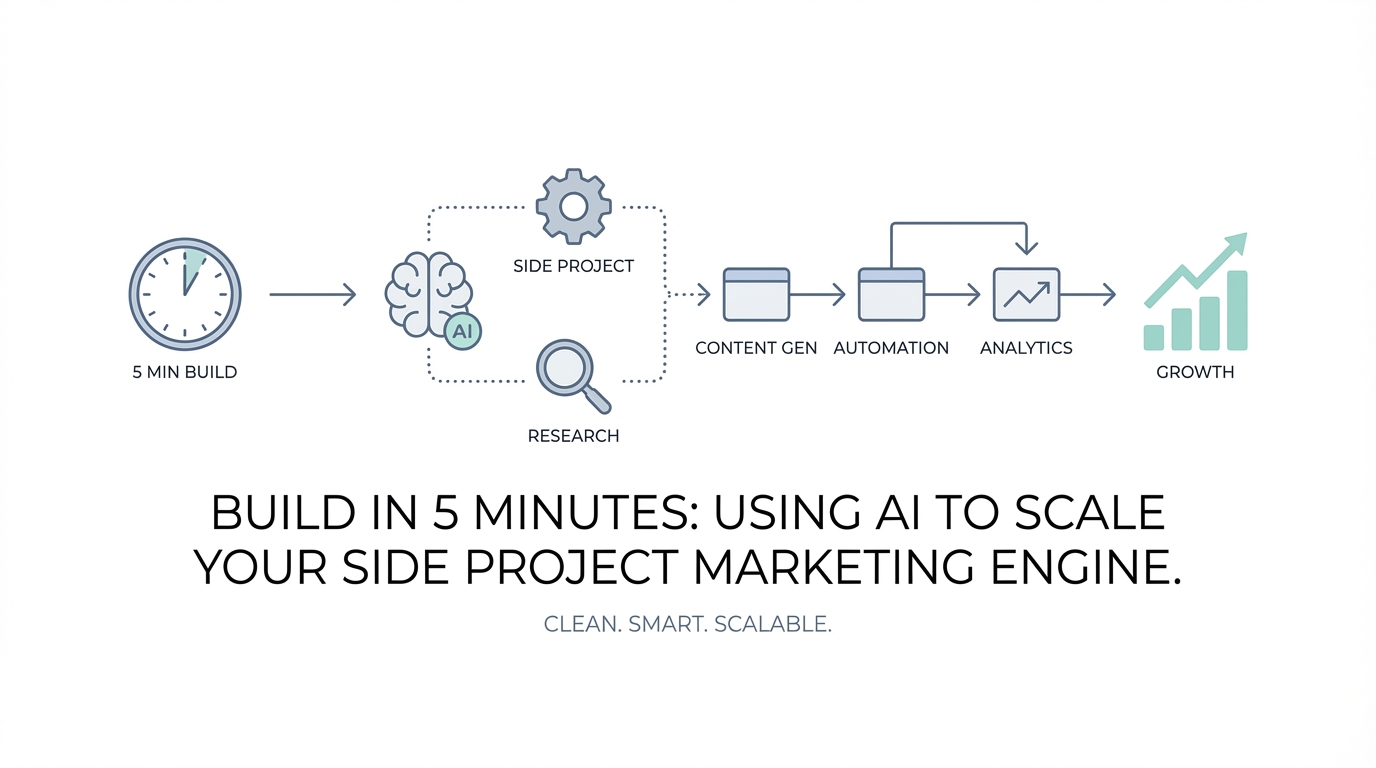
Marketing is the single biggest hurdle for most software engineers. You can build a world-class application, but without a predictable way to get eyes on the product, it remains a ghost town. Traditionally, this meant spending thousands on Google Ads or laboring over blog posts for months. However, a new paradigm is emerging: engineering as marketing. By leveraging modern cursor ai for developers, builders are now launching dozens of micro-tools in minutes to capture organic search traffic and funnel users into their primary SaaS products. This guide explores how to automate marketing with AI, moving from idea to deployment in under five minutes.
The Power of Engineering as Marketing

The concept of building free tools to drive traffic isn't new, but its efficacy has skyrocketed. Take the case of Banu, a founder featured on Starter Story, who grew his SaaS, Site GPT, to $13,000 MRR while spending exactly zero dollars on paid advertising. Instead of competing for expensive keywords in the ad auction, he built over 50 free tools that solve specific, micro-problems for his target audience. This strategy has driven nearly 1 million visitors to his site, with 90% of that traffic coming through these small, functional utilities.
For builders, this approach is a game-changer. It allows you to stay in your comfort zone—writing code—while simultaneously executing a high-impact marketing strategy. Platforms like Stormy AI understand that modern growth isn't just about ads; it's about providing value at every touchpoint. Stormy AI is an AI-powered search engine across TikTok, YouTube, and Instagram that helps you find the right creators to amplify these tools once they are built. When you build a "Chatbot Name Generator" or a "PDF to Markdown Converter," you aren't just building a tool; you are building a lead magnet that ranks for low-difficulty SEO keywords and provides immediate utility to potential customers.
The AI Catalyst: Why Cursor Changes Everything
Building 50 tools used to take months of manual effort. In 2026, building saas with ai has compressed that timeline into hours. The tool of choice for many high-velocity builders is Cursor, an AI-native code editor that allows you to iterate on existing codebases using natural language prompts. Once you have a single tool template—say, a simple React component that takes an input and produces an AI-generated output—you can clone and modify it for any keyword in minutes.
The workflow is simple: you show Cursor your existing "Free Tool A" and tell it to create "Free Tool B" with a specific keyword focus and a unique logic prompt. Because the AI understands the context of your architecture, it handles the boilerplate, the styling, and the API integration. This is how founders like Banu can go from a new keyword discovery to a live tool in under 5 minutes. By using cursor ai for developers, you are essentially hiring an infinite team of junior engineers to execute your side project marketing plan.
The 7-Step Playbook for High-Volume Tool Creation
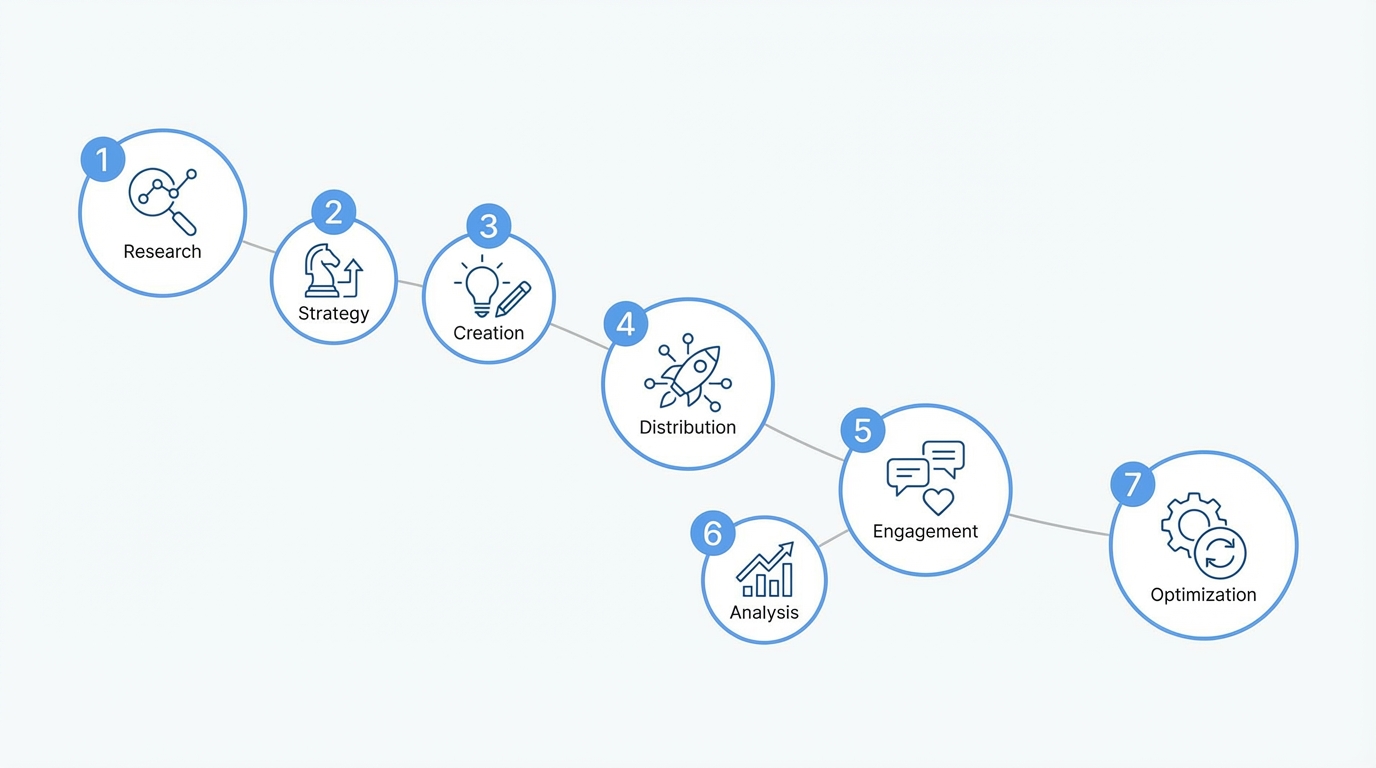
To scale your marketing engine effectively, you need a repeatable process. Following this playbook ensures you aren't just building randomly, but targeting high-intent traffic that converts.
Step 1: The "Blank Search" Keyword Discovery
Start by heading to Ahrefs Keywords Explorer. A powerful trick is to leave the search bar blank and hit enter. This gives you access to the entire database of global search terms, which you can then filter down to find hidden gems for your specific niche.
Step 2: Filter for Low Difficulty and High Intent
To rank quickly, you need keywords that established giants haven't dominated. Apply a Keyword Difficulty (KD) filter of maximum 10. Simultaneously, include keywords like "generator," "builder," "converter," or "AI." This identifies functional tools people are actively searching for.
Step 3: Set Volume Minimums
There is no point building a tool for five people. Filter for keywords with at least 1,000 monthly searches. This ensures that once you rank on the first page of Google, you’ll receive a steady stream of passive traffic.
Step 4: Create Your Notion Roadmap
List your target keywords in a tool like Notion. Create columns for monthly volume, KD, and "Product Relevance." A "PDF to Markdown" tool is highly relevant for a documentation SaaS, while a "Random Pizza Topping Generator" is not. Focus on the tools that have a natural bridge to your paid product.
Step 5: Design the CTA Bridge
Every free tool must have a clear Call to Action (CTA). If someone uses your free AI reply generator, include a banner saying: "Love this? Automate your entire customer support with Site GPT." The goal is to solve a small problem for free and a big problem for a fee.
Step 6: The 5-Minute Build with Cursor
Using Cursor, point to your previous tool's directory and prompt: "Create a new tool based on the structure of the PDF converter, but make it an AI-powered email subject line generator using the provided keyword." The AI will handle the TypeScript logic, UI updates, and SEO meta tags automatically.
Step 7: Launch and Analyze
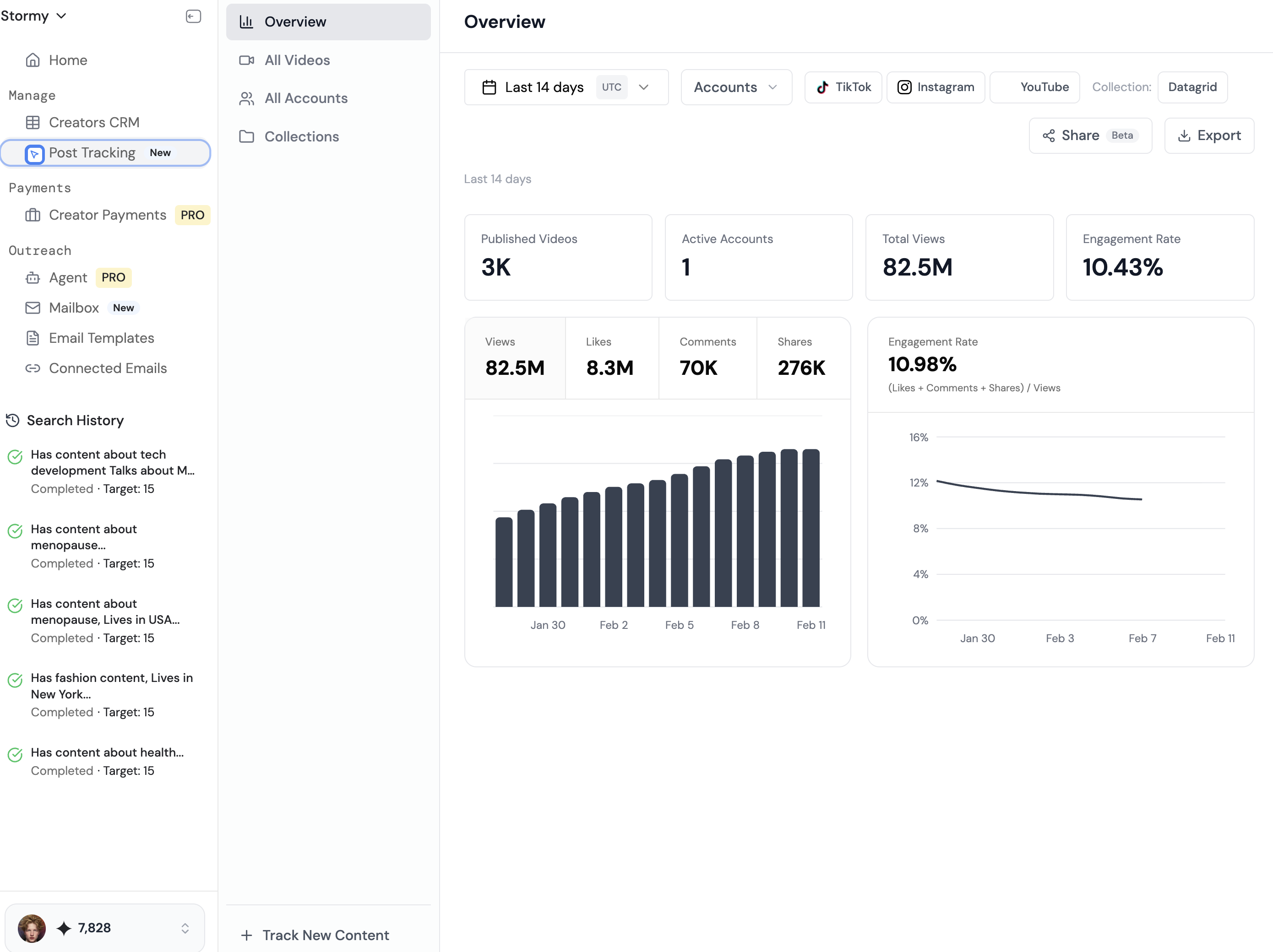
Don't wait for perfection. Launch the tool and track performance using PostHog for analytics and Stormy AI for post tracking and analytics, which helps you monitor views and engagement if you use creators to promote your tools. If a tool starts getting traction, spend time polishing it. If it doesn't, move on to the next one.
Technical Architecture: Scaling 50+ Tools on One Engine
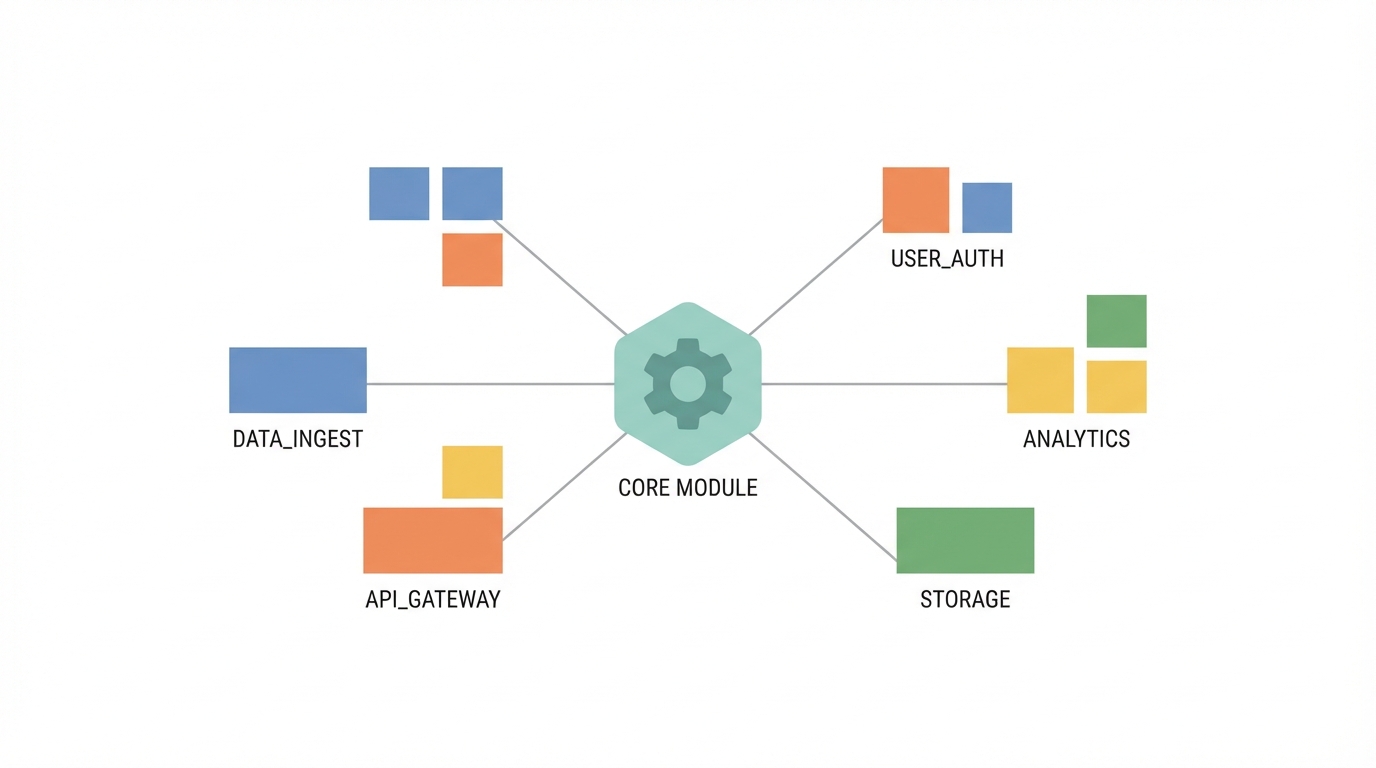
To manage 50+ tools without losing your mind, you need a shared codebase. Most successful builders use a Monorepo or a multi-tenant directory structure. Instead of 50 separate websites, you have one Next.js application where each tool is a unique route (e.g., domain.com/tools/generator-name).
This architecture allows you to share global components like headers, footers, and tracking scripts. When you update your CTA banner, it updates across all 50 tools instantly. For backend functionality, use a centralized API route that handles different prompt templates based on the tool's ID. This makes side project marketing incredibly efficient, as you only have to maintain one server environment and one SEO domain authority.
Amplifying Your Tools with UGC and AI
Ranking on Google is a long-term play, but you can drive immediate traffic by leveraging User-Generated Content (UGC). Mobile app developers often find success by having creators demonstrate their free tools on TikTok or Reels. If you’ve built a unique utility, you can find UGC creators on Stormy AI by typing a natural-language prompt like "SaaS reviewers in the US" to instantly find matching influencers. These videos often go viral because they provide immediate value, which in turn boosts your site's social signals and speeds up Google indexing.
For app marketing campaigns, these tools serve as the top of the funnel. You can run low-cost Apple Search Ads for the free tool, which has a much lower Acquisition Cost (CAC) than the main product, then use retargeting to convert those users into paid subscribers.
The Builder's Mindset: Launch First, Ask Questions Later
The biggest mistake builders make is over-engineering. Your free tool doesn't need a login system, a complex database, or a pixel-perfect design. It needs to work and it needs to be fast. Banu's advice to his past self was clear: "I would not spend months and months on launching something. Just launch with a very core feature."
This "ship fast" mentality is perfectly suited for the ai marketing tools era. If a tool takes 5 minutes to build, the cost of failure is essentially zero. You are playing a numbers game. Out of 50 tools, 5 might drive 80% of your traffic. Your job is to find those five as quickly as possible.
Conclusion: Building Your Marketing Moat
In a world where AI-generated content is flooding the internet, functional tools remain a high-value asset that search engines and users love. By combining engineering as marketing with the speed of Cursor, you can build a marketing engine that runs 24/7 without a recurring ad spend.
Start by identifying three low-difficulty keywords today. Use Cursor to clone a simple template, add a compelling CTA for your main product, and get it live. Whether you are building a small side project or scaling a venture-backed SaaS, the ability to automate marketing with AI will be your greatest competitive advantage. Ready to find the right creators to scale your new tools? Explore Stormy AI to send AI-personalized outreach emails and manage your entire creator CRM in one place.