
Most founders start their journey with a solution looking for a problem. They spend months building a polished product, only to launch it to a chorus of crickets. But what if you could reverse-engineer success by eavesdropping on the world's most candid conversations? In the modern digital economy, the most valuable market research isn't found in expensive reports—it is hidden in the chat logs of niche communities. By using AI market research tools like ChatGPT to analyze Discord conversations, entrepreneurs like Sam, the founder of Algrow, are building $14,000-per-month businesses without writing a single line of traditional code. This guide breaks down the exact playbook for using large language models (LLMs) to identify customer pain points and validate saas idea concepts before you ever open an IDE.
The Shift to Community-Driven Market Research
Traditional market research often relies on static data or artificial surveys where participants tell you what they think you want to hear. Discord offers the opposite: raw, unedited, and emotionally charged interactions. When users are frustrated with a current tool or struggling to achieve a specific outcome, they don't fill out a survey—they complain to their peers in real-time. This makes platforms like Starter Story such a goldmine for analyzing how successful founders identify these organic gaps in the market.
The beauty of this approach is that it allows you to find profitable saas niche opportunities that are too small for giant corporations to notice but large enough to support a highly profitable independent software business. By focusing on these micro-communities, you are effectively performing customer pain point identification at scale, using AI as your tireless research assistant.
The 'Chat History' Method: Scraping for Pain Points

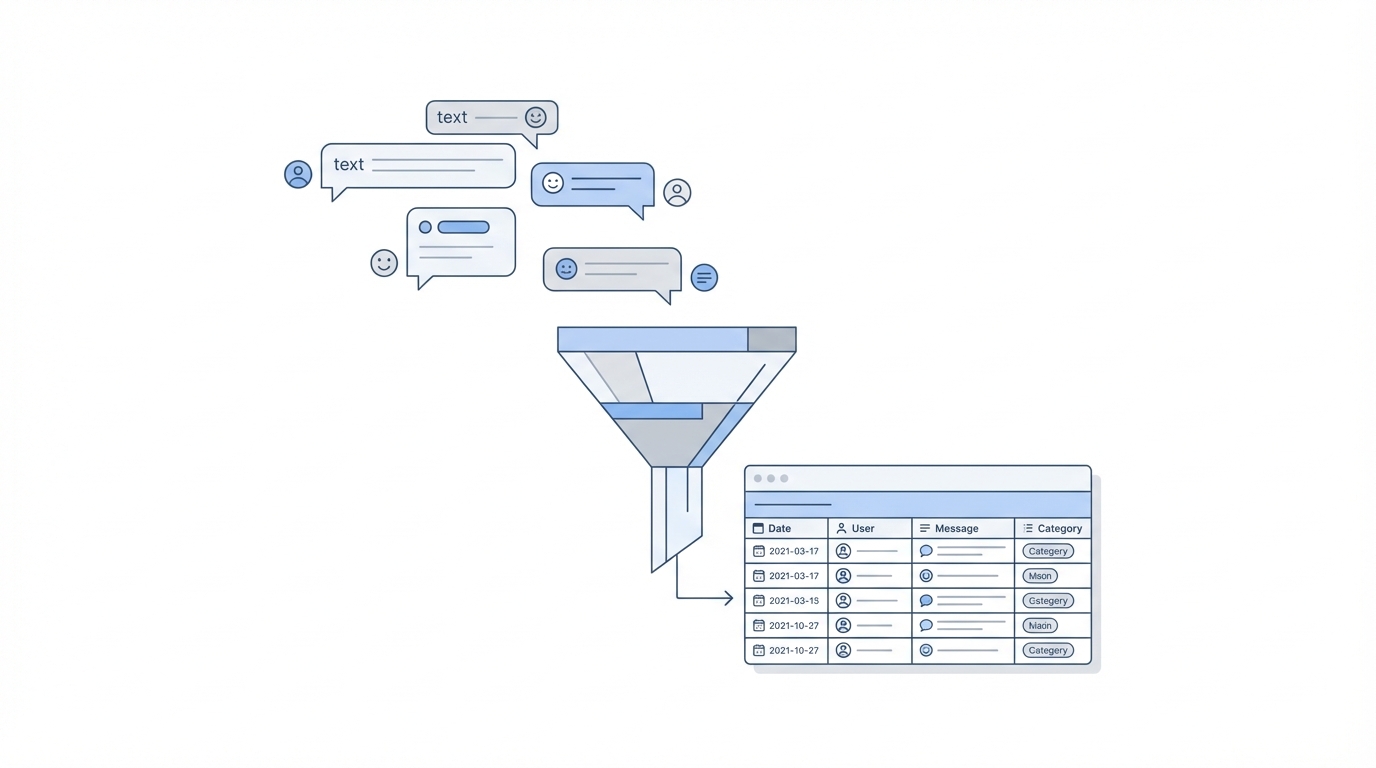
The first step in this market validation framework is finding where your Ideal Customer Profile (ICP) hangs out. While many marketers flock to Meta Ads Manager or LinkedIn, the most granular conversations are happening in private or semi-private Discord servers. Tools like Discboard allow you to search for communities by keyword, such as "YouTube Automation," "3D Assets," or "Mobile App Growth."
Once you have joined these servers, the goal is not to sell, but to listen. While an AI search engine like Stormy AI helps brands instantly find matching influencers across TikTok and YouTube via natural-language prompts, a founder’s goal is to find the problem these creators are facing. Sam’s strategy involved joining a server called "MoneyMind" and simply observing the search bar results. He noticed a recurring theme: users were constantly asking "how do I find a niche?" or "how can I replicate this viral format?"
To execute the 'Chat History' method, you can manually scroll through days of conversations or use Discord’s built-in search to look for keywords like "annoying," "how do I," "struggling with," or "is there a tool for." Copying and pasting these logs into an LLM allows you to process thousands of messages in seconds, highlighting the frequency and intensity of specific problems.
Step 1: Finding Your ICP’s Digital Home
Start by identifying 5-10 Discord servers using Discboard.org. Look for servers with active "general" or "help" channels. You want communities where people are actively building things, as these users are most likely to pay for software that saves them time. For example, if you are targeting mobile app developers who use Apple Search Ads, look for ASO (App Store Optimization) or indie hacker servers on Reddit.
Prompt Engineering: Asking AI to Find the Gold

Simply dumping text into ChatGPT isn't enough. To truly validate saas idea potential, you need to use specific prompts that force the AI to categorize and weight the data based on commercial intent. Effective ai market research tools require effective instructions. Just as you might use Stormy AI to get an AI-powered quality report on a creator to detect fake followers and engagement fraud, you must use AI to vet the quality of the pain points you discover in chat logs. When you have your Discord logs, try using a prompt like this:
"I am providing you with 3 days of chat logs from a community of faceless YouTubers. Please: 1. Identify the top 3 recurring technical hurdles. 2. List any specific software tools mentioned and the complaints associated with them. 3. Rank these problems by 'desperation level'—how much do these users seem to want a solution?"
This structured approach helps you move past surface-level noise and identify high-demand software niches. In Sam’s case, the AI would have flagged the constant need for "channel research" and "viral format replication" as a high-intensity pain point. This led to the birth of Algrow, which eventually reached over 10,000 users in just six months.
By using vibe coding—a term for building applications primarily through AI prompting—Sam was able to build an MVP in just one week using Cursor. He had zero technical background, but he had the most important piece of the puzzle: validated demand.
Validation Through DMs: The 'Silent Screen Share' Strategy
Data from AI is a great starting point, but real-world validation requires human interaction. Sam utilized a unique "silent screen share" method on Discord. He would join a voice channel, mute his mic, and share his screen while using his tool. This piqued curiosity without feeling like a sales pitch. When people asked, "What is that tool?" he knew he had something valuable.
To follow this market validation framework, once you have a basic MVP or even just a mockup, send personalized DMs to the users you identified in the chat logs. Don't ask them to buy; ask for feedback. Use a tool like Loom to send a 60-second video of your software solving the specific problem they complained about in the chat. If you need to manage hundreds of these conversations at scale, Stormy AI can handle hyper-personalized outreach and automated follow-ups through its built-in AI email inbox. If they respond with "I need this right now," you have successfully validated your find profitable saas niche hypothesis.
From Niche Problem to Robust Feature Set

Once you have your first 100 users from Discord, the next challenge is transitioning from a single-feature tool to a full SaaS platform. For Algrow, this meant moving from just "finding niches" to "generating content." Sam realized that his users didn't just want to find viral formats; they wanted to replicate them. This led to the integration of AI video generation and image tools.
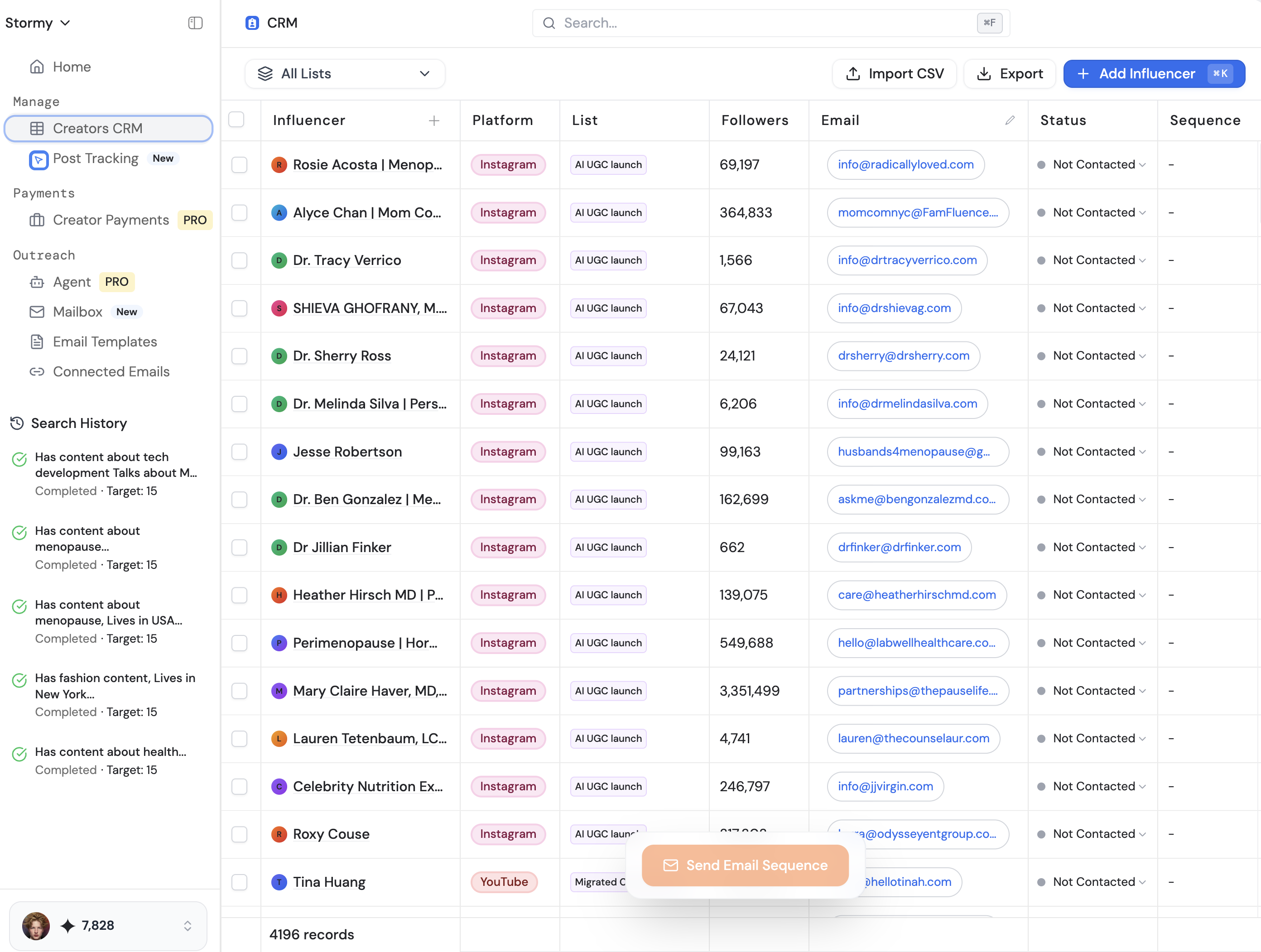
For app developers and brands, this is where Stormy AI becomes invaluable. Stormy AI is a comprehensive Creator CRM that allows you to track every interaction, negotiation, and payment in one place while monitoring campaign performance through its post-tracking and analytics dashboard. Just as Algrow helps creators find viral formats, platforms like Stormy AI allow businesses to discover and manage the right UGC creators to execute those formats for mobile app ads. By identifying what is working in the community, you can build features that automate the hardest parts of the user's workflow.
Sam’s tech stack remained simple to allow for quick iteration. He used Heroku for hosting and MailerLite for managing his growing list of subscribers. Even with a $14,000 monthly revenue, his overhead remained manageable because he built only what the community requested.
Case Study: How Algrow Identified the Demand for 'Faceless' Tools
The success of Algrow is a masterclass in customer pain point identification. Sam didn't guess that people wanted YouTube automation tools. He saw the surge in "faceless" content creation and the massive struggle users had in finding trending formats. By analyzing the market via Discord, he identified that:
- Traditional research was too slow: Creators were manually searching YouTube for hours.
- Data was fragmented: There was no central place to see subscriber counts vs. average views for specific niches.
- Execution was a bottleneck: Even after finding a niche, creators struggled to produce the actual content.
By addressing these three specific points, Algrow became an essential tool for influencers and drop shippers alike. Sam’s story proves that you don't need to be a coding wizard if you are a research wizard. Using Cursor to "vibe code" allowed him to focus on the marketing and community aspects while the AI handled the heavy lifting of the software development.
The Playbook: How to Find Your First 100 Customers
If you are looking to validate saas idea concepts today, follow this step-by-step playbook:
Step 1: Identify Your ICP's Hangouts
Use search terms related to your industry on Discord and Reddit. Join at least 5 active communities. Don't forget to check if these users are also discussing strategies on Google Ads or specialized forums.
Step 2: Aggregate the Data
Extract chat logs (ethically and legally) and feed them into ai market research tools. Look for recurring questions. If a question is asked more than 10 times in a week, it's a potential feature.
Step 3: Ship a 'Broken' MVP
Sam’s first version on Heroku had bugs, but it solved the core problem. Speed to market is more important than a bug-free interface. If the pain is real, users will tolerate a few application errors.
Step 4: Build a Private Community
Move your early adopters from the large public servers into your own private Discord. This creates a feedback loop where your power users tell you exactly what to build next. This is significantly more effective than traditional email marketing for younger demographics.
Conclusion: The Future of Niche SaaS Validation
The barrier to entry for building software has never been lower, but the barrier to finding a profitable saas niche remains high. The winners of the next decade won't be the ones who can code the fastest, but the ones who can listen the most effectively. By using AI to parse Discord logs and validate ideas through direct community engagement, you can bypass the "build it and they will come" fallacy.
Whether you are building a tool for YouTubers like Sam or a platform to help app developers find creators through Stormy AI, the principle remains the same: Identify the struggle, validate the interest, and build the solution alongside your users. By setting up an autonomous AI agent through Stormy AI, you can even discover and outreach to creators on a daily schedule while you sleep. Start by joining a community today, and let the chat logs guide your next $10k-a-month idea.