The 2026 Playbook for URL-to-Video Automation: Scaling TikTok Shop with Synthesia and OpusClip
Master URL-to-video automation in 2026. Learn how to scale TikTok Shop using Synthesia, OpusClip, and AI-powered production to slash CAC and boost conversions.
In 2026, the landscape of digital commerce has undergone a seismic shift. We are no longer in the era of manual content creation; we are firmly entrenched in the age of programmatic creative. As of this year, TikTok Shop’s Global Merchandise Value (GMV) is projected to reach a staggering $66 billion, nearly doubling its performance from just two years ago. For brands, the challenge is no longer just having a product—it is maintaining algorithmic relevance through a relentless stream of high-quality video content. In the U.S. alone, social shoppers spend approximately $32 million per day on the platform, and the only way to capture that attention at scale is through automated UGC production.
The barrier to entry has shifted from budget to speed. While the 2024 marketing playbook relied on artisanal video production, 2026 is about the URL to video AI generator. This technical marketing guide explores the specific workflow required to transform static Shopify or Amazon product pages into high-converting video assets using a cutting-edge AI stack featuring Synthesia and OpusClip. By automating the creative lifecycle, brands are reducing content production time by an average of 70%, allowing them to focus on strategy rather than the logistics of filming.
"In 2026, creative fatigue is the silent killer of ROAS. If you aren't testing 50+ ad variants a week, you aren't competing—you're just guessing."
The Industrial Production Workflow: From URL to 50+ Ad Variants
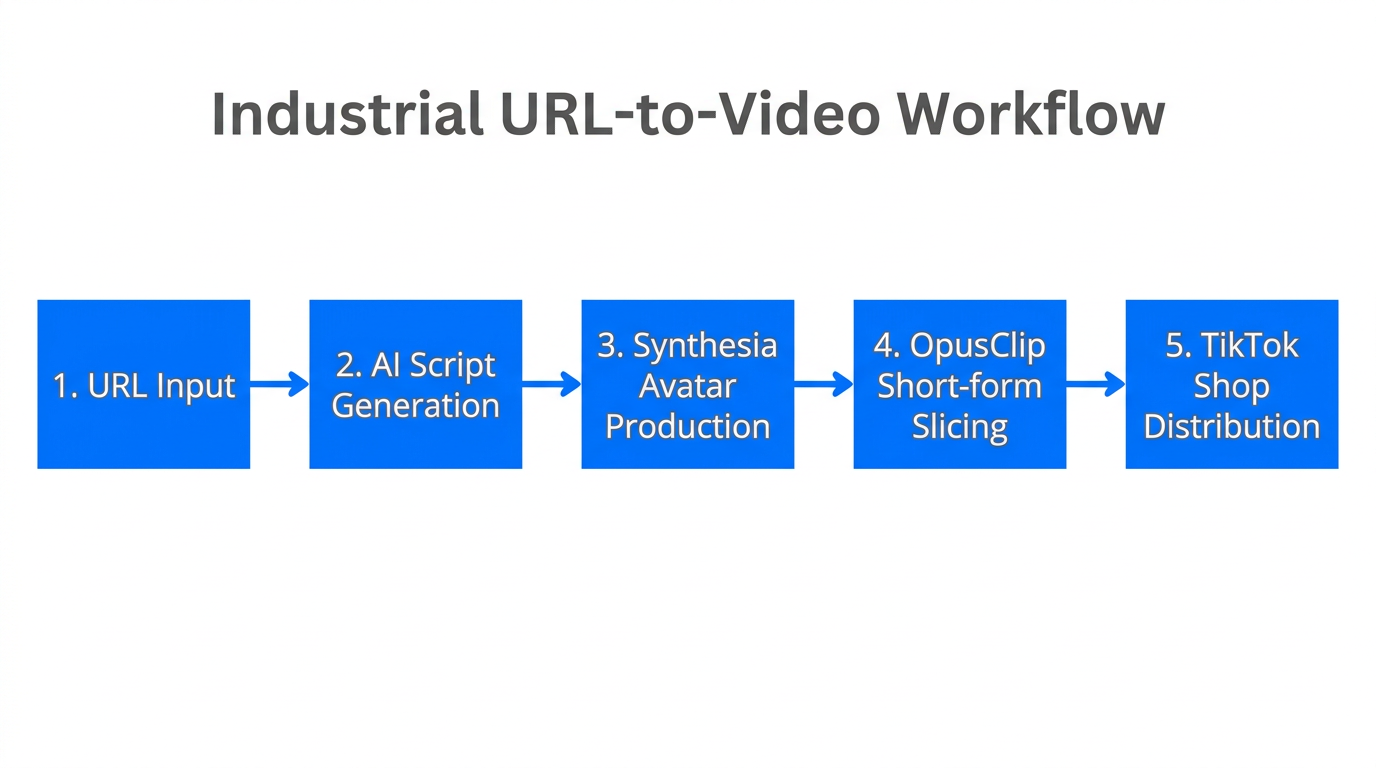
The foundation of a modern ecommerce video marketing strategy is the ability to scrape existing data and turn it into visual storytelling. The process begins with your product landing page. In 2026, sophisticated URL to video AI generator tools like PostEverywhere and Koro can ingest a Shopify or Amazon URL and instantly identify key selling points, customer reviews, and high-resolution imagery.
The workflow follows a specific sequence designed for high-velocity testing:
- Data Ingestion: The AI scans the product page, extracting the USP (Unique Selling Proposition), price points, and visual assets.
- Script Generation: Using Large Language Models (LLMs) like Claude or ChatGPT trained specifically on high-converting TikTok hooks, the system generates 10-15 different script variations ranging from "problem-solution" to "ASMR unboxing" narratives.
- Visual Assembly: Tools like Runway and Koro combine these scripts with stock footage, B-roll, and your product images to create a cohesive baseline video.
Synthesia Video Automation: Localized Lip-Sync Dubbing for Global Scale
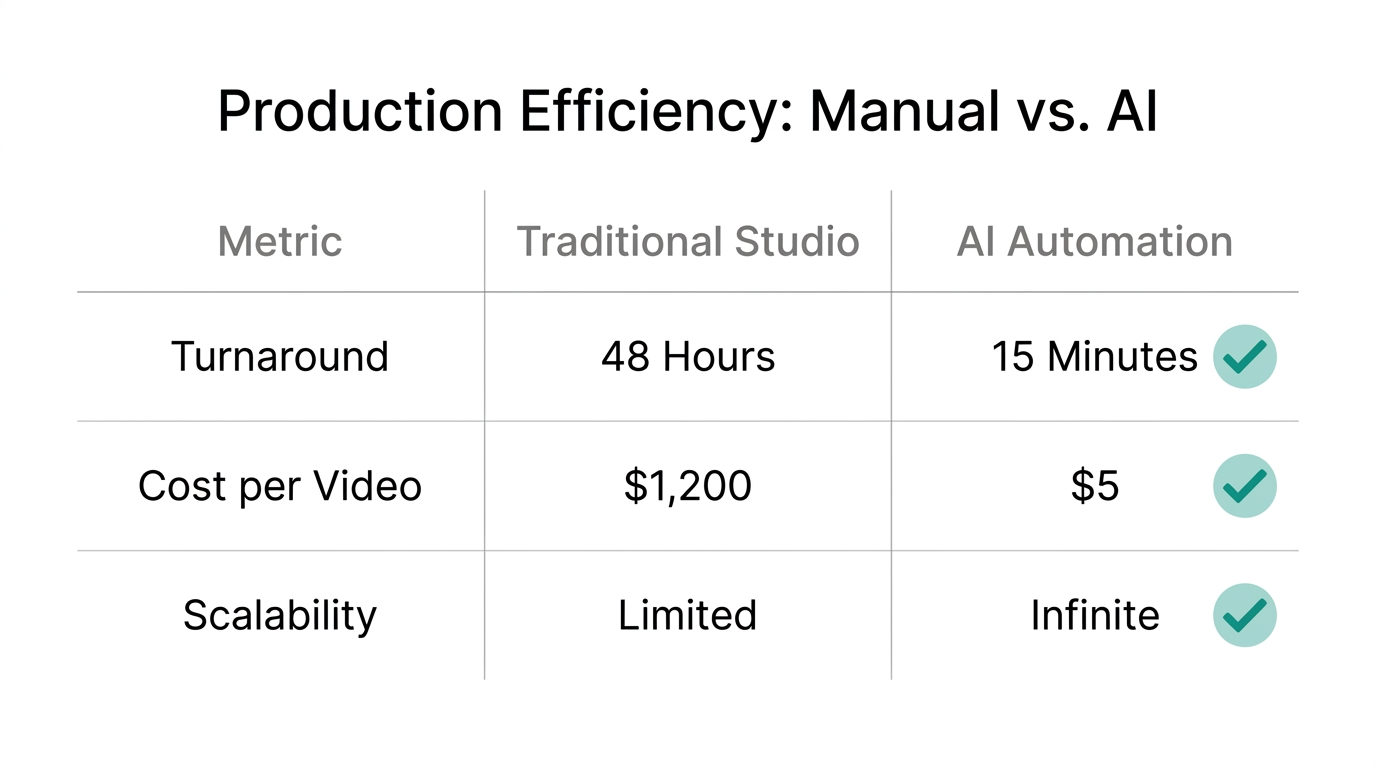
Scaling a brand globally used to mean hiring local creators in every market. In 2026, Synthesia video automation has rendered that friction obsolete. By utilizing AI avatars and synthetic voice dubbing, brands can now produce content that feels native to any region without ever picking up a camera. This is particularly vital as TikTok Shop expands its dominance into the 24.1% of total social commerce market share expected by next year.
With Synthesia’s latest lip-sync technology, you can take a master video in English and dub it into 20+ languages with perfect mouth movement. This allows a health and beauty brand—the category that commands 79.3% of U.S. TikTok Shop sales—to launch simultaneously in the UK, Germany, and Southeast Asia. The efficiency gain is massive; what used to take weeks of coordination and reshooting now takes minutes of processing time.
| Feature | Manual Production | Synthesia Automation |
|---|---|---|
| Turnaround Time | 2-4 Weeks | 15 Minutes |
| Cost per Language | $2,000+ | Included in Subscription |
| Scalability | Limited by Creator Availability | Infinite |
| Consistency | Varies by Talent | Brand-Consistent Avatars |
As Sandie Hawkins, former Head of Ecommerce at TikTok, famously noted, AI enables all brands to compete at the same level. By using Oreate AI and Synthesia, even a small D2C startup can maintain the content output of a global conglomerate, leveraging data to drive results as quickly as possible.
Repurposing with OpusClip: Turning Long-Form into Viral Shorts
Not all content needs to be built from scratch. Most brands sit on a goldmine of long-form content: webinars, YouTube reviews, or founder interviews. OpusClip for TikTok Shop is the essential tool for mining this gold. In 2026, OpusClip’s AI doesn’t just cut video; it uses Computer Vision to identify the most engaging moments based on historical viral trends.
By feeding a 20-minute product demonstration into OpusClip, you can automatically extract 10-15 "shorts" that are already formatted for TikTok’s 9:16 aspect ratio, complete with AI-generated captions and dynamic transitions. This automated UGC production strategy ensures that your brand remains top-of-mind without requiring additional filming days. When paired with Beatoven.ai for custom, royalty-free background music, these clips become highly unique assets that bypass the "duplicate content" filters of the algorithm.
"Repurposing is the ultimate leverage. One high-quality long-form video should result in 30 days of social commerce presence."
Optimizing for Discovery: 'List with AI' and Internal SEO
Producing the video is only half the battle; the other half is ensuring it is discoverable. TikTok has evolved into a powerful search engine, and internal SEO is now as critical as Google SEO. In 2026, the "List with AI" features within the TikTok Seller Center have become mandatory for success. Brands that automate their product titles, descriptions, and category tagging see a 40% jump in conversions compared to those using manual entries.
Using AI to optimize listings involves:
- Keyword Injection: Automatically identifying high-volume search terms and weaving them into product descriptions.
- Sentiment Alignment: Ensuring the tone of the listing matches the energy of the viral videos.
- Automated Tagging: Using AI to select the precise niches that the TikTok algorithm is currently favoring.
For brands managing thousands of SKUs, tools like ShopReel AI facilitate this process, ensuring that every listing is optimized for both the human shopper and the recommendation engine. This "closed-loop" marketing strategy—often referred to as GMV Max—uses AI-driven signals to identify high-intent buyers, effectively eliminating the tracking gaps that previously plagued the industry.
Reducing CAC Through High-Velocity Video A/B Testing
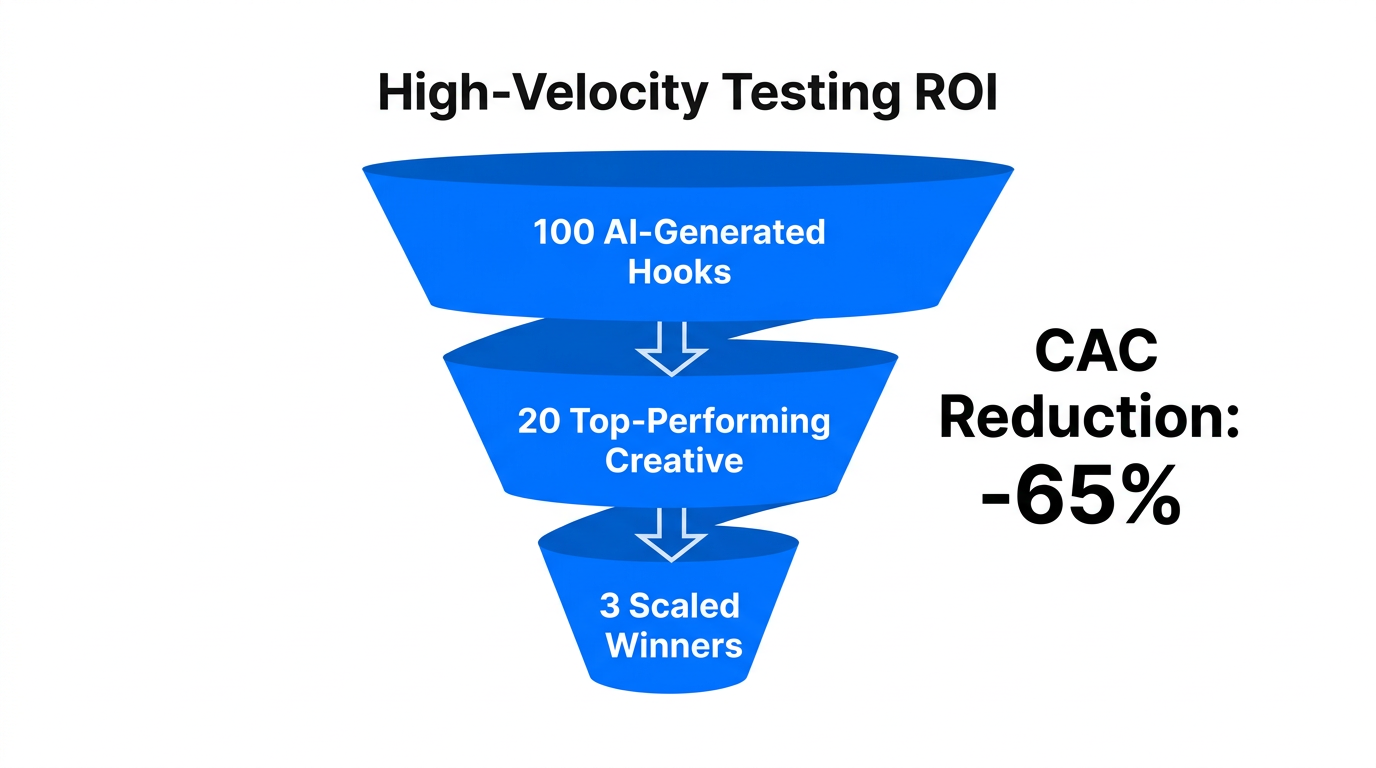
The ultimate goal of any ecommerce video marketing 2026 strategy is the reduction of Customer Acquisition Cost (CAC). High-volume video A/B testing is the most effective lever for this. By feeding the algorithm 100+ AI-generated "hooks" per month, brands can identify the top 5% of performers for paid amplification. This is exactly how the skincare brand Playboy scaled their pipeline, generating 110 videos in a single month to identify winning creator-product fits before scaling with paid spend.
When you use an automated stack, the cost per creative drop significantly. Instead of spending $500 per video, your cost per asset can fall to under $10. This allows for a "spray and pray" strategy that is actually data-driven. You aren't hoping for a hit; you are using a volume of attempts to guarantee one. This approach helped a UK clothing store achieve a 25% rise in engagement simply by refining their video hooks based on AI analytics.
The Human-AI Hybrid: Sourcing Real Creators with Stormy AI
While AI production is revolutionary, it should augment human expertise, not replace it entirely. The most successful brands in 2026 use a hybrid model: 80% AI-generated content for volume and testing, and 20% high-tier creator content for brand authority. This is where Stormy AI becomes an indispensable part of your growth stack.
Once your URL-to-video automation identifies a specific narrative or "hook" that is converting well, you can use Stormy AI to find real-life creators who match that specific vibe. Using Stormy's AI search engine, you can look for creators in specific niches—like "eco-friendly beauty in London"—and instantly vet them for audience quality and engagement fraud. By pairing automated outreach with your high-performing AI scripts, you can scale an affiliate army that mirrors your most successful automated ads. Platforms like Stormy AI streamline creator sourcing and outreach by using autonomous AI agents that handle the heavy lifting of discovery and follow-ups while you sleep.
Conclusion: The 2026 Mandate
The transition from manual to automated content is no longer a choice; it is a requirement for survival in the 2026 ecommerce landscape. By integrating a stack that includes URL to video AI generators, Synthesia video automation, and OpusClip for TikTok Shop, brands can achieve a scale that was previously impossible. However, the true winners will be those who combine this industrial-scale production with the authentic human connection provided by platforms like Stormy AI.
Start by auditing your current manual workflows. Are you spending weeks on a single video that might flop? Or are you building an automated engine that tests 50 variants while you sleep? The data is clear: with TikTok Shop poised to dominate social commerce for the foreseeable future, the time to automate your creative pipeline is now. Focus on volume, embrace synthetic localization, and use AI to find the human creators who will take your brand to the next level.