Unreasonable Hospitality: Why the Savannah Bananas Brand Strategy is the Future of Customer Acquisition in 2026
Discover how the Savannah Bananas use 'Unreasonable Hospitality' and 'weird' branding to slash customer acquisition cost and dominate social media in 2026.
In 2026, the digital advertising landscape has reached a point of absolute saturation. With every brand leveraging the same Google Ads algorithms and Meta Ads Manager optimizations, the technical advantage of performance marketing has effectively evaporated. We are living in an era where customer acquisition cost (CAC) is no longer a math problem to be solved by better targeting; it is a psychological challenge to be solved by radical differentiation [source: Harvard Business Review]. Enter the concept of 'Unreasonable Hospitality'—a growth lever that the Savannah Bananas have used to build a business worth nearly a billion dollars while maintaining a 3 million person waiting list for tickets.
The secret to their success isn't just a quirky team name or yellow tuxedos. It is a go-to-market strategy 2026 requires: transitioning from a product-centric model to an experience-centric model. By prioritizing 'fan-first' entertainment over the traditional rules of baseball, they have turned a boring, slow-paced sport into a viral phenomenon that captures more engagement than every Major League Baseball team combined. This article explores how you can apply their 'weird' framework to your own brand building strategies to drive customer retention tactics that last a lifetime.
Defining Unreasonable Hospitality: The Jesse Cole Story
Learn how Jesse Cole defines the core philosophy of providing unreasonable hospitality to fans.
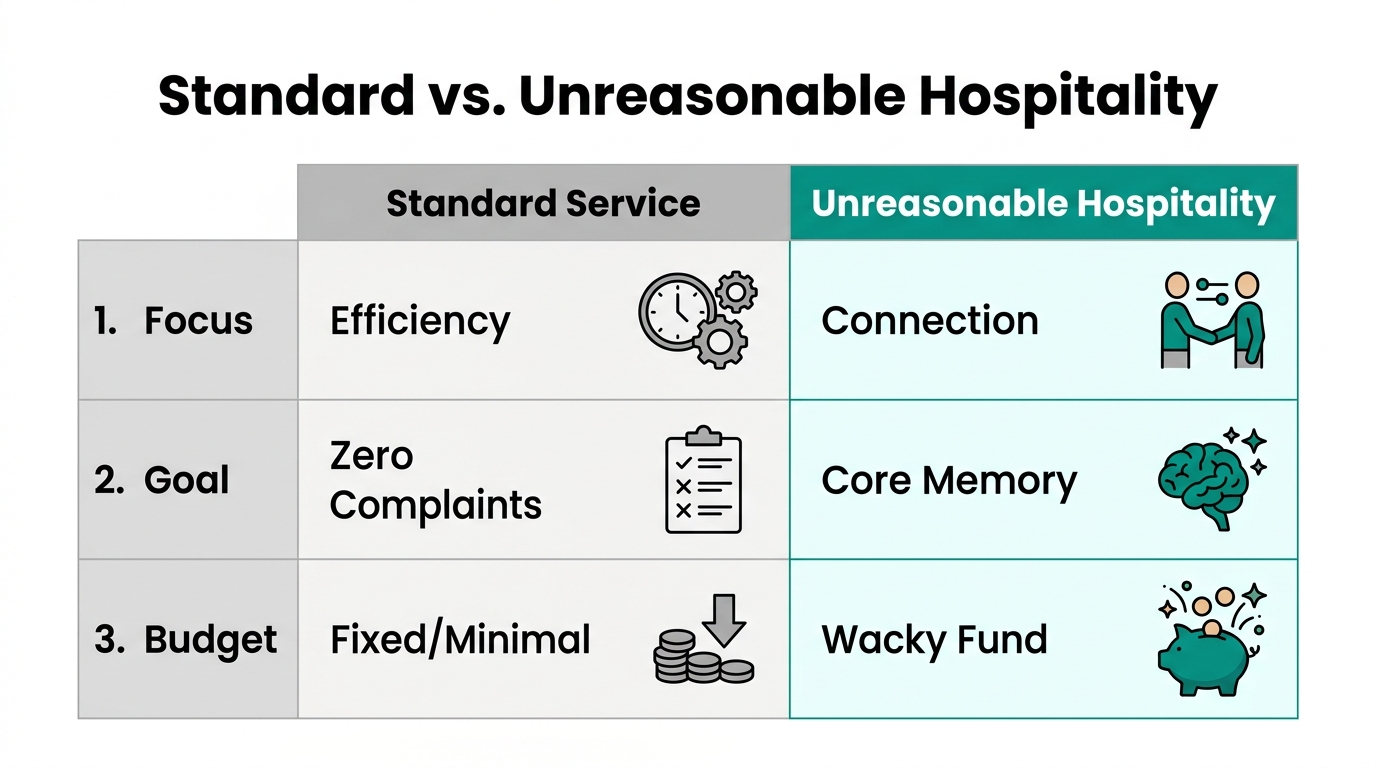
The term 'Unreasonable Hospitality' was popularized by Will Guidara, the former co-owner of Eleven Madison Park. The core philosophy is simple: go above and beyond what is rational to make a customer feel seen. Guidara famously overheard a guest lamenting that they never got to try a classic New York street hot dog. He ran outside, bought a $3 frankfurter, had his world-class chefs plate it with gourmet garnishes, and served it. That $3 investment created a story that was worth thousands in word-of-mouth marketing.
Jesse Cole, the founder of the Savannah Bananas, adopted a similar mindset when he took over a failing college summer league team. In his 'struggle season,' Cole and his wife sold their house and slept on a twin air mattress just to keep the team alive. He didn't focus on winning games; he focused on customer experience design. He began by eliminating the 'friction points' of a typical baseball game—starting with the price. In 2026, when you buy a Bananas ticket, you pay exactly $25. No hidden fees, no service charges, and most importantly, the Bananas pay the sales tax for you. This small gesture costs them millions in annual revenue but saves them ten times that in brand loyalty.
"You don't get credit for doing what is expected. You only get points on the board when you do something so weird it's worthy of remark."
The 'They Only Remember You're Weird' Framework
People ignore the ordinary but will always remember when your brand stays weird.As marketing strategist George Mack often notes, 'they only remember you’re weird.' In a world of sea-of-sameness, being 'normal' is the fastest way to be forgotten. If your strategy is something that every other competitor in your niche agrees with, it isn't a strategy—it's a commodity. The Savannah Bananas embraced the weird by creating 'Banana Ball,' a version of baseball where games are capped at two hours, hitters are ejected for bunting, and fans catching a foul ball counts as an out.
This 'weirdness' is the ultimate customer acquisition cost hack. Instead of spending millions on TikTok Ads to find new fans, the Bananas let their fans do the marketing for them. Their content is so inherently shareable—featuring dancing grandmas (The Nanas) and male cheerleaders (The Man-Nanas)—that they have built a social media following larger than the Yankees and Red Sox combined. Weirdness creates a story, and stories are the only thing that survive the 2026 attention economy.
| Strategy Type | Traditional Baseball Model | The 'Banana Ball' Model |
|---|---|---|
| Focus | Winning Games / Athleticism | Fan Entertainment / Experience |
| Pricing | Variable + Fees + Taxes | Flat $25 (All-Inclusive) |
| Content | Highlight Reels (Serious) | Viral Showmanship (Wacky) |
| Retention | Team Loyalty (Geographic) | Community Belonging (Global) |
How to Audit Your Customer Journey for 'Friction Points'
Eliminate customer friction by removing hidden fees and simplifying the entire buying process.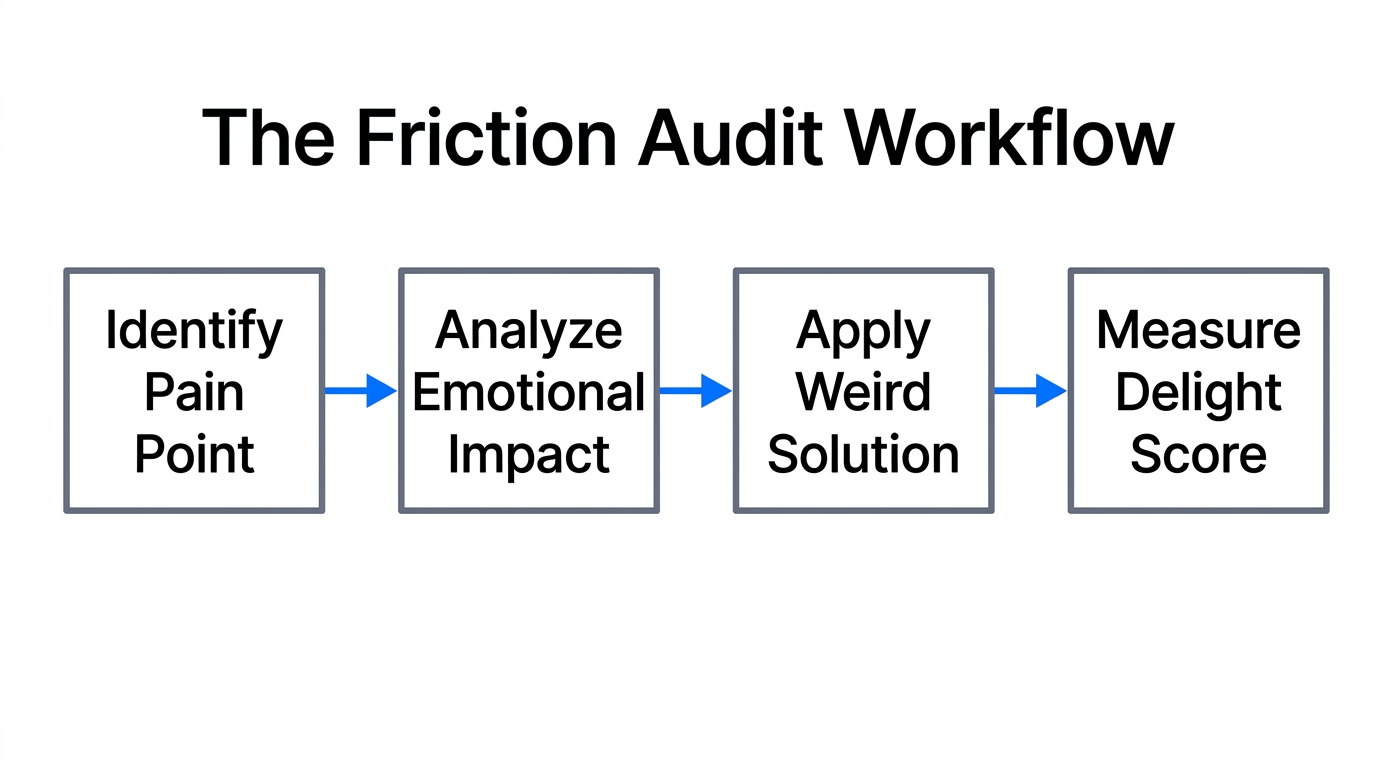
To implement an experience-centric model, you must first identify where your customers are suffering. Jesse Cole didn't just guess what was wrong with baseball; he watched security footage of his stadium for hours. He looked for the exact moment fans started checking their phones or heading for the exits. He realized that the 3-hour game length was a massive friction point for families with children who needed to be in bed. His solution? A strict 2-hour time limit.
You can apply this to any business. Use PostHog or Mixpanel to find the 'dips' in your user retention curve. If people are dropping off during your onboarding, your onboarding is a friction point. If customers are complaining about support response times, that is your 'long baseball game.' Customer experience design in 2026 is about radical elimination. If a step in your process doesn't add value to the end user, delete it.
For example, if you are sourcing influencers for a campaign, the friction is usually the outreach. Manually emailing 100 creators is the 'boring baseball' of marketing. Platforms like Stormy AI solve this by using AI agents to discover and outreach to creators on a daily schedule, allowing brands to focus on the 'showmanship' of the campaign rather than the administrative slog.
"If you want to get big, you have to be insane about the details that others ignore. It's the 'insane' part of 'insanely great' that carries the value."
The 5% Playbook: Allocating a 'Wacky' Budget
Discover the specific strategy of using a dedicated budget to fund wacky ideas.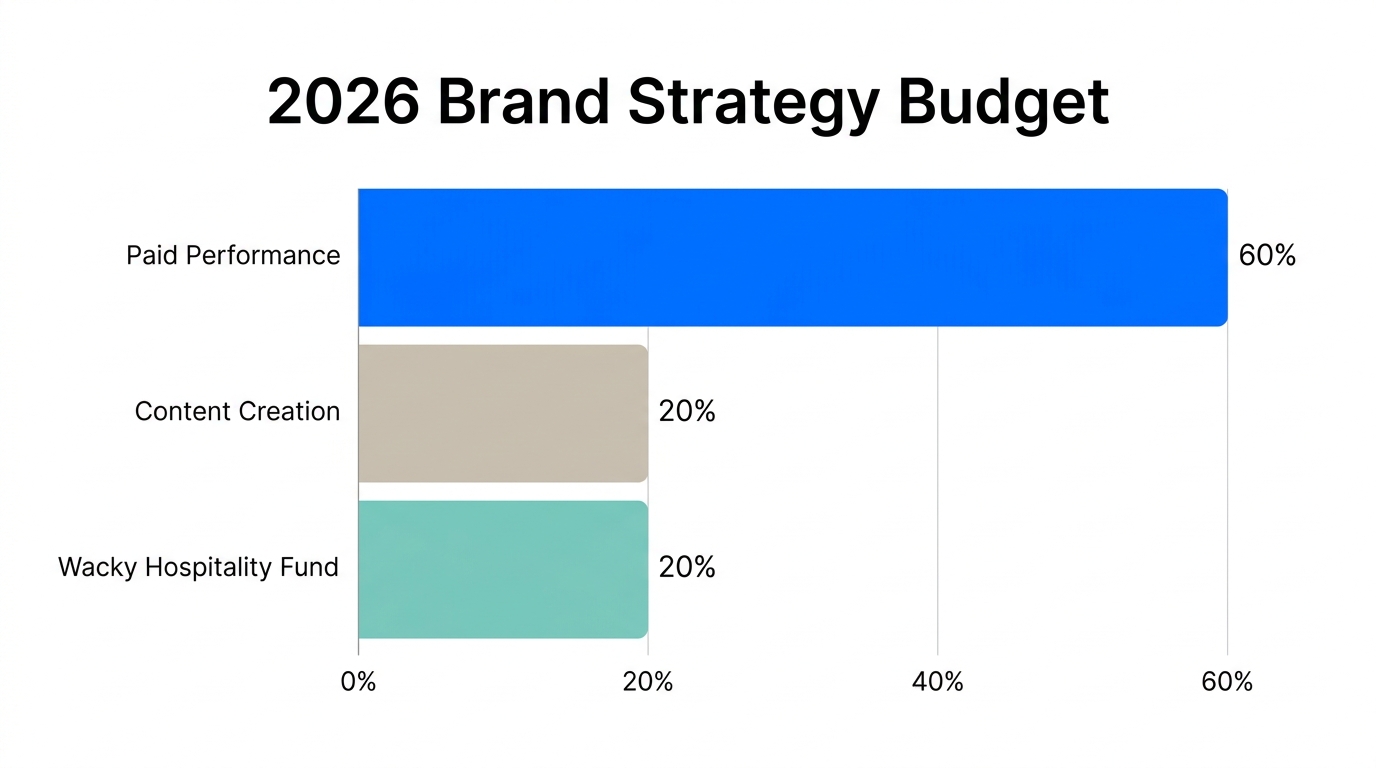
How do you afford to be 'unreasonable'? Will Guidara suggests a tactical financial framework: allocate 5% of your margin to 'wacky' stuff. If you run a 20% margin business, commit to dropping to 15% and using that 5% specifically for customer delights that have no immediate ROI. This could be hand-written notes, unexpected gifts, or, in the case of the Bananas, all-you-can-eat concessions included in the ticket price.
Step 1: The 10 Ideas a Day Rule
Jesse Cole and MrBeast both follow a similar ritual: writing down 10-20 ideas every single day. The first five are usually easy; the last five are where the brand building strategies truly live. By flexing your 'idea muscle,' you force yourself to move past the obvious and into the unreasonable. Use a tool like Notion to track these ideas and review them weekly.
Step 2: Invest in Showmanship
Showmanship is the art of making the mundane feel spectacular. The Bananas don't just walk onto the field; they have a parade. In your business, this could mean turning your email newsletter into an event. Use a platform like Beehiiv to create custom referral programs that reward your most vocal fans with exclusive 'weird' perks that money can't buy.
Step 3: Train for Empathy, Not Just Efficiency
Most companies train for efficiency—how fast can we close this ticket? Unreasonable hospitality requires training for empathy. Teach your team to listen for 'life moments.' If a customer mentions they are moving, send them a 'new home' gift. This is unprovable by data in the short term, but it builds the 'soul' of the brand, which is the only customer retention tactic that survives a recession.
Transitioning to an Experience-Centric Model
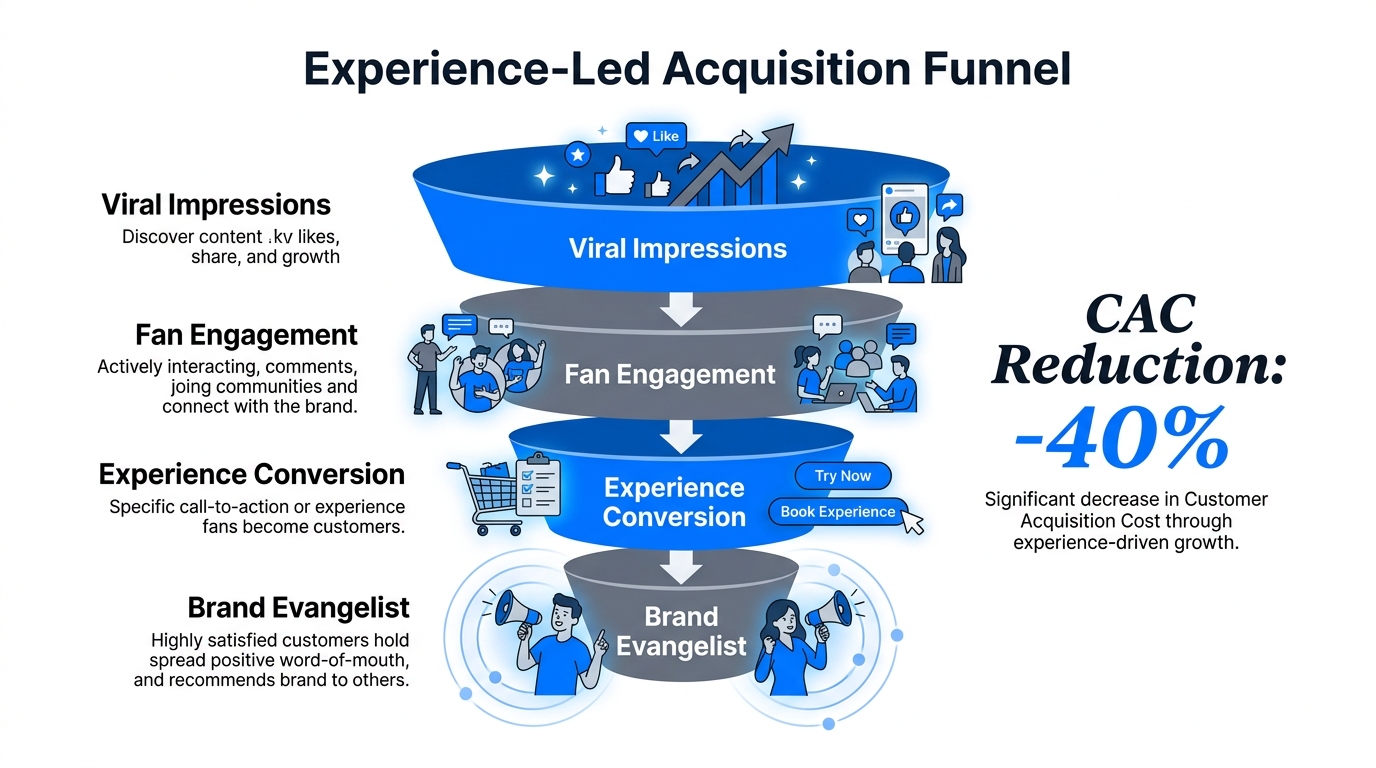
In 2026, the product is often just the 'souvenir' of the experience. The Savannah Bananas sell millions in merchandise to people who have never even attended a game. Why? Because they are buying into a culture of fun. They want the yellow jersey because it represents a rejection of the 'boring' status quo. This is the ultimate goal of go-to-market strategy 2026: making your brand a lifestyle, not a line item.
Think about your tech stack. Are you using Stormy AI’s Creator CRM just to track leads, or are you using it to ensure no customer ever feels like a number? Are you using Klaviyo to blast promotions, or to send 'just because' messages that brighten a user's day? The transition to an experience-centric model requires a shift in how you view your customers—from 'traffic' to 'guests.'
For startups and agencies, this shift is often easier to achieve through UGC (User-Generated Content). By working with creators who already embody 'unreasonable' passion, you can borrow their credibility. Modern influencer platforms like Stormy AI allow you to search for these specific types of high-engagement creators across TikTok and Instagram, ensuring your brand is associated with people who actually care about their audience.
"Every mistake is an amazing opportunity to blow someone away. People will remember the error, but they will never forget the unreasonable effort you took to fix it."
Conclusion: The Future is Live and Scarce
As AI-generated content floods the internet in 2026, humans will increasingly crave things that are scarce and real. This is why live events, like those run by Feld Entertainment (owners of Monster Jam and Disney on Ice), continue to thrive. The Savannah Bananas are essentially a 'traveling circus' of baseball, providing a physical, emotional experience that can't be replicated by an LLM.
To lower your customer acquisition cost this year, stop looking at your competitors' ads and start looking at their 'boring' parts. Where is the friction? Where is the lack of soul? If you can be the 'weird' alternative that pays the sales tax, removes the fees, and makes the experience 'insanely great,' you won't just acquire customers—you'll build a waiting list that lasts for decades.
Ready to start finding the creators who will help tell your brand's 'weird' story? Discover how Stormy AI can automate your outreach and help you build a 'fan-first' marketing engine today.