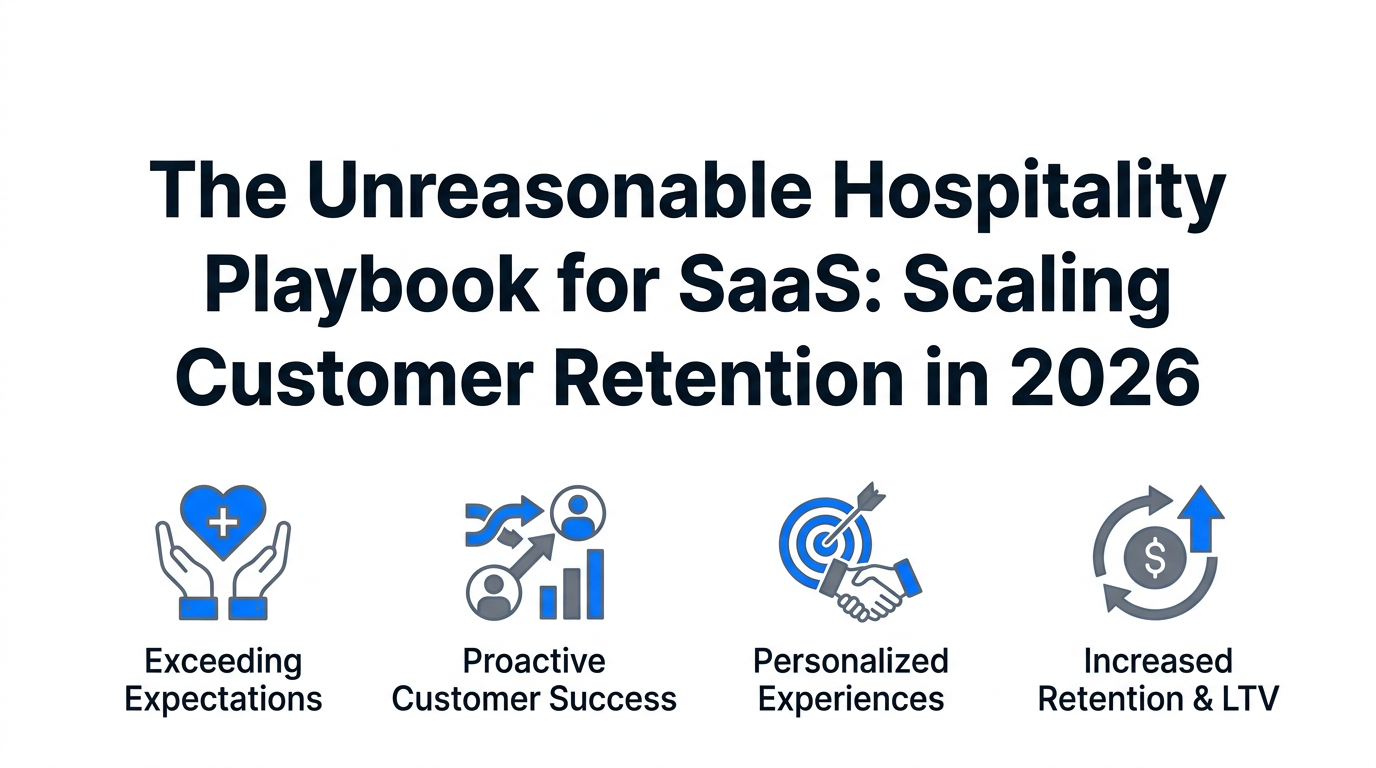
In the competitive landscape of growth marketing 2026, software has become a commodity. Features are shipped in days, and UI patterns are replicated by AI agents in minutes. To survive, digital product founders are shifting their focus from aggressive customer acquisition to a philosophy that originated in a three-Michelin-star restaurant in New York City: Unreasonable Hospitality. As we navigate the current year, the most defensible moat isn't your code—it’s how you make your users feel.
Will Guidara, the author of Unreasonable Hospitality and a producer on the hit show The Bear, transformed 11 Madison Park from a struggling brasserie into the #1 restaurant in the world. He didn't do it by just perfecting the duck; he did it by obsessing over the human connection. For SaaS companies facing rising churn and peak competition, Guidara’s framework offers a revolutionary customer experience strategy to drive SaaS customer retention by doing things that don't scale—until they do.
The 'One Size Fits One' Framework for Digital Onboarding
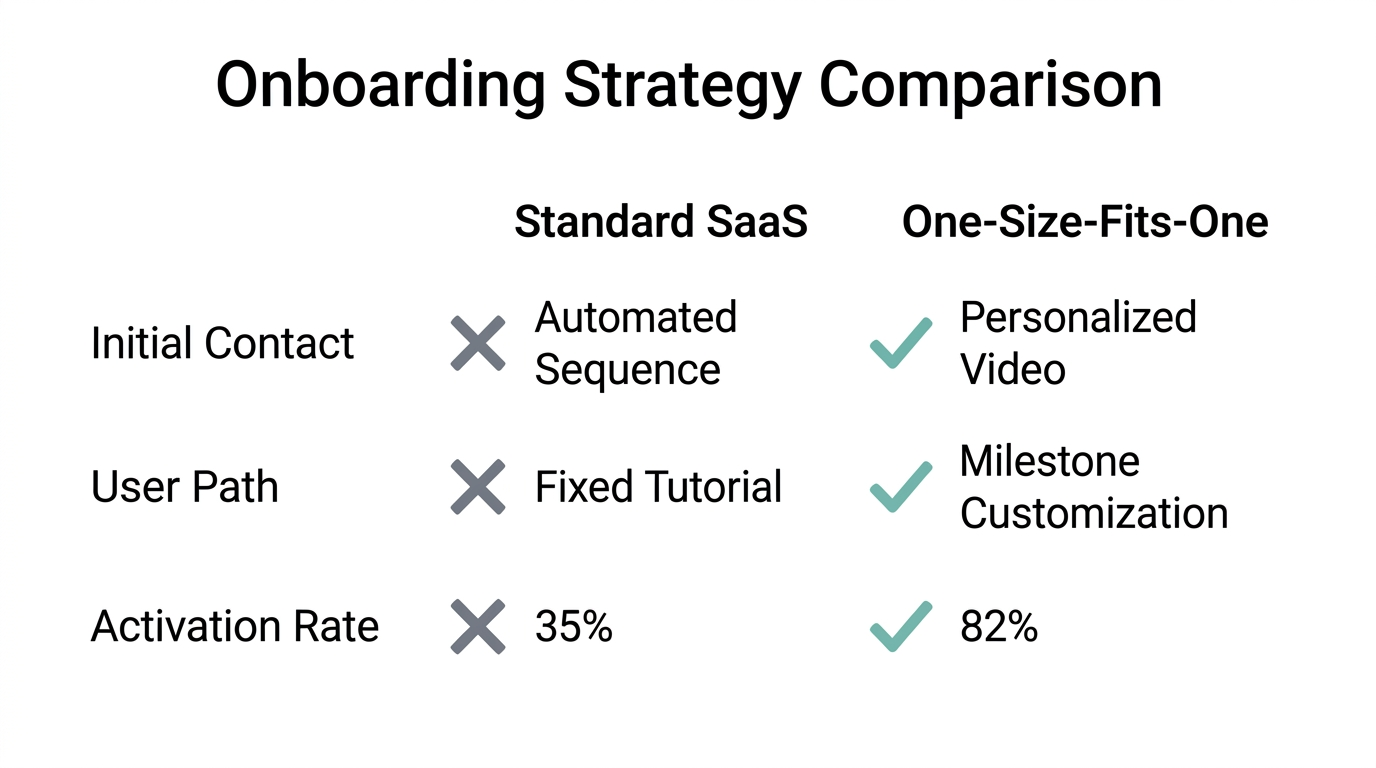
Most SaaS companies suffer from 'One Size Fits All' onboarding. You sign up, you get the same five-step tour, and you receive the same automated email sequence from legacy CRM platforms. In 2026, this approach is the fastest way to lose a user to a more attentive competitor. Guidara’s 'One Size Fits One' philosophy suggests that personalized gestures always have the greatest impact.
Imagine a user signing up for your fintech app and mentioning in a support chat that they are saving for a trip to Tokyo. In a 'One Size Fits All' world, they get a generic 'Savings Goal Reached' notification. In an 'Unreasonable Hospitality' world, your team sends them a digital guide to the best hidden ramen spots in Shibuya once they hit their milestone. This is the Dirty Water Dog moment of software—taking a specific, human detail and reflecting it back to the user.
"The most human moments are perfectly imperfect, and those are the stickiest moments of all. Specificity is the ultimate form of generosity."Hiring a 'Dreamweaver' for Your Growth Team
How hiring a dedicated Dreamweaver transforms standard service into an unforgettable brand experience.
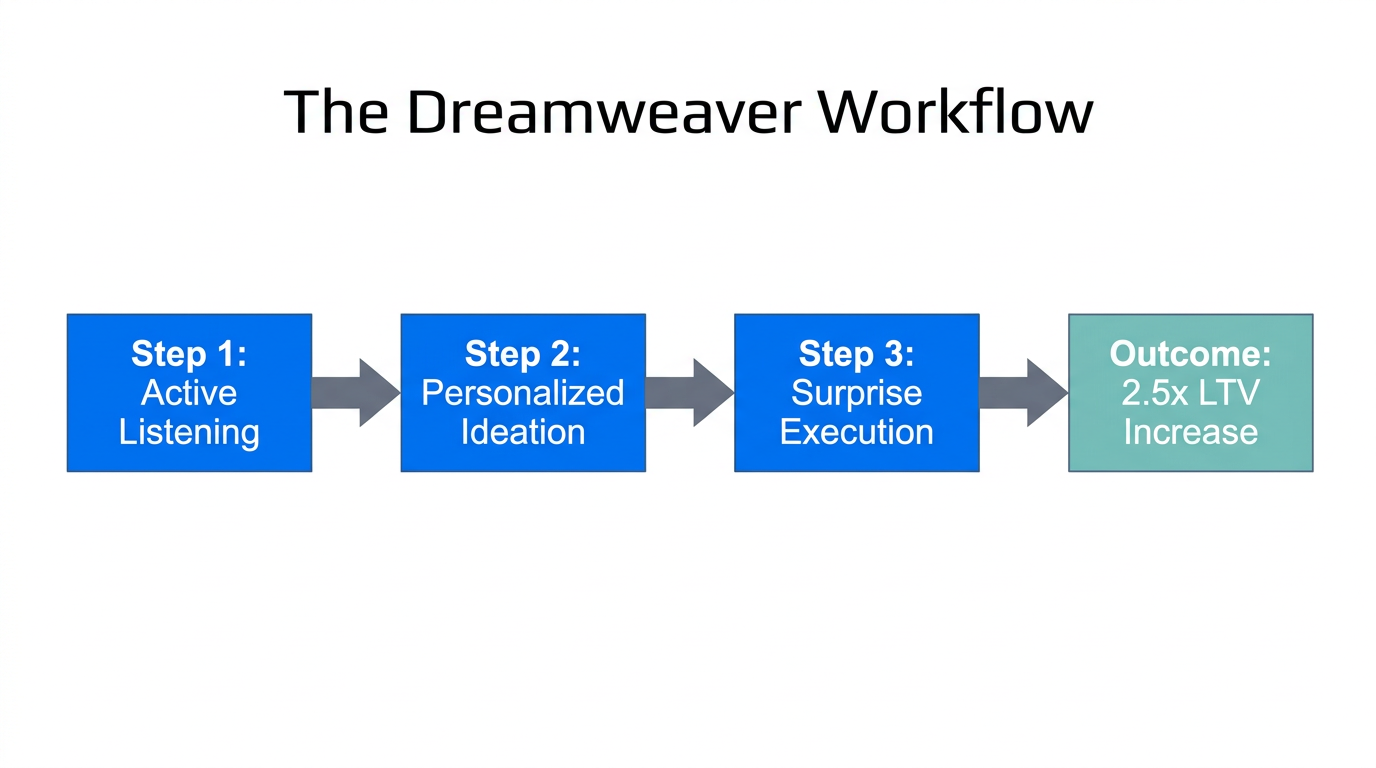
Operationalizing hospitality requires bandwidth. In Guidara’s restaurant, he hired a Dreamweaver—a role dedicated solely to helping the team bring their 'unreasonable' ideas to life. In a SaaS context, this role sits at the intersection of Customer Success, Marketing, and Operations.
The Dreamweaver isn't there to handle support tickets; they are there to create bandwidth for excellence. When a CSM overhears that a power user is struggling with a local charity drive, the Dreamweaver is the one who finds a way to donate software credits or send a custom-designed kit to help them succeed. This role is often best filled by someone from a non-technical background—think art school grads or former hospitality professionals—who prioritizes connection over clicks.
| Feature | Standard Customer Success | Unreasonable Hospitality (Dreamweaver) |
|---|---|---|
| Goal | Reducing Churn / Closing Tickets | Building Emotional Connection |
| Budget | Fixed/Strict | Surprise & Delight Focused |
| Metrics | NPS / Time-to-Resolution | LTV / Word-of-Mouth Referrals |
| Action | Reactive (Wait for issues) | Proactive (Find 'Magic' moments) |
Infecting 'Forgotten Text' with Brand Personality
Why optimizing the 'forgotten text' in your product builds unexpected and deep customer loyalty.One of the most overlooked user engagement tactics is what we call 'forgotten text.' These are the micro-copy moments: tooltips, error messages, loading screens, and unsubscribe pages. Most companies use the stock text provided by their framework, but this is a massive missed opportunity for hospitality.
Think about the classic 'Welcome Email.' Most are boring confirmations. But as Sam Parr of The Hustle demonstrated, a welcome email that tells a story—about a bell going off in the office and a team member doing push-ups because you joined—creates an immediate bond. By treating every error message as a touchpoint to make a user smile, you turn a negative experience into a retention win.
"Sometimes magic is just being willing to invest more energy into an idea than anyone else would deem reasonable."When users are waiting for a data export to finish, don't just show a spinning wheel. Use that time to share a tip, a joke, or a sincere thank you. Tools like Canva or Framer allow you to inject high-quality animations and personality into these 'dead' spaces effortlessly.
The Step-by-Step Guide to a 'Surprise and Delight' Budget
Hospitality doesn't have to be expensive, but it must be intentional. To scale this in 2026, you need to operationalize the 'One Size Fits Some' strategy. This involves identifying recurring patterns—like a user's first anniversary with the product or reaching a certain usage volume—and attaching a mandatory 'delight' action to it.
- Identify the Milestone: Use an analytics tool like Mixpanel to trigger a notification when a user hits a 'Wow' moment (e.g., their 1,000th task completed).
- Assign the Budget: Give every CSM a monthly 'unreasonable' budget. For example, $20 per power user to spend on a physical gift or a personalized video using Descript.
- The Rule of Reciprocity: Based on the work of Robert Cialdini, a small, unexpected gift creates a sense of obligation and affinity. This is why companies like Chewy send flowers when a customer's pet passes away; it’s not just nice, it’s a defensible business strategy.
- Measure the Story: Track how many of these gestures result in a social media shoutout or a referral. In 2026, user-generated stories are more valuable than paid ads.
For brands looking to take this further, Stormy AI can be a powerful ally. By using Stormy's AI search engine, Dreamweavers can instantly find creators or influencers in a user's specific niche to collaborate on a surprise gift—such as a personalized shoutout or a co-branded piece of content—that feels hyper-relevant to that specific user's world.
Measuring the ROI of Hospitality-Led Growth
The data-driven evidence proving that small gestures of hospitality significantly increase bottom-line returns.Performance marketing in 2026 is increasingly expensive. CAC (Customer Acquisition Cost) is soaring as privacy regulations tighten. In this environment, the ROI of unreasonable hospitality often outpaces traditional spend. When you give a user a story to tell, they become your marketing department.
Consider the 'Bottle of Cognac' strategy Guidara used for the check at 11 Madison Park. By bringing a gift at the moment of highest friction (the bill), he ensured the guest left on a high note. In SaaS, the 'bill' is the renewal notice. Instead of just sending an invoice through Stripe, what if that month came with a surprise credit, a free feature upgrade, or a physical 'thank you' kit?
"Every dollar spent on hospitality is far more impactful than a dollar spent on traditional marketing because hospitality gives people stories to tell."Conclusion: Hospitality is the New Code
As we move through 2026, the technical gap between products will continue to shrink. The winners will be the founders who realize that SaaS customer retention is a human problem, not a technical one. By implementing a Dreamweaver role, reviving forgotten text, and embracing the 'One Size Fits One' framework, you can build a brand that users don't just use, but love.
Whether it's sending a New York hot dog to a table of foodies or sending a custom Notion template to a user starting a new project, the goal remains the same: make them feel seen. In a world of automated bots and AI agents, being unreasonable about your hospitality is the most reasonable growth strategy you have.
Ready to find the right creators to help tell your brand's story of excellence? Start by using Stormy AI to discover influencers who align with your mission and can help you scale your hospitality efforts today.