We have officially entered the era of "vibe coding." With the rise of generative UI tools, anyone with an idea can manifest a functional application in minutes. However, this accessibility has created a new problem: the "sea of sameness." If everyone uses the same default prompts on v0.dev or Lovable, the internet begins to look like one giant, interchangeable Shadcn template. To build a lasting business in the AI for creator economy, you must move beyond the "Standard Template" trap and develop a brand differentiation strategy that elicits trust and emotion.
The Danger of the 'Standard Template' Trap
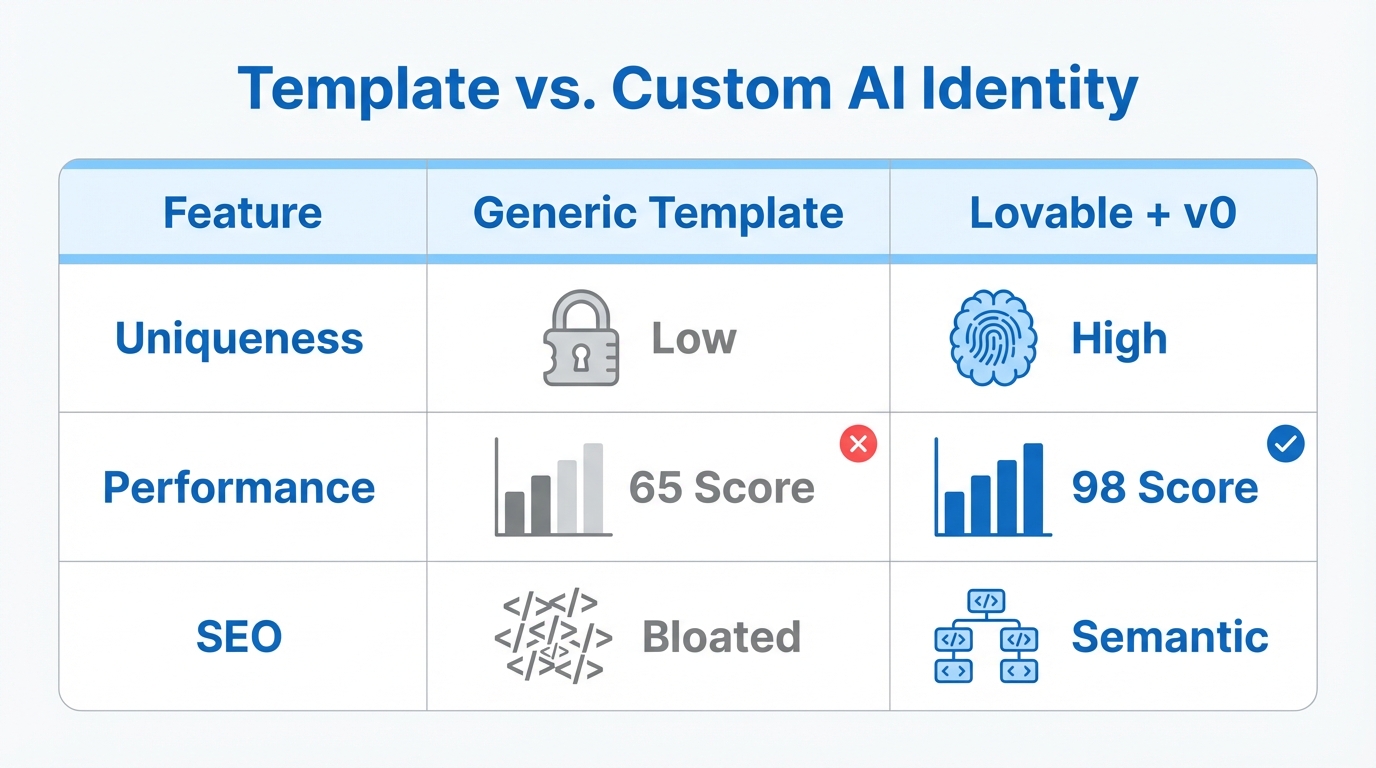
While platforms like v0.dev are revolutionary, they are inherently developer-centric. This often leads to designs that are technically functional but visually sterile. When 99% of AI-generated results rely on the same component libraries, your product loses its "soul." For a startup, this is a silent killer. Conversion rates drop because the UI fails to resonate with users who have grown accustomed to—and bored of—the "standard AI look."
"AI is not trained to be unique; it is trained to be average. The only way it can be unique is if you hand-hold it and give it the resources to be flavorful."
As Mang, the founder of Aura, points out, someone who isn't trained in design might look at a basic template and think it's "not too bad." But a trained eye—and more importantly, a high-value customer—can tell in seconds when a product lacks thoughtfulness. To escape this, you need to infuse your prompts with taste. This means moving away from generic instructions and toward specific, high-context design vocabulary.
Advanced Prompting for Unique Typography and Color
80% of all digital design is typography. If you leave your font choice to the AI's default, you'll likely end up with Inter—a great font, but one that is currently overused to the point of invisibility. A visual identity for SaaS starts with choosing fonts that match your brand voice. Are you building a luxury tool? Prompt for a sophisticated Serif font. Is your brand modern and tech-forward? Look into Manrope or Geist.
| Design Element | Generic AI Choice | Brand-Differentiated Choice |
|---|---|---|
| Typography | Inter / System Sans | Geist, Manrope, or custom Serif |
| Layout | Standard Hero + Cards | Bento Layout / 1/3 Grid Split |
| Styling | Flat / Default Shadows | Glassmorphism / Claymorphism |
| Colors | Blue/White #0070f3 | Custom Brand Gradients |
Beyond fonts, you must define your visual hierarchy. Instead of asking for "a pricing page," ask for "a pricing table with a 1/3 - 2/3 split, using an outline layout with subtle 2px borders and #f5f5f7 backgrounds." Providing this level of detail prevents the AI from falling back on its "average" training data. Tools like Aura act as "training wheels" here, allowing you to visually select these attributes and generate a high-context prompt that tools like Lovable can then execute perfectly.
Creating Unique Visual Assets with Aura and Unsplash
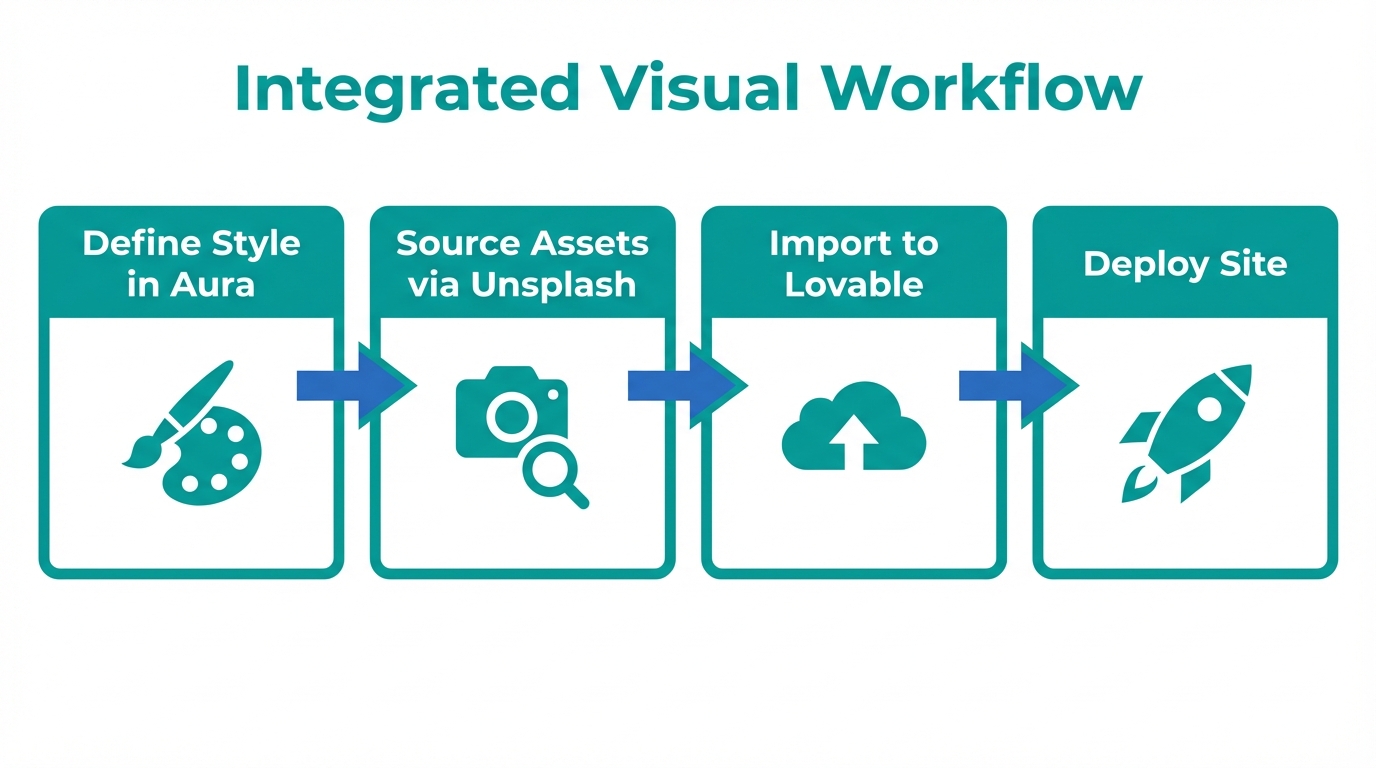
A common mistake in AI-driven custom UI for startups is using low-quality or generic placeholder images. To stand out in social feeds—especially when your product is being discovered on platforms like TikTok or Instagram—you need high-end visual assets. Aura integrates directly with Unsplash, but the "hack" is in the tagging.
Instead of searching for "technology," use tags like "3D render," "minimalist architecture," or "abstract gradients" filtered by your primary brand color. This ensures that every image in your UI feels intentional rather than accidental. When you combine high-quality imagery with a "framed" presentation—showing your design inside a browser window or a clay device mockup—you immediately elevate the perceived value of your product.
"Great design is an unfair advantage. It allows you to charge 2x, 3x, or even 5x more because it invokes instant confidence in the user." [source: a16z]
When you are sourcing UGC creators or influencers to promote your product, having a "designed" look makes a massive difference. High-tier creators are more likely to partner with brands that look "A16Z-backed." Tools like Stormy AI can help you discover and outreach to creators, but your brand's visual identity is what will ultimately close the deal and convince them your product is worth their endorsement.
Remixing as a Competitive Research Tool
One of the most powerful features of the modern AI workflow is the ability to remix. This isn't just about copying; it's about "vibe-checking" the best designs on the web and adapting them to your needs. Platforms like 21st.dev and CodePen provide a treasure trove of open-source components that you can feed into your AI prompts.
By bringing in external code references from libraries like React Bits, you can add "special sauce" like particle backgrounds, text blur effects, or unique loaders. These small additions signal to the user that the product was built by someone who cares about the details. This level of craftsmanship is exactly what sets a "vibe-coded" weekend project apart from a professional SaaS product built on Shopify or Framer.
The Role of Micro-interactions and Sequence Animations
Generic AI designs are static. Professional designs move. To truly differentiate your brand, you must prompt for sequence animations. This is the "Apple style" where elements don't just fade in all at once; they arrive one by one, creating a sense of narrative flow.
- Staggered Entrances: Prompt for "elements should fade in with a 100ms stagger."
- Hover Effects: Add "subtle scale-up on hover with a spring transition" using Framer Motion parameters.
- Loading States: Use text gradients that animate while data is being fetched, similar to OpenAI's interface.
As seen on sites like Ideabrowser.com, even a simple moving logo or a hover effect on a card can elicit DMs from founders and investors saying, "the design is sick." These micro-interactions are the "last 10%" of the work that yields 90% of the brand's perceived quality.
Scaling Your Brand with AI Agents
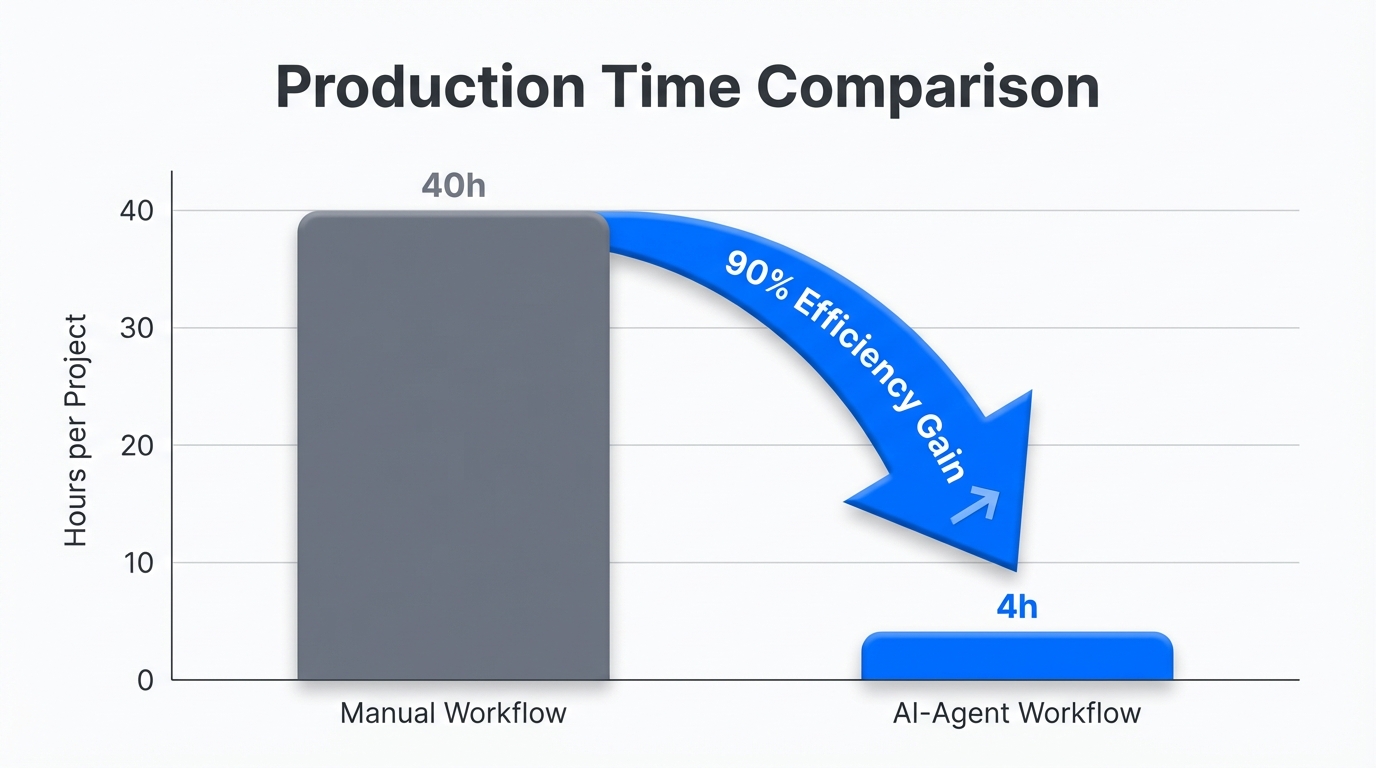
Once you have established a unique brand differentiation strategy through your UI, you can begin to automate your growth. If you are building for the creator economy, your next step is getting your beautifully designed product into the hands of influencers. AI marketing tools are now capable of handling the entire lifecycle of creator relations.
For example, Stormy AI allows you to set up an autonomous AI agent that discovers creators matching your niche and sends hyper-personalized outreach. When those creators click through to your site, they won't see a generic template—they will see a unique, trustworthy brand identity built with the precision of tools like Aura and Lovable. This synergy between high-end AI design and automated AI outreach is the ultimate unfair advantage for modern startups using tools like Zapier to connect their stack.
Conclusion: Don't Settle for Default
The barrier to building software has collapsed, which means the value has shifted from functionality to brand. In a world where anyone can code, "taste" is the only moat. By mastering the design vocabulary, leveraging specialized tools like Aura, and incorporating advanced micro-interactions, you can create a product that looks and feels like it was built by a world-class design agency.
- Stop using default prompts; define your typography and grid hierarchy explicitly.
- Use Aura's prompt builder to bridge the gap between your vision and the AI's execution.
- Incorporate "remixed" components from 21st.dev to add unique animations.
- Use Stormy AI to find the right creators to showcase your new, high-end brand identity.
Success in the AI for creator economy isn't about how fast you can prompt—it's about how much you care about the output. Take the extra ten minutes to refine your "vibe," and the market will reward you for it.