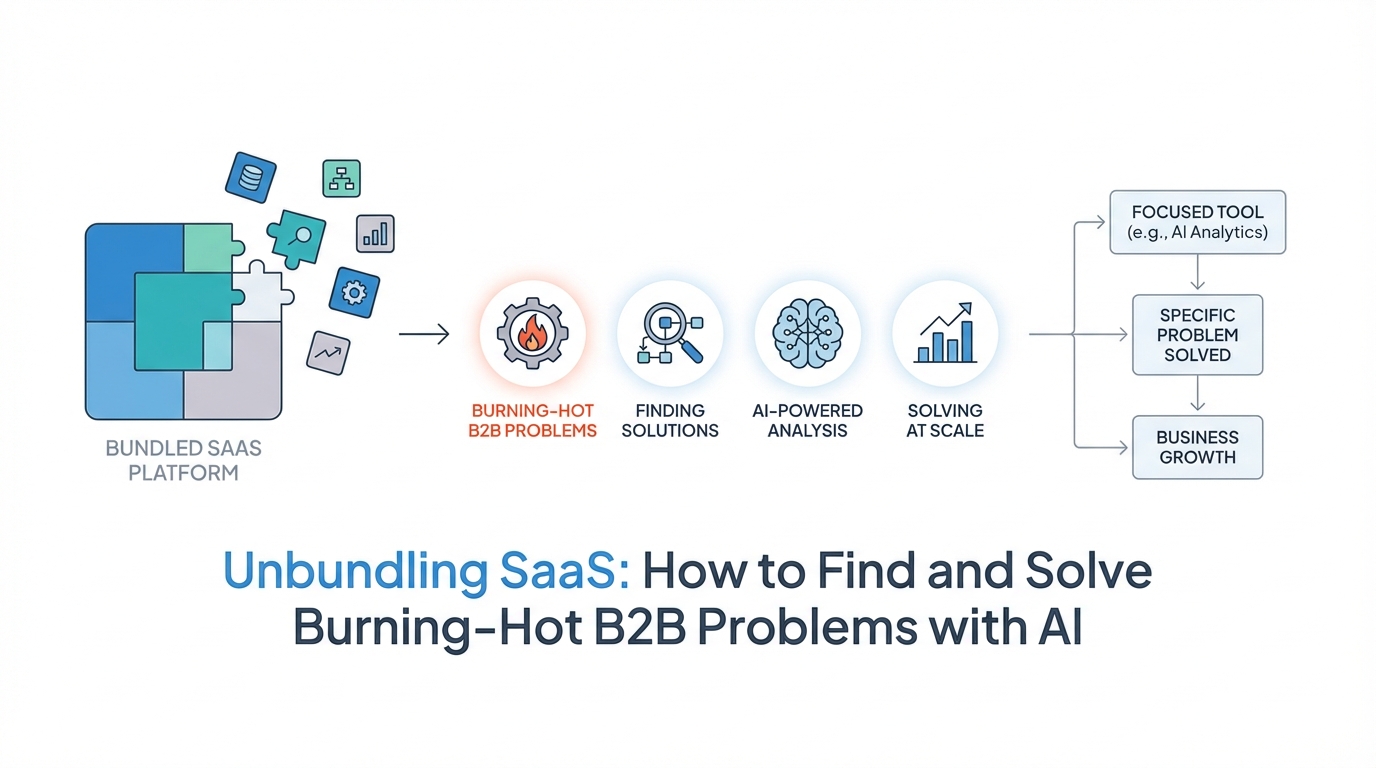
For the last decade, the dream of every software founder was to build the next 'all-in-one' platform. We saw the rise of massive, multi-billion dollar behemoths that attempted to do everything for everyone. But the tides are shifting. In 2024, the most profitable opportunities aren't found in building the next horizontal giant, but in the strategic process of unbundling SaaS. By identifying high-friction workflows within massive platforms and creating lean, AI-powered solutions for specific niches, solo developers and small teams are building high-margin businesses without the VC-backed burnout. This is the era of 'vibe-coding,' where the ability to identify a burning-hot B2B problem is more valuable than a computer science degree.
The B2C Money Pit vs. the B2B Goldmine

Many first-time founders gravitate toward B2C (Business-to-Consumer) apps because they are relatable. We all use apps for fitness, meditation, or calorie counting. However, as the industry matures, B2C has become a notorious 'money pit.' Success in the consumer space depends almost entirely on distribution and viral loops. You might build an incredible app like Cal.ai, which has successfully scaled to millions in revenue by simplifying calorie tracking with AI, but for every Cal.ai, there are thousands of developers burning cash on Meta Ads trying to acquire users who churn in thirty days.
In contrast, B2B software consulting and niche development offer a much higher likelihood of success. Businesses don't buy software because it's 'fun'; they buy it to solve a specific, painful problem that is costing them time or money. When you solve a 'burning-hot' problem for a business owner, they aren't looking for a flashy UI or a social network—they want a tool that works. This creates an environment where high-margin B2B services can eventually be converted into vertical SaaS products with stable, recurring revenue and low churn.
Reverse-Engineering Massive Platforms: The Unbundling Strategy
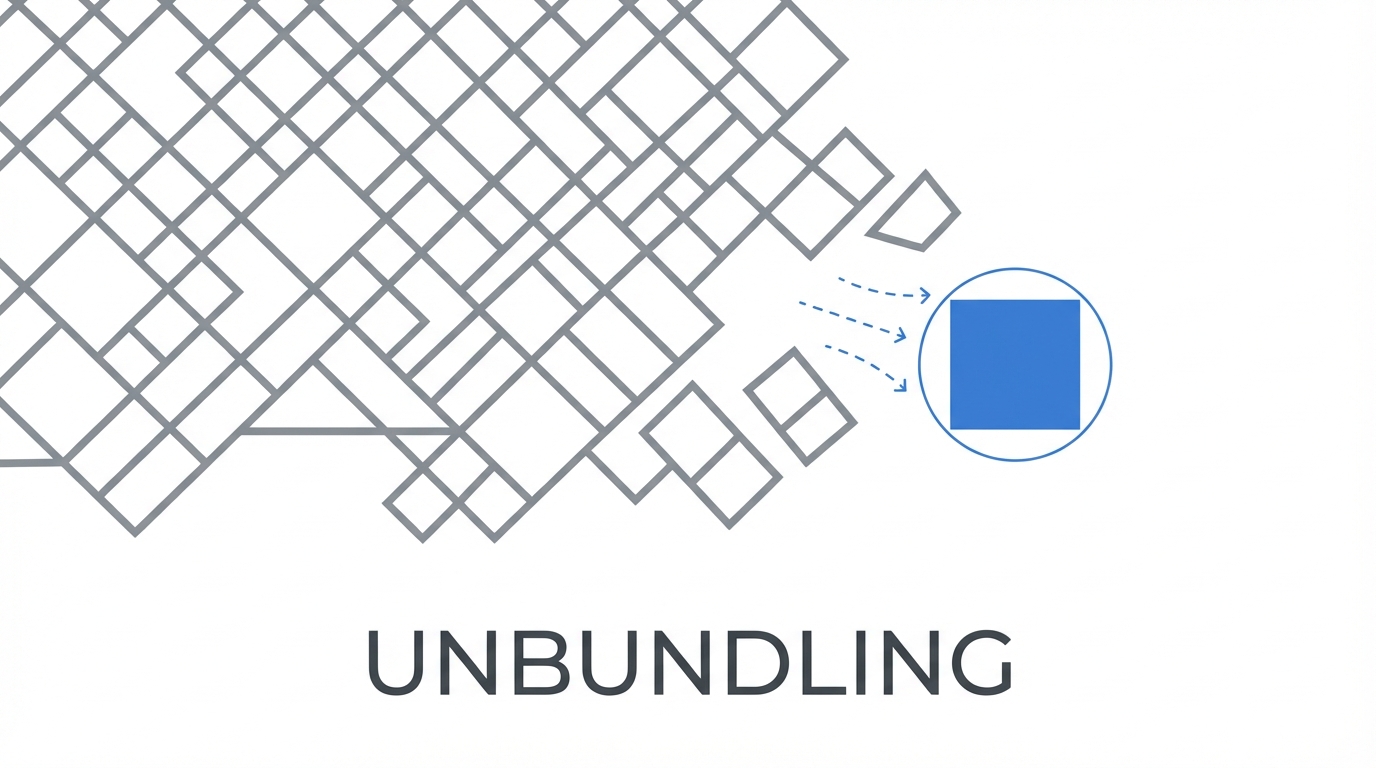
The concept of unbundling SaaS is simple: take a massive tool like Ahrefs or Salesforce and extract one specific feature that a particular industry needs. Platforms like Ahrefs do hundreds of millions in revenue because they provide a comprehensive suite of SEO tools. However, a local dentist or a law firm doesn't need 90% of those features. They only need a tiny fraction of that power, tailored specifically to their local market.
Thanks to the proliferation of public APIs, you can now reverse-engineer these giants. You can pay for access to the same data that the big players use and build a 'clone' that is 10x simpler and 5x cheaper for a specific niche. This is one of the most significant micro-SaaS ideas 2024 has to offer: don't build a better SEO tool for everyone; build the best SEO tool specifically for orthodontists. By focusing on a vertical, you eliminate the noise and become the obvious choice for that customer segment.
How to Find 'Burning-Hot' Problems on Upwork

If you don't know what to build, the best place to look is Upwork. Searching for keywords like 'Airtable consultant,' 'Zapier automation,' or 'Google Sheets expert' will reveal exactly where businesses are struggling. You aren't looking for simple tasks; you are looking for businesses that are cobbling together multiple tools to solve one problem. When you see a company using a Google Form, connected to Zapier, sending data to Airtable, and then manually triggering emails—you have found a burning-hot problem.
These businesses are currently 'Frankensteining' a solution because a dedicated SaaS doesn't exist for their specific workflow. For example, a tutoring business might need a custom inquiry flow that integrates parent data, student availability, and tutor matching. They might be willing to pay $2,500 for a consultant to set this up. Instead of just setting up the automation, you can use AI to build a custom CRUD (Create, Read, Update, Delete) app that replaces the mess of tabs and triggers with a clean, branded interface.
The Vibe-Coding Playbook: From Prompt to MVP in 30 Minutes
The technical barrier to entry has collapsed. You no longer need to spend weeks scaffolding a database or configuring a server. By using a 'vibe-coding' workflow, you can move from a job description to a working prototype in under half an hour. Here is the step-by-step playbook:
Step 1: Extract the Requirements
Take the raw job description from Upwork and feed it into ChatGPT. Ask the AI to format the requirements into a Product Requirements Document (PRD). This document should outline the user roles, the data types (e.g., students, appointments, payments), and the core features.
Step 2: Scaffold with Replit
Paste that PRD into the Replit Agent. Tools like Replit allow you to prompt an entire application into existence. The AI will handle the database initialization, the backend logic, and the deployment. Within minutes, you have a live URL you can share.
Step 3: Polish the UI
While the functional logic is being built, use v0.dev to generate a professional frontend. You can describe the 'vibe' of the app—for example, 'a clean, professional dashboard for a nonprofit case management system using Shadcn.' Copy the React components from v0.dev and drop them into your Replit project to give it a premium feel.
Step 4: The 'Loom' Pitch
Don't just send a text proposal on Upwork. Record a one-minute video showing the client a working prototype of their app using Loom. Seeing their company name in a custom dashboard is incredibly persuasive and allows you to charge 5x to 10x more than a standard hourly consultant.
Case Study: Student Case Management for a Nonprofit
Consider a real-world example: A nonprofit needs to track students, case notes, and utility assistance payments. Their current process involves manual data entry into multiple spreadsheets, which is prone to error and difficult to report on. A consultant found this request on Upwork and, rather than just building another Airtable base, used AI to build a dedicated case management system.
In less than 30 minutes, the developer created a system where social workers could log in, view active clients, and input data through a mobile-optimized interface. By leveraging a Postgres database and simple API integrations, the solution was more secure and scalable than a spreadsheet. The result? A happy client, a $2,500 project fee, and a foundational piece of software that could be sold to dozens of other nonprofits with the exact same problem. This is how you transition from B2B software consulting to a scalable micro-SaaS.
Scaling Your Niche SaaS and Managing Growth
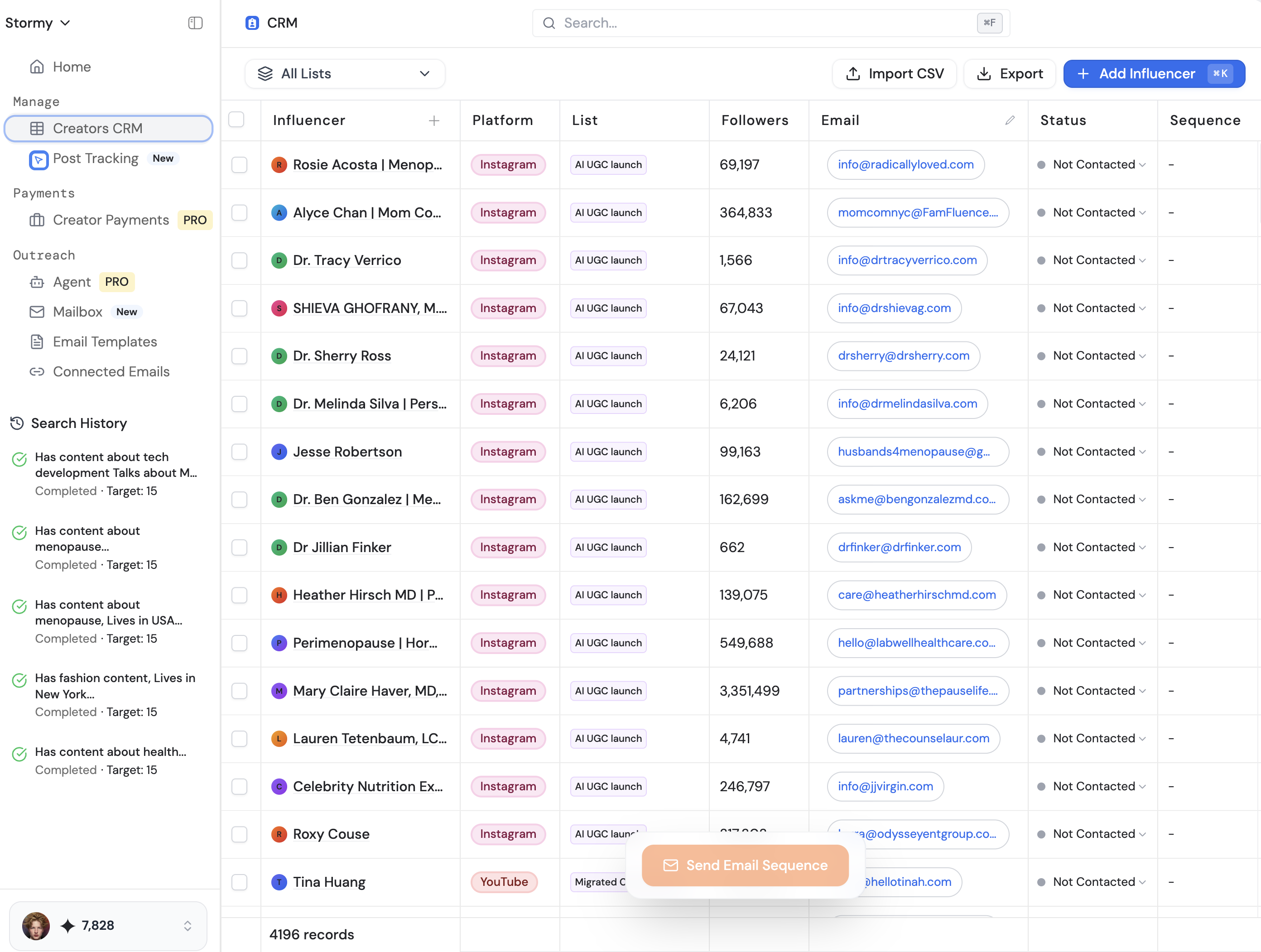
Once you have built a custom solution for one client, you have the blueprint for a vertical SaaS. The next challenge is finding more businesses like them. If you've built a tool for tutoring companies, you need to find more tutoring business owners. This is where modern AI tools come into play for influencer discovery and outreach. If your niche relies on social media presence, using platforms like Stormy AI can help you identify creators and influencers within that specific industry who can help promote your new software.
Managing these growing relationships requires a system. Tools like Stormy AI offer a creator CRM that allows you to track interactions and manage the rollout of your software to new partners. As you scale from one client to ten, having a centralized place to manage your outreach and collaborations is the difference between a side hustle and a real business.
The Future of Software is Vertical

The era of the 'all-in-one' platform is being challenged by a wave of hyper-specialized, AI-powered tools. By focusing on unbundling SaaS and solving high-friction problems for specific B2B niches, you can build a business that is both profitable and sustainable. Whether you are vibe-coding a prototype in Replit or scouring Upwork for your next project, the goal is the same: find where the spreadsheets are breaking and replace them with something better.
Don't be afraid to start small. A 'small' B2B problem solved well can easily lead to a six-figure income as a solo dev. Focus on the 'burning-hot' pain points, utilize AI business opportunities to speed up your development, and remember that the best way to validate a product is to have someone pay you to build it. If you're ready to learn more about building these types of businesses, communities like Startup Empire provide the roadmap and support needed to turn these AI-built prototypes into lasting empires.
Conclusion: Take Action Today
The AI business opportunities of 2024 are waiting for those who are willing to look past the hype and focus on utility. To start your journey in unbundling SaaS, follow these three steps this week:
- Spend one hour on Upwork searching for high-pay consulting jobs involving Airtable or Zapier.
- Identify one 'Frankenstein' workflow where a business is struggling to connect multiple tools.
- Use Replit and v0.dev to build a mock-up and send a video pitch.
The barrier is gone. It's time to build.