When Roger Chen first began building "Bro," an AI companion app that floats over your texts, he didn't wait for a finished product to start his marketing. He didn't even have a functioning codebase. Instead, he used a high-fidelity mockup to run ads, validate interest, and eventually scale to over 8 million views on TikTok. This wasn't a fluke; it was the result of a precise ugc marketing strategy that prioritized human psychology over flashy graphics. In the hyper-competitive world of the App Store, where organic reach is the lifeblood of survival, understanding how to recruit, manage, and optimize creators is the difference between a dead launch and a #1 ranking.
The Validation-First Framework: Testing the "Ghost" App
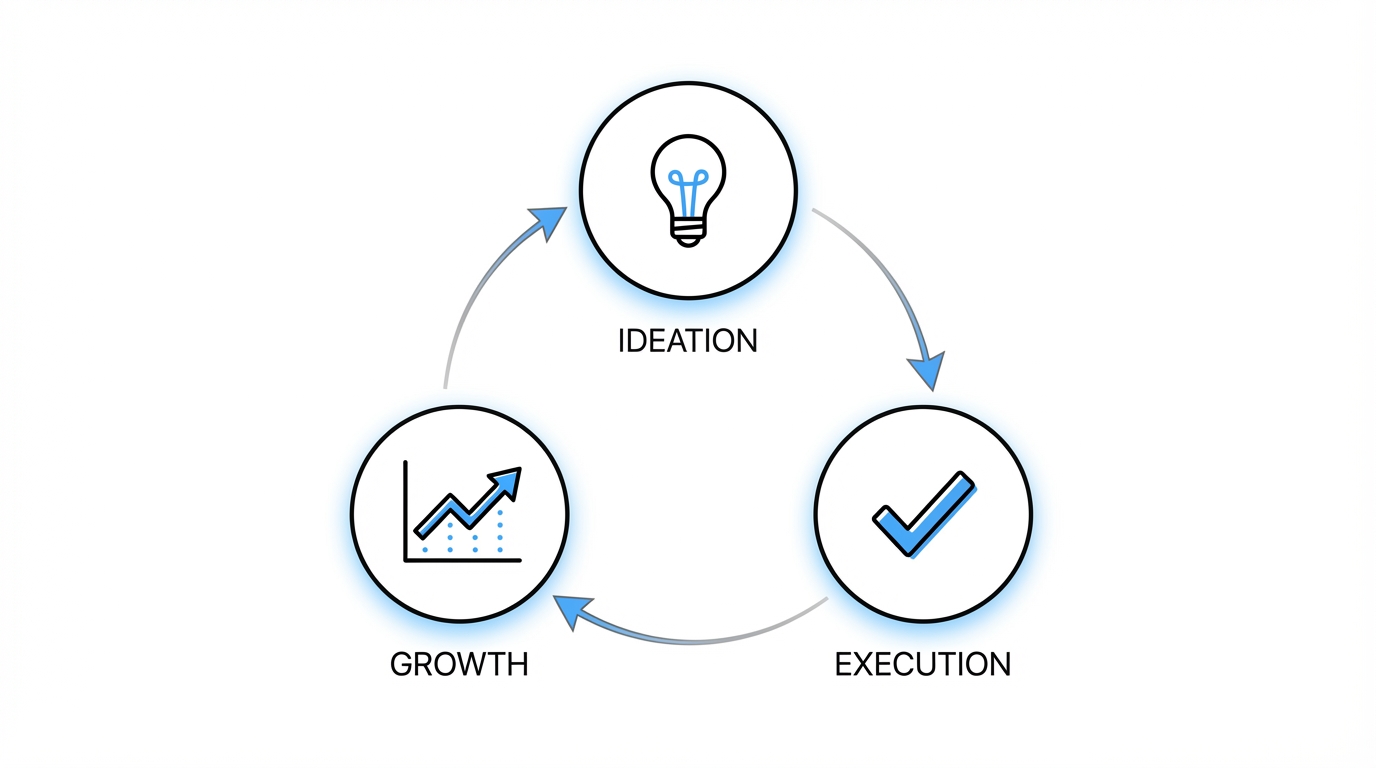
Most founders spend months in "pivot hell," building features no one wants. Roger Chen bypassed this by using Protopie to create mockups that looked and felt like real apps. By filming himself and his co-founder interacting with a "fake" app—essentially a glorified PowerPoint—they were able to gauge user interest before writing a single line of production code. This viral app marketing approach relies on speed. If a concept doesn't resonate as a video, it won't resonate as a product.
Testing with TikTok Ads in the early stages isn't about ROI; it's about instant feedback. While many founders view ads as a scaling tool, successful consumer social apps use them for validation. You can spend $2,000 on ads today and know by tomorrow if your core "wedge"—the specific scenario where your app provides value—is actually interesting to your target demographic. This saves weeks of engineering time by identifying which UI elements people actually click on before the backend even exists.
The Psychology of the Scroll: Why "People Love People"
The cardinal sin of influencer marketing for apps is leading with the interface. Roger’s core insight is simple: People love people; they scroll past apps. When a user sees a digital interface immediately, their brain registers it as an ad and they swipe away. However, when they see a human face reacting to a relatable situation, they stop. This is why a successful ugc marketing strategy must lead with a "hook and scenario" rather than a feature list.
In the case of Bro, the videos that hit millions of views often featured a creator in a relatable panic—like accidentally texting a crush "I love you." By the time the app's floating interface appeared to help solve the problem, the viewer was already invested in the story. This "hidden demo" technique ensures the app feels like a solution to a problem rather than a tool looking for a user. Data from Superwall suggests that understanding these psychological triggers is what separates profitable apps from the rest.
The Outreach Playbook: Finding Creators via Scenarios

Finding the right creators requires moving beyond general categories like "tech" or "lifestyle." Platforms like Stormy AI help founders identify creators who aren't just popular, but who fit the specific scenarios their app addresses. Stormy AI is an AI-powered platform for creator discovery that acts as a search engine across TikTok and Instagram. For an app like Bro, Roger didn't just search for "influencers." He used natural-language prompts to find creators mastering relationship and scenario-based hashtags.
Step 1: Identify Your Scenario Hashtags
Instead of searching for #AppReview, search for the problem your app solves. If you have a fitness app, look for #PostWorkoutFail or #GymAwkwardness. If it's a social app, look for #DatingHorrorStories or #TextingGaffes. You want creators who are already masters of the context where your app lives. This makes the integration of your product feel organic rather than forced.
Step 2: High-Volume Outreach
Scale is a numbers game. To find the 2-3 videos that will garner 2M+ views, you often need to coordinate with 50 or more creators. Many founders fail because they put all their eggs in one or two expensive influencer baskets. The creator economy for startups favors those who treat outreach as a high-volume sales funnel. Using Stormy AI, you can set up an autonomous AI agent that discovers, outreaches, and follows up with creators on a daily schedule—ensuring your pipeline never runs dry.
Executing the "Hidden Demo" Technique
The "Hidden Demo" is the secret sauce of viral app marketing. This involves integrating the app interface into relatable, real-world digital environments like iMessage, Tinder, or Instagram DMs. In one of Bro's most successful videos—which hit 2.3 million views—the creator showed a real iMessage thread. The "Bro" AI was just a small floating window over the text, offering a suggestion on how to fix a texting mistake. Because the environment was familiar, the viewer's guard was down.
This technique works because it provides contextual value. You aren't telling the user what the app does; you are showing them exactly how it fits into their existing digital life. When filming these, ensure the creator’s hands are visible. Perceptive TikTok audiences will notice if the footage looks like a canned screen recording. Real hands on a real phone, as seen in TikTok trends, increase the authenticity score of the content, which is a major factor in the platform's recommendation algorithm.
Managing Volume vs. Outliers: The Reality of Hit-Making
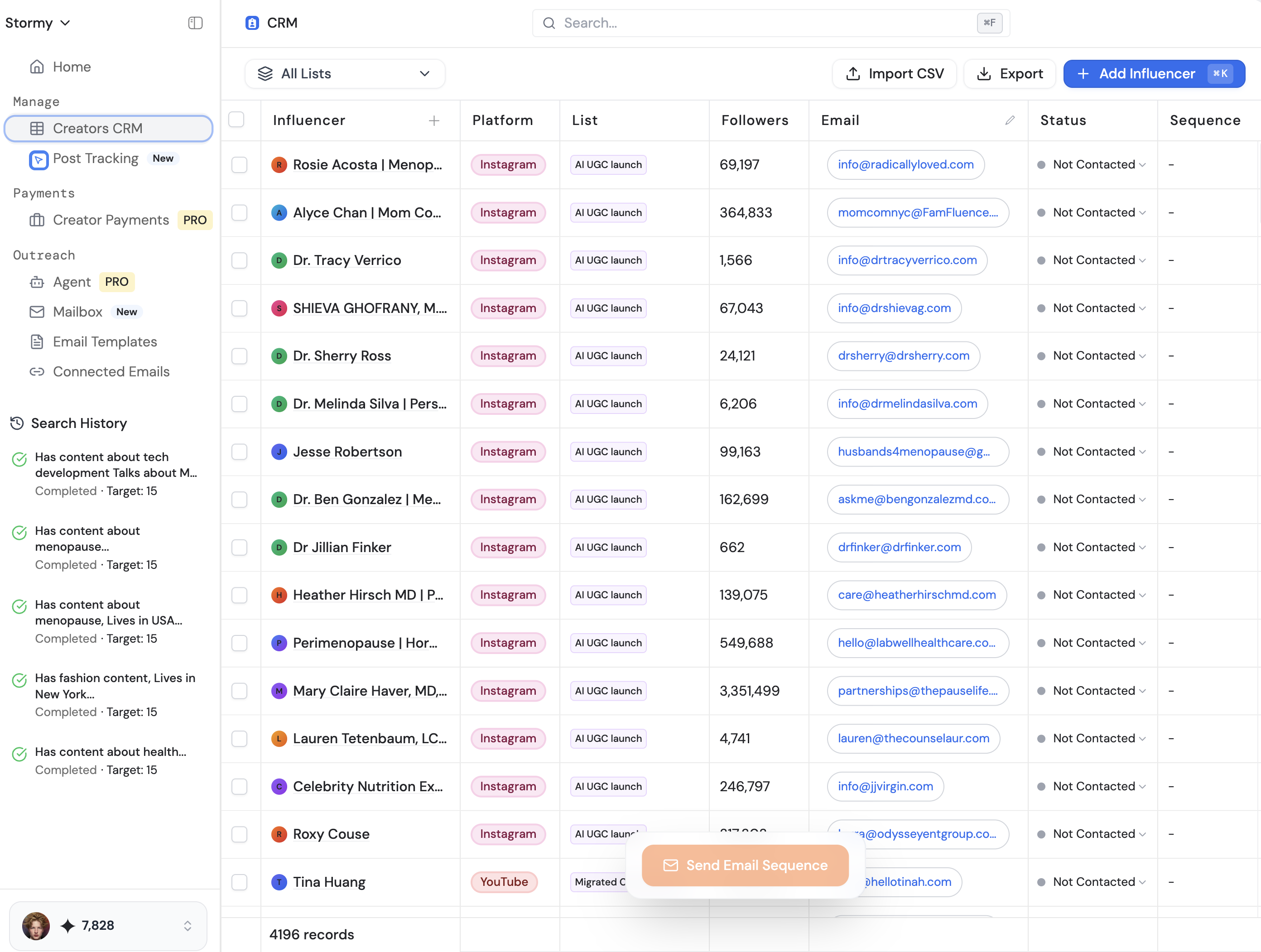
It is impossible to predict which video will go viral. Even experienced founders like Roger are often humbled by the results: "The ones I thought would work just didn't work, and the ones I felt were ridiculous worked surprisingly well." This is why your tiktok influencer outreach must be wide-reaching. You are essentially buying lottery tickets, but you can improve your odds by using Stormy AI to vet creators for audience quality and engagement fraud before sending a brief.
When managing dozens of creators, keep the briefs simple. Do not over-script. Give them the hook and the wedge scenario, then let them use their own voice. If you try to make a creator sound like a corporate spokesperson, the TikTok algorithm will bury the video. The goal is to generate enough content that you have a constant stream of data to analyze through your Meta Ads Manager or TikTok dashboard to see which creators have the highest engagement rates.
Post-Validation: Scaling to Product-Led Viral Growth
While UGC gets people in the door, product-led viral growth keeps them there. Roger’s previous app, Lobby, hit 500,000 daily active users by turning the app experience itself into a marketing tool. One such feature was the "Group Picture"—a prompt that triggered a synced Boomerang for everyone in a video chat. These were watermarked and highly shareable, creating a natural invite loop that increased network density.
For mobile app founders, the goal of influencer marketing for apps should be to seed the initial user base. Once you have a core group of users, the product should take over the heavy lifting. This often involves A/B testing your paywalls and invite flows to ensure you are maximizing the traffic coming from TikTok. Tools like Paywall Experiments allow you to see what high-revenue apps are doing to convert their viral traffic into paid subscribers.
Conclusion: Using the Playbook for Your App
Success on TikTok isn't about having a huge budget; it's about authenticity and iteration. By using mockups for rapid validation, focusing on human-centric scenarios, and managing a high volume of UGC creators, you can replicate the strategy that took Bro and Lobby to the top of the charts. Remember to look for temporal density—getting everyone to use the app at the same time—and relationship density—getting friends to join together. If you are ready to start finding the right faces for your brand, use Stormy AI to streamline your discovery process and automate your outreach. The next 8-million-view video is just one scenario away.