Applying the Uber and Airbnb Growth Playbook to Modern Influencer Marketing in 2026
Learn how Bill Gurley’s market expander theory and the Uber growth model are revolutionizing influencer marketing ROI in 2026 for high-conviction brand building strategies.
In the high-stakes world of digital growth, most marketers are currently fighting for scraps of existing market share. They look at the current landscape, calculate the cost-per-acquisition, and try to optimize their way to a 5% improvement. But as we move through 2026, the most successful brands aren't playing the market share game anymore. Instead, they are applying the Uber growth model and Airbnb marketing strategy to creator partnerships—a shift from buying 'cheap' impressions to securing 'Park Avenue' digital real estate.
History has shown us that human nature is hardwired to overestimate risk and underestimate opportunity. From the early days of Bessemer Venture Partners underestimating Shopify to the world’s smartest analysts missing the scale of mobile gaming, the pattern is clear: we consistently fail to grasp how much a truly disruptive asset can expand its own market. In 2026, this same bias is causing brands to miss out on the most lucrative high-conviction marketing investments in the influencer space.
The 'Park Avenue' Strategy: Why the Best Are Never Too Expensive
Understand the logic of identifying and investing in the high-value 'Park Avenue' of startups.
Josh Kushner, the founder of Thrive Capital, recently shared a profound insight derived from his family’s background in New York real estate. He noted that in the most prestigious parts of Manhattan, there is no such thing as 'overpaying' for Park Avenue real estate. While a building might seem outrageously expensive today, its status as a scarce, top-tier asset ensures that someone will always be willing to pay more for it in a decade.
"You can't really overspend on Park Avenue real estate. When you buy the best, typically it's never too expensive because there's always someone in ten years who wants to pay more for it."
Applying this to influencer marketing ROI in 2026, many brands make the mistake of choosing 'Value' creators—those with lower rates but mediocre engagement or brand alignment. They fear the high price tags of 'Digital Manhattan' creators. However, the brand building strategies that actually move the needle are built on concentration, not dilution. A single partnership with a category-defining creator is often worth more than 100 mid-tier activations because that creator owns the attention 'real estate' that cannot be replicated.
Bill Gurley and the 'Market Expander' Theory
How Bill Gurley's market expander theory predicted Uber's growth far beyond initial expert projections.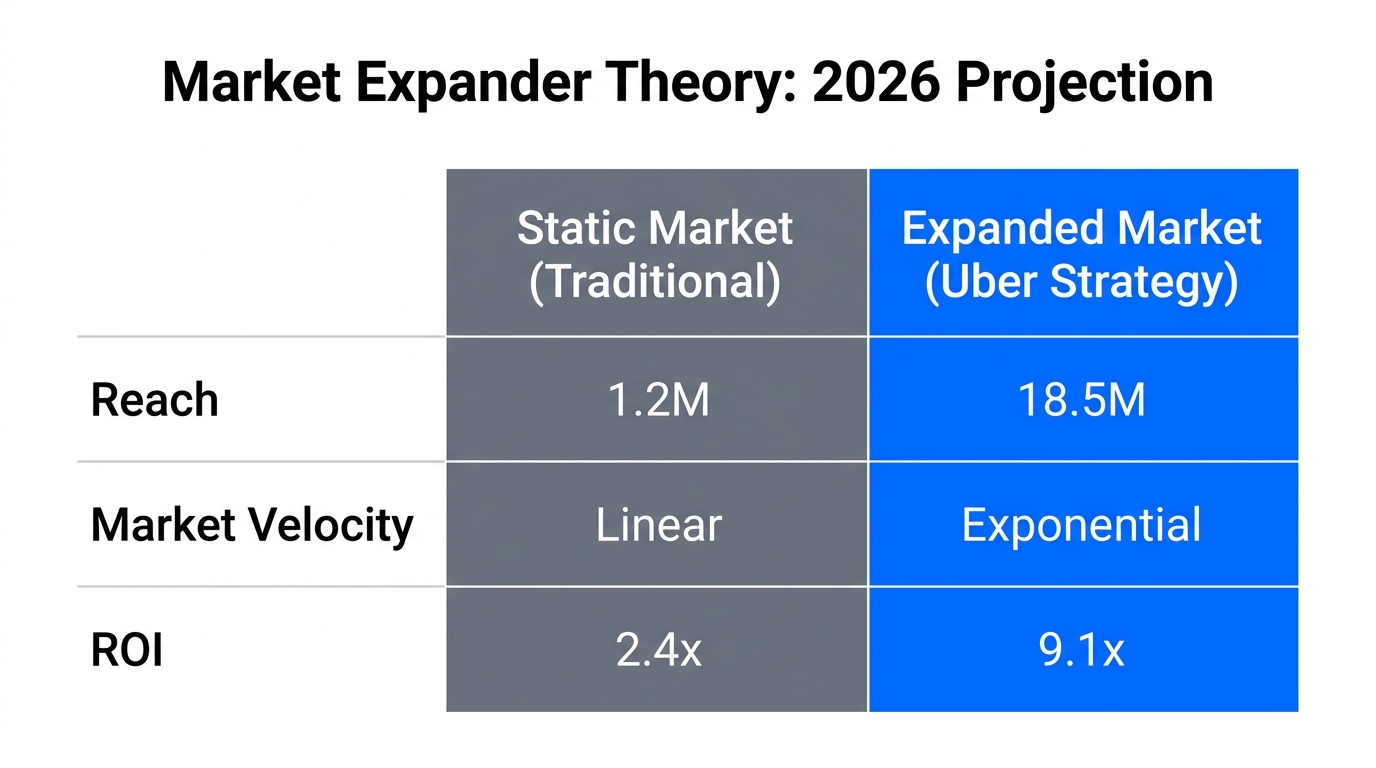
To understand why high-conviction influencers are worth the premium, we have to look at Bill Gurley's legendary analysis of Uber. In his famous essay, "How to Miss by a Mile," Gurley pushed back against valuation experts who claimed Uber was overvalued at $17 billion. Those experts were sizing Uber based on the existing taxi market—a classic mistake of thinking the future will look exactly like the past.
Uber didn't just take a slice of the taxi pie; it expanded the market by 3x in cities like San Francisco. By increasing convenience, lowering friction, and offering a fundamentally better experience, Uber turned people who never took taxis into frequent riders. This is the Uber growth model: disruptive technology doesn't just compete; it creates new demand.
| Metric | The Cynic's View (Market Share) | The Optimist's View (Market Expander) |
|---|---|---|
| Growth Strategy | Compete on price/efficiency | Create new use cases |
| Market Size | Static (Fixed pie) | Dynamic (Expanding pie) |
| Primary Risk | Overpaying for share | Missing the outlier |
| 2026 Success | Incremental gains | 10x-100x ROI |
The same logic applies to modern influencers. A 'Market Expander' creator doesn't just show your product to their audience; they create a new category of need. When Airbnb launched, many thought it was just a better version of Couchsurfing. Today, one out of every 30 travel dollars in America is spent on Airbnb. They didn't just steal hotel guests; they made travel more accessible for a whole new demographic.
Why Brands Must Own 'Digital Manhattan'
Why true winners focus on acquiring the 'Manhattan' of assets rather than third-best options.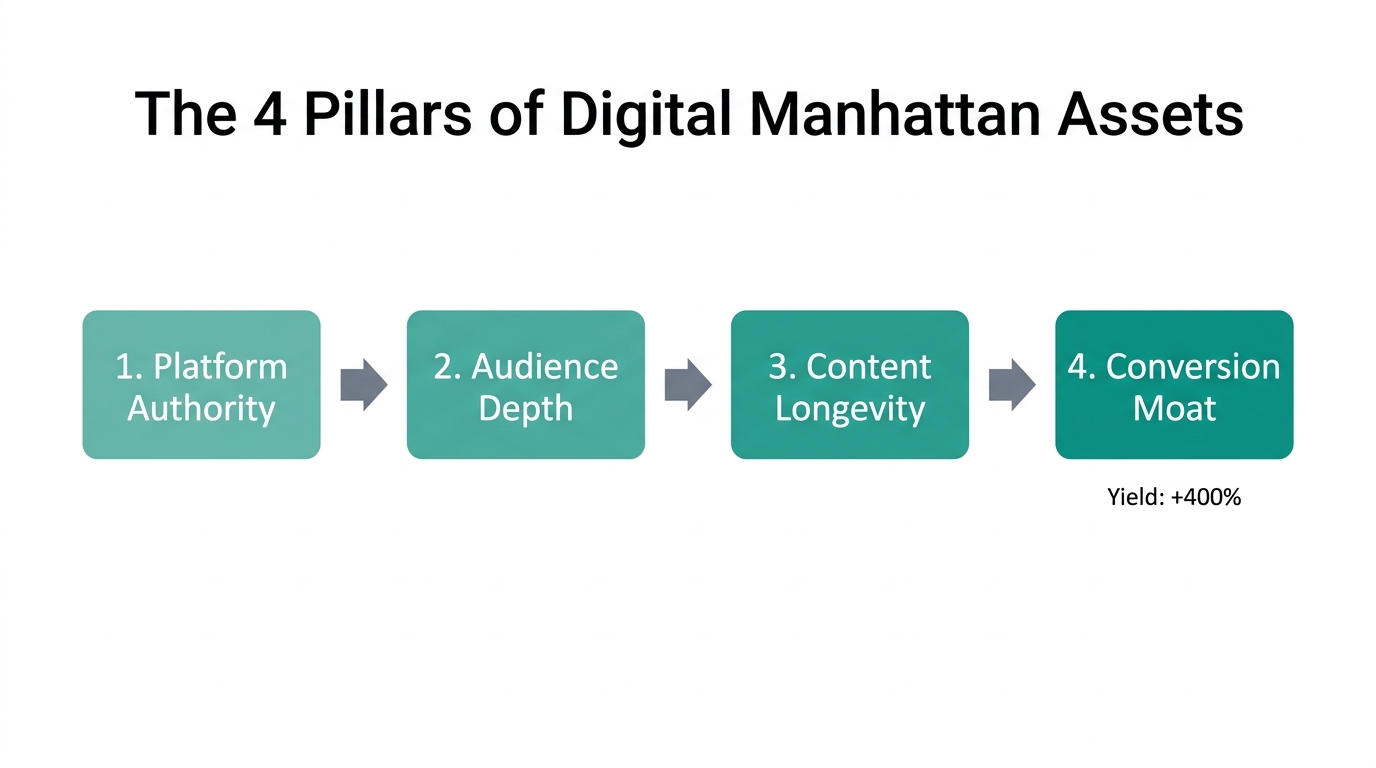
Michael Saylor often refers to Bitcoin as Digital Manhattan—a scarce, non-reproducible asset that will only grow in value as more people realize its utility. In the creator economy of 2026, the 'Digital Manhattan' assets are the creators who have spent a decade building unimpeachable trust with their communities. These creators are the scarce land of the internet.
If you are trying to build a brand in 2026, you shouldn't be looking for the 'seventh-best' creator because they are cheaper. You buy the Manhattan asset. You invest in the creator who owns the niche. Using AI-powered discovery engines like Stormy AI, brands can now identify these 'high-conviction' creators by analyzing deep audience quality and historical performance data that goes beyond surface-level follower counts.
"Sizing the market for a disruptor based on the incumbent's market is like sizing the car industry based on how many horses there were in 1910." — Aaron Levie, CEO of Box
Avoiding the 'Cynic’s Risk' to Capture the 'Optimist’s Reward'
The Bessemer Venture Partners 'Anti-Portfolio' is a humbling reminder that even the most professional investors miss the biggest wins. They passed on Apple, Google, and Airbnb because they focused on the risks rather than the uncapped upside. In their 2010 memo on Shopify, they predicted a best-case exit of $400 million. Today, Shopify is a $130 billion behemoth.
In high-conviction marketing investments, the risk isn't that you spend $100,000 on a creator and it fails. That is a manageable loss. The true risk—the Cynic’s Risk—is that you pass on the creator who could have become the face of your brand for the next decade, allowing a competitor to secure that 'Park Avenue' real estate instead.
Step-by-Step: Building a High-Concentration Influencer Portfolio
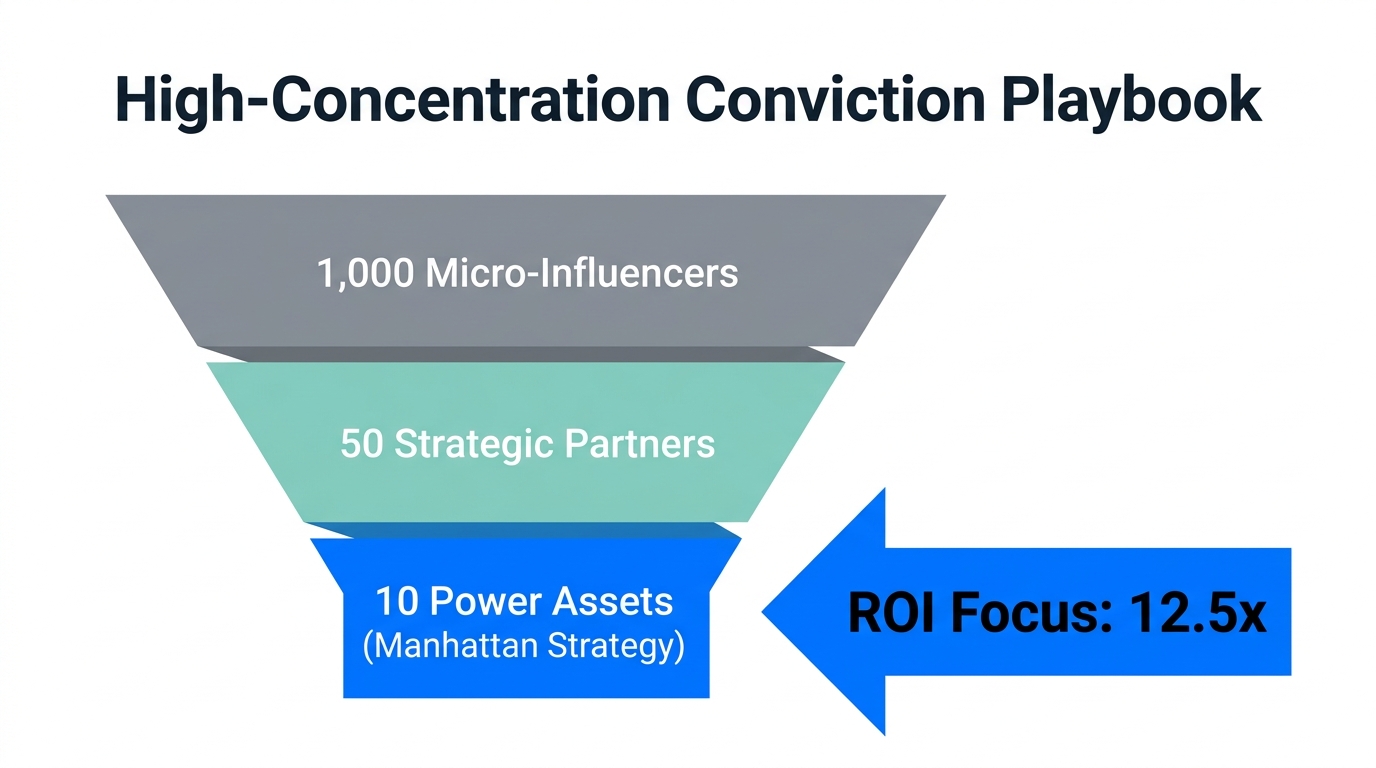
If you want to apply the Airbnb marketing strategy of category expansion to your brand, follow this 2026 playbook for creator selection and management.
- Step 1: Identify the Market Expanders. Don't just look for creators in your niche. Use Stormy AI to find creators who have a high 'concentration of trust'—audiences that act on their recommendations regardless of the product category.
- Step 2: Apply the 'Park Avenue' Valuation. Instead of asking "What is the lowest price we can pay?", ask "Is this creator the Digital Manhattan of this niche?" If the answer is yes, pay the premium. It is cheaper than buying ten mediocre assets.
- Step 3: Move from Transactions to Equity. The Uber growth model worked because drivers and riders were incentivized to stay in the ecosystem. Treat your top creators like partners. Use a Creator CRM to manage long-term relationships rather than one-off posts.
- Step 4: Automate the 'Suburbs'. While you manually handle your 'Park Avenue' creators, use AI agents to handle the discovery and outreach for your scale-tier creators. This allows your team to focus 90% of their energy on the 10% of creators who will drive 90% of your growth.
- Step 5: Measure Expansion, Not Just Attribution. Look for new use cases. Are customers mentioning your product in ways you didn't expect? Like the 70% of restaurant orders that are now delivery, your 'secondary' creator channels might eventually become your primary business driver.
"I don't care about the market size; I care about if we can make something fundamentally different. If you make something great, the market will come." — Elon Musk
Conclusion: The Future Belongs to the Bold
As we look at the marketing landscape in 2026, the lesson from Uber, Airbnb, and Shopify is undeniable: we are living in a hits-driven world. The influencer marketing ROI of the future won't be found in spreadsheets that calculate precise (but wrong) CPMs. It will be found by the optimists who have the courage to invest in scarce, high-quality digital assets before they become 'obvious' to the rest of the world.
Stop looking for 'cheap' alternatives. Stop sizing your potential based on the 'horses' of yesterday. Secure your Digital Manhattan today by using advanced tools like Stormy AI to find the creators who aren't just taking market share—they are expanding the world.