Triple Whale vs Northbeam vs Rockerbox: Which 2026 Attribution Tool is Best for Your Shopify Store?
Evaluating Triple Whale vs Northbeam vs Rockerbox in 2026? Discover the best Shopify attribution software for your DTC brand's scale, budget, and AI needs.
In 2026, the ecommerce landscape has shifted from tracking clicks to attributing agentic influence. With the global ecommerce market projected to hit $7.41 trillion this year, according to SellersCommerce, the pressure to maintain margins in a "pretzel-shaped" customer journey has never been higher. Today’s shopper interacts with 8–10 touchpoints before a single purchase, often aided by AI assistants that execute transactions directly. For the modern founder, choosing between Triple Whale, Northbeam, and Rockerbox isn't just about data—it's about which tool powers your autonomous operations.
While these tools provide the data, an AI ecommerce employee like Stormy AI is what actually acts on it. Stormy AI monitors your attribution dashboards, identifies shifts in ROAS, and rebalances budgets across Meta Ads and Google Ads while you sleep. In this guide, we’ll break down which attribution giant deserves a spot in your 2026 tech stack.
Triple Whale: The Speed-to-Insight King for $1M-$40M Brands
Triple Whale remains the undisputed heavyweight for Shopify DTC brands scaling toward the $40M mark. Their dominance was cemented during BFCM 2025, where brands using the platform generated $2.88 billion in revenue—nearly 20% of all Shopify merchant sales according to PR Newswire. The secret sauce in 2026 is Moby 2, an action-based AI agent that moves beyond simple Q&A to autonomous campaign management.
"AI is no longer experimental; it’s how brands protect margins and compete. We’ve moved from data tools to real-time strategic advisors." — AJ Orbach, CEO of Triple Whale
For a lean team, the appeal of Triple Whale is its plug-and-play simplicity. Within minutes of installing the Triple Pixel, you gain access to first-party server-side tracking that bypasses the 30% data loss common in the "zero-click" world often discussed by SparkToro. If you are running a high-velocity TikTok Shop or a standard Shopify store, the "Triple Attribution" view—which shows last-click credit side-by-side with multi-touch models—is essential for avoiding the double-counting trap where Meta and Google both claim 100% credit for the same sale.
Northbeam: Causal Validation for Enterprise Media Buyers
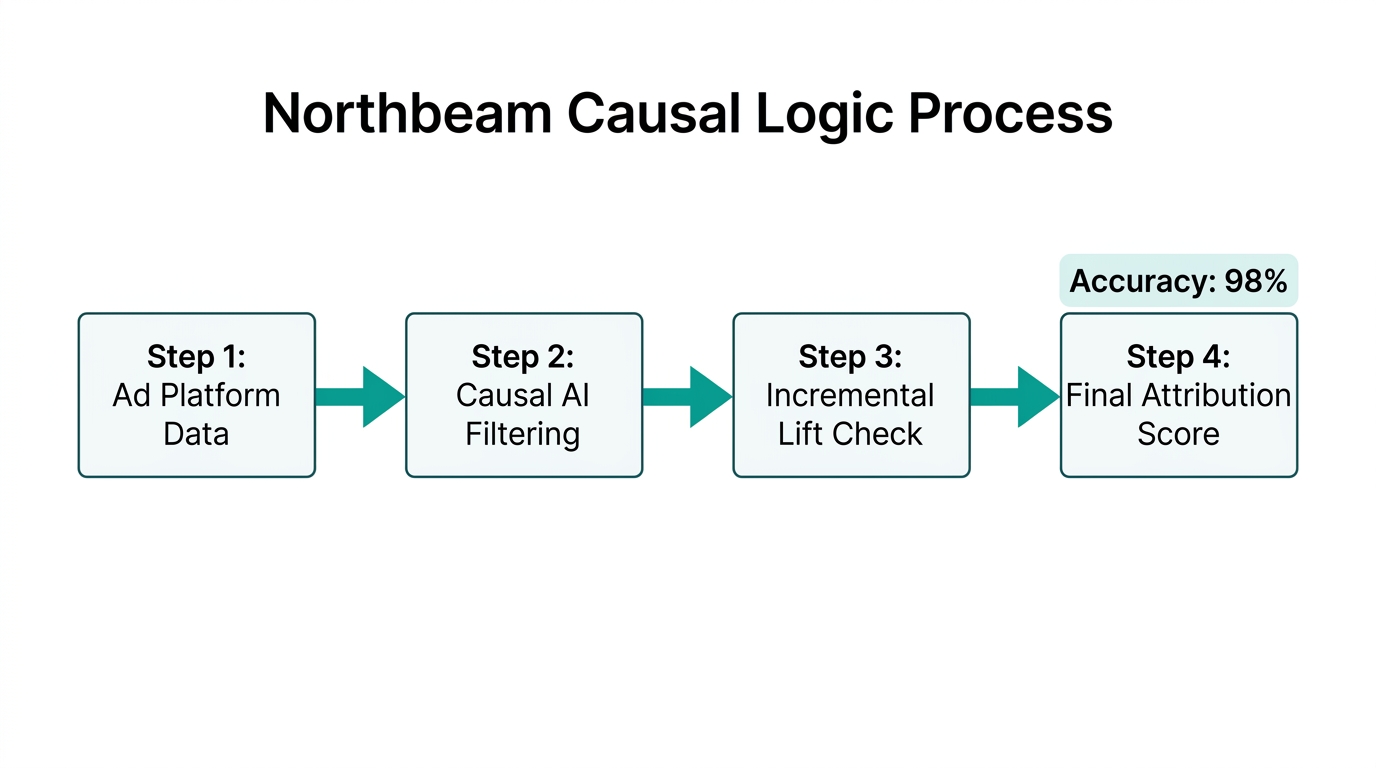
If Triple Whale is a strategic advisor, Northbeam is a scientific laboratory. Starting at $1,500/month, it targets enterprise-grade brands that require Media Mix Modeling (MMM) and deep incrementality testing. While Triple Whale excels at showing you what happened, Northbeam focuses on why it happened using advanced machine learning.
Northbeam’s 2026 focus is on creative-level granularity. In an era where "infinite AI-generated creative" is the norm, Northbeam helps media buyers identify which specific visual hooks are driving long-term LTV versus short-term spikes. This is critical because, as noted in recent Polar Analytics benchmarks, high-AOV brands (>$1,000) often see a low 0.51% conversion rate but a massive 7.62x ROAS—journeys that require the granular patience only Northbeam provides.
Rockerbox: The Choice for Offline and CTV Spend
For brands that have matured beyond digital-only ads, Rockerbox (now owned by DoubleVerify) is the gold standard. While Triple Whale and Northbeam focus heavily on the Shopify ecosystem, Rockerbox thrives in omnichannel attribution. If your 2026 budget includes linear TV, direct mail, podcasts, or Connected TV (CTV), Rockerbox’s unified multi-touch attribution (MTA) is superior.
A notable case study involves Rebag, which used Rockerbox to scale TikTok spend by over 100% YoY by validating how upper-funnel video views eventually led to high-value purchases. Rockerbox doesn't just track clicks; it integrates with your data warehouse like Snowflake to provide a single source of truth across the entire customer lifecycle, both online and off.
Feature Showdown: How They Stack Up in 2026
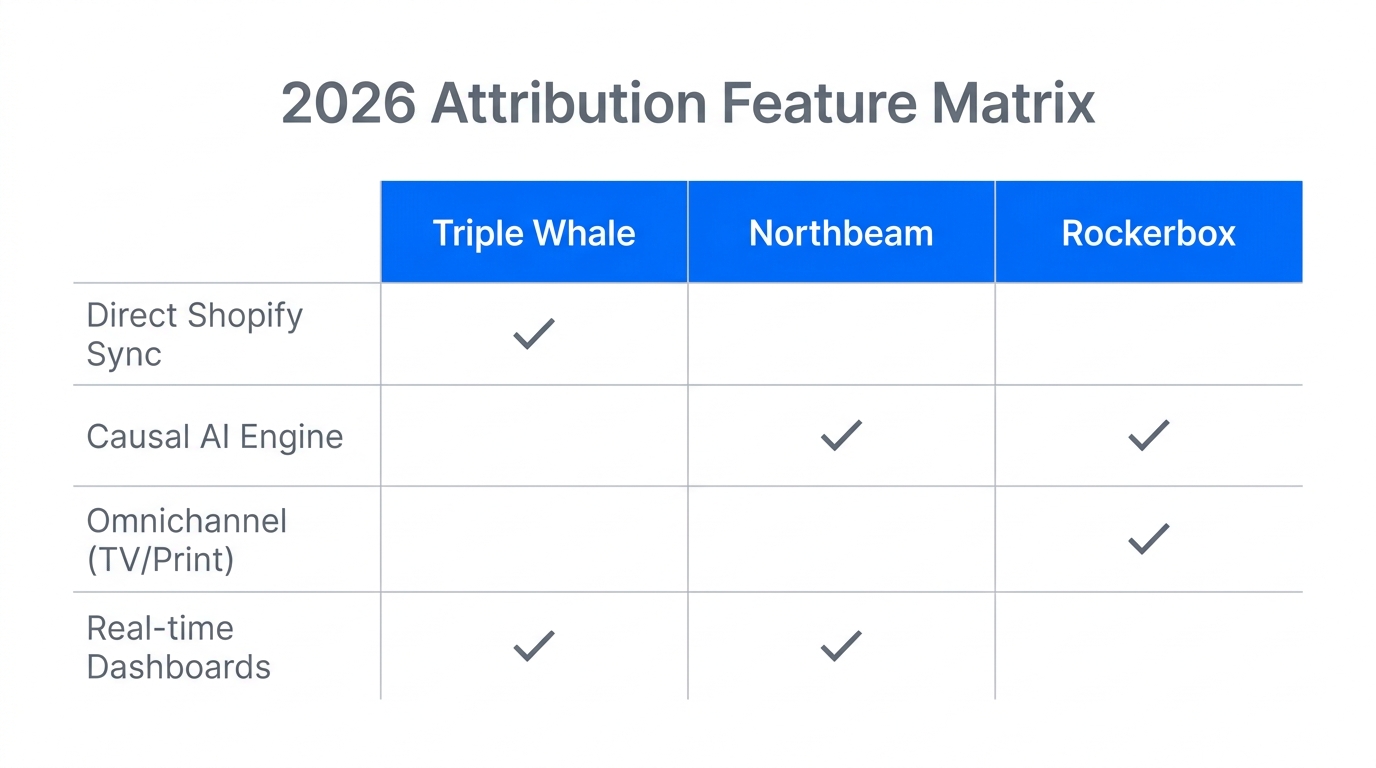
The choice often comes down to specific operational needs. Below is a comparison of the 2026 feature sets for each platform.
| Feature | Triple Whale | Northbeam | Rockerbox |
|---|---|---|---|
| Best For | Shopify DTC ($1M–$40M) | Data-heavy brands ($40M+) | Omnichannel/Offline Spend |
| AI Capabilities | Moby 2 (Action-based agents) | Creative-level ML models | Unified MTA & Attribution |
| Setup Time | Minutes (Plug-and-play) | Weeks (Analyst-led) | Months (Enterprise implementation) |
| Key Integration | Shopify, TikTok Shop, Vibe.co | Custom Data Pipelines | TV, Direct Mail, Digital |
| Starting Price | $129/mo | ~$1,500/mo | Custom/Enterprise |
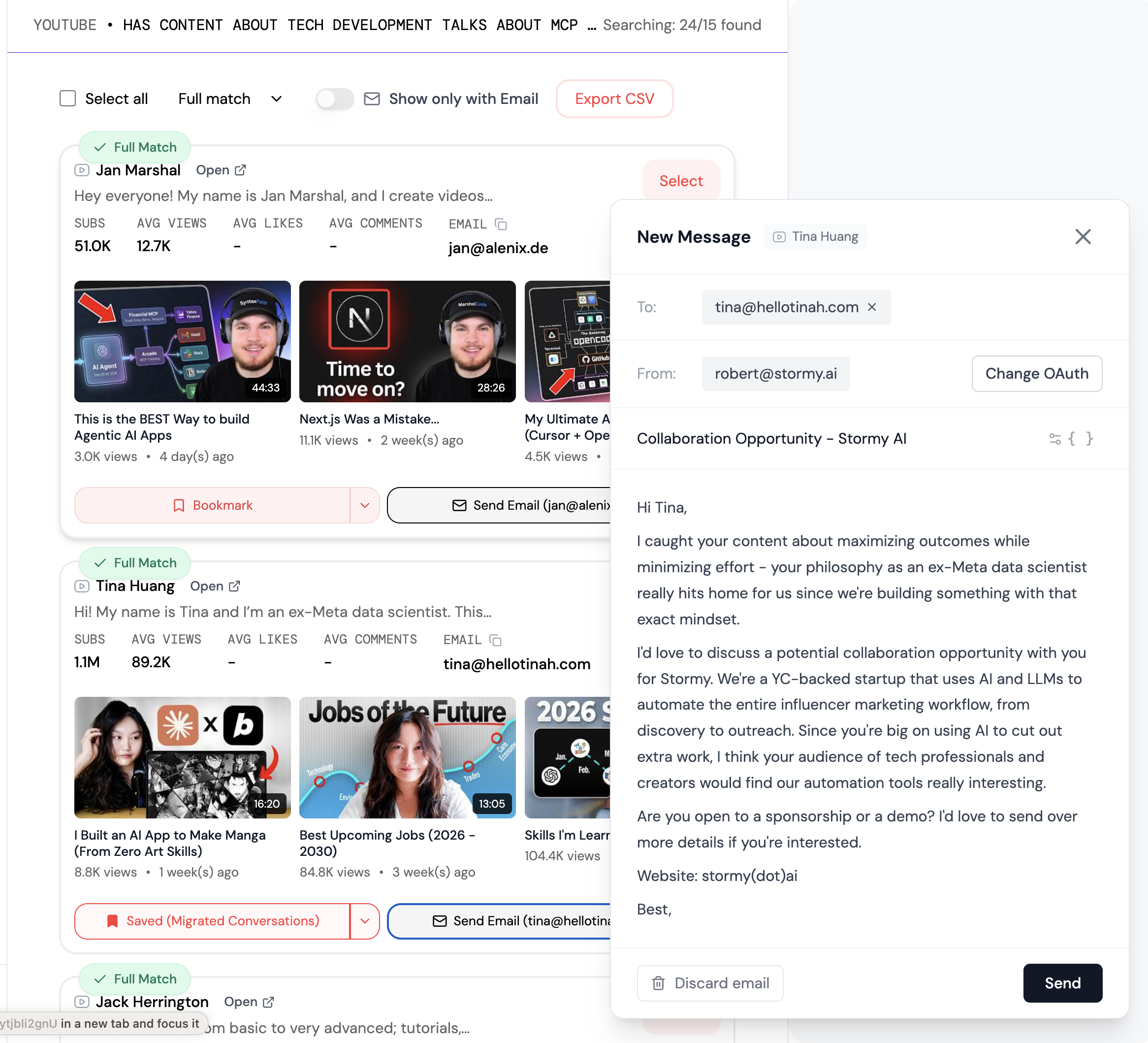
Regardless of which tool you choose, the data is only valuable if you act on it. This is where Stormy AI acts as your AI ecommerce employee. Stormy can pull reports from any of these platforms, drop them into a shared spreadsheet, and even draft hyper-personalized outreach to creators whose posts are flagging as high-performers in your attribution dashboard.

2026 Pricing Models: GMV vs. Custom Implementation
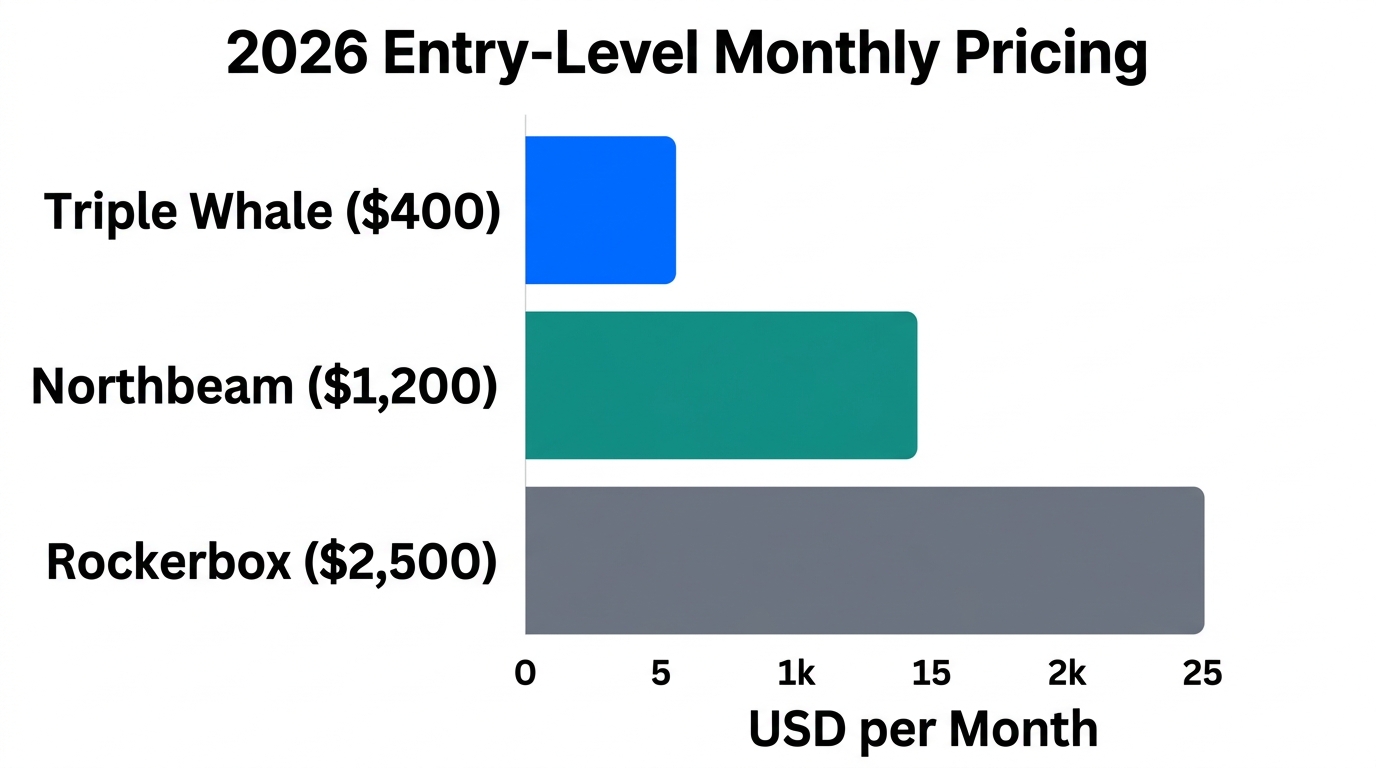
Pricing has become a point of contention in 2026. Triple Whale uses a GMV-based tiering system, starting at $129/month for their Growth plan. This makes it accessible for emerging brands, but as you scale, the cost increases. Their "Professional" plan, priced at $749/month, is required for those wanting full Media Mix Modeling and advanced Business Intelligence features according to Tekpon.
Northbeam and Rockerbox generally eschew public pricing for higher-tier customers, moving toward custom contracts that reflect the complexity of the data stack. For brands with high-ticket items and long sales cycles, Hyros remains a niche competitor with pricing starting around $99–$230/month, though it lacks the broader operational suite offered by Triple Whale.
User Sentiment: The "Tool Bloat" Problem
A growing trend in 2026 reddit discussions on r/PPC and r/ShopifyAttribution is the concern over "tool bloat." Some founders feel that Triple Whale has become too heavy with its expansive agentic suite. This has led to the rise of lightweight alternatives like Polar Analytics and Outoftheblue.ai, which focus on full data ownership via Snowflake rather than an all-in-one dashboard approach.
"Any single attribution model will fail. What works now is all-around attribution—a blended approach of MMM, MTA, and incrementality." — Vlada Grebenykova, CMO
Critics also warn of the "Retargeting Death Spiral." Attribution tools often over-credit retargeting because it appears at the end of the journey. Brands that rely solely on these numbers may cut "unprofitable" top-of-funnel ads, only to see their entire customer pool dry up months later. To combat this, smart 2026 brands use Stormy AI to set automated budget floors for awareness campaigns, ensuring the top-of-funnel engine keeps running regardless of last-click metrics.
2026 Best Practices: Deploying Your Attribution Playbook
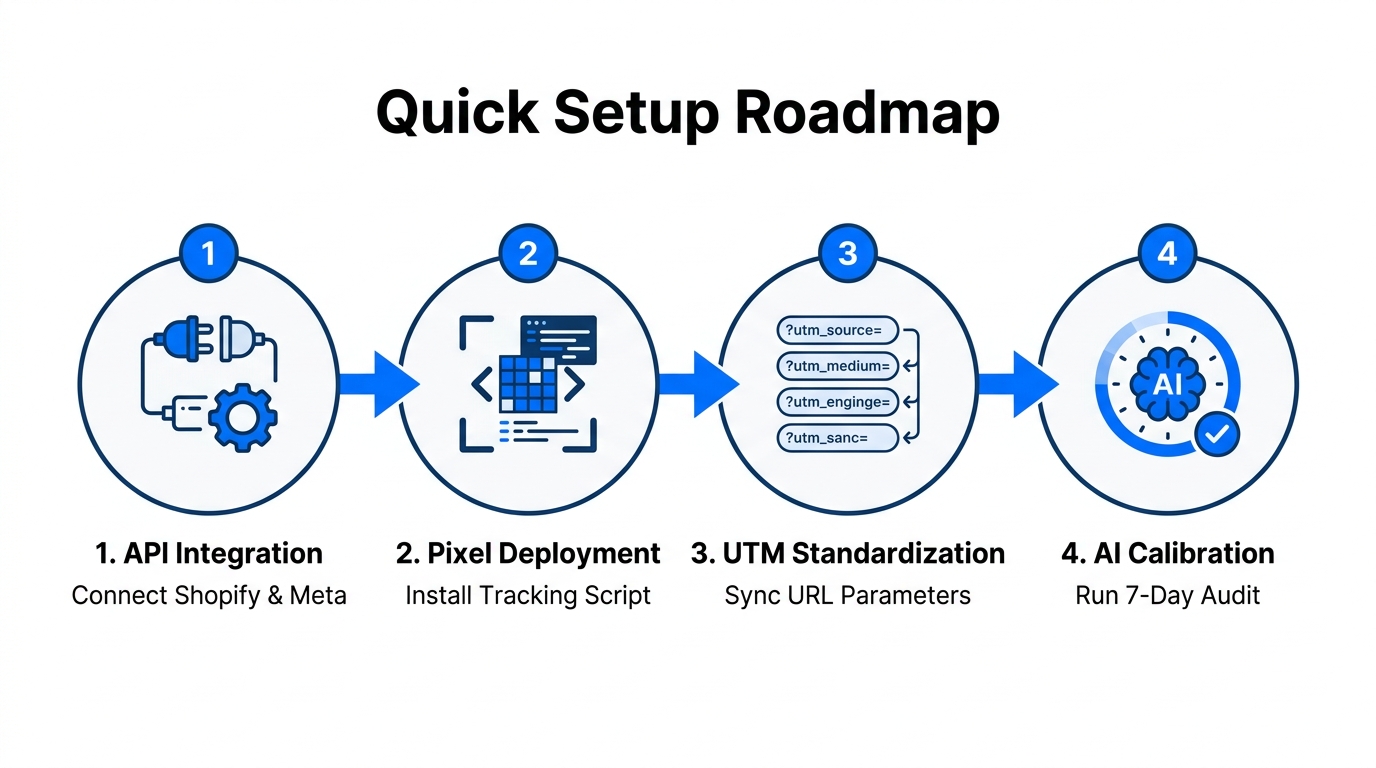
To win in 2026, follow this three-step attribution playbook:
- Deploy the Server-Side Pixel: Whether using Triple Pixel or Northbeam’s tag, ensure Server-Side Tracking is toggled ON to capture data directly from your server, bypassing browser-level blocks like Apple Safari's ITP.
- Configure Action-Based Agents: In Triple Whale, use Moby 2 to set a "Scaling Prompt." For example: "Reallocate $500 from low-performing Meta ads to high-performing TikTok creatives every 4 hours if ROAS is > 2.0."
- Audit Pixel Health Weekly: Use tools like the Pixel Events Manager (launched April 2026) to monitor real-time event flow and device segmentation to catch tracking failures before they skew your data.
Final Verdict: Which Tool Wins?
The "best" tool depends entirely on your 2026 business stage:
- Choose Triple Whale if you are a Shopify brand between $1M and $40M looking for the fastest "speed-to-insight" and want AI agents to help run your daily ops.
- Choose Northbeam if you spend $100k+/month on ads and have a dedicated media buying team that requires causal validation and deep creative analytics.
- Choose Rockerbox if you are an omnichannel enterprise spending significantly on offline channels like TV, radio, or direct mail.
Ready to automate the rest of your ecommerce back office? Let Stormy AI handle your inventory, supplier follow-ups, and creator outreach while you focus on scaling your brand.