The digital advertising landscape has officially crossed a monumental threshold in 2026. With global digital ad spend surpassing $1 trillion according to Statista and ecommerce-specific spend reaching $271 billion, the stakes for brands have never been higher. According to MarketingLTB, while the median ROAS (Return on Ad Spend) for ecommerce sits at 3.2x, the top 10% of advertisers are pulling ahead with an incredible 8.4x ROAS through advanced AI optimization and superior data maturity. Many of these elite brands are moving beyond traditional channels and using Stormy AI to find and scale high-performing influencer partnerships that feed their paid funnels.

However, for the modern growth lead or operations director, ROAS is no longer the North Star. In a world of "intelligent commerce," chasing a high ROAS can be dangerously misleading if your contribution margins are thin or your customer acquisition costs (CAC) are skyrocketing behind the scenes. We are entering the era of outcome engineering, where the winners are defined by their ability to leverage first-party data and precise attribution tools like Triple Whale and Northbeam.
The Death of Vanity Metrics: Why Contribution Margin is the New ROAS
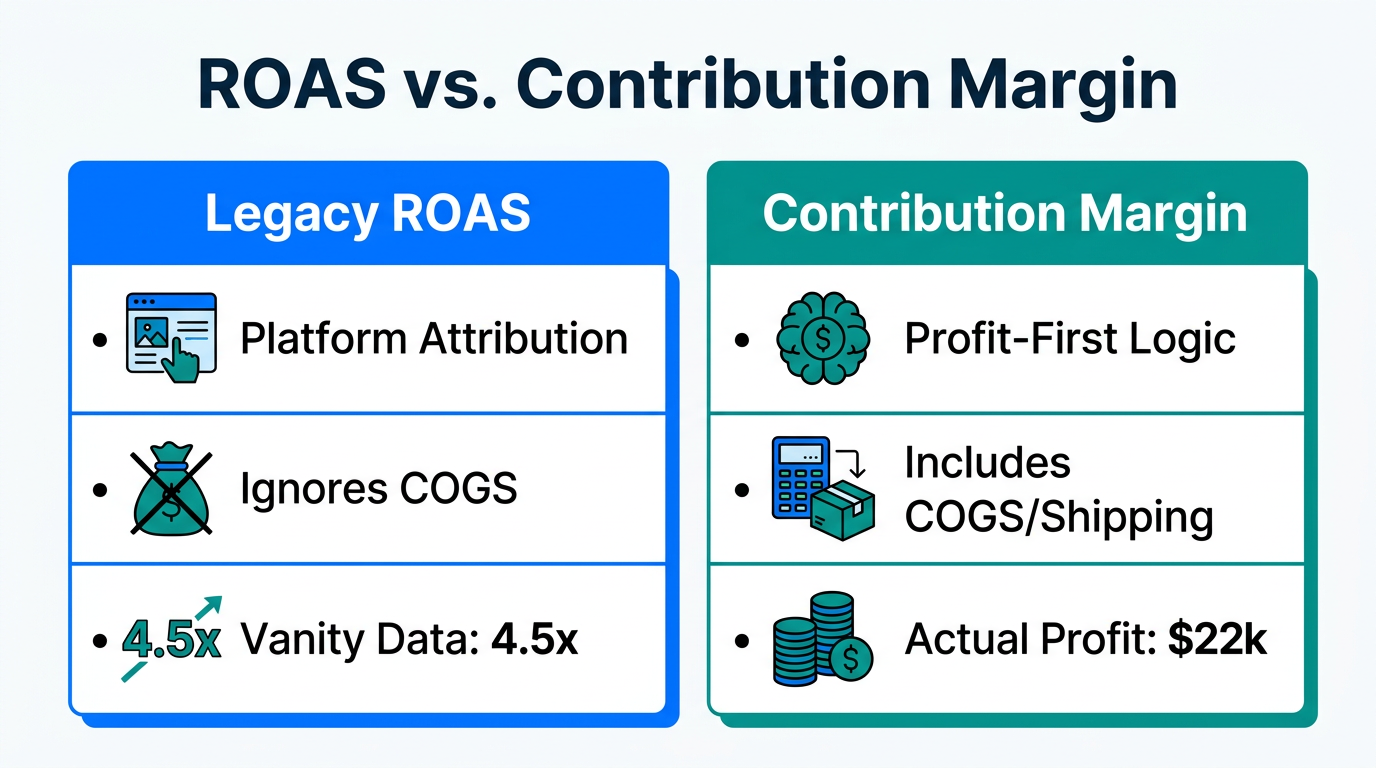
In 2026, scaling a "leaky" funnel is the fastest way to burn capital. Experts at Clearco and Neon Growth argue that brands must shift their focus from platform-reported ROAS toward Contribution Margin and Incrementality. ROAS often fails to account for shipping costs, return rates, and merchant fees—variables that can turn a "profitable" campaign into a net loss. Furthermore, as platforms like Meta Ads Manager and TikTok Ads self-attribute conversions, they often take credit for sales that would have happened anyway.
"Chasing ROAS without understanding contribution margin is like driving a car based only on the speedometer while the fuel tank is leaking into the engine."
To combat this, leading brands use Triple Whale vs Northbeam 2026 logic to decide which attribution model fits their scale. Shopify-native brands often prefer Triple Whale as their essential operating system, centralizing profit data. Meanwhile, Northbeam offers enterprise-grade, multi-touch attribution (MTA) that tracks the entire customer journey across dozens of touchpoints. While Northbeam and Triple Whale handle the paid side, Stormy AI provides the missing link for organic and influencer attribution, allowing brands to see how creator content drives long-term brand equity and conversion.
Solving the 20-40% Conversion Data Loss Problem with Server-Side Tracking
With the final deprecation of third-party cookies, relying on browser-based tracking is a recipe for disaster. Research from Benly.ai shows that brands without server-side tracking for marketers lose between 20% and 40% of their conversion data. This "data gap" makes it impossible for ad platform algorithms to optimize correctly, leading to higher CPAs and inefficient bidding.
The solution in 2026 is the implementation of robust server-side tracking via Elevar or integrated solutions within Triple Whale. By sending data directly from your server to platforms like Google Ads and Meta, you bypass ad blockers and browser restrictions. This creates a "clean" feedback loop that allows AI-powered commerce agents to bid more accurately on high-value shoppers. For many brands, these "high-value shoppers" are often first reached through influencers identified via Stormy AI's search engine.
The Impact of Data Maturity on Platform Performance
- Google Shopping: Currently averaging a 4.2x ROAS with a CPC of $1.16 according to WordStream benchmarks.
- Meta: Average CPMs have climbed to $11.54, requiring 100% data accuracy to remain viable.
- Amazon Sponsored Products: 59% of brands are increasing spend here because of the "closed-loop" attribution advantage (Skai.io).
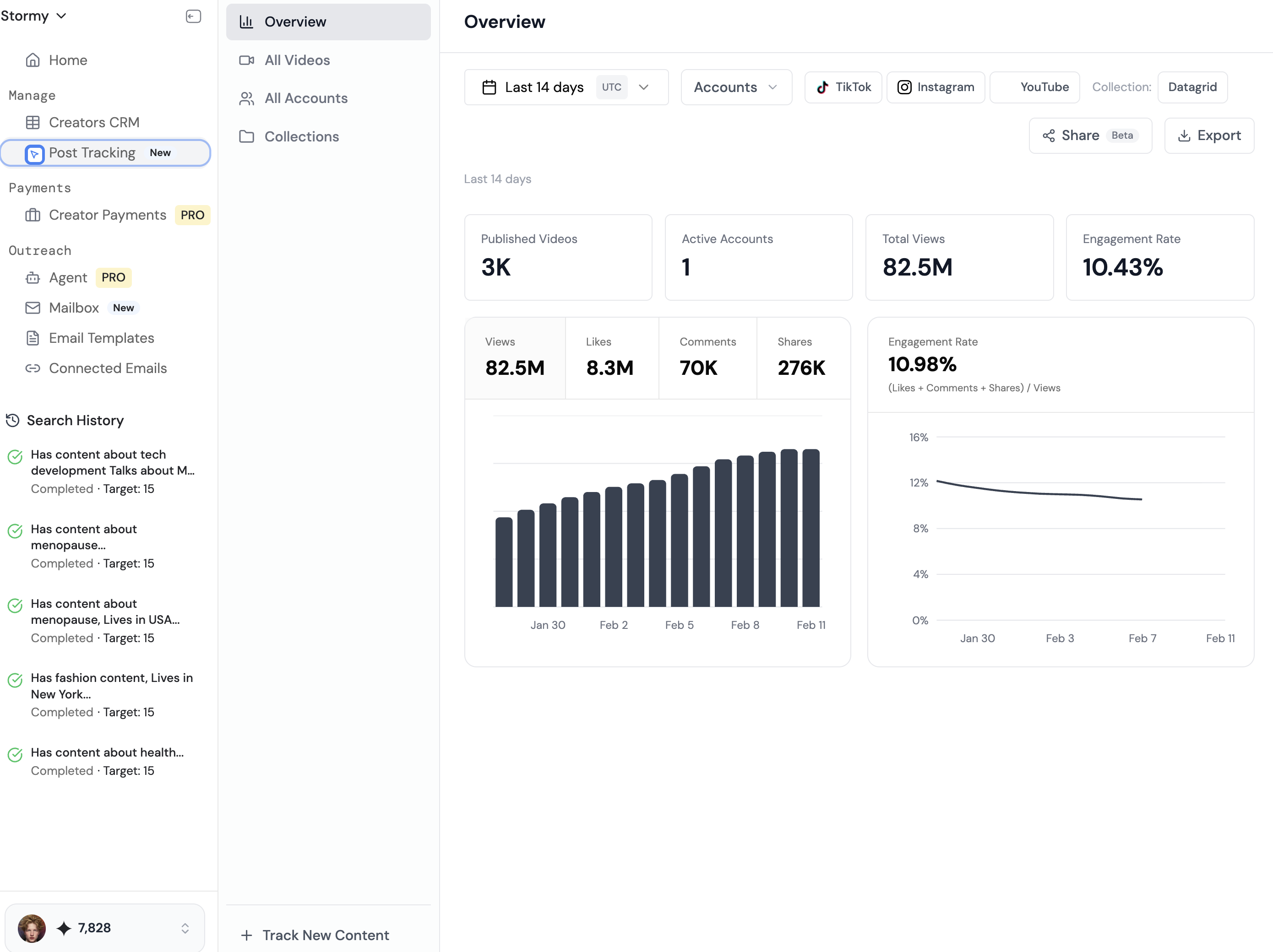
- Influencer Marketing: Brands using Stormy AI for automated outreach report a 30% reduction in CAC by diversifying away from purely paid social.
Triple Whale vs Northbeam 2026: Feature Comparison
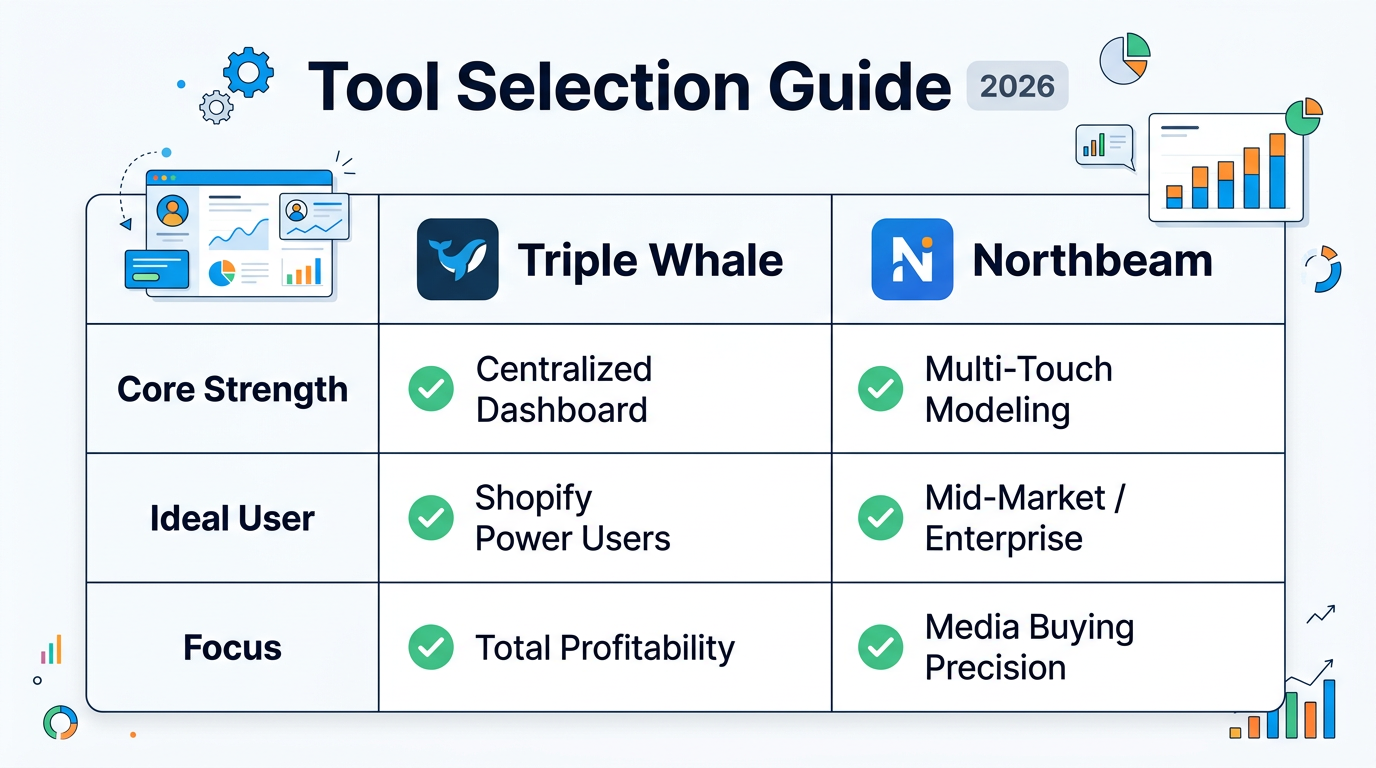
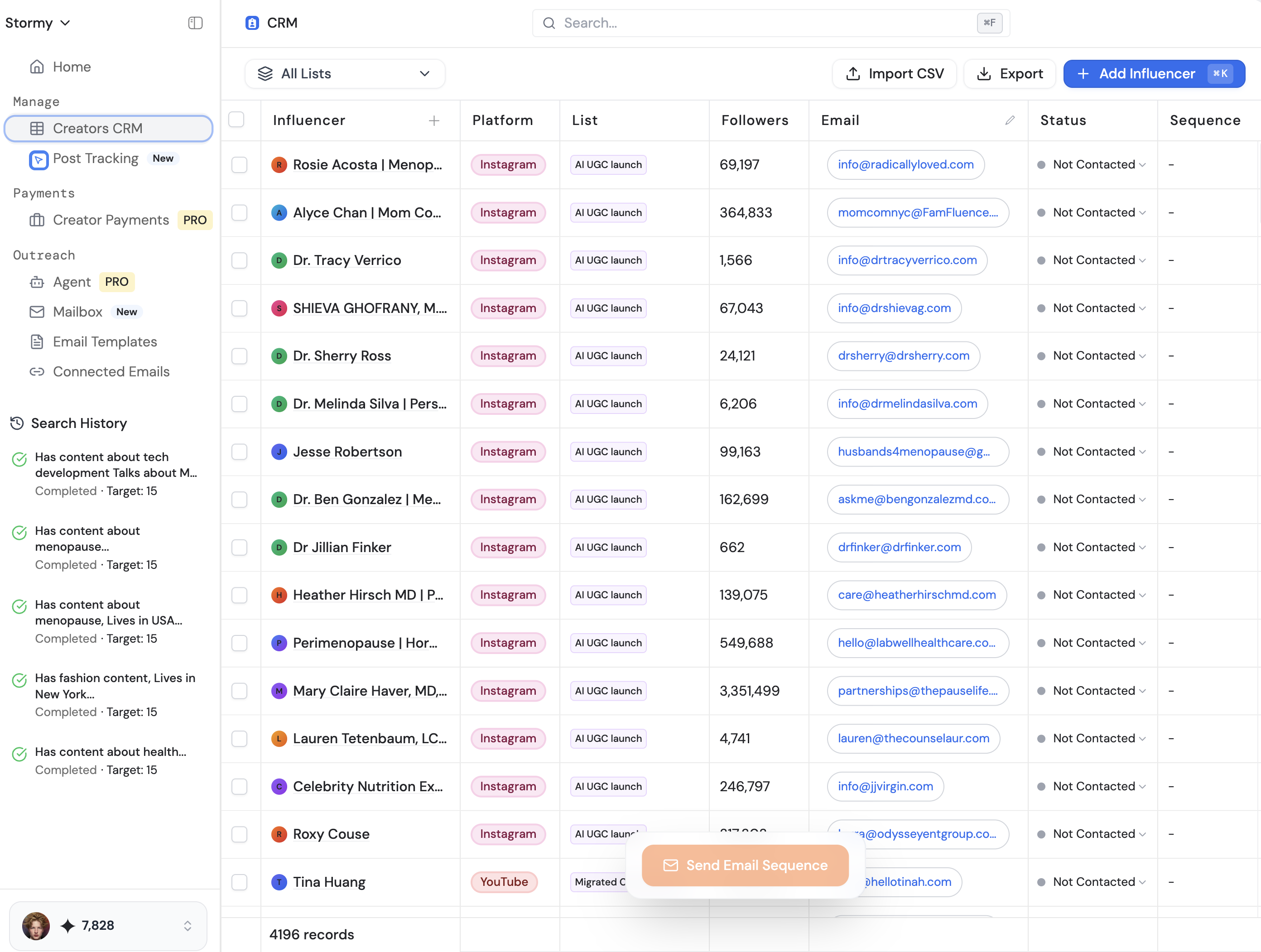
Choosing between these two powerhouses depends on your brand's complexity and technical overhead. While both provide ecommerce attribution tools, their approach to the customer journey differs. Triple Whale excels at showing you the immediate health of your Shopify store, while Northbeam specializes in the long-tail attribution paths. To truly dominate in 2026, brands are combining these attribution insights with Stormy AI to ensure their influencer "seed" campaigns are being tracked as accurately as their PMax or Meta Advantage+ campaigns.