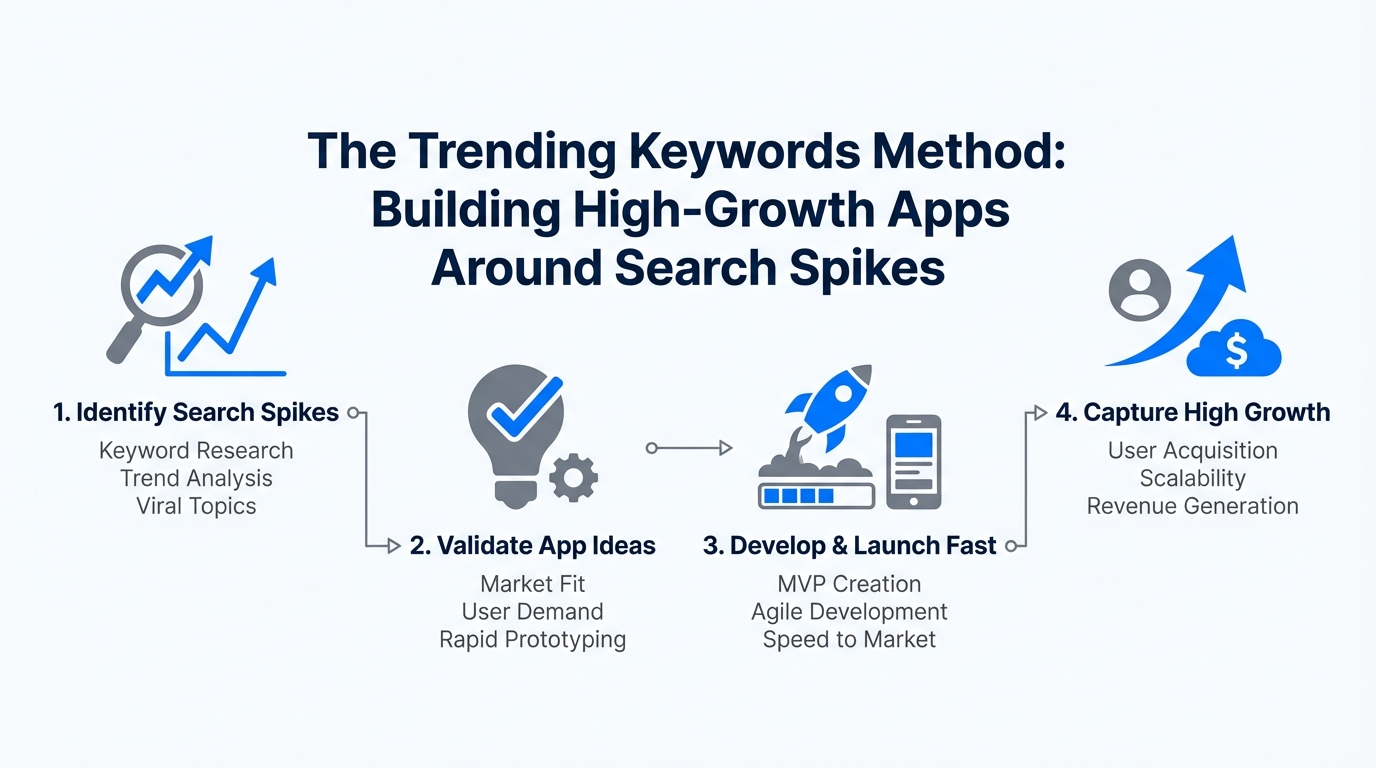
In the modern mobile landscape, the traditional path of building a product and then finding an audience is becoming increasingly obsolete. Today, the most successful developers are flipping the script. Instead of starting with code, they start with high-intent search volume. According to data from MobileAction, roughly 70% of App Store visitors find apps via search, and a staggering 65% of all downloads occur immediately after a search query. This indicates that the App Store is no longer just a storefront—it is a sophisticated search engine where the right trending app store keywords can act as a direct pipeline to thousands of active users.
Identifying 'Zero Competition' Spikes: The Research First Approach
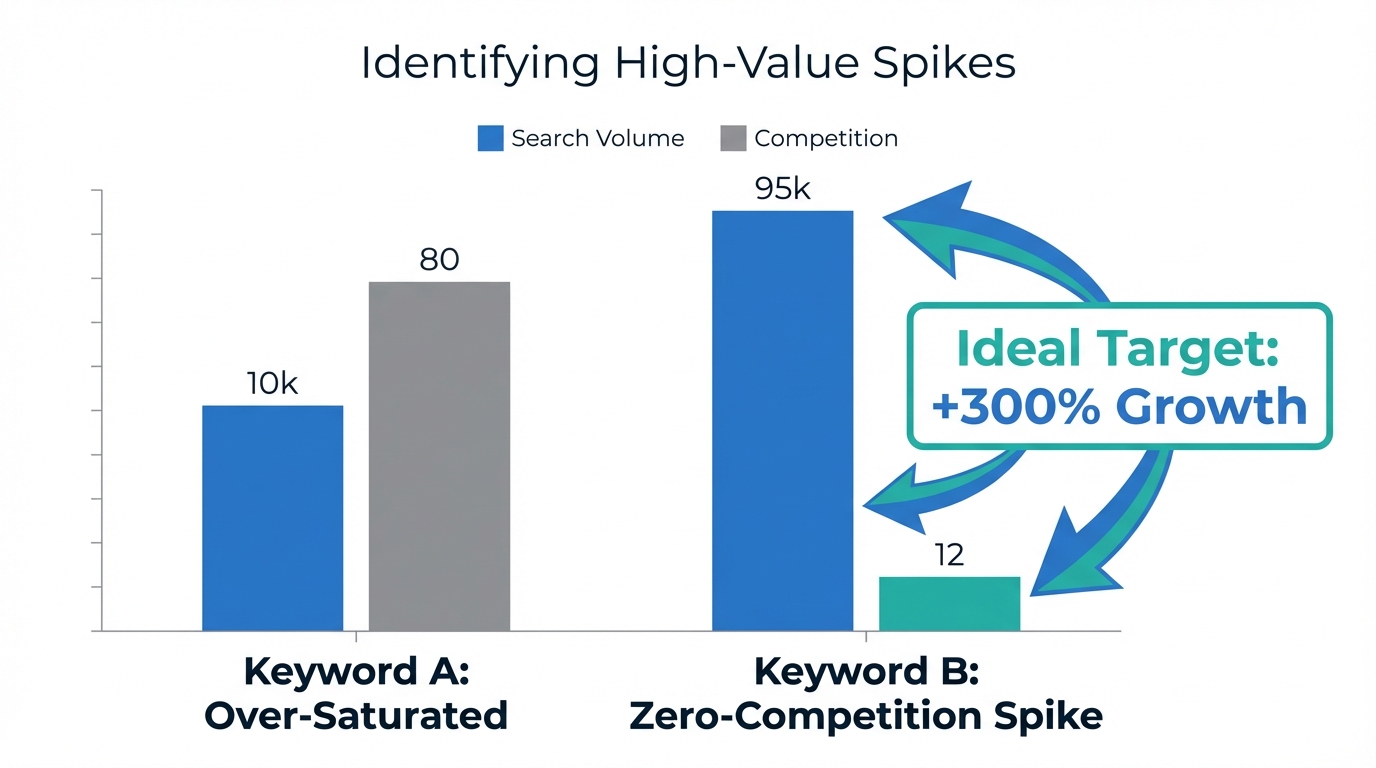
The core of the Trending Keywords Method lies in identifying what industry experts call "Zero Competition" spikes. These are specific search terms that experience a sudden surge in popularity before the market has a chance to react with polished, high-budget applications. By performing deep app store market research, developers can find these gaps and fill them with targeted MVPs (Minimum Viable Products).
Consider the case of the "hair product scanner." This niche term saw a massive spike in search interest as consumers became more conscious of ingredients, yet for months, the search results returned only generic health apps. Similarly, the "Shadow Work Journal" phenomenon demonstrated how a single trending keyword could drive thousands of downloads overnight. According to research from ASOTools, targeting terms with a Difficulty Score below 40 is the sweet spot for new apps looking to capitalize on these spikes without being buried by incumbents.
"2025 is a transition year where practitioners must focus on Thematic Clusters rather than chasing individual high-volume terms."
The AI Pivot: A Growth Lever Across 15+ Categories
One of the most consistent trends in 2025 has been the integration of "AI" terms into nearly every metadata field. Sensor Tower reports that over 100 top apps across 15 different categories have added AI-related keywords to their titles and descriptions to capture high-intent search volume. This isn't just for tech apps; even productivity and finance apps are seeing growth by positioning themselves as "AI-powered."
| Category | Top AI Keyword Trend | Growth Potential |
|---|---|---|
| Finance | AI Budget Planner | High |
| Productivity | AI Task Automator | Medium |
| Health & Fitness | AI Meal Scanner | Very High |
| Entertainment | AI Voice Generator | High |
However, simply adding "AI" to your title isn't enough. Apple's algorithm has evolved toward semantic indexing, meaning it now understands the thematic intent behind a user's query. If you rank for a high-volume keyword but your Conversion Rate (CVR) is low, the algorithm will quickly demote you. This makes niche app development about more than just keywords; it’s about fulfilling the specific promise made in the search bar.
The 'Seasonal Swap' Calendar: Timing Your Metadata
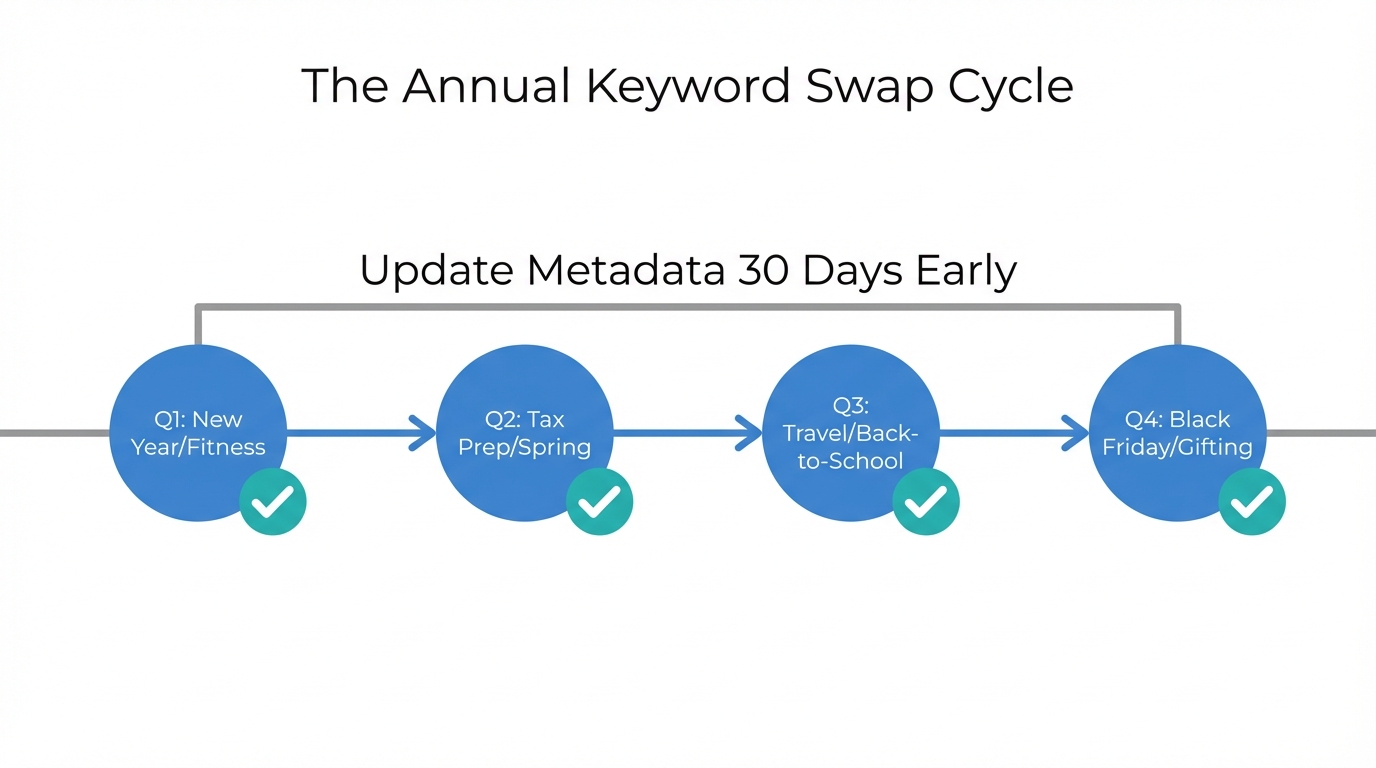
Search volume is not static; it is highly volatile and cyclical. Smart developers use a "Seasonal Swap" strategy to rotate their metadata based on predictable spikes. For example, search volume for "meditation" and "budget tracker" consistently peaks in January, while "travel planner" and "beach workout" peak in June. By using the Apple Search Ads (ASA) Popularity Index via tools like SplitMetrics, you can time your updates to catch these waves.
In 2025, the Finance and Productivity categories are showing the highest growth in high-intent search volume. To stay ahead, experts recommend a metadata audit every 4 weeks. Failing to update your trending app store keywords is a recipe for stagnation, as a term that ranks 100 today can drop to a 5 by next month due to shifting consumer interests.
Playbook: Building a Keyword-First MVP
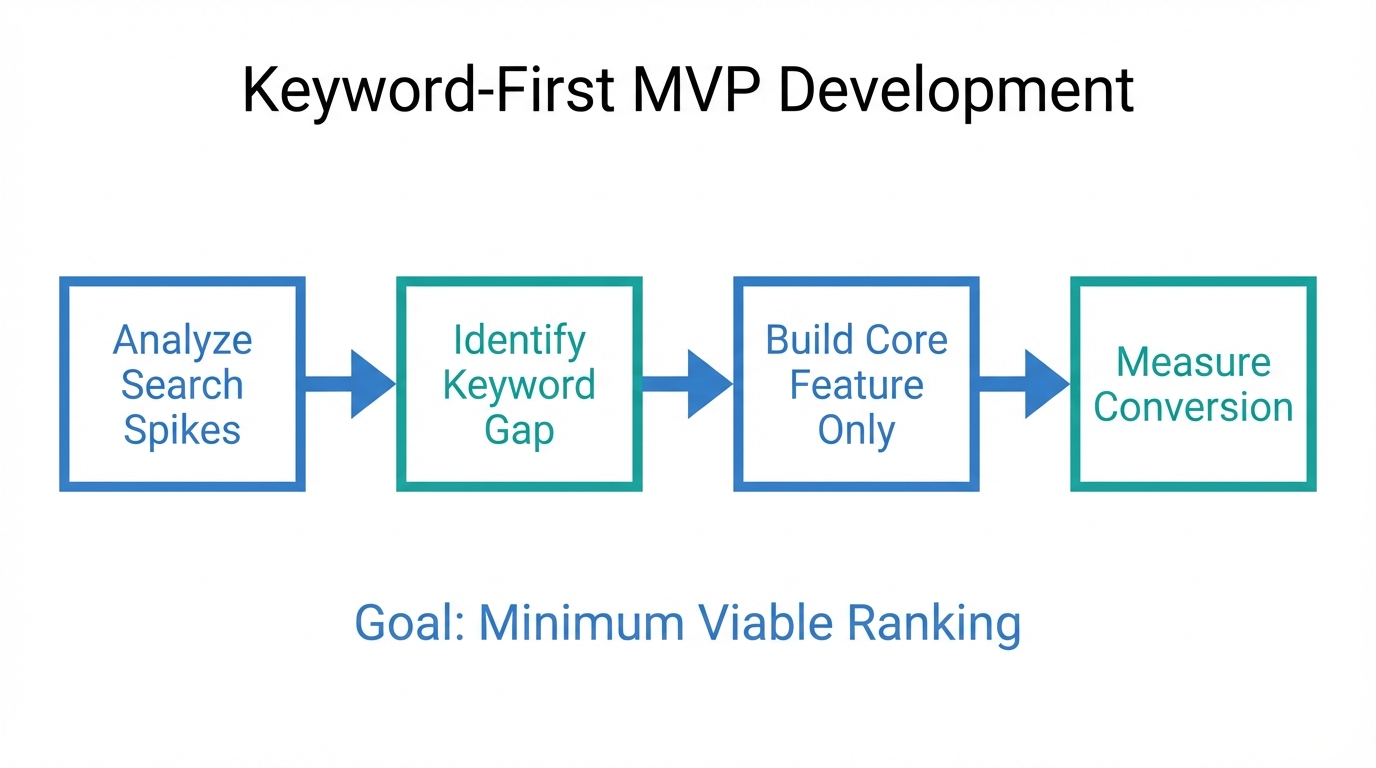
To succeed in creator economy growth, you must validate demand before writing a single line of code. Follow this step-by-step playbook to ensure your app is built on a foundation of actual search intent:
- Identify the Gap: Use ASOTools to spy on competitors ranked #10–#50. These apps are often more aggressively optimized than market giants and reveal the keywords actually driving niche traffic.
- Analyze Long-Tail Volume: While "fitness" is too competitive, "affordable fitness tracker for beginners" can drive a 32% increase in organic installs due to higher relevance.
- Develop the Metadata First: Draft your title (max 30 characters) and subtitle. Ensure your primary keyword is in the first 25 characters of the Title, as this carries 20% more weight in 2025.
- Validate with Content: Before the app is even live, leverage UGC (User Generated Content) to see which "hooks" resonate with your target audience. Platforms like Stormy AI can help you discover niche creators who can test your app's concept through social video, providing early signals of conversion potential.
"Volume is meaningless without Conversion Rate Relevancy. If you rank high but don't convert, Apple will demote you in days."
How to Avoid the 'Relevancy Penalty'
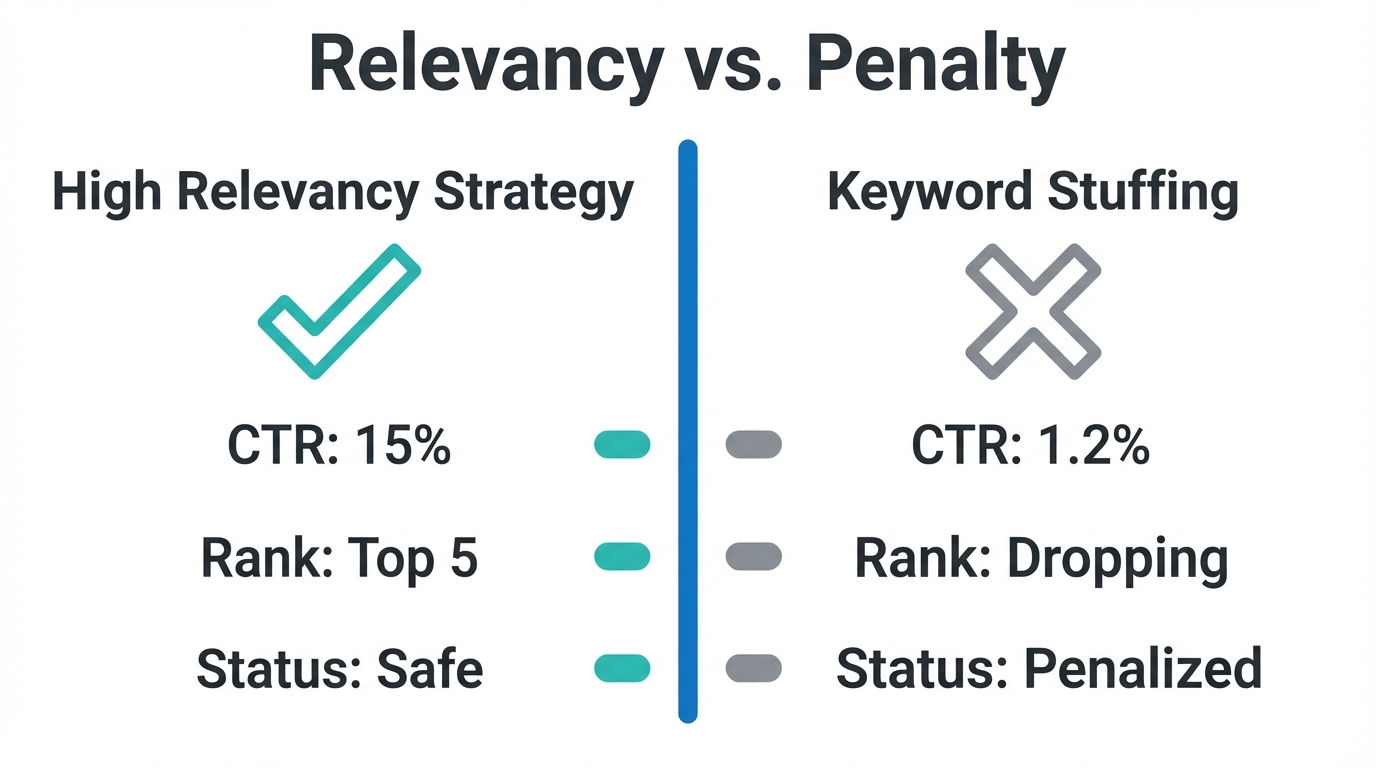
As you scale, the temptation to "keyword stuff" becomes high. However, Apple's algorithm has become incredibly sensitive to spammy behavior. The "Shadow Work Journal" case study serves as a warning: apps that placed the same keyword in the Title, Subtitle, and Screenshots simultaneously faced a severe over-optimization penalty. Apple now uses OCR (Optical Character Recognition) to index text inside your screenshots, meaning your visuals contribute to your ranking—but they must remain natural.
To maintain high rankings, you must align your creator marketing with your keyword strategy. When users search for a term and find your app, their experience should match their intent. Using Stormy AI to source creators who specialize in your specific niche ensures that the traffic you drive to the App Store is high-quality and likely to convert, protecting your relevancy score and long-term organic visibility.
The Future of ASO: Navigating the 'SAP Crash'
It is important to note that the way we measure search volume is changing. Following the September 2025 SAP Crash, Apple shifted its reporting from daily scores to a Monthly Search Term Rank Report. This change, noted by ASO.dev, caused a perceived 77% drop in keywords showing high popularity scores. Data that was once transparent is now partially hidden, making app store market research more dependent on historical trends and thematic clusters than real-time metrics.
Conclusion: Search-First Development
Building high-growth apps in 2025 requires a shift from "product-first" to "intent-first" thinking. By mastering trending app store keywords, developers can bypass the high cost of user acquisition and tap into existing streams of high-intent search volume. Whether you are leveraging the AI pivot or timing your seasonal updates, the goal remains the same: find where the users are looking and be the first high-quality answer they see. Success in the App Store is no longer about who has the biggest budget, but who has the best data.