In the fast-paced marketing landscape of 2026, the most lucrative opportunities aren't always found at the center of a trend. Instead, they exist in the periphery. While millions of dollars flow into primary trends like GLP-1 weight-loss medications or cosmetic surgeries, the real wealth is being built by entrepreneurs who practice "trend surfing." This strategic approach involves identifying the specific needs that arise immediately after a consumer follows a major trend. By building auxiliary business models—often called "parasite businesses"—founders can piggyback on the massive marketing spend of industry giants like Novo Nordisk or the global plastic surgery market.
The Warren Buffett Question: Predicting the 'Then What?'
To identify these high-growth niches, you must ask what many call the 'Warren Buffett Question': "Then what?" When a consumer makes a massive life change—whether it is losing 50 pounds on a semaglutide regimen or undergoing a Brazilian Butt Lift (BBL)—their journey doesn't end at the point of purchase. In fact, it's just beginning. Every major trend creates a vacuum of secondary needs that the primary provider is often too large or too specialized to fill. This concept of second-order thinking is what separates successful investors from the crowd.
Consider the explosive growth of the BBL, which has seen an 800% increase in volume according to industry reports over the last decade. It is currently the fastest-growing cosmetic surgery in the world. With an average cost of $12,000—and premium surgeons in cities like Miami charging upwards of $40,000—this is a billion-dollar economy. But the surgery itself is just the "front end." The auxiliary market includes specialized recovery centers, lymphatic drainage massages, and even custom furniture designed for post-operative care.
"The biggest opportunities aren't in the trend itself, but in the friction points the trend creates for the consumer. Solve the 'Then What' and you own the market."
Case Study: The Multi-Million Dollar BBL Recovery Ecosystem
 17:38
17:38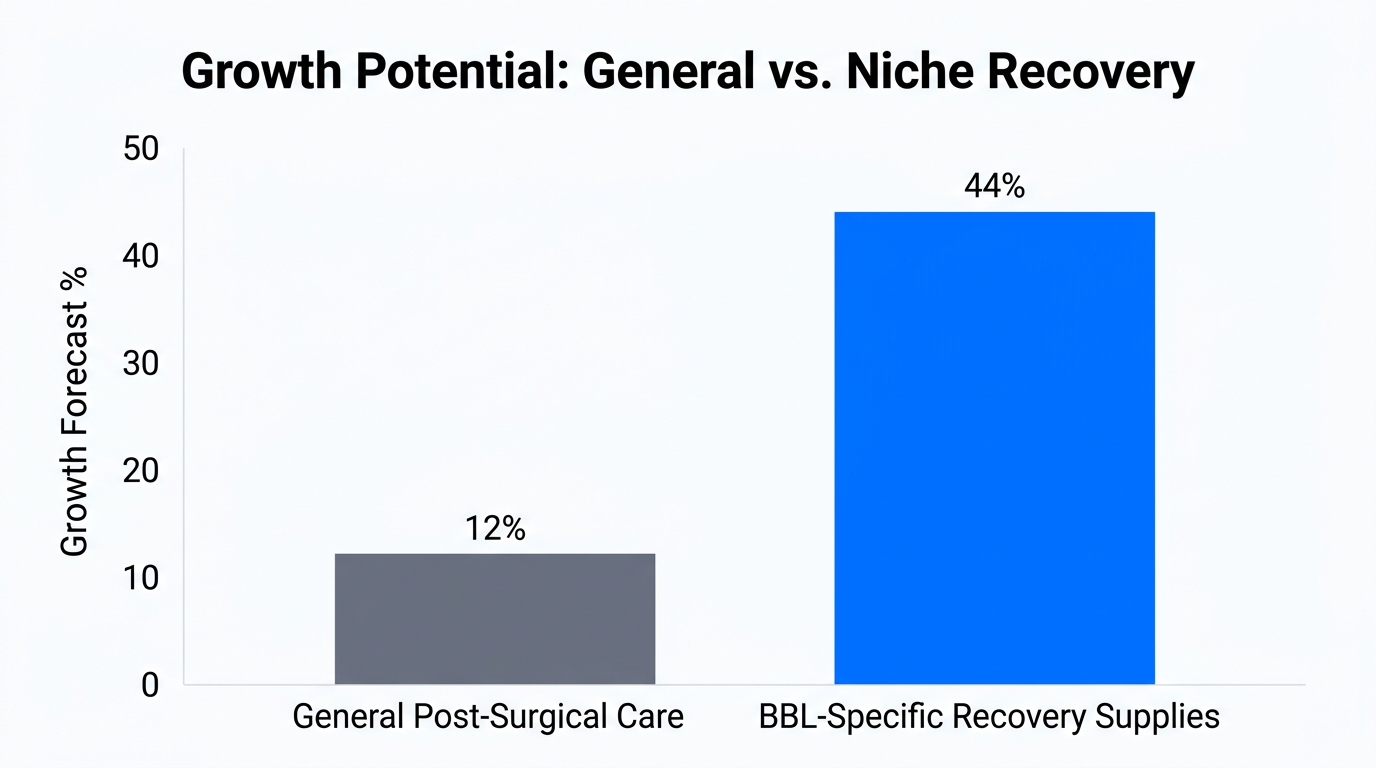
The BBL procedure, pioneered by medical legends like Ivo Pitanguy, involves transferring fat from the abdomen to the glutes. It is a high-ticket, high-impact transformation. However, the recovery is notoriously difficult. Patients cannot sit directly on their buttocks for weeks, leading to the rise of specialized BBL recovery pillows and cushions. What started as a niche product on Amazon has evolved into a sophisticated e-commerce vertical.
Beyond physical products, there is a booming service market. Recovery "houses" or boutique post-op hotels have become a standard part of the value chain. These businesses don't need to spend millions on brand awareness; they simply need to be where the patient is searching after they book their surgery. By partnering with influencers who document their "surgery journeys" on TikTok and Instagram, these recovery brands capture high-intent leads at a fraction of the cost of traditional customer acquisition.
The Ozempic Wave: From Injections to SaaS and Supplements
18:11The rise of GLP-1 medications like Ozempic and Wegovy is perhaps the most significant health trend of the 2020s. While big pharma controls the drug, entrepreneurs are building massive businesses around the user experience. One standout example is Shotsi, a subscription-based mobile app that helps users track their semaglutide injections, manage side effects, and monitor progress. This is a multi-million dollar SaaS business built entirely on top of another company's drug.
But the auxiliary market for weight-loss drugs isn't limited to software. There is a burgeoning category of "Ozempic-adjacent" supplements. As users experience rapid weight loss, they often face issues like "Ozempic face"—a loss of facial volume—or gut health imbalances. Brands are now launching collagen boosters and digestive health drinks specifically marketed to "manage your gut health while on the shot." This e-commerce trend surfing allows smaller brands to use the terminology of the primary trend to find a pre-qualified audience seeking FDA-compliant ways to manage side effects.
| Primary Trend | Primary Spend | Auxiliary Opportunity (The "Parasite") | Business Model |
|---|---|---|---|
| BBL Surgery | $12,000 - $40,000 | Recovery Pillows & Post-Op Apparel | E-commerce / Retail |
| Ozempic / GLP-1 | $900/month | Dosage Tracking & Side Effect Management | SaaS (Subscription) |
| Gut Health / Biohacking | $500 - $5,000 | Microbiome Testing & Personalized Probiotics | DTC / Labs |
| Elite Athletics | Personal Training | Fecal Microbiota Transplants (FMT) | High-Ticket Medical |
Methodology: How to Map the Value Chain of a Trend
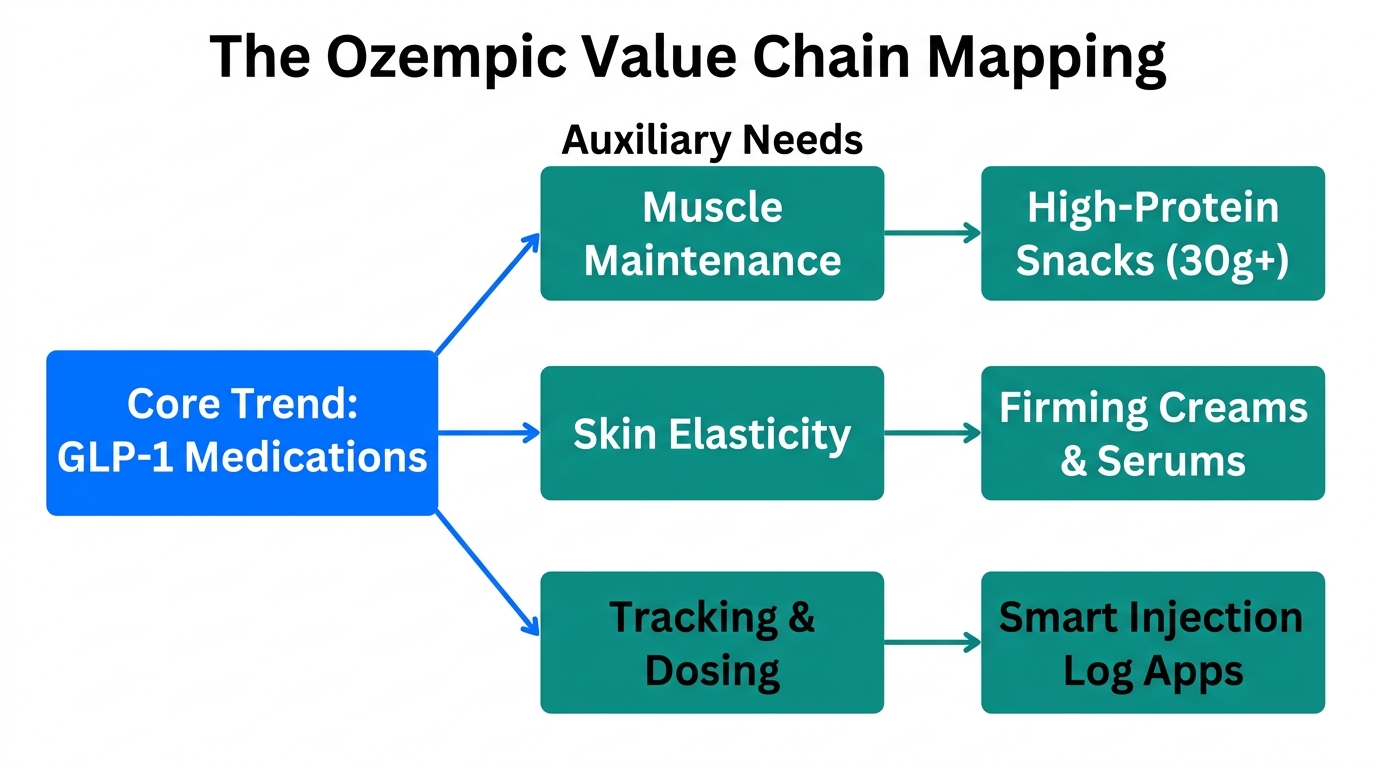
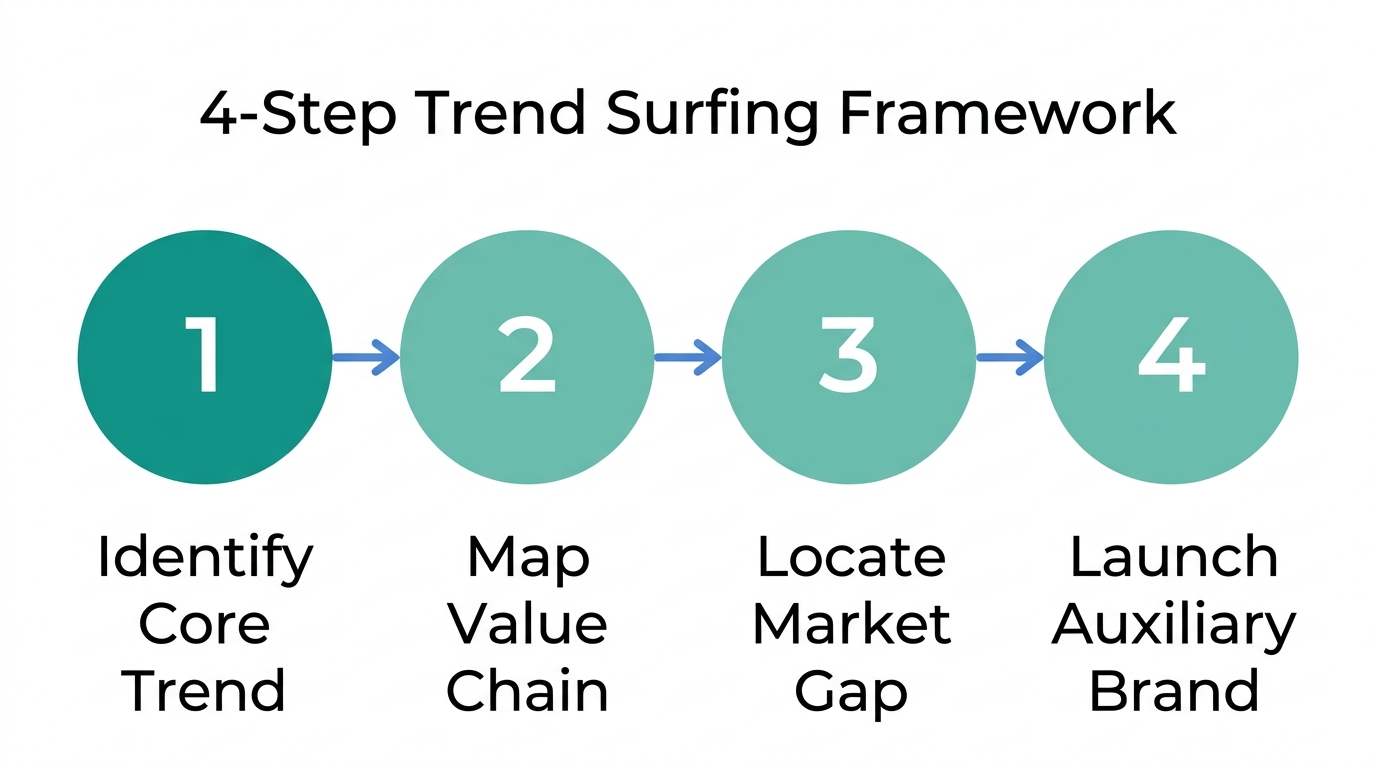
Building a successful auxiliary business requires a systematic approach to niche market identification. You aren't looking for the "coolest" idea; you are looking for the most inevitable one. Follow this playbook to map the value chain of any trending medical or cosmetic procedure this year:
Step 1: Identify the High-Ticket Entry Point
Look for trends where the initial buy-in is high (over $1,000). High-ticket entry points usually indicate a customer with disposable income and a deep emotional investment in the outcome. Use tools like Google Trends or social listening to see where the volume is spiking.
Step 2: List the Side Effects and Friction Points
Read the forums. Go to Reddit or niche Facebook groups and look for what people complain about after they get the product or service. Do they need a special diet? Do they need to track something daily? Is there a social stigma they need help managing?
Step 3: Create a Specialized Solution
Generic products fail in auxiliary markets. Your product must be hyper-specific. Don't sell a "pillow"; sell a "BBL Recovery Seat for Post-Op Support." The more specialized your language, the higher you can price the product. Specificity equals authority in niche markets.
"In a world of generalists, the specialist who solves a post-surgery pain point can charge a 300% premium and still have a waiting list."
Influencer Marketing for High-Ticket Recovery in 2026
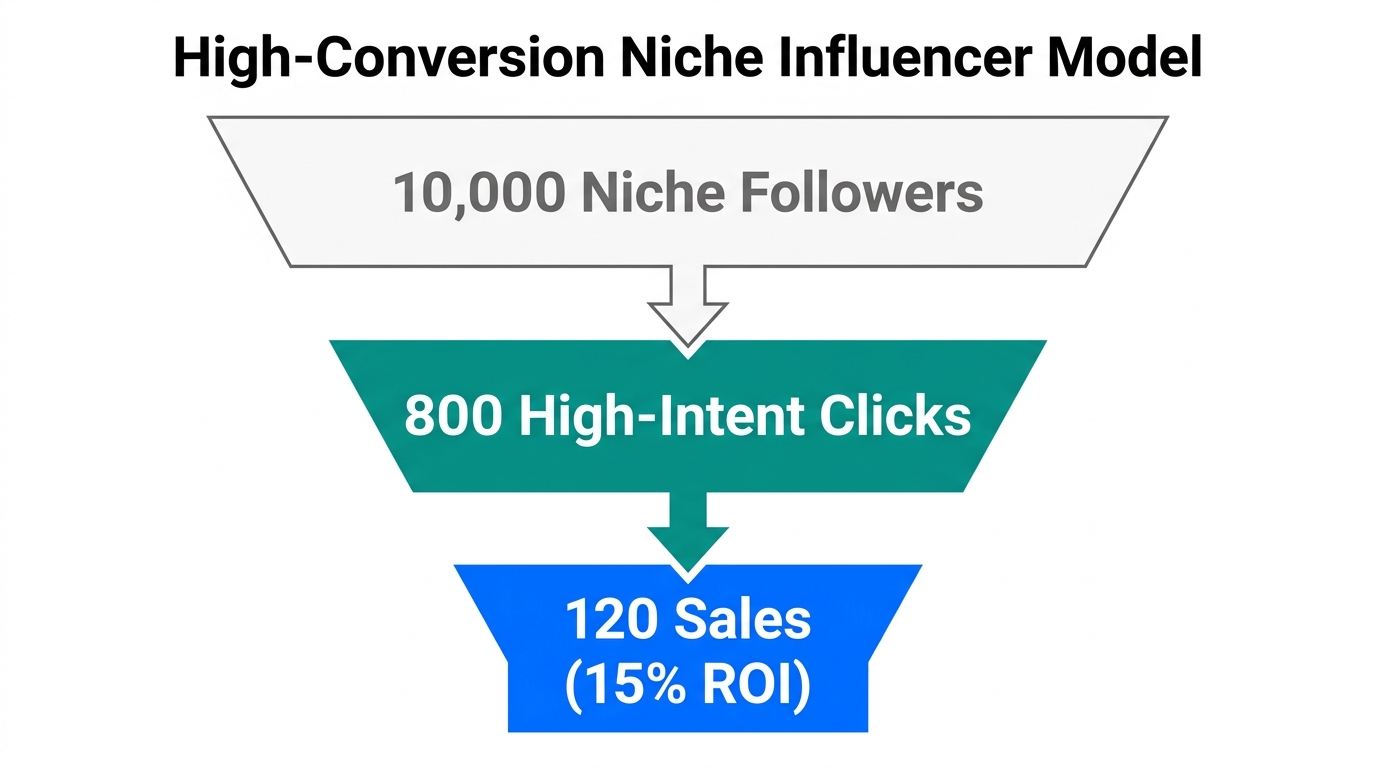
In 2026, the way we market these products has shifted from broad awareness to micro-niche trust. For high-ticket recovery items, traditional celebrity endorsements are less effective than "journey creators." These are influencers who document every step of their surgery or health transformation. Their audience isn't just watching for entertainment; they are watching for a blueprint.
When sourcing these creators, you need to look beyond follower counts and focus on audience sentiment and niche relevance. Platforms like Stormy AI have revolutionized this process by allowing brands to search for creators based on specific life events—like "recovering from BBL" or "starting Ozempic journey"—across TikTok and YouTube. This allows you to find influencers who are in the exact 30-day window where their influence over a potential customer's recovery spend is at its peak.
By leveraging Stormy AI's creator analysis and vetting, brands can detect whether a creator's audience is genuinely interested in health and recovery or just composed of bot accounts. Vetting audience quality is critical when you are selling a $200 recovery kit or a $1,000 post-op service. You can't afford to waste your outreach budget on accounts with 90% fake followers.
Predicting the Next 'Guts and Butts' Gold Mine: FMT
35:51If the last five years were about the "Butts" (BBL), the next five are about the "Guts." We are seeing a massive shift toward Fecal Microbiota Transplants (FMT). While it sounds like science fiction, FMT has a 90% effective rate for treating severe gut issues like colitis and Crohn’s disease. Organizations like OpenBiome are leading the research, but the commercial opportunity is even wilder.
Studies from Harvard have shown that elite endurance athletes have specific microbiomes that allow them to recycle lactate more efficiently. We are approaching a reality where the "Performance-Enhancing Poop" market becomes a legitimate high-end health vertical. Imagine a world where people pay thousands of dollars to receive a microbiome transplant from an Olympic-level athlete to improve their own endurance or mental clarity.
Niche Dominance: The Grinder and Dude Wipes Lessons
22:52The success of auxiliary and niche markets is often found in unapologetic focus. Look at Grindr, which has outperformed nearly every other dating app in the market. Under the leadership of James Lu and Raymond Zage, the app focused on speed and proximity, turning a $600 million acquisition into a multi-billion dollar public company. They didn't try to be Match Group; they dominated a specific, high-intent community.
Similarly, Dude Wipes proves that you can take a "joke" product and turn it into a $220 million annual revenue powerhouse by using bro-marketing and identifying a specific gap in the male hygiene market. Like Liquid Death or Manscaped, they leaned into the humor to build a massive brand in a category—flushable wipes—that most people thought was already solved by baby brands.
"You don't need a new idea; you need a better angle on an old problem. If it's a 'taboo' topic, there's probably a hundred-million-dollar business hidden inside it."
Conclusion: Success Leaves Clues
The entrepreneurs winning in 2026 aren't the ones trying to be the next Elon Musk. They are the ones watching the $25 billion being spent on cosmetic and medical trends and asking, "How can I help these people the day after their surgery?" Whether it is building a tracking app for the latest weight-loss drug or selling recovery gear for the latest surgery, the path to millions is paved with auxiliary solutions. Success leaves clues, and those clues are currently found in the surgery recovery rooms and the medicine cabinets of millions of consumers. Stop looking for the next big trend and start looking for the next big consequence.