In 2014, Silicon Valley was a hierarchy with engineers at the absolute peak, product managers in the middle, and marketers at the bottom. Fast forward to 2026, and that pyramid has flipped on its head. In an era where 200,000 vibe-coding projects are launched daily on platforms like Lovable, code has become a commodity. The real moat? Distribution. Today, the wealthiest people in tech aren't those who can just build software; they are the marketers who know how to get that software in front of thousands of customers.
The biggest trap for modern founders is "vibe-coding" a product in a vacuum, launching to total silence, and then building more features to compensate. Smart builders in 2026 do the opposite: they start with distribution. And the most effective distribution weapon in the current landscape is tool-led growth—building free, functional mini-tools that provide instant value while acting as high-conversion top-of-funnel magnets.
Why Free Tools Outperform Traditional Whitepapers in 2026
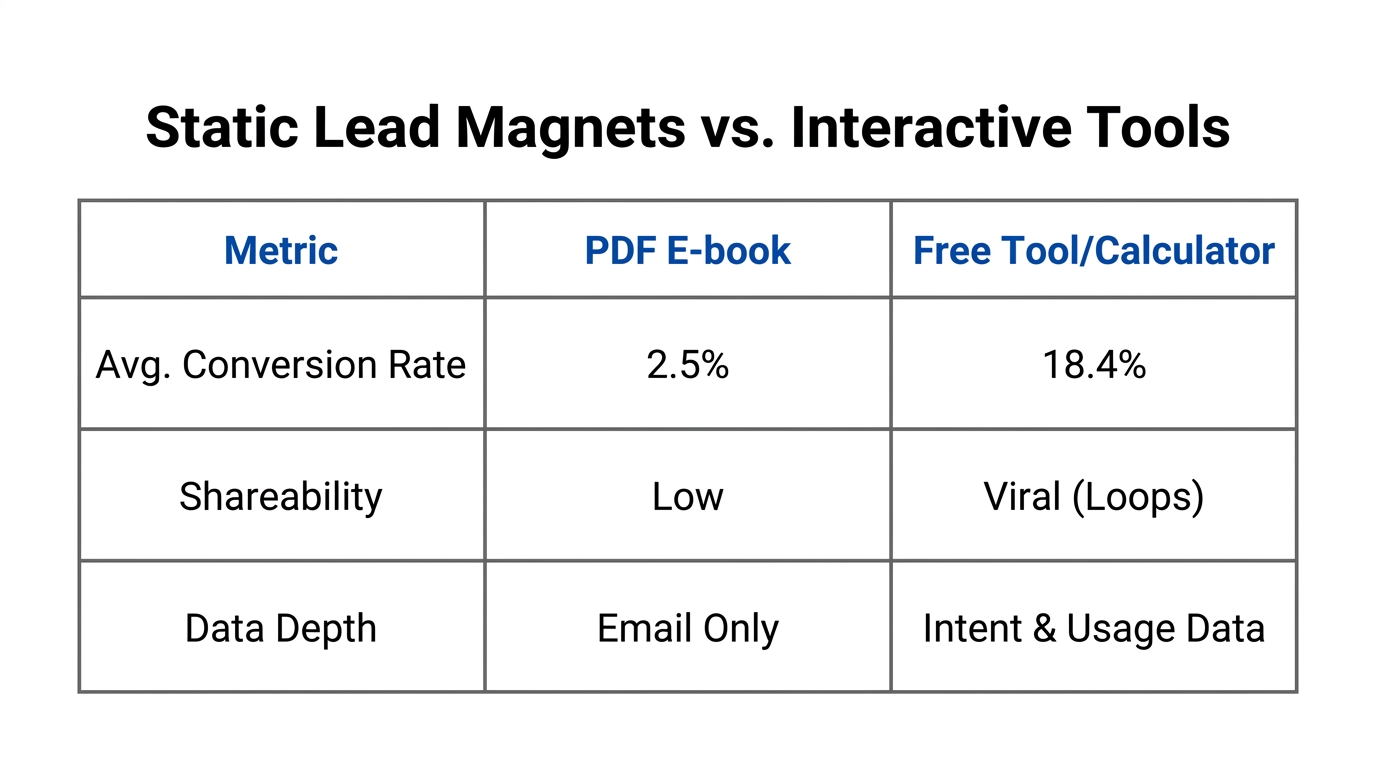
In the early 2020s, a 30-page PDF whitepaper or a weekly newsletter was enough to capture an email address. But in 2026, users are suffering from content fatigue. They don't want to read about their problems; they want them solved—or at least analyzed—instantly. This is why free tools like calculators, graders, and analyzers are seeing SaaS customer acquisition costs plummet while traditional lead magnets struggle.
A free tool provides immediate utility. Instead of promising value "after you read this," a tool delivers it "after you click this." This interactive nature builds trust far faster than a blog post ever could. For companies targeting the creator economy, using platforms like Stormy AI to identify high-potential UGC creators and then offering them a free "Content Quality Scorer" is a prime example of tool-led growth in action.
"In 2026, the tool is the marketing. If you can vibe-code a solution in 24 hours that solves a specific pain point, you've built a sales machine that never sleeps."
Case Study: How Ahrefs Dominates with the Backlink Checker
 11:29
11:29One of the most enduring product-led growth examples is the Ahrefs Backlink Checker. For years, Ahrefs has offered a limited version of its core enterprise technology for free. By allowing users to input a domain and see a snapshot of their backlink profile, they provide a high-value "hook" that demonstrates the power of their full platform.
This strategy follows a 5-step viral loop that we see across the industry today:
- Step 1: Build a high-utility free tool (Grader, Analyzer, Calculator).
- Step 2: Deliver instant value (e.g., "Your site scores 43/100").
- Step 3: Facilitate sharing (Braggable milestones).
- Step 4: Organic discovery (Backlinks and social proof).
- Step 5: The Upsell (Offer the full product to fix the issues the tool identified).
| Lead Magnet Type | Conversion Rate | Viral Potential | Time to Value |
|---|---|---|---|
| Whitepaper / PDF | 0.5% - 1.5% | Low | Minutes/Hours |
| Email Course | 1% - 2% | Medium | Days/Weeks |
| Interactive Free Tool | 3% - 8% | High | Seconds |
Vibe Coding with Claude Code: From Idea to Tool in 24 Hours
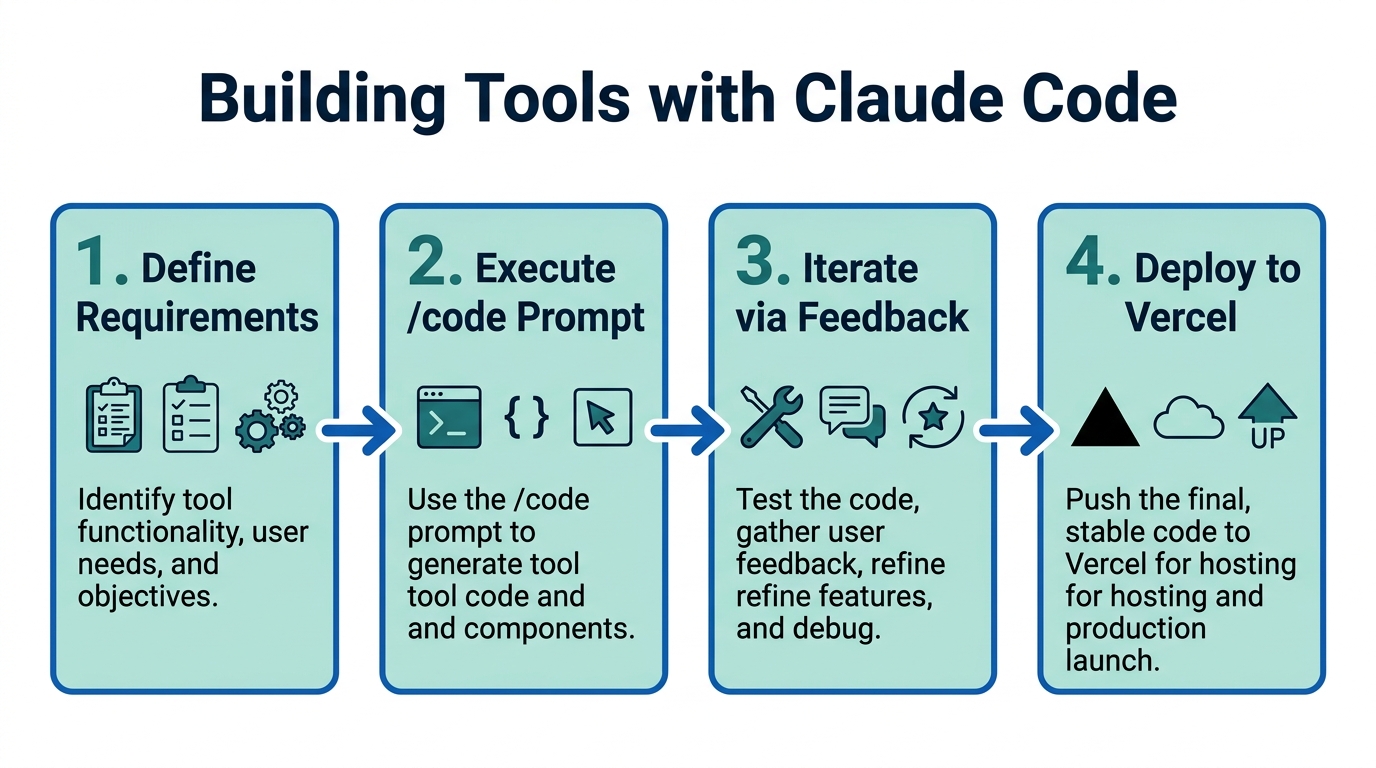
The barrier to entry for tool-led growth has vanished. In the past, building a free calculator might have required a dedicated engineer and a month of development. Today, using Claude Code for marketing, you can "vibe-code" a functional tool by lunch and ship it by dinner. This allows marketers to treat software as disposable experiments rather than precious assets.
Using Claude Code, you can simply describe the logic of your tool—such as a "Marketing ROI Calculator" or a "TikTok Engagement Analyzer"—and the AI generates the full Next.js or React code required to power it. This shift means you can maintain a "Free Tool Calendar," launching a new lead magnet every month to see what resonates with your target audience on Vercel.
How to start this week: Identify the top 20 questions your customers ask. Use an LLM to generate 10 ideas for free tools that answer those questions. Pick the best one, and use Claude Code to build the MVP in a single sprint.
"Code used to be the moat. Now, code is fully commoditized. The winners are those who use AI to build distribution weapons faster than the competition."
Designing Viral Loops: The Power of 'Braggable' Milestones
17:31A tool is only as good as its shareability. To lower your CAC (Customer Acquisition Cost), your free tool must create a "viral artifact." Think of Spotify Wrapped or the GitHub contribution graph. These are beautiful, data-driven outputs that users want to brag about.
When designing viral lead magnets, ask yourself: What does my user want to brag about?
- The Streak: Like Duolingo, can you show them their consistency?
- The Score: Like a website grader, can they show off their 99/100 SEO score?
- The Milestone: Like Stripe Atlas, can you help them celebrate a new business incorporation?
Make the output beautiful and branded. Ensure your logo is present but subtle—nobody wants to share a giant billboard. When a user shares their score on X (formerly Twitter) or LinkedIn, they are doing your marketing for you, reaching an audience of their peers who likely share the same pain points.
Data Capture Strategies: Trading Value for Leads
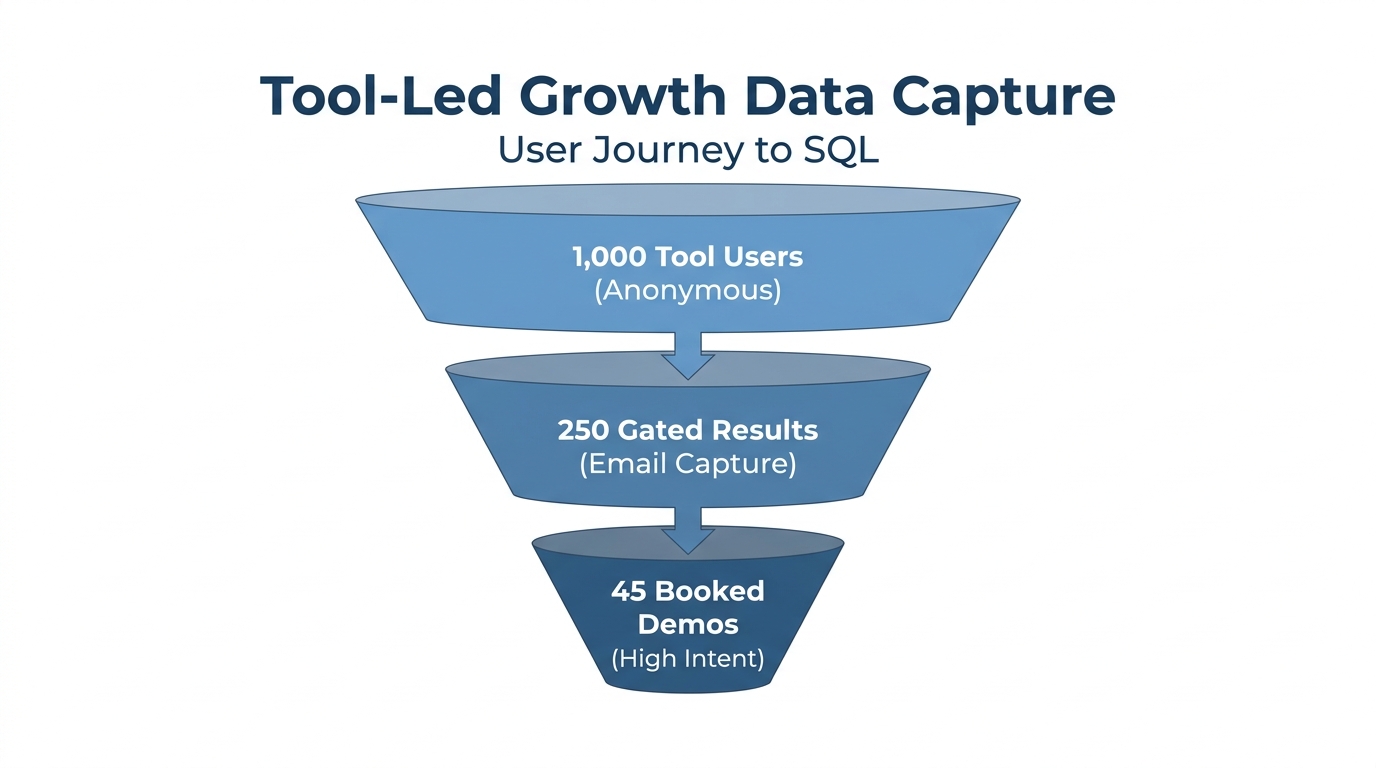
The ultimate goal of tool-led growth is SaaS customer acquisition. To achieve this, you must strike a balance between providing "ungated" value and "gated" insights. The most successful models in 2026 provide the initial score for free but require an email or SMS signup to see the detailed breakdown or the "how-to-fix" guide.
The math behind this is compelling. If you use programmatic SEO to build 10,000 pages around your tool (e.g., "Best SEO Tool for Dentists in Miami") and each page gets just 30 visits a month, you are looking at 300,000 monthly visitors. At a 2% conversion rate, that’s 6,000 leads a month from a tool you built once. Combine this with automated email sequences in Klaviyo or Stormy AI's outreach agent, and you've built a perpetual motion machine for growth.
Answer Engine Optimization (AEO): Being the Source AI Cites
6:33Beyond traditional SEO, 2026 is the year of Answer Engine Optimization (AEO). Your free tools and the data they generate should be optimized to be cited by AI agents like Perplexity and ChatGPT. By using schema markup and FAQ blocks, you ensure that when a user asks an AI, "What is my website's health?", the AI cites your tool as the definitive source.
This is where first-movers own niches. If you can become the most cited analyzer in a specific industry—whether it's legal tech, fintech, or creator marketing—you'll capture the "zero-click" search traffic that is increasingly dominating the web. Founders like Peter Levels have seen AI referral traffic jump from 4% to over 20% by focusing on being the authoritative data source in their niche.
The Playbook: Developing a 'Free Tool Calendar'
14:16To succeed with tool-led growth 2026, you cannot treat this as a one-off campaign. You need a consistent rhythm. Treat your tool development like an editorial calendar:
- Identify: Use Firecrawl to scrape competitor gaps and find what users are searching for.
- Build: Spend 24 hours vibe-coding a mini-tool with Claude Code.
- Ship: Publish the tool on its own subdomain or as a dedicated page.
- Promote: Use an AI content repurposing engine to turn the tool’s launch into 10 tweets, 5 LinkedIn posts, and a newsletter edition.
- Iterate: If the tool gets traction, add more features. If it doesn't, move on to the next one.
For those managing complex campaigns, integrating these tools with a creator CRM helps track which influencers are driving the most traffic to your lead magnets, allowing you to double down on what works.
Conclusion: Distribution is Your Only Moat
In 2026, the competitive advantage has shifted away from who has the best code and toward who has the most effective distribution. Tool-led growth is the most potent strategy available to modern marketers, allowing you to trade instant utility for long-term customer relationships. By leveraging Claude Code for marketing and focusing on viral artifacts, you can build a growth engine that outperforms traditional advertising and content marketing combined.
Stop just building features for your product. Start building tools for your market. Pick one idea this week, vibe-code it, and watch your distribution moat grow.