In the world of fast-moving consumer goods and high-growth retail, few names carry the weight of Tom Ryan. Often described as the “Leonardo da Vinci of calories,” Ryan is the mastermind behind a staggering list of cultural touchstones: the McGriddle, stuffed crust pizza, the Smashburger chain, and the iconic $1 Menu. While most marketers are content with incremental gains, Ryan’s approach to product innovation strategy is a masterclass in engineering products that don't just fill a shelf—they define a category.
As we navigate the consumer landscape of 2026, the frameworks Ryan pioneered are more relevant than ever. In an era where attention is the scarcest resource, his ability to combine lipid toxicology (the science of fat) with consumer psychology marketing provides a blueprint for any brand looking to build a multi-billion dollar legacy. This article breaks down the specific growth strategies and psychological frameworks Ryan used to move billions of dollars of product across the globe.
Analyzing the 'Ambitious 32-Year-Old' Persona
One of Ryan’s most effective frameworks for innovation is his focus on a very specific target audience: the Ambitious 32-Year-Old. In Ryan’s view, this demographic represents the ultimate “sweet spot” for brand building in 2026. Why? Because at 32, a consumer typically possesses three critical traits that drive market trends:
- Financial Autonomy: They finally have the disposable income to spend on quality.
- Refined Taste: They know what they like, but they aren't closed off to new experiences.
- Trend Awareness: They are active participants in modern culture but are not easily swayed by fleeting fads that lack substance.
By designing products for this archetype, Ryan ensures that his creations have generational staying power. If you can convince the ambitious 32-year-old that your product is a staple, you win the market. This isn't just about food; it’s a strategy for any software or physical product. You work backwards from a person who is “with it” but demands real value.
"I try to get inside the mind of an ambitious 32-year-old. You have money, you have taste, but you're still open-minded—you're a part of every major trend that has staying power."
The Master of Constraints: The McGriddle Solution
Learn how solving the physics of sticky syrup led to the McDonald's McGriddle.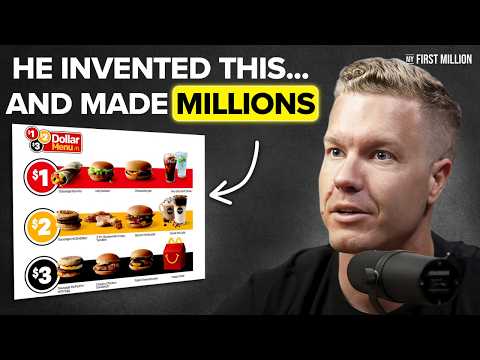
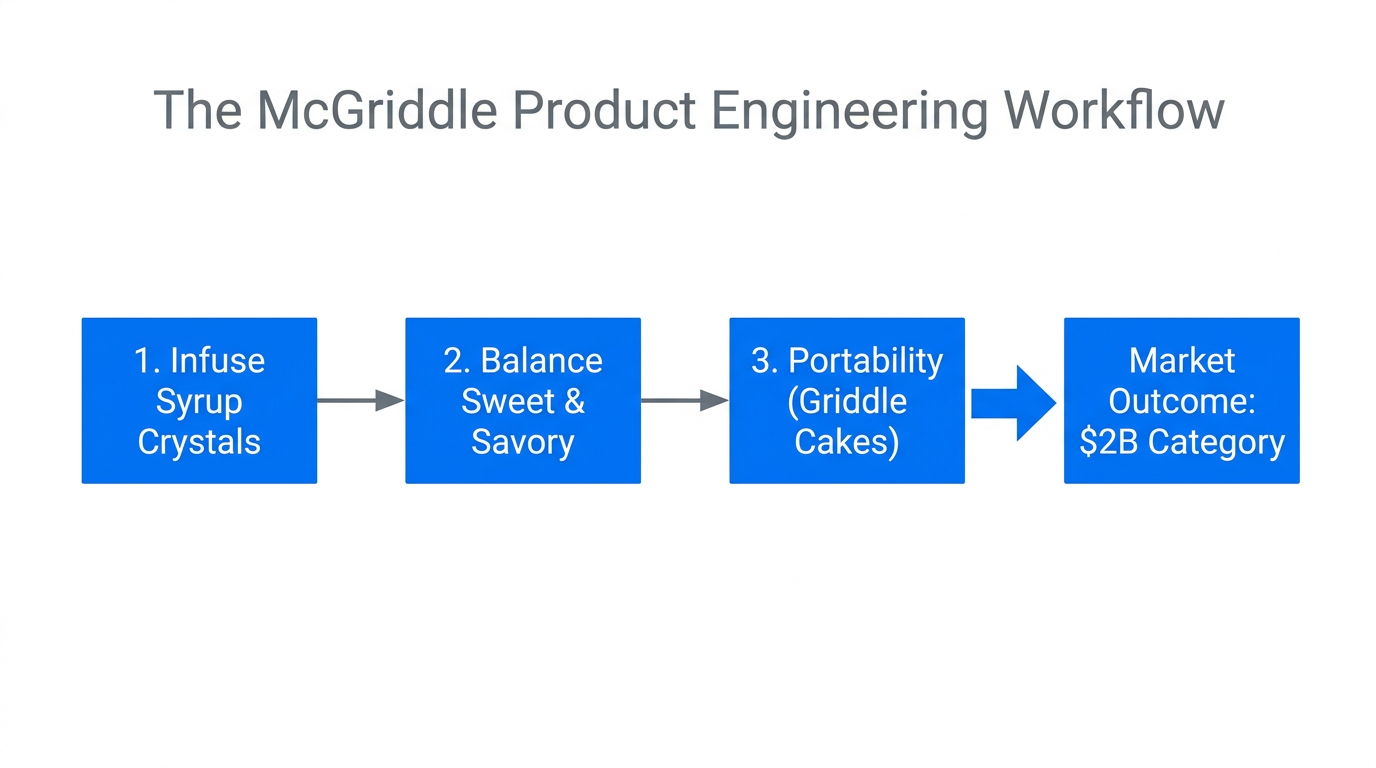
When Ryan joined McDonald's, he faced a massive problem in the breakfast category. The brand had savory options (biscuits and McMuffins) and coffee, but they lacked a sweet, portable option. Most teams would have suggested standard pancakes or French toast. Ryan, however, is a master of constraints.
He asked a physics and psychology question: “How do we take the Denny’s Grand Slam Breakfast and put it in your hand?”
The constraint was portability. You can’t have messy, drippy syrup if a consumer is eating while driving or walking. This led to the invention of syrup crystals—small pockets of sweetness embedded directly into the pancake bun. By solving the "sticky hand" problem, Ryan created the McGriddle, a product that combined salty sausage and sweet syrup in a single, mess-free hand-held unit. This innovation didn't just add a menu item; it engineered a new category of breakfast that contributed billions to the company's market cap.
The Power of Clustering: Why Extremes Outperform the Middle
Discover how Tom Ryan revolutionized Pizza Hut by clustering customers with the iconic Lovers line.Earlier in his career at Pizza Hut, Ryan realized that the biggest mistake brands make is trying to serve a "mild" version of a product to everyone. Drawing on consumer clustering theories—similar to the ones highlighted in Malcolm Gladwell's famous talk on pasta sauce—Ryan identified that there is no such thing as the perfect pizza; there are only perfect pizzas.
He launched the "Lovers" line (Meat Lovers, Pepperoni Lovers, Cheese Lovers), which leaned into the extremes of what consumers wanted. If a customer liked meat, Ryan didn't give them a little more meat—he gave them way more than they thought they wanted. This clustering strategy proved that niche extremes often outperform middle-of-the-road products because they satisfy a specific craving with high intensity.
| Strategy | Middle-of-the-Road | The 'Lovers' Cluster Strategy |
|---|---|---|
| Targeting | Broad, generic appeal | Specific, high-intensity segments |
| Ingredient Density | Standardized/Conservative | Extreme/Over-indexed |
| Marketing Message | "Something for everyone" | "The ultimate for YOU" |
| Result | Mediocre loyalty | Massive cult following & higher LTV |
"The middle is a death trap. If your customers like chunks, give them more chunks than they ever thought possible. Go to the extreme of the cluster."
Operational Innovation: Physics as a Marketing 'Wow Factor'
Tom Ryan’s background in lipid toxicology allowed him to view product development as a series of physics problems. When he conceptualized stuffed crust pizza, he wasn't just thinking about taste; he was thinking about the "wow factor." He noticed that most people threw away the crust (the "handle") or gave it to the dog. He wanted to turn the worst part of the pizza into the value driver.
The challenge was the physics of the oven. Putting cheese inside dough often led to a "bike tire" effect—the outer layer would burn before the cheese melted. Ryan’s team had to engineer special dough formulations and pans to ensure the crust remained gooey while the exterior stayed golden. This operational innovation created a visual and sensory experience that was impossible for competitors to copy quickly, giving Pizza Hut a massive competitive advantage in the 90s and beyond.
In 2026, brands are using tools like Stormy AI to discover UGC creators who can showcase these "wow factors" through authentic video content. Just as stuffed crust was built to be marketable, modern products must be engineered to be visually viral.
The $1 Menu Case Study: Low-Barrier Acquisition
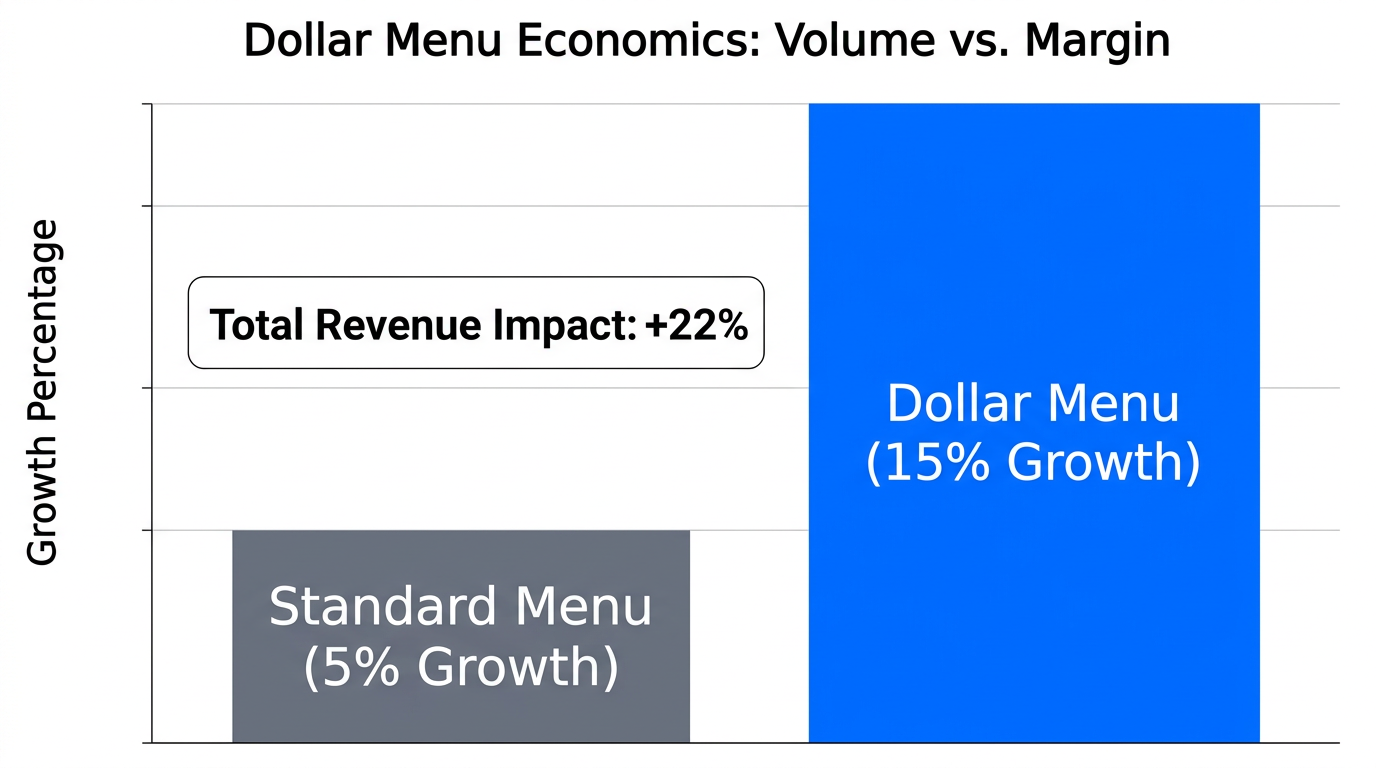
While Ryan is known for premium innovations like Smashburger, his creation of the $1 Menu remains one of the most significant customer acquisition vehicles in history. The goal of the $1 Menu wasn't necessarily high margins on the individual items; it was to lower the barrier to entry for the brand.
By offering a high-value, low-cost entry point, McDonald's was able to bring customers into the ecosystem more frequently. Once the customer was at the counter or the drive-thru, the high-LTV (Lifetime Value) products (like the McGriddle or Big Mac) would handle the heavy lifting of profitability. This is a classic "loss leader" strategy refined through the lens of mass-market consumer psychology.
The Law of Opposites: David Bars vs. Natural Food
Explore the law of opposites through David Bars, a pure protein delivery mechanism.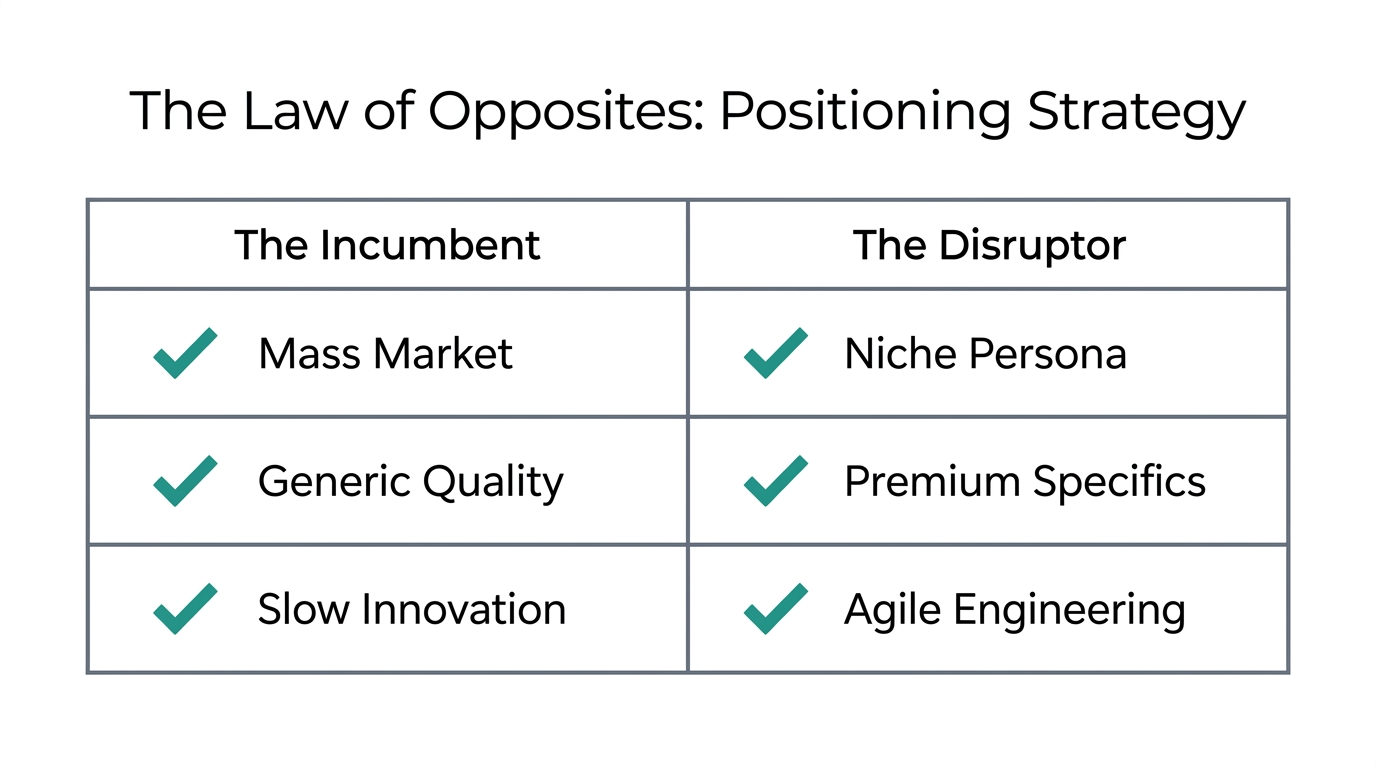
The Ryan playbook often aligns with the Law of the Opposite, a concept found in the 22 Immutable Laws of Marketing. This law states that if you aren't the leader, you must be the opposite of the leader. We see this today with David Protein Bars, founded by Peter Rahal (formerly of RXBAR).
While most protein bars in 2026 scream "all-natural" and "organic," David Bars leans into being ultra-processed for the sake of efficiency. They use a modified fat called EPG to deliver high protein with 92% fewer calories. Instead of hiding from the "processed" label, they run toward the fire, even running ads for "Boiled Cod" on their site to show how much better their bars taste than "natural" options. This bold positioning—being the antidote to the current trend—is exactly how Tom Ryan would approach a crowded market.
"Marketing is a battle of perceptions, not products. The challenger doesn't need to be better; they need to be the opposite."
Playbook: Applying the Ryan Strategy to Your Brand
See how to apply Tom Ryan's engineering principles to build defensible companies in today's market.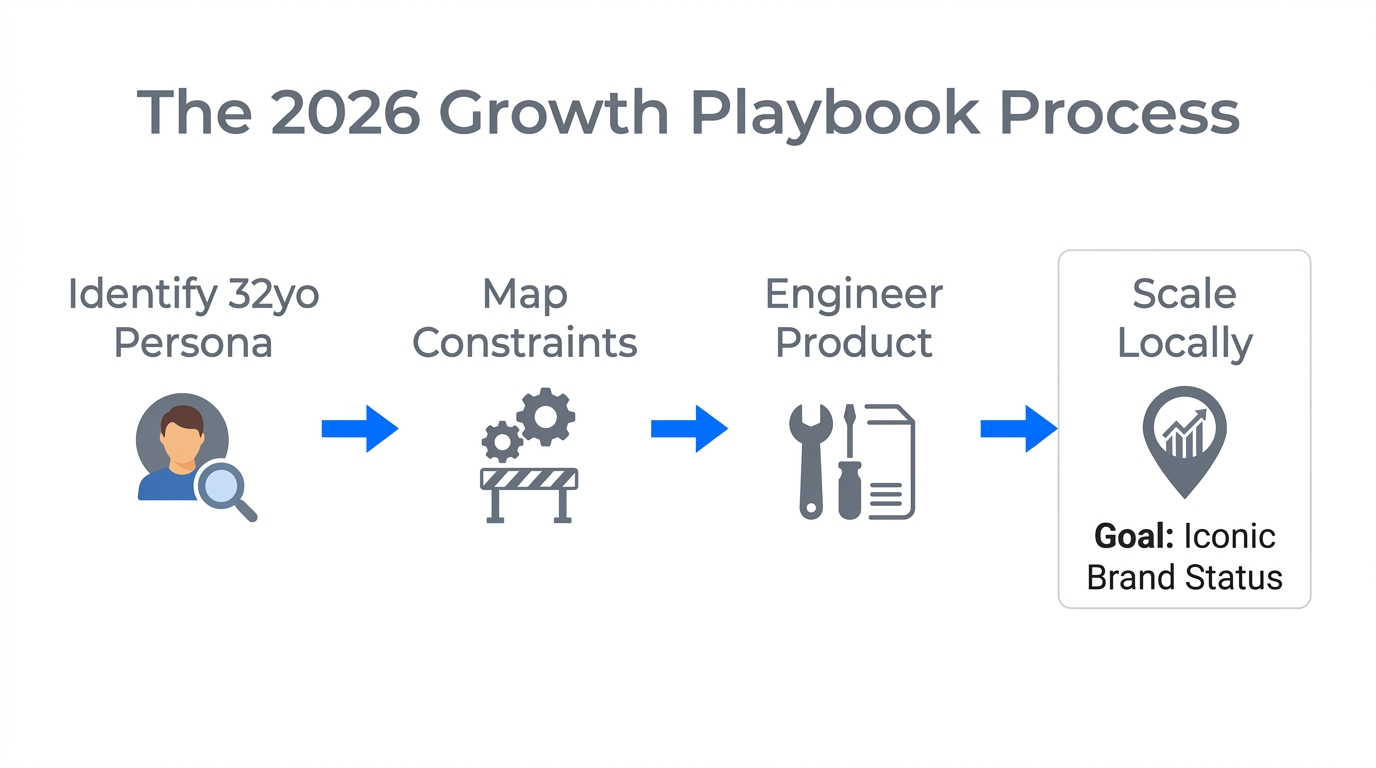
Whether you are launching a SaaS tool or a new beverage, the Tom Ryan framework for brand building in 2026 remains consistent. Follow these steps to engineer your next "iconic" product:
- Identify the Psychological Constraint: What is the one thing preventing your customer from using your product more often? (e.g., "It's too messy," "It's too slow," "It's too expensive"). Solve that physical or psychological hurdle first.
- Define Your 'Ambitious' Persona: Stop targeting "everyone." Build for the 32-year-old with taste and money who wants a modern classic.
- Lean Into a Cluster: Find the segment of your audience that wants the "extreme" version of your feature. Double down on that feature until it becomes a marketable "wow factor."
- Engineer for Virality: In 2026, your product must look good on camera. Use tools like TikTok Ads Manager and Stormy AI to find creators who can highlight the unique physics or results of your product.
- Establish a Low-Barrier Entry: Create your version of the "$1 Menu." What is the easiest way for a customer to experience your brand for the first time?
Conclusion: The Future of Product Innovation
Tom Ryan’s career proves that the world is not full of solved problems. From the McFlurry to Smashburger, he has consistently found "white space" by applying rigorous science to human cravings. In 2026, the brands that win will be those that embrace constraints, lean into the Law of Opposites, and engineer products with a genuine "wow factor."
Success in modern marketing requires more than just a great product; it requires strategic discovery and outreach. To find the creators who can tell your brand's story and reach that "Ambitious 32-Year-Old" demographic, explore the AI-powered search and discovery tools at Stormy AI. Don't just build a product—engineer a legacy.