In 2026, the ecommerce landscape is no longer defined by who has the highest ad budget, but by who can most effectively harness the power of social commerce. The era of the 'founder-led hustle'—where growth is driven by sheer willpower and manual labor—is being replaced by systems-led growth. As we move deeper into this year, the brands reaching the coveted 7-figure milestone are those treating social platforms like TikTok not just as discovery engines, but as full-funnel conversion machines.
With global ecommerce sales projected to surpass $7.4 trillion according to research from Invesp, the opportunity for scale is unprecedented. However, the path to $1 million in annual revenue is narrower than ever. Only an estimated 1-2% of stores ever reach this mark, largely due to the widening 'CAC-LTV gap.' To bridge this gap, modern brands are leveraging TikTok Shop as a primary scaling vehicle, combining influencer-led content with direct-to-app purchasing to drive hyper-efficient customer acquisition.
The $2.9 Trillion Shift: Why TikTok Shop is King in 2026
Social commerce has evolved from a trend into a dominant economic force, projected to reach $2.9 trillion this year. This shift is driven by a fundamental change in consumer behavior: the expectation of a frictionless shopping experience. In 2026, 59% of all ecommerce sales are happening on mobile devices, as noted by Marketing LTB. TikTok Shop sits at the intersection of this mobile dominance and social discovery.
"Social commerce isn't just a new channel; it's a total reimagining of the retail funnel where the point of discovery and the point of purchase are identical."
Unlike traditional DTC models that require a user to click an ad, wait for a landing page to load, and then navigate a checkout process, TikTok Shop keeps the user within the ecosystem. This removes the friction points that often kill conversions. For brands looking to scale, this means a lower barrier to entry for impulsive purchases and a significantly higher conversion rate compared to standard mobile web traffic.
Leveraging Social Analytics to Identify 'Hero Products'
The secret to rapid scaling often lies in product focus rather than catalog expansion. Many 7-figure brands achieved their initial growth by perfecting a single 'Hero Product' before diversifying. In 2026, identifying that product requires a deep dive into social analytics.
By monitoring which items generate the highest engagement and organic 'saved' counts on TikTok, brands can predict which products will trend. You should be looking for products with a high 'scroll-stop' factor—items that provide an immediate visual solution to a common pain point. Use tools like Triple Whale or Northbeam to track which organic posts are driving the most 'Shop' clicks, then aggressively put paid spend behind the creators who produced that content.
Step-by-Step Framework for Influencer-Led UGC Scaling
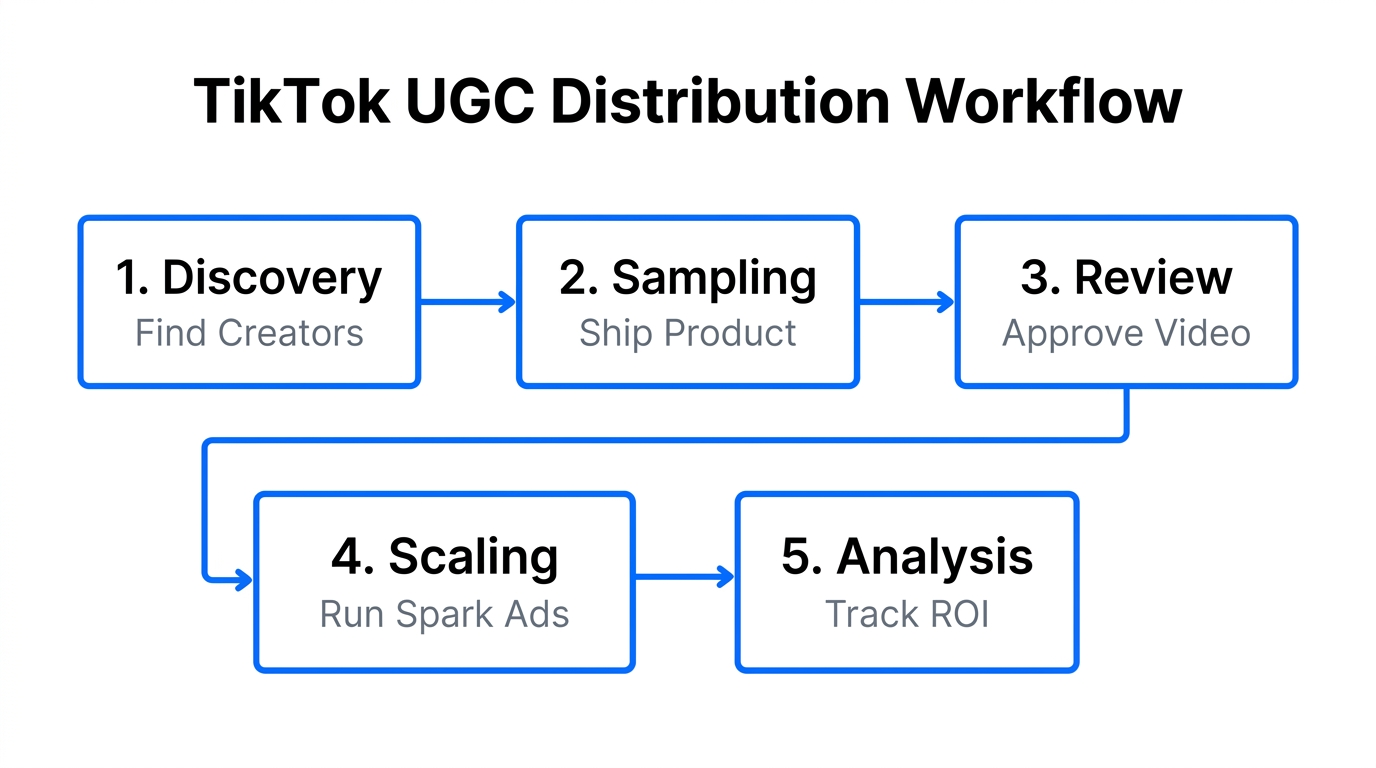
In 2026, influencers are the new retailers. To scale to 7 figures, you must transition from one-off sponsorships to a high-volume creator engine. This involves sourcing dozens of creators monthly to produce User-Generated Content (UGC) that feeds both your organic feed and your paid TikTok Ads.
- Source Creators at Scale: Manual outreach is the death of scaling. Use AI-powered platforms to find creators who align with your niche and have high engagement rates. Efficient brands use Stormy AI to automate the discovery and vetting process, allowing them to reach out to hundreds of relevant creators in a single afternoon.
- Brief for Authenticity: Avoid over-produced 'ad-like' content. Brief your creators to focus on the first 3 seconds (the hook) and the benefit-driven resolution.
- Whitelisting and Spark Ads: Don't just post the video to your brand account. Use 'Spark Ads' to boost the creator's original post. This maintains the social proof (likes/comments) and feels more authentic to the user.
- Direct-to-Shop Integration: Ensure every piece of content is tagged with the relevant TikTok Shop product link. In 2026, removing just one click from the buyer's journey can increase revenue by 15% or more.
| Strategy Phase | Manual Hustle (Old Way) | Systems-Led Scaling (2026 Way) |
|---|---|---|
| Creator Sourcing | Manual DMing and spreadsheets | AI-automated discovery tools |
| Content Production | 1-2 pieces of content per week | 20+ UGC variations per month |
| Ad Optimization | ROAS-focused broad targeting | IMR-focused creator whitelisting |
| Customer Journey | Click-to-website (High friction) | Native TikTok Shop checkout (Zero friction) |
Mastering Unit Economics: Moving Beyond Vanity Metrics
Scaling to 7 figures often fails because founders focus on ROAS while ignoring contribution margins. Experts at Common Thread Collective argue that you must shift your focus to Incremental Marginal Return (IMR). With Meta CPMs seeing historical increases of up to 89% in specific categories as noted by Digital1010, you cannot afford to lose money on your first purchase.
To ensure 7-figure sustainability, your strategy should include:
- Bundling for AOV: Create 'TikTok Bundles' that combine your hero product with high-margin accessories to increase the Average Order Value.
- Retention as the New CAC: Increasing retention by just 5% can boost profits by 25% to 95% according to recent ecommerce loyalty studies. Once a customer buys through TikTok Shop, move them into a personalized email flow using Klaviyo.
- Conversion Rate Optimization (CRO): Before doubling your spend, ensure your storefront (whether on Shopify or TikTok Shop) converts at a minimum of 2.5% to 3%. Use tools like Hotjar to identify where mobile users are dropping off.
"Revenue is vanity, profit is sanity, and cash is reality. You can't scale what you can't fund."
From Hustle to Machine: The 2026 Tech Stack
Scaling requires operational excellence. You cannot manage a 7-figure brand with manual inventory tracking. According to Clearco, 82% of small businesses fail due to cash flow mismanagement. In 2026, your tech stack must automate the 'boring' parts of the business so you can focus on strategy.
Your 2026 scaling stack should look like this:
- Platform: Shopify Plus for enterprise-grade stability.
- Marketing Automation: Klaviyo for AI-driven email and SMS flows that should drive 30-40% of total revenue.
- Influencer Management: Stormy AI for automated creator discovery, outreach, and tracking across TikTok and Instagram.
- Customer Support: Gorgias to handle the influx of TikTok comments and inquiries via a centralized helpdesk.
- Financing: Settle or similar revenue-based financing to manage inventory during peak growth periods.
Case Study: Shifting to Automated Social Sales
Consider the growth of Condition 1, a rugged case manufacturer. By shifting from broad, expensive Meta targeting to aggressive email and SMS segmentation combined with creator-led content, they achieved 679% revenue growth in a single holiday season. This wasn't achieved by spending more, but by optimizing the lifecycle of the customer and using creators to build trust at scale.
To replicate this, you must build a system where creator discovery, content production, and ad whitelisting run 24/7. When you combine this with the native checkout experience of TikTok Shop, you create a frictionless 'sales machine' that operates while you sleep.
Final Thoughts: Scaling Your 7-Figure Vision
The transition from a struggling store to a 7-figure brand in 2026 requires a social-first mindset. By leveraging the $2.9 trillion social commerce wave, focusing on unit economics, and automating your creator management, you can overcome the CAC barriers that stop most brands in their tracks.
Start by identifying your hero product, sourcing 10-20 high-quality UGC creators this month, and integrating your Shopify store directly with TikTok Shop. The tools and the market are ready—the only variable left is your systems-led execution.