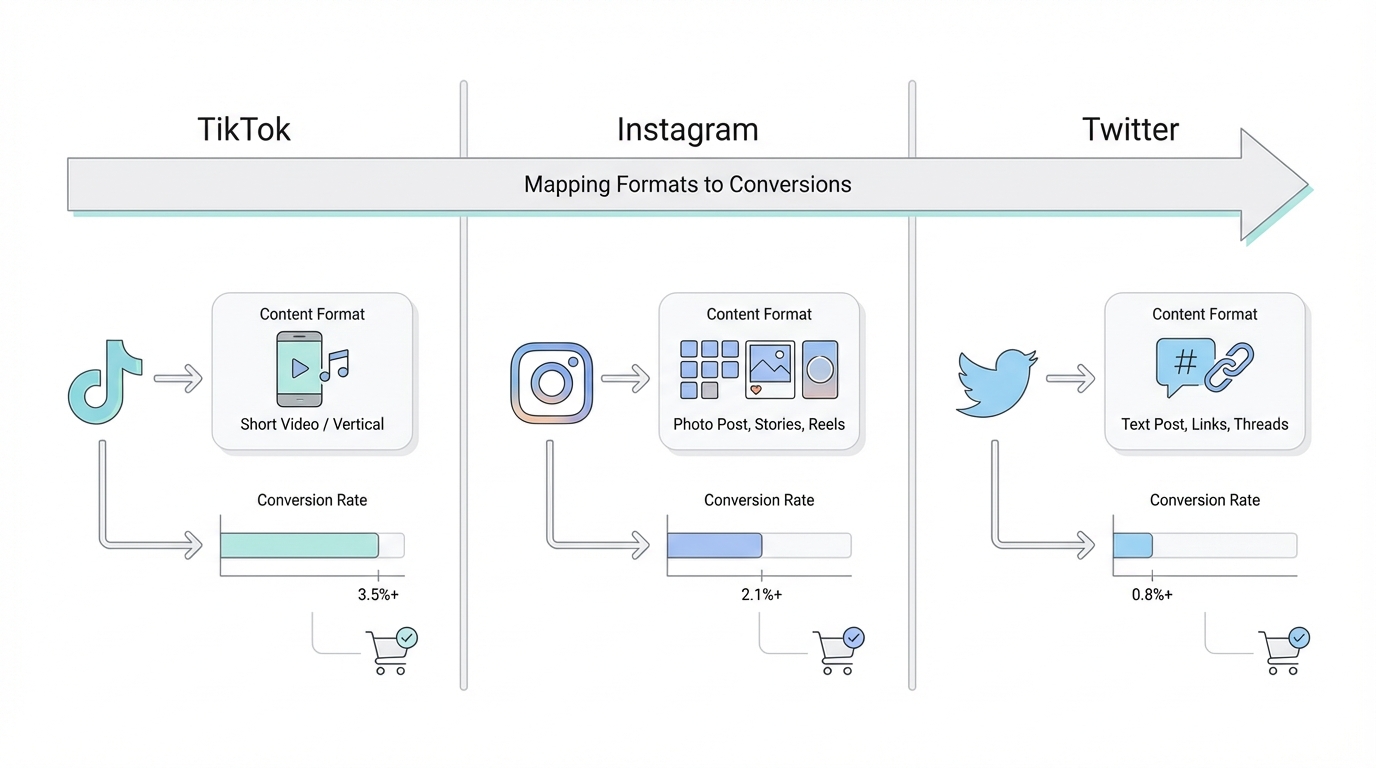
Most mobile app developers believe that if they build a superior product, the users will naturally follow. They spend months polishing features, only to launch to a deafening silence. Jack Frics, a serial app founder, lived this reality when his first app took eight months to make its very first dollar. However, the narrative shifted dramatically when he stopped focusing on 'originality' and started obsessing over social media conversion rates. By mapping specific content formats to the psychological triggers of different platforms, he eventually scaled to a $15,000 month and generated 40,000 downloads overnight from a single viral event. This article deconstructs the data-driven framework for choosing between Instagram Reels vs TikTok for business and why your highest-viewed content might actually be your lowest-converting asset.
The Mirage of Views vs. Revenue: The 2x2 Slideshow Trap

In the world of app marketing analytics, not all virality is created equal. Jack's early success with his app, Curiosity Quench, was built on a specific TikTok format: the 2x2 slideshow. These videos typically featured four images—for example, "Most Attractive Hobbies"—with a provocative caption designed to spark debate in the comments. While this format is a powerhouse for the algorithm, often racking up over 5 million views, its ability to convert casual scrollers into paying app users is surprisingly low.
The logic behind the 2x2 slideshow is simple: it triggers people. When you post a list of hobbies or traits, viewers flock to the comments to disagree, argue, or tag friends. This high engagement signals to the TikTok algorithm that the content is valuable, pushing it to millions. However, because the content is meme-based rather than feature-based, the intent is low. You are reaching a broad audience that is there for the entertainment, not necessarily the utility of your app. Jack found that while these videos generated thousands of downloads, the conversion to paid subscriptions was significantly thinner than expected.
To bridge this gap, Jack began pinning a call-to-action (CTA) in the comments. By placing a link to his app directly where the heated discussions were happening, he captured a fraction of that massive traffic. Yet, the lesson remained: high views do not guarantee high revenue. For developers looking to scale, understanding the difference between a 'reach play' and a 'conversion play' is the first step toward a sustainable marketing strategy.
The 8-Second Rule: Why Usage Videos Win on Conversions

When Jack launched his newest app, Lovely—a shared widget for couples—he abandoned the 'triggered' slideshow approach for something much more direct: the usage video. These are short, 8-to-10 second clips that show someone actually interacting with the app's core feature. For Lovely, this meant showing a shared whiteboard where partners could leave doodles for each other. The data was startling: these videos converted 20 times better than the 2x2 slideshows.
Why does showing the app work so much better? It eliminates the 'cognitive gap' for the user. In a meme-based video, the user has to figure out what the app does after they click the link. In a usage video, they already know the value proposition before they ever hit the App Store. This is a critical trend identified by Stormy AI's analysis of influencer marketing; audiences are increasingly savvy and prefer authentic, functional demonstrations over flashy, over-produced advertisements. Modern marketing teams use Stormy AI to find and vet UGC creators who specialize in this 'native-feel' demonstration style, which blends seamlessly into a user's organic feed.
Jack's strategy involved copying what works. He didn't try to reinvent the wheel. Instead, he would spend an hour every morning scrolling through his niche to see which formats were gaining traction for competitors. When he saw a shared whiteboard format going viral for another app, he spent a single day building that feature into his own app and began posting videos of it immediately. This iterative approach—scrolling, saving, and replicating—is how he hit 100,000 downloads in just 10 weeks.
The 'Twitter Loop' Strategy: 40,000 Downloads Overnight
While TikTok and Instagram are the go-to platforms for visual content, viral Twitter marketing remains an underestimated goldmine for app growth. Jack's experience with the 'Twitter Loop' proves that a compelling narrative can outperform a million-dollar ad budget. It started with a simple launch tweet where Jack shared his goal: taking a new app from $0 to $5,000 a month in 10 weeks. This 'build in public' approach created a narrative that users wanted to follow.
The explosion occurred when a user took Jack's 'love note' app and repurposed it as a shared grocery list. This unintended use case went viral, garnering over 300,000 likes and 16 million views. Jack didn't just let the tweet sit there; he leaned into the chaos. He quote-tweeted the viral post, adding context and humor, which created a feedback loop that brought in 40,000 downloads in a single night. This illustrates a key principle: Twitter is for stories, TikTok is for features.
The ripple effect of Twitter virality often extends far beyond the platform. In Jack's case, the story was picked up by major outlets, including Russian news stations and global tech blogs. This secondary wave of exposure generated another 10,000 downloads from a single international market. For app marketers, this highlights the importance of monitoring social sentiment. When a user finds a 'hack' or a new way to use your product, that is your signal to double down on that content format across all channels.
Finding Gold: The 15-Minute Creative Research Playbook
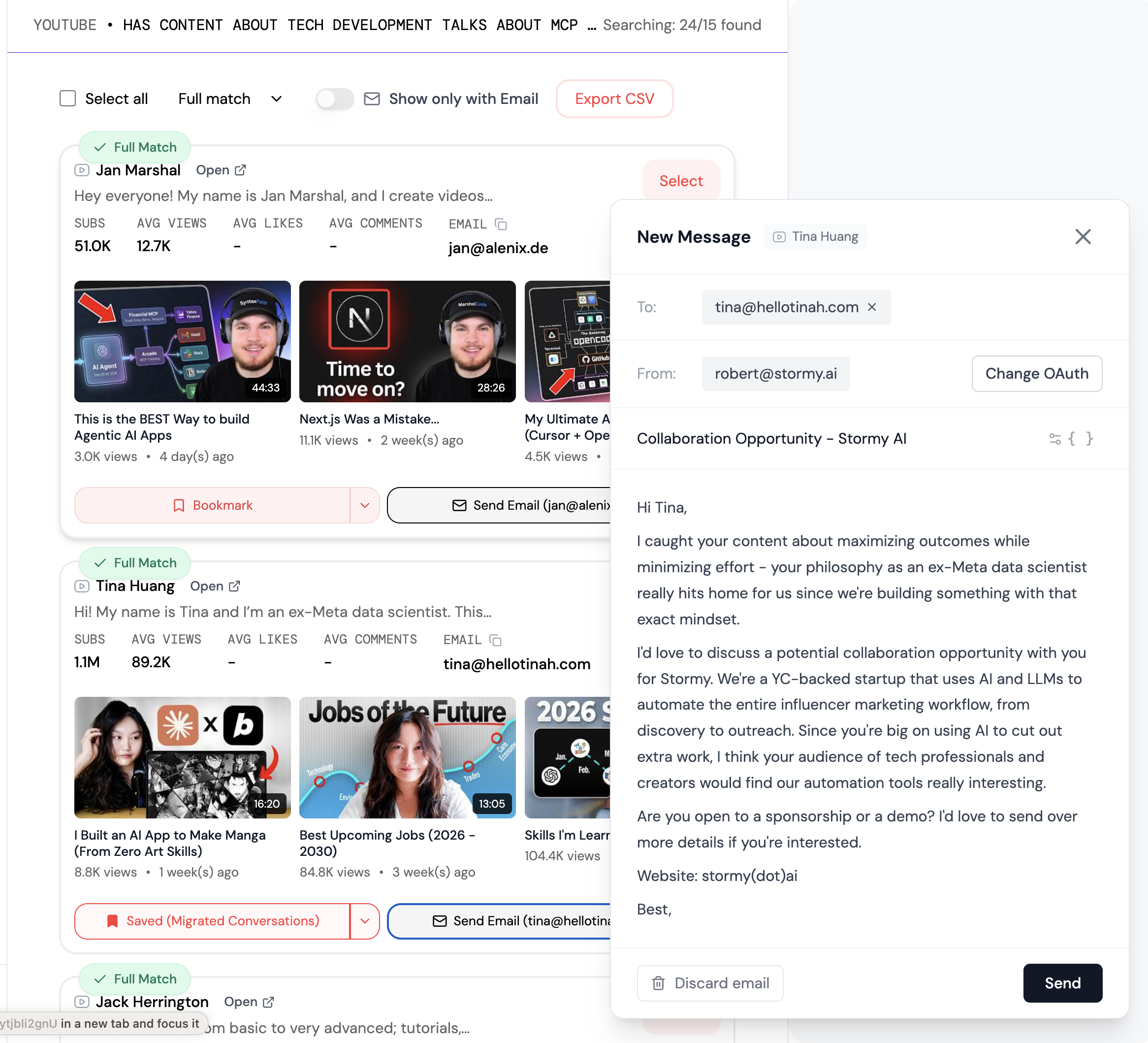
Success on social media is rarely about being a 'marketing savant.' As Jack admits, his process is remarkably 'lazy' but highly effective. To find winning formats, he uses a structured 15-minute ritual that any founder can replicate. Instead of staring at a blank page, marketers use Stormy AI to identify high-quality creators and identify which apps are currently seeing outlier growth. This type of app marketing analytics allows you to see the exact engagement metrics of viral videos in your specific niche.
Step 1: The Branded Scroll
Spend 15 minutes every morning scrolling on a branded account or a burner phone. You need to see the 'For You' page exactly as your target audience sees it. Do not use your personal account, or the algorithm will show you content based on your personal interests rather than your business niche.
Step 2: Save the Gems
Every time you see a video that makes you stop—even if it's not related to apps—save it. Look for the format, not the content. Is it a list? A POV? A screen-recording with a specific audio? Your brain will eventually start making associations between these viral formats and your app's features. This is where you can find influencer marketing trends before they become saturated.
Step 3: Rapid Replication
When you find a 'piece of gold' (a high-converting usage format), don't just make it once. Jack made his winning hobby-list video 400 times. He didn't tweak the formula; he just kept pushing the same proven format to different segments of the algorithm. Consistency beats creativity when you've already found a format that converts.
Optimizing the Paywall: From Downloads to Dollars
Getting 40,000 downloads is a vanity metric if your conversion funnel is broken. Jack's early version of Curiosity Quench had a 'shop' where users had to manually find and buy 'quench credits.' This resulted in a mere $500 to $1,000 in monthly revenue. The 'lightbulb moment' came when he realized that standardized paywalls were the industry norm for a reason. By implementing a clear paywall during the onboarding process, his revenue jumped from $1,000 to $4,000 almost instantly.
To optimize this, marketers often use platforms like Superwall to A/B test their paywall designs. Testing headers, button colors, and trial lengths can lead to massive swings in LTV (Lifetime Value). For example, adding a free trial is often the single most effective way to lower the barrier to entry for a new user. You can browse thousands of successful setups at Paywall Experiments to see what the top-grossing apps are doing to maximize their revenue.
When you combine high-intent instagram reels vs tiktok for business strategies with a high-converting paywall, you create a growth engine. Jack's Lovely app utilizes a 'Fremium' model that encourages virality but still gates premium features. This balance is key for consumer apps where the goal is to keep the 'top of the funnel' as wide as possible while still maintaining profitability.
Allocating Resources: Which Platform Should You Prioritize?

Not all platforms serve the same stage of the user journey. Based on Jack's multi-app experience, here is how you should allocate your time and budget to maximize social media conversion rates:
- Instagram Reels: Best for high-intent, high-converting content. The audience on Instagram tends to have a higher willingness to pay, and the 'Save' culture on IG helps features go viral within friend groups. Use Reels for direct app demonstrations.
- TikTok: Best for raw reach and top-of-funnel awareness. Use TikTok to test 'meme-based' formats and controversial hooks. If something hits here, it will hit big, but be prepared for lower average conversion rates.
- Twitter (X): Best for storytelling and networking. This is where you build your brand's narrative. One viral 'Build in Public' thread can lead to massive organic PR and high-quality user acquisition.
For those looking to scale even faster, transitioning from organic to paid ads on Meta Ads Manager or Google Ads is the logical next step once a format is proven. However, the most successful paid ads are often just whitelisted organic posts. Stormy AI provides an autonomous AI agent for creator discovery and outreach, which becomes invaluable when you need to produce the high-volume content required to keep your ad creative fresh.
Conclusion: The Path to 100,000 Downloads
Jack Frics' journey from zero to a 100,000-download app portfolio proves that app marketing analytics and social media strategy are more about observation than invention. By identifying that 8-second usage videos convert 20x better than generic slideshows, he was able to stop wasting time on 'vanity virality' and start building a real business. Whether you are leveraging Apple Search Ads or grinding through organic TikTok posts, the core lesson remains the same: Find what is working, understand why it converts, and replicate it at scale.
The future of app growth lies at the intersection of AI-powered discovery and authentic human storytelling. Stop guessing what your audience wants and start using the data available to you. By leveraging Stormy AI to track post performance and manage your creator CRM, you can turn a simple app idea into a revenue-generating machine. Start your 15-minute scrolling ritual today—your next 'gold' format is waiting.