In the rapidly evolving digital landscape of 2025, TikTok has become the undisputed heavyweight of short-form video. However, this explosive growth has brought a sophisticated shadow industry in its wake. Brands are no longer just fighting simple bots; they are up against an era of agentic AI and hyper-realistic personas that make traditional influencer vetting processes nearly obsolete. As marketing budgets shift toward creator-led campaigns, the risk of TikTok influencer fraud has reached an all-time high, threatening both ROI and brand reputation.
The Staggering Scale of the TikTok Fraud Crisis
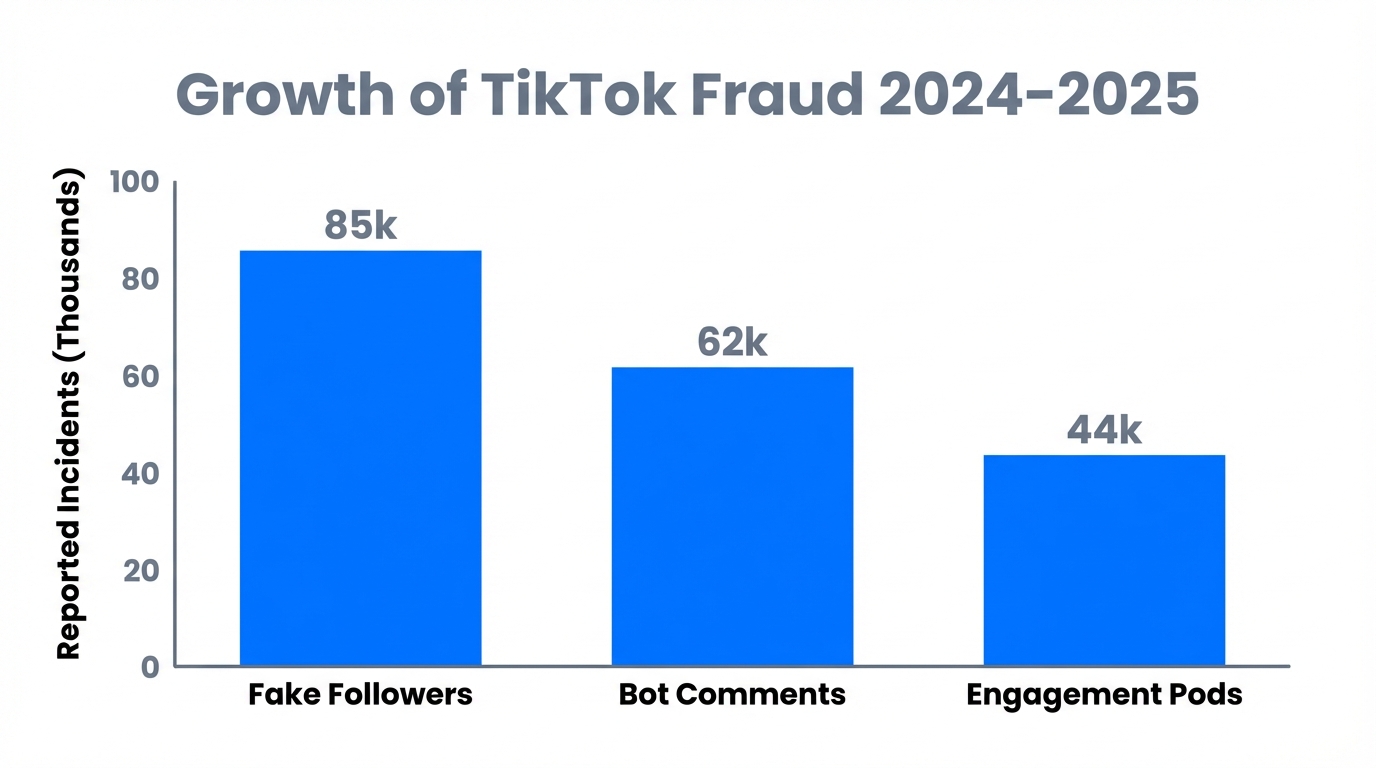
The numbers are nothing short of alarming. Recent projections suggest that by 2026, social platforms will host nearly 950 million fake accounts. This epidemic isn't just a nuisance; it is a direct drain on corporate resources. Globally, influencer fraud is estimated to cost businesses over $1.3 billion annually, with approximately 15% of total influencer marketing spend lost to bot-driven traffic. For brands focused on a robust TikTok marketing strategy, the "half-fake" reality is the new baseline: between 49% and 55% of influencers across major platforms have utilized engagement pods or purchased followers at some stage.
While mega-influencers (those with over 1 million followers) often see up to 23% of their audience flagged as "low quality," the problem persists across all tiers. Small and medium-sized businesses are particularly vulnerable as they may lack the enterprise tools necessary to distinguish between a viral sensation and a meticulously crafted bot network. Fake TikTok followers are no longer just static profiles; they are dynamic entities designed to mimic human behavior perfectly.
"The key insight for 2025 is that AI must act as a super virtual assistant, helping marketers filter through thousands of creators to find those with truly clean data."
The Evolution of Agentic AI: How Bots Became Humans
The traditional bot—a profile with no photo and a string of numbers for a name—is a relic of the past. Today, fraudsters utilize agentic AI to create realistic personas that autonomously engage in complex conversations. These AI agents, powered by Large Language Models (LLMs), can post context-aware comments, participate in trending challenges, and even simulate life stories. This makes basic bot detection ineffective because the "human" signals are being generated by software.
According to AI certification experts, these sophisticated scripts allow for social media brand safety risks that go beyond wasted money. An AI persona might suddenly pivot into controversial territory or promote unethical products, dragging your brand into a PR nightmare. This "authenticity crisis" means that checking a follower count is no longer a viable strategy.
A Strategic Framework for Influencer Vetting in 2025
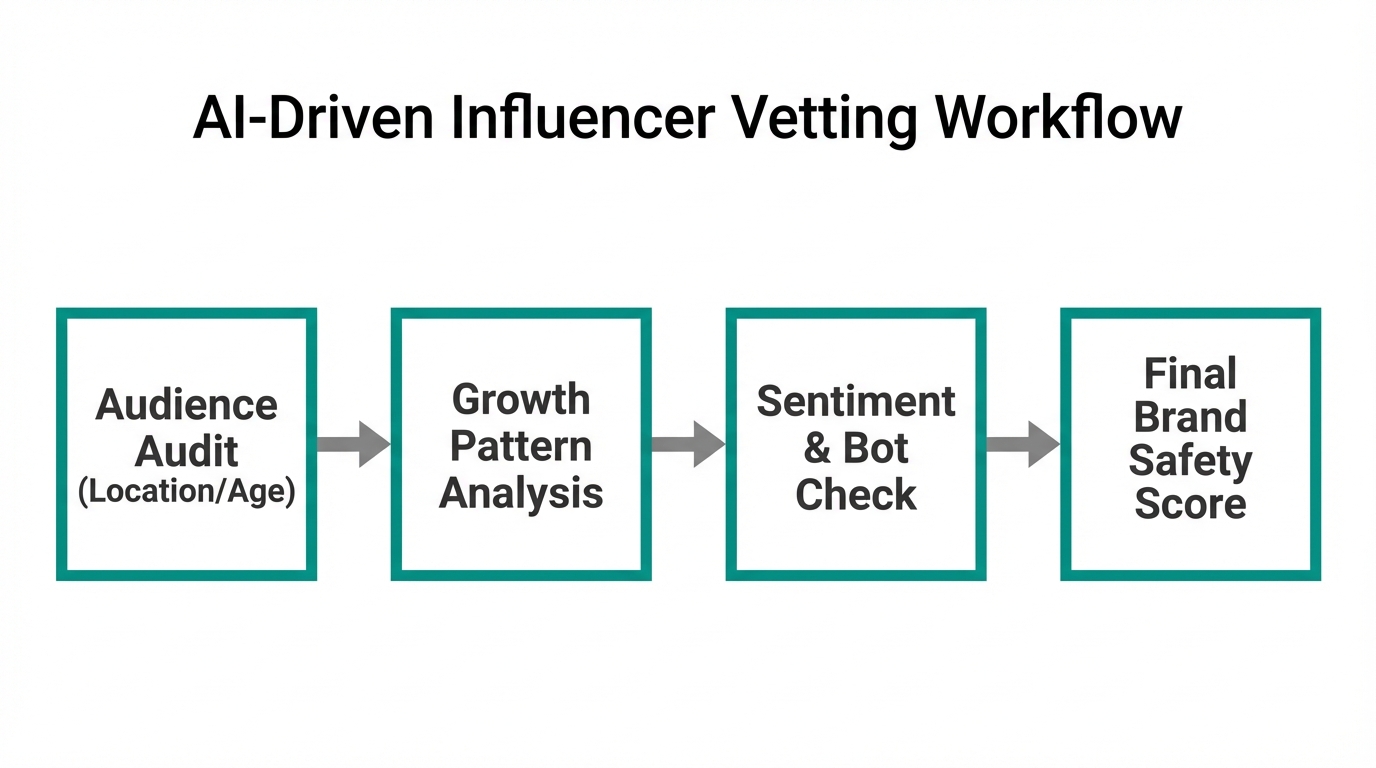
To navigate this landscape, brands must move from vanity metrics to value-based analysis. This requires a multi-layered influencer vetting process that leverages specialized AI tools to see what the human eye cannot. Here is the 2025 playbook for verifying creators:
1. Using Sentiment Analysis for Brand Safety
High engagement numbers can be misleading. A video with 10,000 comments might look like a success, but if 90% of those comments are negative or generated by repetitive "bot-speak" (e.g., "Great post!", "Cool!"), the partnership is a failure. Modern AI tools scan thousands of comments using Natural Language Processing (NLP) to detect genuine, context-aware human responses versus automated scripts.
2. Behavioral Pattern Recognition
AI can identify sudden, unnatural spikes in follower growth that do not correlate with a viral video or a media mention. Furthermore, it flags the 'Follow-Unfollow' pattern—a common tactic where creators use bots to follow thousands of users to gain a follow-back, only to instantly unfollow them. This "churn" behavior is a primary indicator of low-quality audience acquisition.
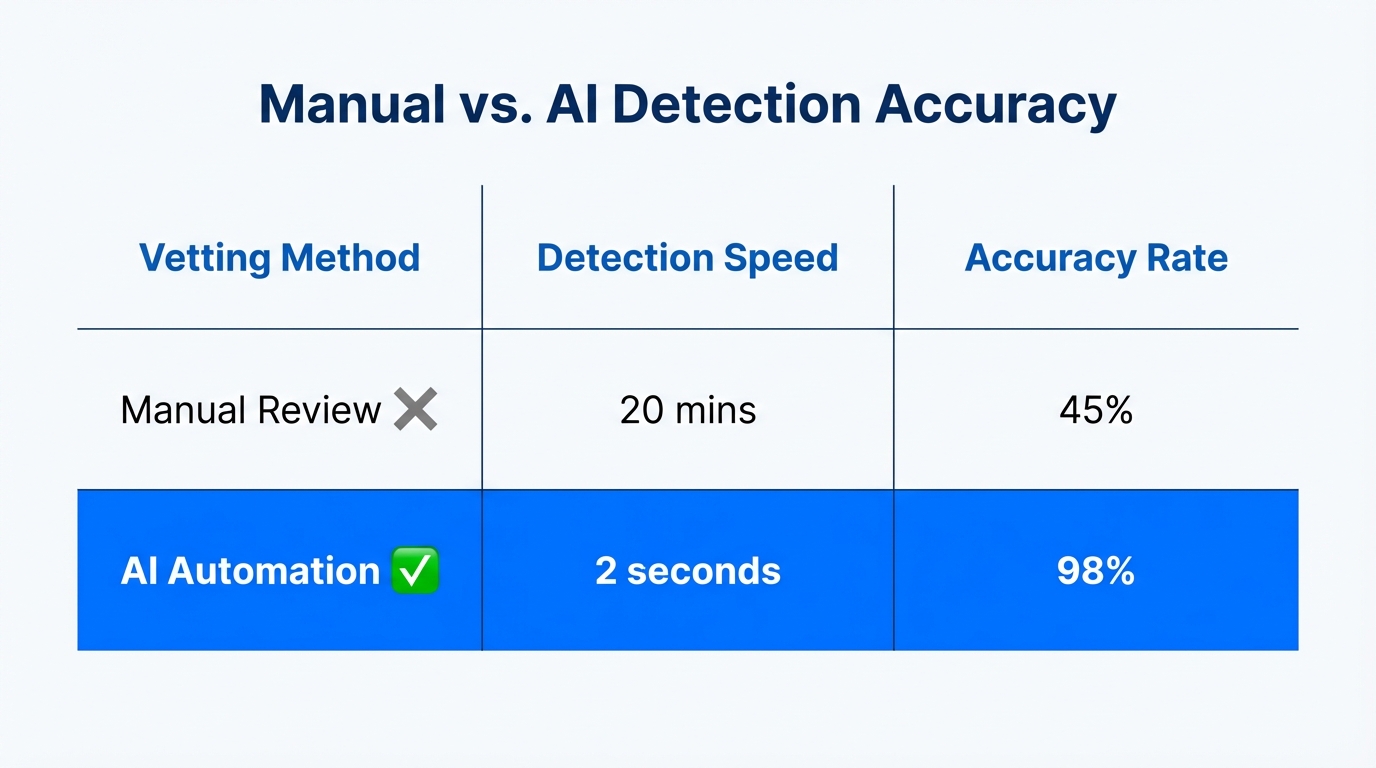
| Metric | Manual Vetting Risk | AI-Powered Vetting Advantage |
|---|---|---|
| Follower Authenticity | High (Easily faked) | 98% Accuracy via Audience Quality Scores |
| Comment Quality | Subjective / Skimmed | Deep Sentiment Analysis & NLP |
| Growth Patterns | Hard to track historically | Automated Anomaly Detection |
| Brand Safety | Reactive only | Proactive Risk Scoring |
3. Audience Topology Analysis
One of the most powerful AI techniques is mapping the network of an influencer's followers. If a large cluster of followers is interconnected only within an "engagement pod" (a group of accounts that strictly like each other's content) and has no other interests or network connections, the AI flags them as fraudulent. This topological mapping is essential for maintaining social media brand safety.
The Virtual Influencer Strategy: 100% Brand-Safe Engagement?
As the risk of human error and fraud rises, some brands are turning to virtual influencers. A prime example is Prada’s collaboration with Lil Miquela during Milan Fashion Week. By using a CGI-generated entity, Prada eliminated the "unpredictability" of human creators while using AI to track the specific demographics of every human who engaged with the content.
However, experts like Kaleb McAfee of Crowe PR warn that while AI influencers offer short-term profitability and safety, long-term brand health still depends on human authenticity. The key is balance: using AI to verify that your human influencers are indeed human and that their audience is legitimate.
To streamline this balance, platforms like Stormy AI can help source and manage UGC creators at scale. By using an AI search engine, brands can find influencers based on natural language prompts and instantly generate AI-powered quality reports that detect fake followers and engagement fraud before a single dollar is spent on outreach.
"While AI influencers are cost-effective, long-term ROI depends on genuine, human influencers who are actual fans of the brand."
Common Mistakes to Avoid in Your TikTok Strategy
Even with the best intentions, many marketing teams fall into traps that waste their budget. Avoid these four critical errors:
- Over-indexing on Follower Count: A creator with 1 million followers and a 20% bot rate is often less valuable than a micro-influencer with 50,000 highly engaged, real fans.
- Accepting Screenshots as Proof: In 2025, static screenshots of "insights" are effortlessly faked with Adobe Photoshop or browser inspection tools. Always use a third-party AI tool to pull real-time API data from verified identity sources.
- Ignoring the Long Tail: Many brands ignore the "Audience Quality Score" (AQS). An AQS rates authenticity by looking at the ratio of likes to comments, the geographical distribution of followers, and the historical activity of the accounts engaging with the content.
- Manual Outreach Fatigue: Attempting to vet hundreds of creators manually leads to errors. Using an AI agent from Stormy AI allows you to discover, outreach, and follow up with creators on a daily schedule, ensuring only vetted influencers enter your CRM.
The Future of Trust in Influencer Marketing
The surge of TikTok influencer fraud in 2025 is a wake-up call for the industry. As fraudsters get smarter with agentic AI, brands must fight fire with fire by integrating AI into every step of their workflow—from initial discovery to final payment. By focusing on Audience Quality Scores and utilizing tools that offer deep transparency, you can transform your influencer marketing from a gamble into a predictable growth engine.
Protecting your brand requires vigilance, the right tech stack, and a commitment to authenticity. Whether you are scaling UGC for mobile app installs or running high-gloss brand awareness campaigns, the goal remains the same: genuine human connection in a world increasingly filled with digital noise.