In the high-stakes world of short-form video, you don't have thirty seconds to build a narrative. You don't even have ten. According to latest data from top-performing app founders, you have exactly three seconds to convince a user not to scroll. This is the foundation of the 3-second rule, a tactical approach to viral UGC content that turns the chaotic nature of the algorithm into a predictable science. By focusing on social media retention metrics specifically within that initial window, brands are now generating millions of organic views without spending a dime on traditional ad placements.
The 75-80% Retention Metric: Why Three Seconds Is Everything
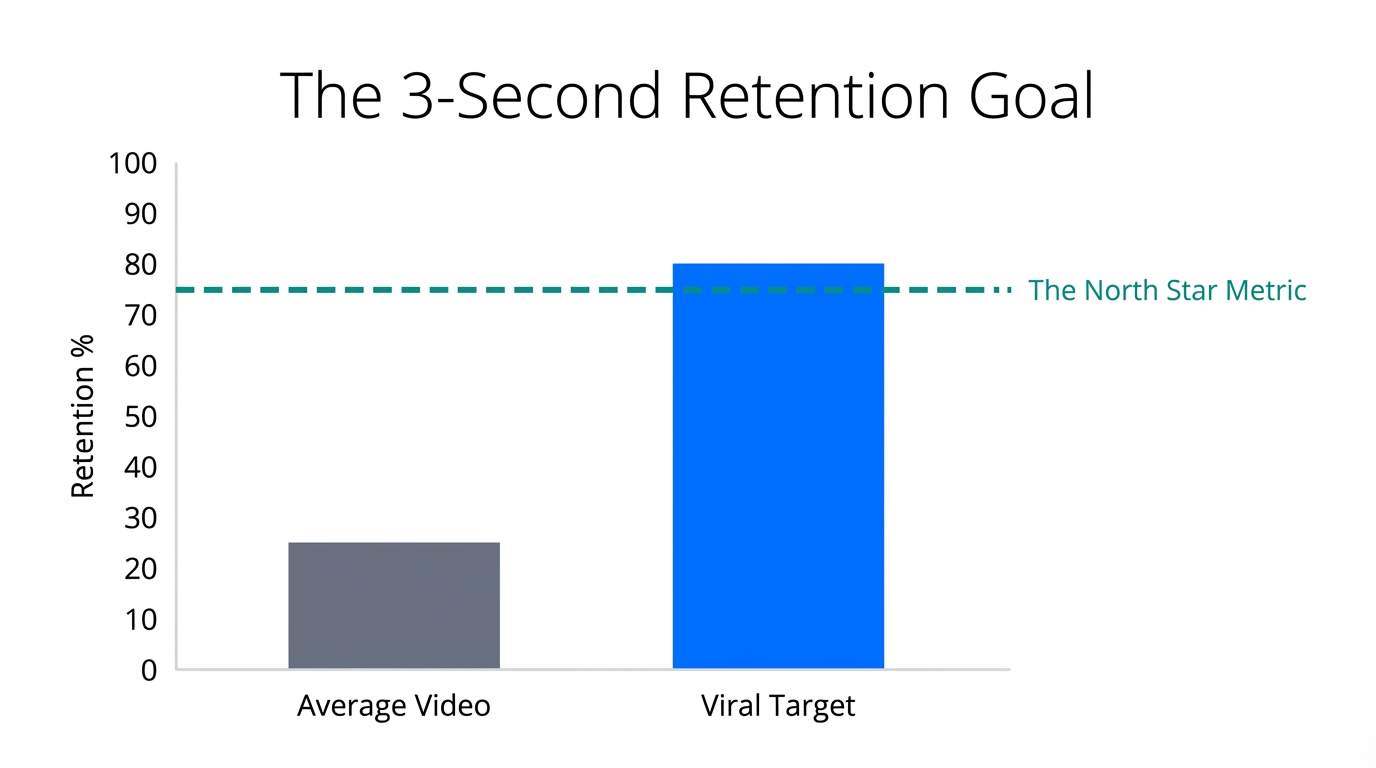
Most marketers obsess over total view counts, but the most successful practitioners of the TikTok hook strategy look at a much more granular data point: watch time past 3 seconds. For creators like Jay, the solo founder behind the travel app Nomad Table, this metric is the only reliable predictor of virality. If a video maintains 75% to 80% retention in those first three seconds, it is almost guaranteed to find an audience. If it drops below 50%, the content is effectively dead on arrival.
When analyzing your TikTok video engagement in the analytics dashboard, ignore the vanity metrics for a moment. Look at the drop-off curve. A steep decline in the first two seconds indicates a failure in the visual or text hook. Success in this niche requires an UGC marketing playbook that treats the first 3 seconds as the most expensive real estate on the internet. High-performing creators often test dozens of variations of the same content just to find the one hook that breaks the 70% threshold.
"If your 3-second retention is between 75% and 80%, it’s a good format. If it’s hitting that consistently, you know it’s going to go viral eventually." [source: Jay Alto]
Anatomy of a Winning Text Hook: Format over Fancy
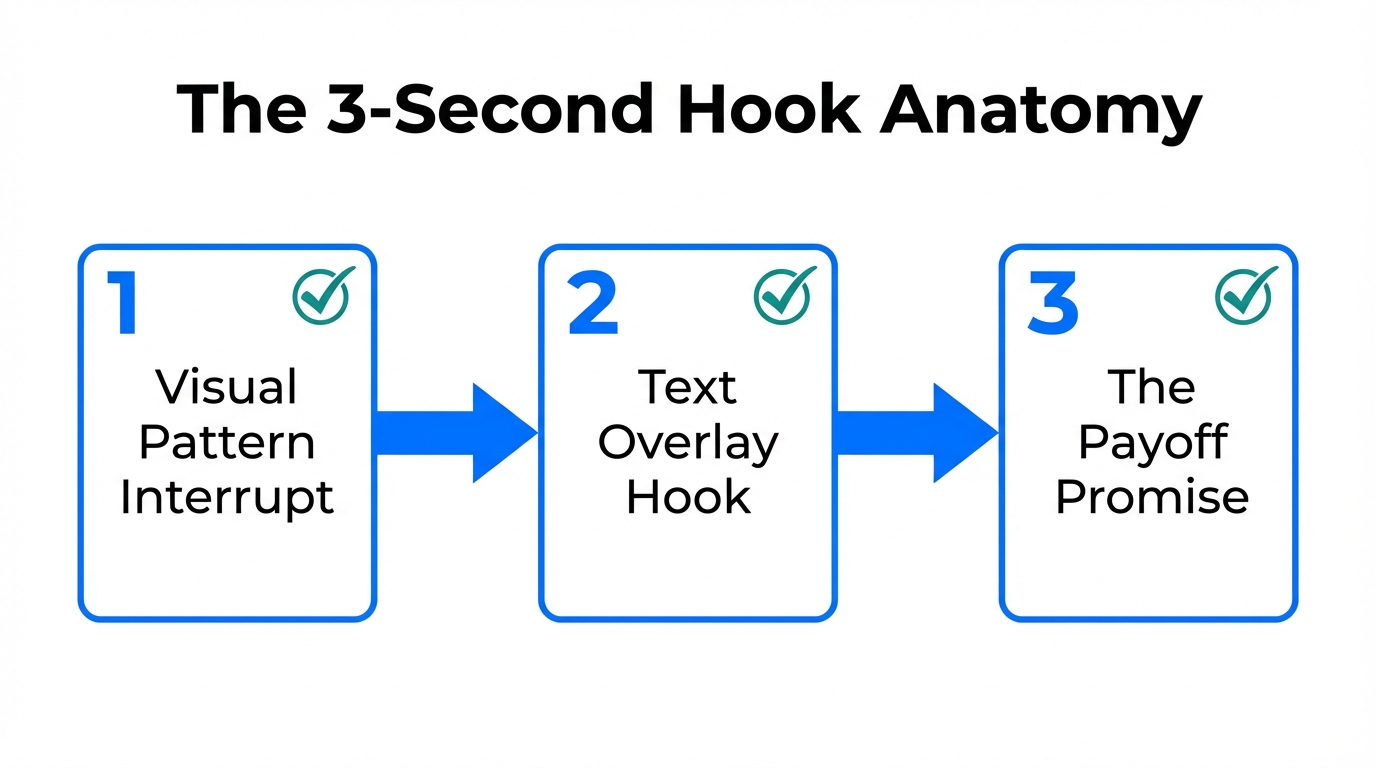
You don't need a professional camera or a studio to master viral UGC content. In fact, polish often works against you. The most effective hooks use simple, native-looking text overlays that lean into high-intent psychological triggers. Two specific formats have emerged as winners in the current meta: the "Imagine If" and the "Now I Find Out."
- The "Imagine If" Format: This positions your product as a solution to a common pain point. For example: "Imagine being scared of solo traveling when this literally exists." This creates immediate curiosity about the "this."
- The "Now I Find Out" Format: This leverages the feeling of being late to a trend. Example: "I’ve been solo traveling for 2 years and now I find out about this." It suggests that the viewer is about to discover a secret.
These hooks work because they feel like a friend sharing a discovery rather than a brand pushing a product. When combined with a compelling visual reaction—like a hand over the mouth or a subtle wink—the retention rate sky-rockets. You can find more examples of these high-performing outliers using tools like Spy Talk, which identifies videos that are outperforming a creator's baseline views by 100x.
| Hook Type | Psychological Trigger | Best For |
|---|---|---|
| The Discovery | FOMO (Fear of Missing Out) | New features or hidden gems |
| The Comparison | Relatability / Pain Points | Alternative solutions to common problems |
| The Bold Claim | Skepticism to Curiosity | Disruptive products or "hacks" |
The Danger of the 'View Trap': Reach vs. Conversion
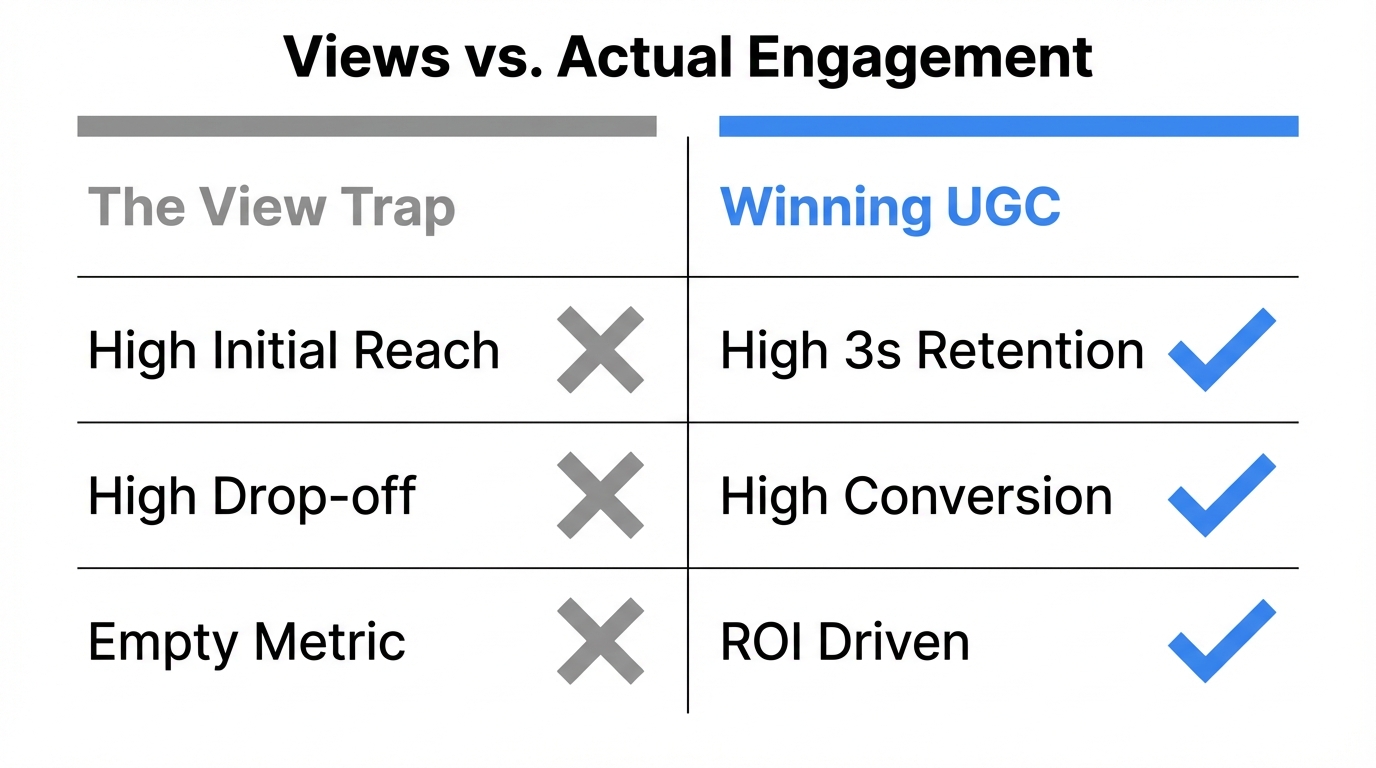
One of the most common mistakes in a UGC marketing playbook is falling for the "view trap." This occurs when a video goes viral for the wrong reasons—typically via clickbait that fails to deliver on its promise. Jay’s early experiments included videos with 300,000 views that resulted in only 174 likes and zero app downloads. This is because the hook (e.g., "the hostel volunteer is getting fired for showing me this") promised scandal but delivered a product demo.
When users feel tricked, they don't convert. They might watch long enough to satisfy the algorithm's retention requirements, but they won't click the link in your bio. To build true TikTok video engagement that leads to revenue, your hook must be intrinsically linked to the product's value proposition. Platforms like Stormy AI can help you source and vet creators who understand this balance, ensuring you find influencers who can generate views that actually translate into customers.
"Clickbait gets views, but authenticity gets downloads. Never promise a scandal in the hook if you’re selling a solution in the body."
Building Trust with 'Organic Details'
Users on TikTok and Instagram have developed a highly sensitive "ad detector." If a video feels too staged, they scroll. The secret to viral UGC content lies in the small, seemingly random details that ground the video in reality. This is often referred to as adding "texture" to the content. Instead of a generic background, show a specific hostel in Thailand or a messy desk. Use native fonts and low-quality, one-take shots.
These organic details build trust. When a creator mentions a specific bad experience at an "unsocial hostel in Thailand," it validates their expertise. They aren't just an actor reading a script; they are a traveler solving a real problem. For mobile app developers, this is critical. High-volume testing on platforms like Superwall shows that the most successful paywalls often mirror the organic, low-fi aesthetic of the ads that brought the users there in the first place.
The High-Volume Testing Cadence: 1 Viral Hit Per Month
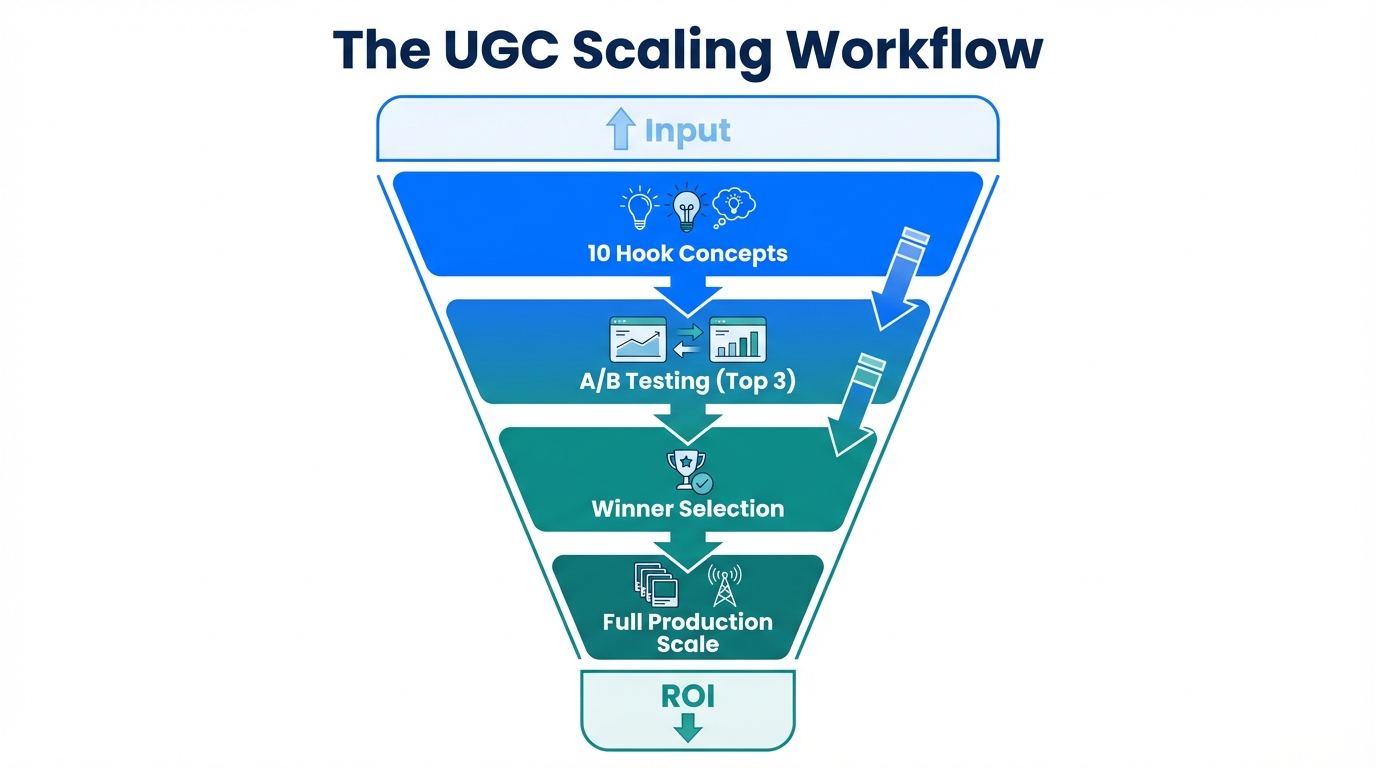
Even with a perfect TikTok hook strategy, virality is still a game of volume. Jay manages a network of over 60 creators who post daily. His goal isn't for every video to go viral; it's to maintain a high baseline of views while waiting for the algorithm to pick up a "winner." With 60 creators posting once a day, your surface area for luck increases exponentially. In this model, you can expect roughly one major viral hit per month per creator account.
Managing this scale as a solo founder requires a robust system. You shouldn't just hire creators and let them do whatever they want. Instead, follow this playbook:
- Test the formats yourself: Become the top performer for your own brand first. Prove the hook works before asking others to film it.
- Use a Performance-Based Pay Structure: Pay creators based on views (e.g., a $1-$2 CPM). This incentivizes them to focus on social media retention metrics.
- Automate the Sourcing: Use an AI-powered tool like Stormy AI to discover new creators in your niche and manage the outreach process automatically.
- Iterate on the Winners: When a specific creator hits 4,000 views consistently, give that exact script to 10 other creators.
| Strategy Component | Legacy Approach | AI-Powered Playbook |
|---|---|---|
| Creator Discovery | Manual DMing and Spreadsheets | Stormy AI Discovery & Outreach |
| Content Strategy | Random "Trend" Chasing | Data-backed Hook Testing |
| Compensation | Flat Fees / Retainers | Performance-Based CPM |
| Scaling | 1-2 High-Quality Posts | 60+ Daily Organic Iterations |
Conclusion: The Science of the Scroll
Success on TikTok is no longer a mystery reserved for Gen-Z influencers. By treating social media retention metrics as a hard science and focusing on the 75-80% 3-second rule, any brand can build a predictable growth engine. The UGC marketing playbook of the future isn't about high production values; it's about high-volume testing, authentic details, and hooks that demand attention. Start by testing your own hooks today, find your winning format, and then use tools like Stormy AI to scale that success across a network of creators. The algorithm is waiting—don't let those first three seconds go to waste.