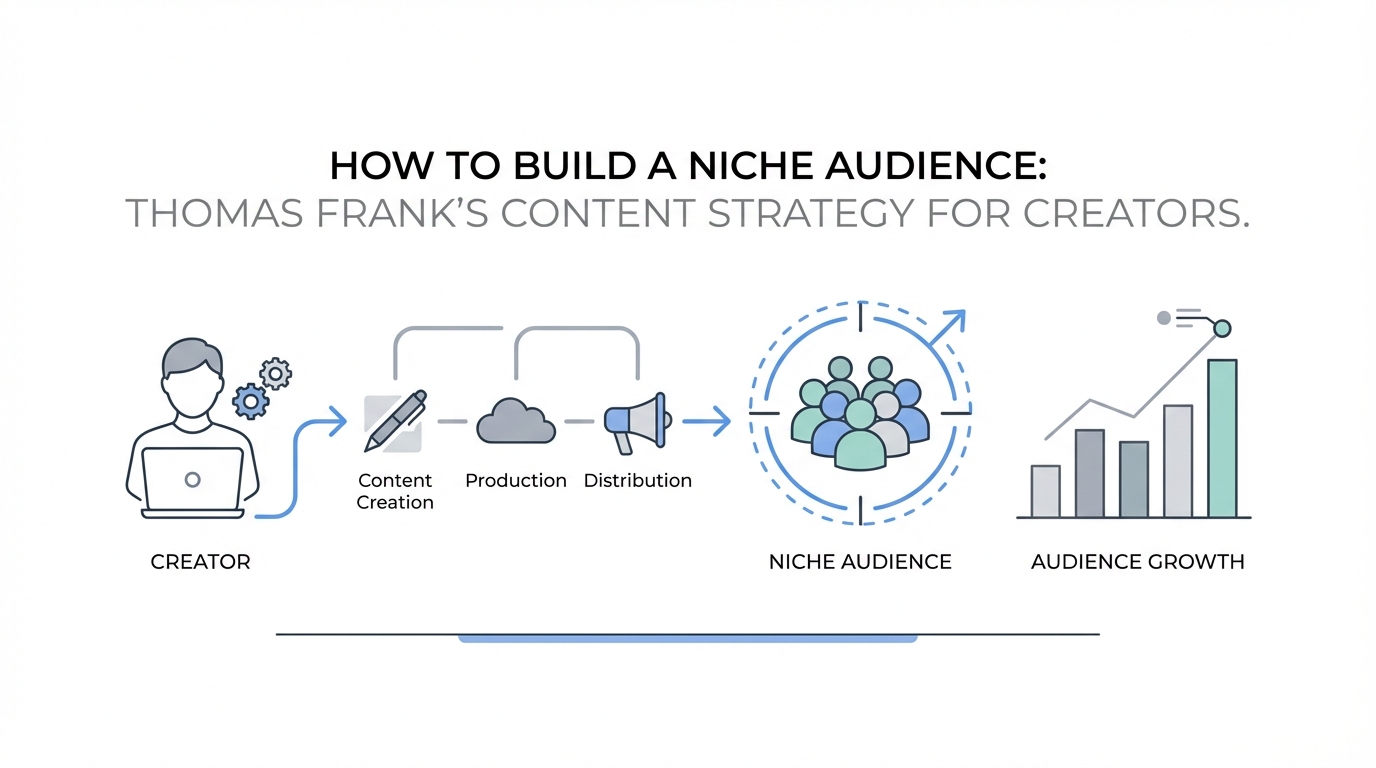
In the modern digital economy, the traditional path to success has been completely rewritten. You no longer need a massive venture capital investment or a sprawling corporate office to build a multi-million dollar business. Consider Thomas Frank, a YouTuber and entrepreneur who generates over $100,000 per month in passive income from his bedroom. His secret isn't magic; it's a sophisticated, yet accessible, niche content strategy that prioritizes depth over breadth. By focusing on a specific community-based product and mastering the art of the content flywheel, Frank has built a sustainable empire on YouTube that continues to grow without the need for traditional advertising spend.
The Death of Buying Attention and the Rise of Earning It
For decades, the standard business model was simple: you bought attention. Whether through TV commercials, billboards, or Meta Ads, the goal was to interrupt potential customers, capture their information via a lead magnet, and eventually sell them a product. But the digital landscape has shifted. Consumers are increasingly blind to banner ads and skeptical of traditional marketing tactics. According to Nielsen research, trust in traditional advertising is declining in favor of peer recommendations. The old way of doing business was transactional; the new way is relational. To succeed today, you must transition from buying attention to earning it. This is where audience growth for creators begins—not with a credit card, but with a commitment to providing genuine value.
Earning attention requires a fundamental shift in how you view your viewers. Instead of seeing them as leads to be converted, you must see them as members of a potential community. This is the foundation of the ACP Funnel (Audience, Community, Product), a concept popularized by Greg Isenberg. By following this framework, creators like Dan Koe and Colin and Samir have bypassed the need for expensive marketing campaigns. Instead, they use platforms like Instagram and YouTube to build a base of loyal followers who trust their expertise implicitly.
The ACP Funnel: A Blueprint for Creator Success
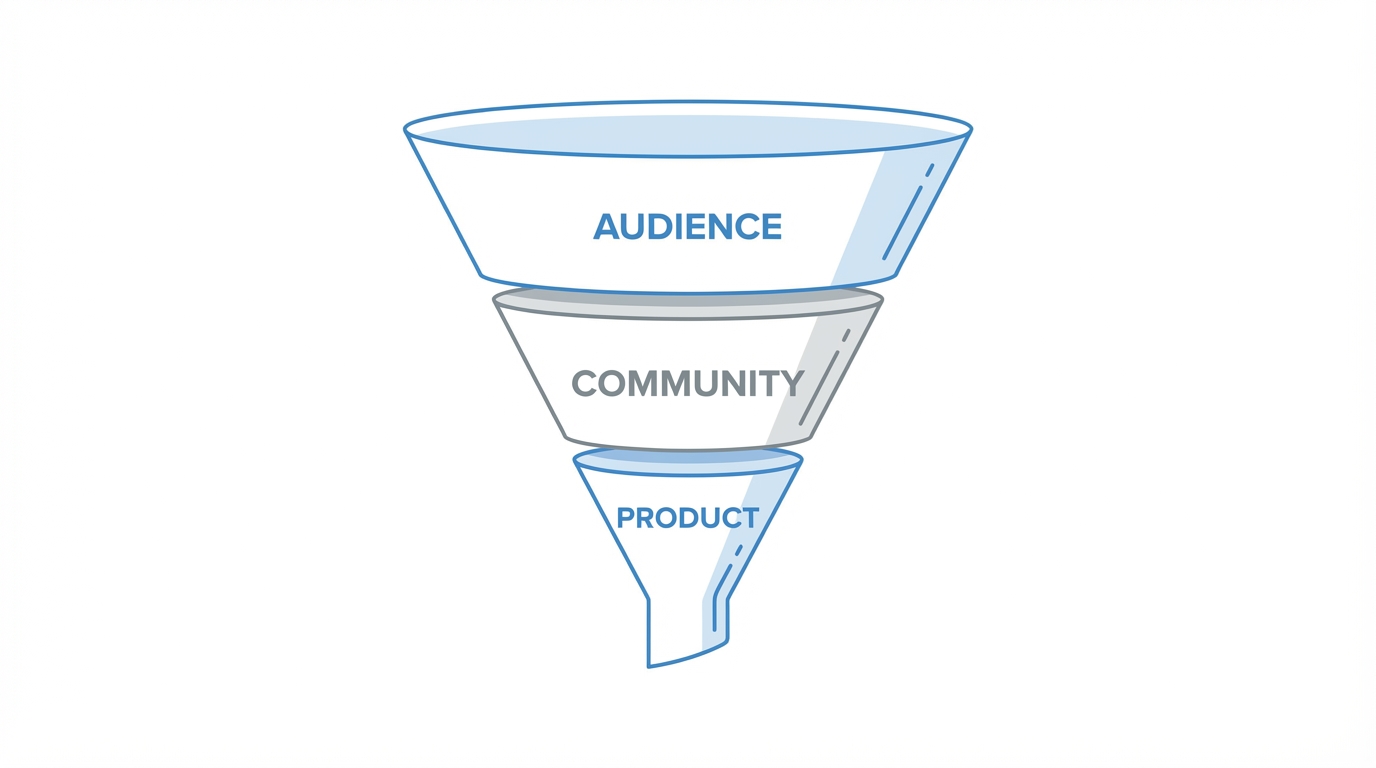
The ACP funnel is a modern alternative to the traditional marketing funnel. It starts with building an Audience through high-quality, searchable content. Once an audience is established, the creator fosters a Community by engaging in two-way conversations. Finally, they introduce a Product that solves a specific problem for that community. This sequence is critical because it builds trust before a single dollar is ever requested. In this model, your content serves as the primary driver for how to grow a youtube channel and sustain a business long-term.
Think of the traditional business model as a hotel. You check in, you sleep, you wake up, and you leave. It is purely transactional, and there is no social bond between the guests. However, a successful creator business functions like an apartment building. In an apartment building, people live near each other, they share spaces, and they develop trust over time. When you build an apartment building instead of a hotel, your business becomes recession-proof. Deep trust ensures that your community will support you even when the economy fluctuates, a core tenet of effective influencer marketing tips for long-term survival.
Step 1: Audience and the 'Deep Not Wide' Rule
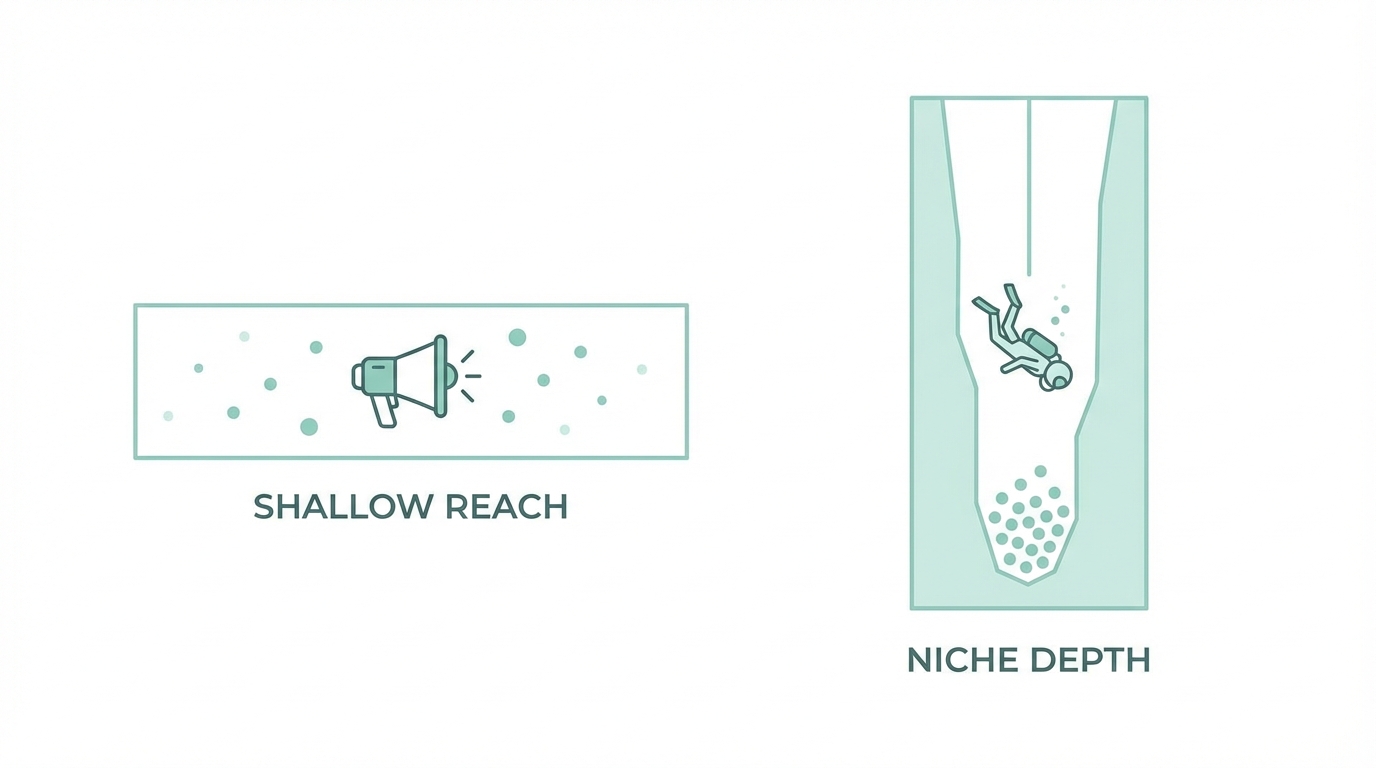

Thomas Frank didn't start by trying to appeal to everyone. He began as a productivity nerd who was obsessed with the latest apps and workflows. When he started his journey on YouTube, he didn't make generic lifestyle videos. Instead, he went deep not wide. He focused specifically on niche content strategy, particularly around the productivity tool Notion. By becoming the go-to expert for a single, specific topic, he was able to dominate that category and attract a highly loyal fan base.
The lesson for new creators is clear: if you try to be everything to everyone, you end up being nothing to anyone. To build a searchable audience, you must identify a specific niche where you can provide unique insights. This approach makes your content highly discoverable for people searching for solutions to specific problems. Brands looking to partner with creators often search for this level of specificity. For instance, companies looking for high-quality UGC might use Stormy AI to find creators who have already established themselves as experts in a particular software or hobby, ensuring their campaigns reach a vetted and engaged demographic.
Mastering Storytelling in a Crowded Market
Information is a commodity, but storytelling is a differentiator. Thomas Frank mastered the art of compelling storytelling to make technical productivity tips feel personal and urgent. He didn't just show how to use a software; he shared his personal struggles with organization and how these tools changed his life. This genuine approach allows viewers to connect on a personal level, which is a key component of audience growth for creators. When you tell a story, you aren't just giving information; you're inviting the viewer into your world.
To differentiate yourself in a crowded social media landscape, you must infuse your personality into your content. High-quality video production isn't just about 4K resolution; it's about the clarity of your message and the emotional resonance of your narrative. Consistent, well-researched content that speaks directly to a specific persona will always outperform generic, high-budget productions. By focusing on storytelling, you create a unique brand identity that cannot be easily replicated by competitors or automated AI tools.
Developing a 'Community Magnet' Instead of a Lead Magnet
In the old way of doing business, you used a lead magnet—usually a PDF or a discount code—to capture an email address. While email marketing is still valuable, the modern creator should focus on building a Community Magnet. A community magnet is a space where like-minded people can interact, share their progress, and support one another. As humans, we have evolved to be social beings; we crave the feeling of belonging to a tribe with a clear, shared goal. Whether that goal is mastering a new language or becoming a productivity pro with Notion, communities with a clear destination outperform generic groups every time.
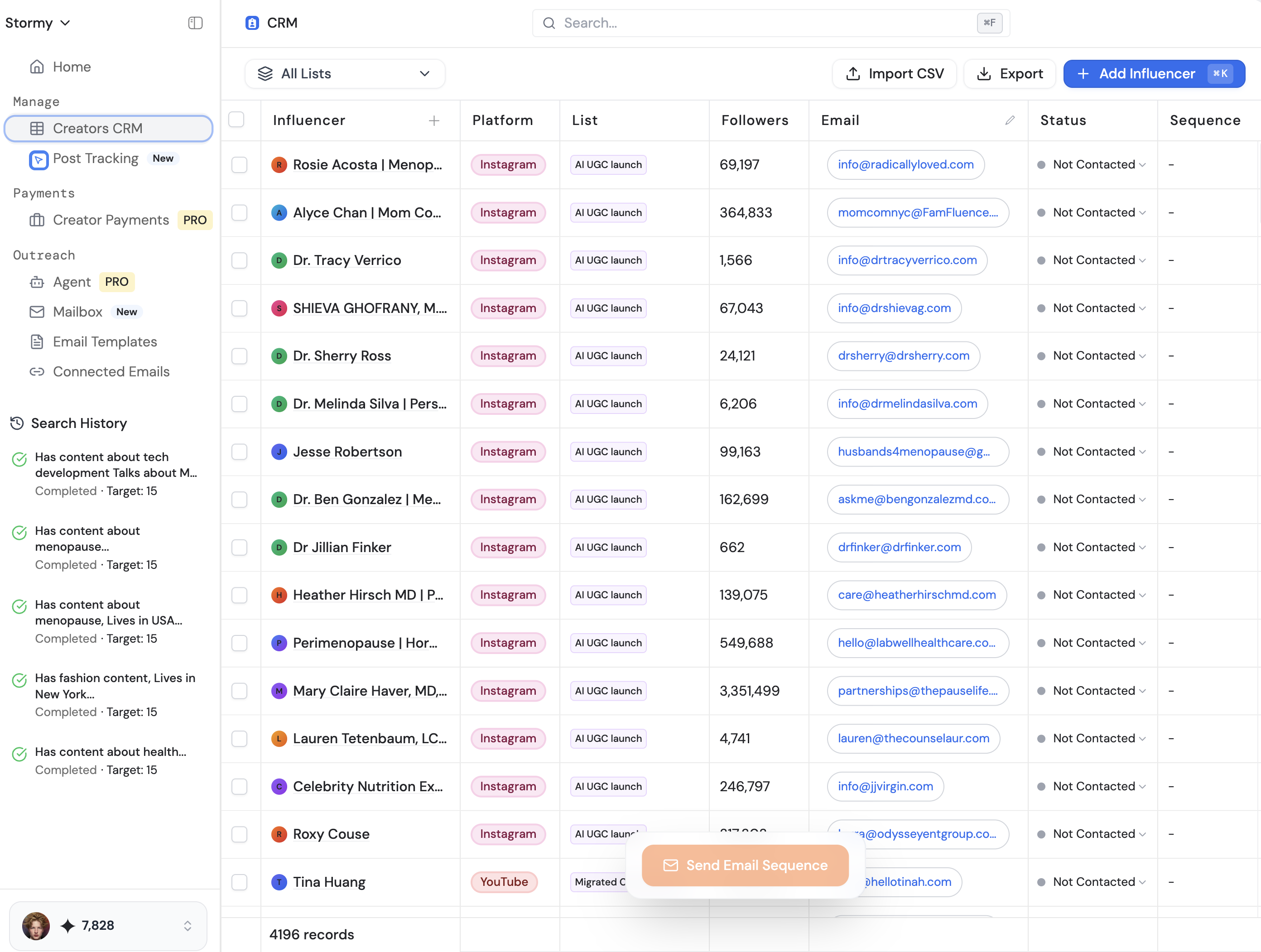
For brands and creators managing these complex relationships, tools like the Stormy AI creator CRM can be invaluable. Managing hundreds of community members or influencer partners requires organization to ensure no interaction is missed. Engaging consistently in your comment section is the first step toward building this magnet. Thomas Frank treats his YouTube channel as a two-way street, constantly asking for dialogue and responding to his viewers. This engagement is what converts a passive audience into a thriving, active community.
Step 2: Converting Audience into Community
The transition from audience to community happens in the comments. If you don't engage with your viewers, you don't have a community; you just have a broadcast. Thomas Frank takes the time to answer questions, address concerns, and listen to the problems his audience faces. This does more than just build goodwill—it provides a wealth of data. By listening to his community, Frank understands exactly what they need, which informs his future content and product development. This is the essence of the content flywheel: your audience tells you what they want, you create it, and they reward you with further engagement and trust.
Engagement should be strategic. Don't just like a comment; ask a follow-up question. This two-way conversation builds massive trust, which Toby Lütke, the founder of Shopify, calls the "Trust Battery." As explained in The Knowledge Project interview, every positive interaction charges the battery, while every missed opportunity or overly aggressive sales pitch drains it. A fully charged trust battery means that when you eventually launch a product, your community is already primed and eager to buy because they know you have their best interests at heart.
Building the Content Flywheel with Viewer Insights
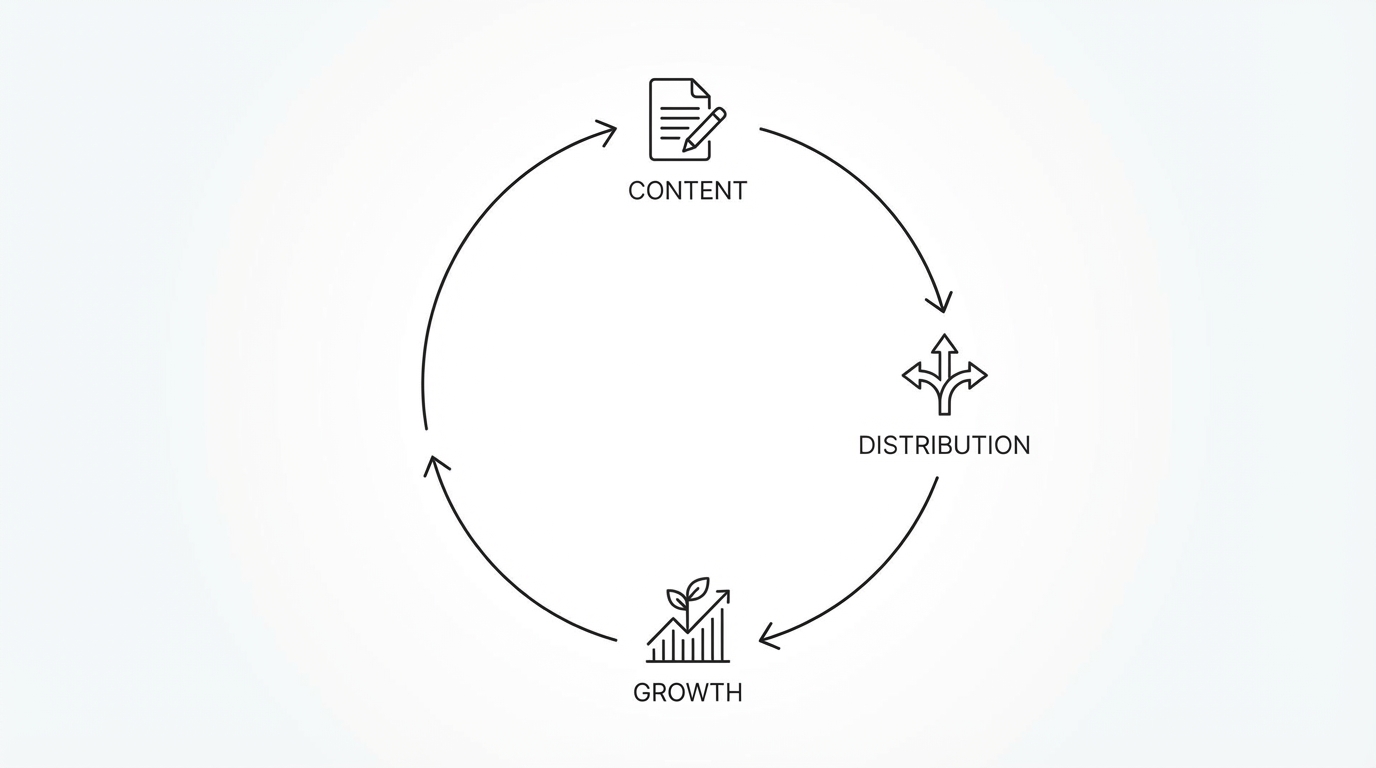
Analytics-driven content is not about chasing trends; it's about refining your content pillars based on what actually resonates with your persona. When Thomas Frank noticed his audience struggling with specific Notion setups in the comments, he didn't ignore them. He built tutorials and templates to solve those exact problems. This created a content flywheel where the feedback loop between the creator and the community became the primary engine for growth. Every video solved a problem, which brought in more viewers, who then provided more feedback for future videos.
To implement this, you must look beyond just views and likes. Look for recurring questions, emotional pain points, and common obstacles discussed by your followers. If you are struggling to find the right niche or want to see what's working for others in your space, you can use modern influencer discovery platforms to analyze creators who are successfully leveraging these flywheels. By analyzing how top-tier influencers respond to their communities, you can adapt those strategies to your own niche content strategy and accelerate your channel's growth.
Step 3: The Product and the Trust Battery
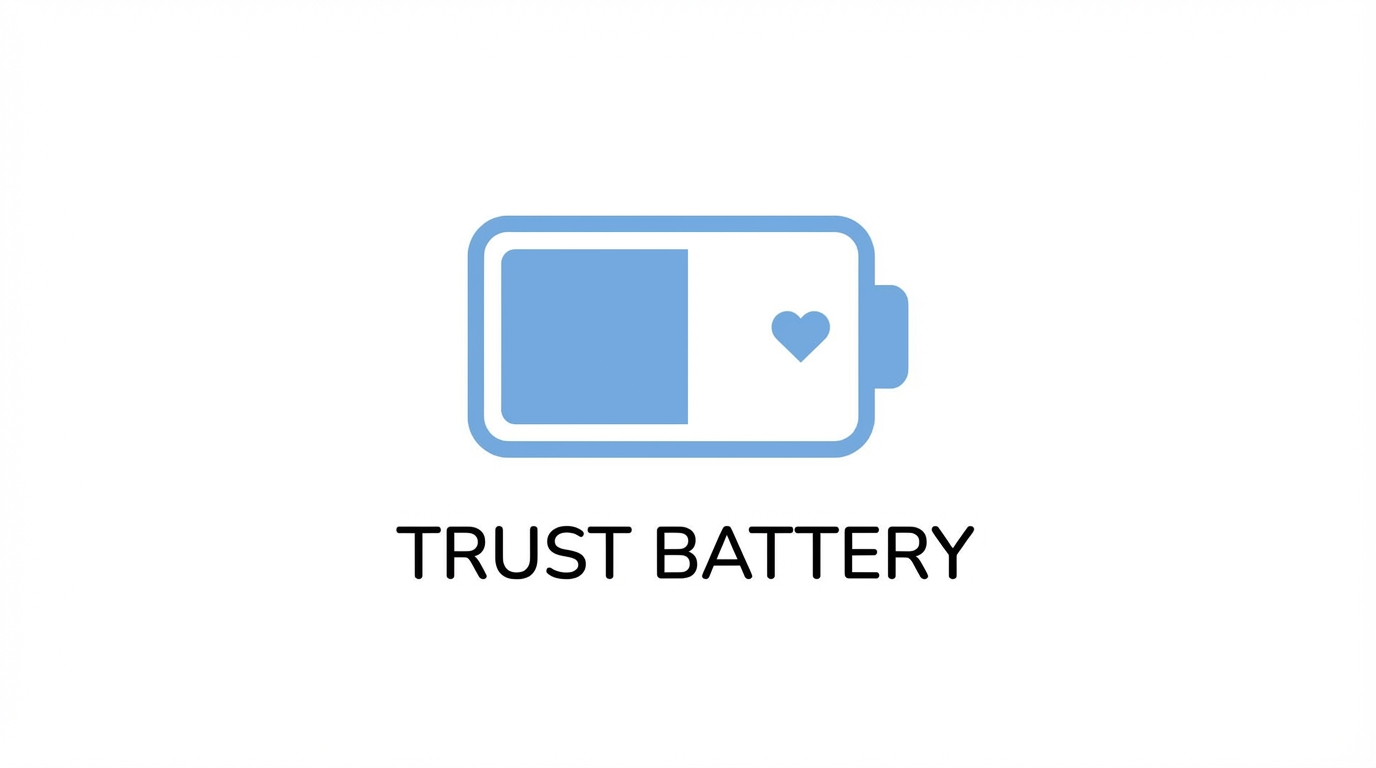
The final stage of the ACP funnel is the Product. But not just any product—a community-based product that supercharges the existing experience. For Thomas Frank, this meant creating premium Notion templates. Because he had spent years providing free, high-quality tutorials, his "Trust Battery" was at 100%. He didn't need to spend thousands on Google Ads to sell his templates; his community was already waiting for them. The product solved the very problems they had been discussing in his comment sections for months.
A successful product should ideally fit into the user's daily or weekly routine. Think about platforms like Instagram or Netflix—they are used consistently. When your product becomes a routine, you create a sustainable revenue stream that doesn't require constant new customer acquisition. By giving away his best information for free, Frank built so much trust that his paid products became an easy "yes" for his community. This is the ultimate goal of how to grow a youtube channel: creating a business that serves your audience so well that they become your best marketing department.
Conclusion: Building Your Own Content Flywheel
Building a niche audience like Thomas Frank requires patience, consistency, and a deep commitment to your community. The ACP funnel provides a clear roadmap: build an audience by going deep on a niche topic, foster a community through active engagement, and create a product that solves real problems. This strategy eliminates the need for venture capital and expensive ads, allowing you to build a lucrative business from anywhere in the world. By focusing on the "Trust Battery" and maintaining a high standard of storytelling, you can differentiate yourself in any market.
For those looking to take the next step in their creator journey, resources like the Community College at Late Checkout offer hands-on learning for mastering the ACP funnel. Whether you are a brand looking to collaborate with creators or an individual looking to start your own channel, the principles remain the same: earn attention, build trust, and solve problems. Start today by identifying your niche, going deep, and charging your trust battery one comment at a time.