In the digital landscape of 2026, where AI-generated content has reached a point of absolute saturation, the most radical move a brand can make isn't a better algorithm or a flashier TikTok filter. It is a physical piece of paper delivered to a real mailbox. While most marketers are drowning in the "digital sludge" of social media feeds, a few visionaries are looking backward to move forward. The biggest surprise of the current year? The triumphant return of print media, led by an unlikely pioneer: The Onion.
The 'Purple Cow' Principle: Why Being Different Trumps Being Better
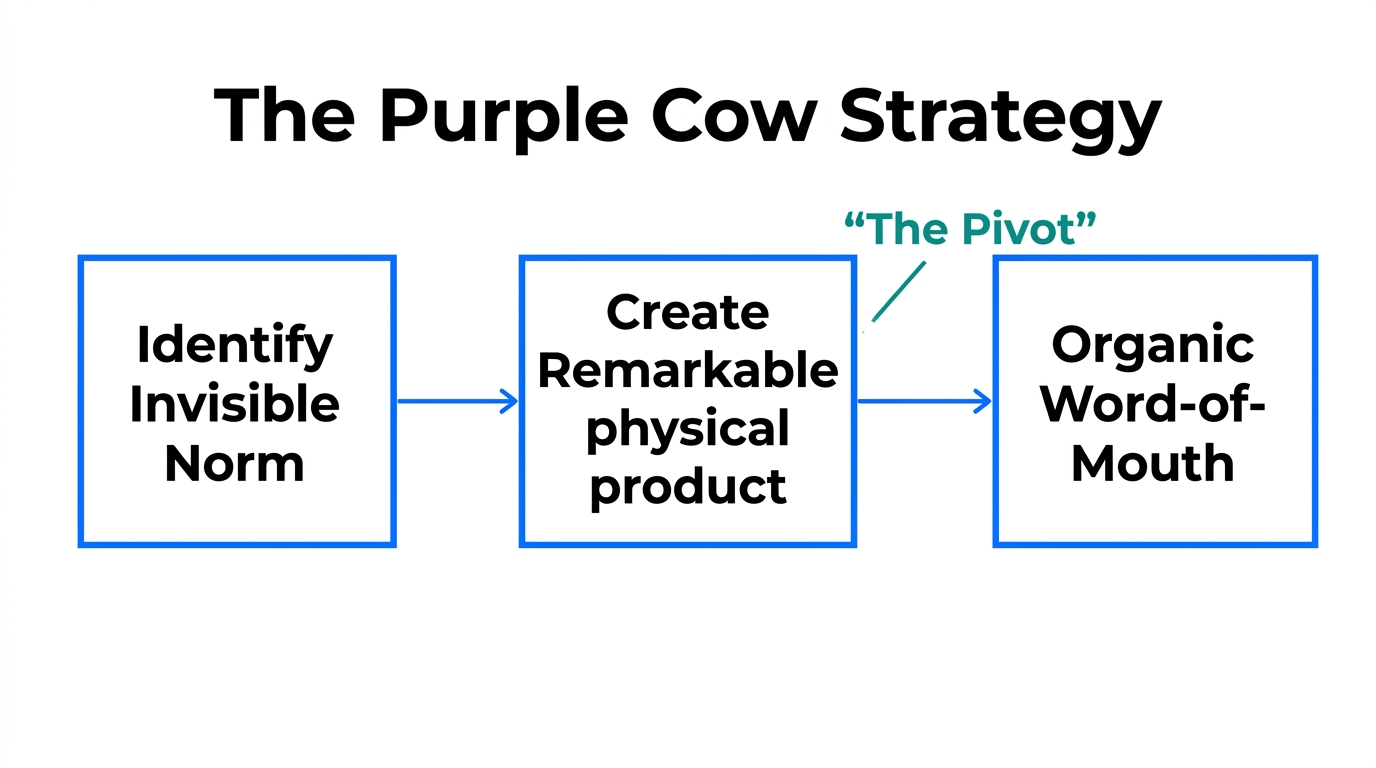
To understand why physical media is winning in 2026, we have to revisit a classic marketing framework: the Purple Cow. Coined by Seth Godin, the principle is simple: in a field of brown cows, a purple cow stands out because it is different, not just a slightly more efficient cow. In the 2026 creator economy, differentiation is the only form of survival.
"If you split test everything, you just end up with pornography—or worse, total invisibility. At some point, you have to take a stand and be different, even if it doesn't make logical sense to the data."
Consider the example of modern athletes. In a world of high-tech compression gear, seeing a runner crush a marathon in blue jeans—as seen with rising stars like Truitt Haynes—is a Purple Cow. It’s not "better" for performance; it’s different enough to capture the world's attention. This same logic applies to distribution. When every brand is fighting for a millisecond of attention in a TikTok Ads Manager queue, the mailbox is suddenly the least crowded channel in existence.
Case Study: How The Onion Leveraged Nostalgia to 3x Revenue
 21:45
21:45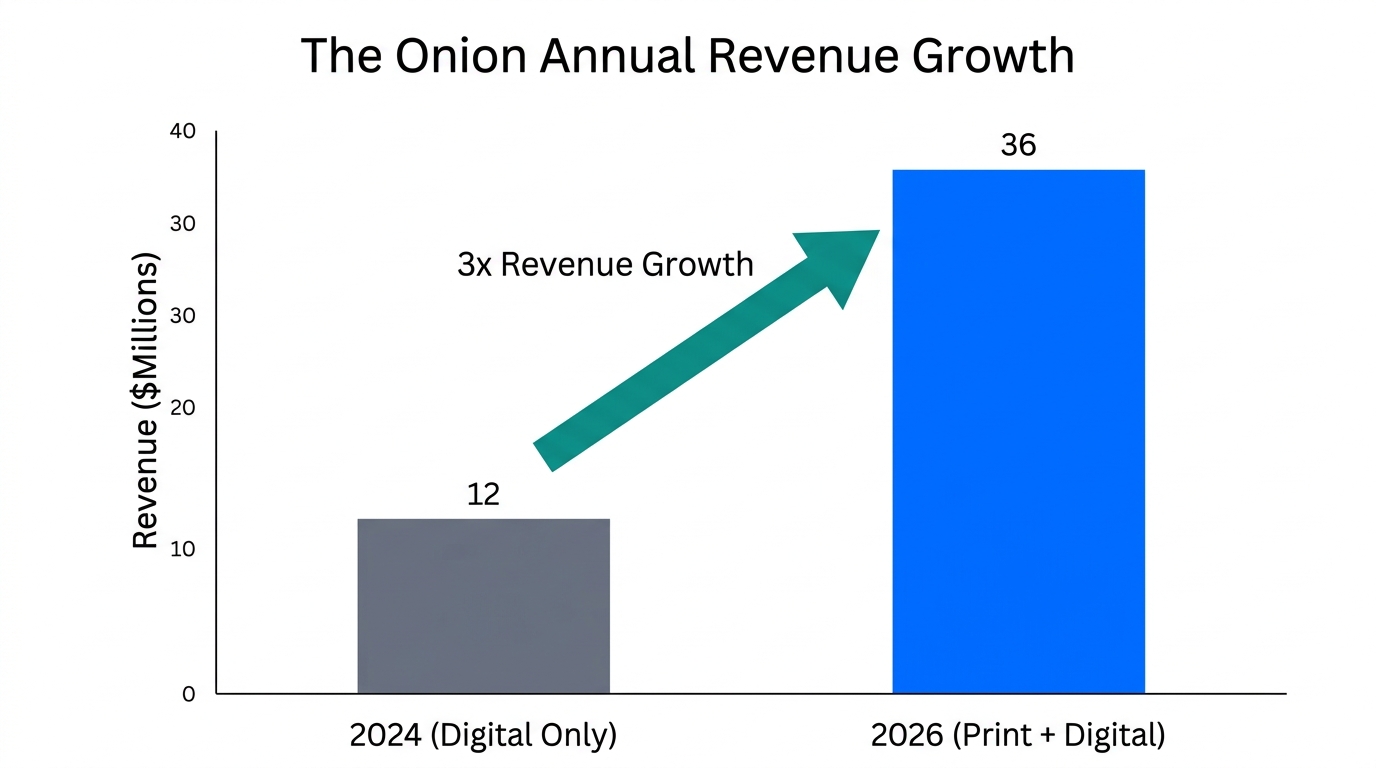
The story of The Onion is the ultimate case study in brand differentiation tactics. Founded in 1988 as a campus newsletter, the brand went through a decade of digital-only ownership under various hedge funds and media conglomerates. In 2024, Jeff Lawson, the founder of Twilio, stepped in as a steward of the brand. His move? He didn't double down on digital impressions. He brought back the print magazine.
The results in 2026 are staggering. Last year, The Onion was struggling with digital ad revenue, pulling in less than $2 million. By going "Purple Cow" and launching a physical subscription for $10 a month, they secured over 53,000 paying subscribers. This single move 3xed their revenue to a projected $6 million this year.
| Metric | Digital-Only Era (2024) | Physical Print Era (2026) |
|---|---|---|
| Annual Revenue | <$2,000,000 | $6,000,000 |
| Customer LTV | Low (Ad-based) | High ($120/yr Sub) |
| Brand Sentiment | Social Media Noise | Premium Collectible |
| Platform Risk | High (Algorithm Dependent) | Zero (Direct-to-Mail) |
Why did it work? Because people are experiencing "digital fatigue." In 2026, your email inbox is a Coca-Cola freestyle machine of unlimited syrup and bubbles—unlimited options, but none of them satisfying. A physical magazine is a coconut with a straw: simple, organic, and tangible. For brands looking to find the creators who can help bridge this gap, Stormy AI provides the discovery tools to find niche influencers who understand the power of physical communities.
The High-Net-Worth Newsletter: Physical Briefings as the New Status Symbol
25:21In B2B marketing, the "physical pivot" is even more lucrative. Take the concept of the "Diego Binders." Named after a high-end curator who delivers physical binders of long-form journalism to tech executives, these physical briefings are becoming the ultimate status symbol. While 99% of people are reading headlines on a X feed, the top 1% are reading curated, physical memos from thinkers like Howard Marks or Brent Beshore.
"The internet browser is a dopamine fast-food dispenser. A physical binder is a sanctuary for deep work and high-level decision making."
This is the physical distribution strategy for the elite. By printing out the best research, stapling it together, and putting it in a folder, you change the category of the content. It’s no longer just another Chrome tab; it’s a briefing. Curated "info diets" are the 2026 equivalent of farm-to-table eating. Just as people pay more for meat sourced from a specific ranch, high-net-worth individuals pay more for information that has been physically harvested and curated for their eyes only.
Pricing for Scarcity: Moving from $10/mo to $1,000/yr
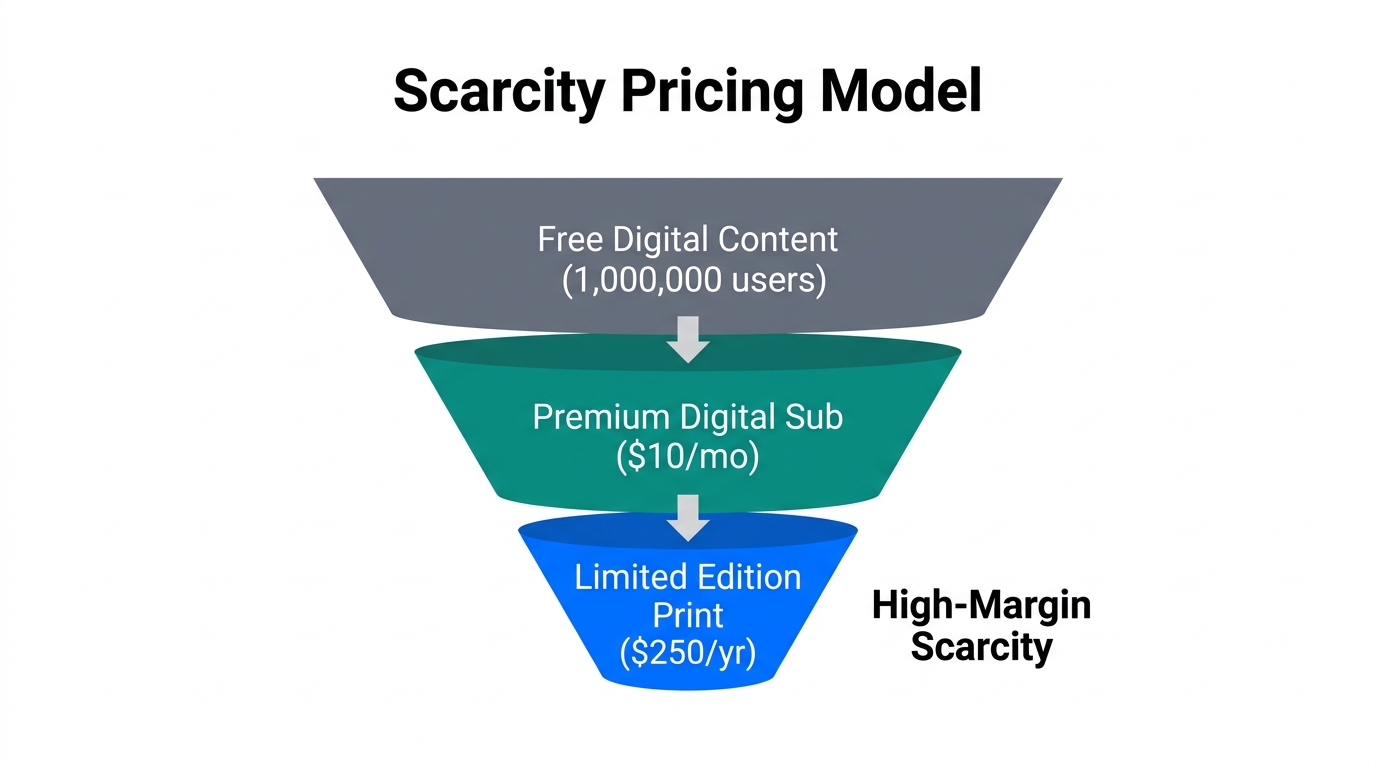
The economics of physical media allow for a radical shift in pricing. In the digital world, you are fighting a race to the bottom. In the physical world, you are pricing for scarcity.
Consider the "Milk Delivery" model. Companies like Oberweis Dairy survived for over a century by delivering milk in glass bottles. While the business faced challenges due to poor management, the core value proposition—nostalgia and glass-bottled quality—remains incredibly powerful in 2026. Consumers are willing to pay a 3x premium for milk in a glass bottle because it feels like the way it used to be made.
The Playbook: Launching a 'Punk Rock Zine' for Your Top 1%
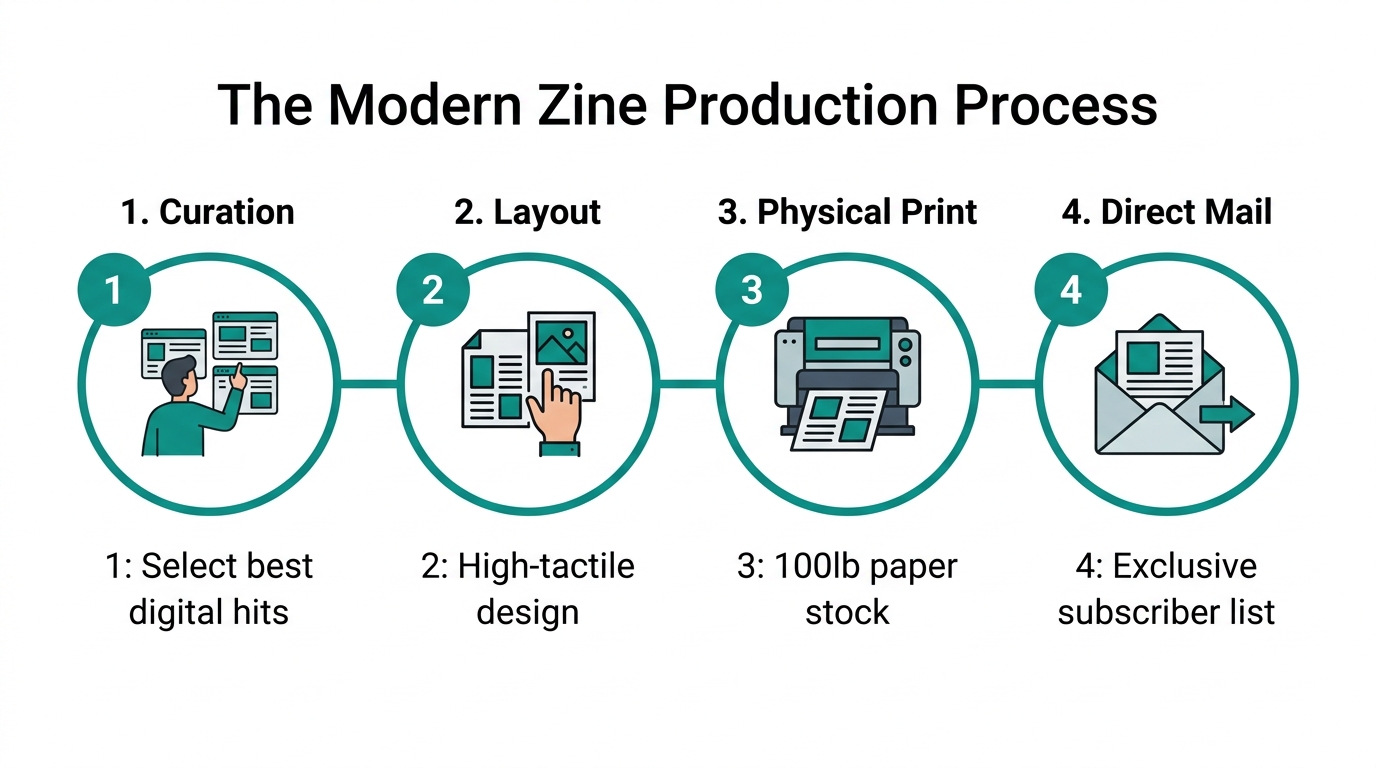
You don't need a billion-dollar printing press to execute a print magazine marketing strategy. In fact, in 2026, "lo-fi" is often more effective than "hi-fi." Here is the step-by-step playbook for launching a physical zine for your brand's top customers.
- Step 1: Identify Your 1%: Use an AI-powered CRM to find your top 1% of customers by lifetime value. These are the people who will appreciate a physical touchpoint.
- Step 2: Curate, Don't Create: You don't need 50 pages of original content. Curate the 5 most important things your audience needs to read. Add a "sticky note" editorial at the top explaining why these matter.
- Step 3: Lean into Lo-Fi: Print the content on high-quality white paper. Use a heavy-duty stapler. Place it in a high-quality envelope or a simple binder. The "handmade" feel creates more intimacy than a glossy corporate brochure.
- Step 4: Provide Reading Instructions: Tell your readers how to consume the content. Tell them to read it at 8:00 PM after the kids are in bed, with the phone in another room. You are selling an experience of focus, not just information.
- Step 5: Charge for the Diet: Don't give it away for free. Charge a premium price—$500 to $1,000 a year. This ensures the recipient values the "info diet" you are providing.
"The smart man does first what the dumb man does last. While others are waiting for the digital bubble to burst, the winners are already building physical moats."
Conclusion: The 2026 Physical Renaissance
25:53The success of The Onion and the rise of high-end physical briefings signal a major shift in consumer behavior. As AI continues to flood our digital lives with perfect, frictionless content, friction becomes a feature. The act of opening a mailbox, turning a page, and smelling ink on paper provides a sensory experience that no VR headset or AI agent can replicate.
Whether you are a startup founder or a marketing executive, the lesson of 2026 is clear: don't just try to be better than your competitors on Meta Ads. Be a Purple Cow. Go physical, go premium, and go direct to the one place your customers still actually pay attention to—their own front door. By leveraging tools like Stormy AI to find the right voices to fill those pages, you can build a brand that isn't just seen, but felt.