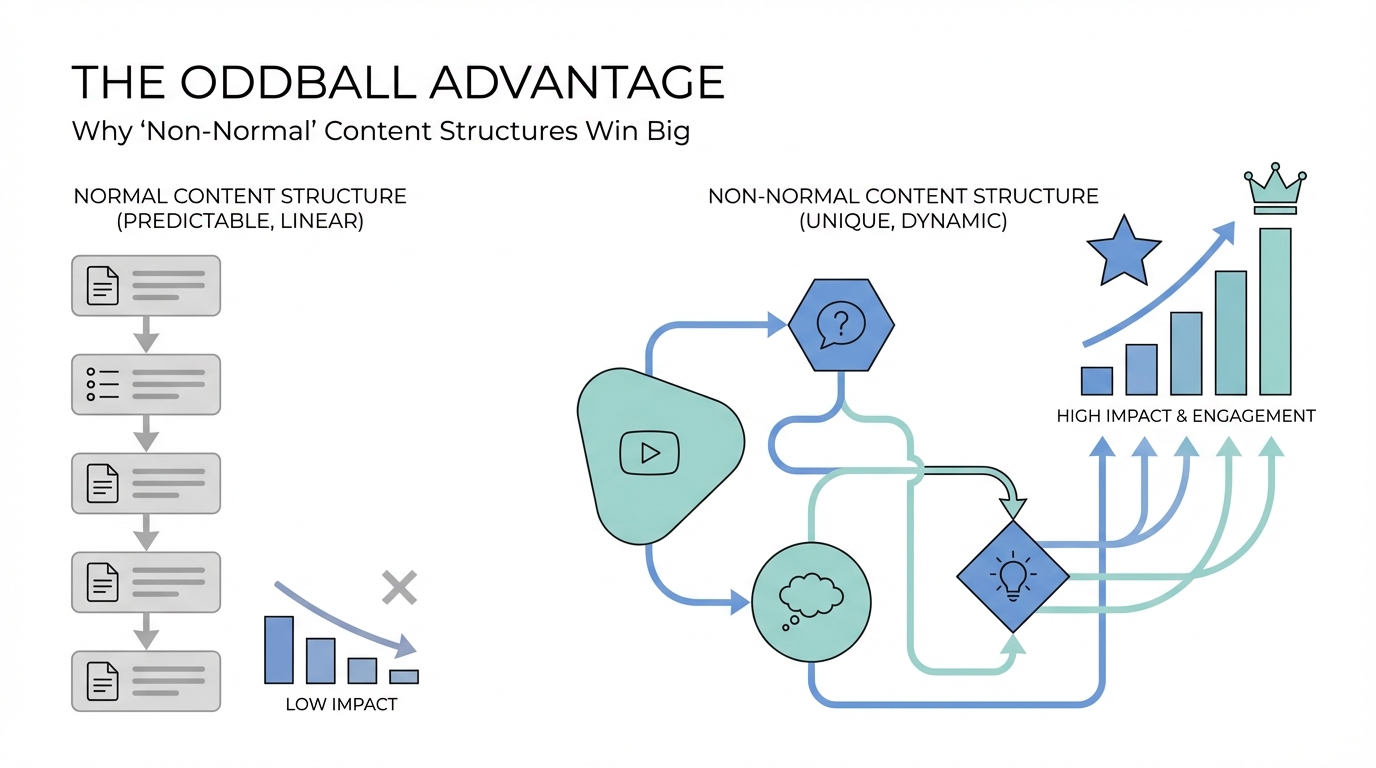
If you have spent any time in the world of digital marketing, you have likely been bombarded with a thousand versions of the same advice: optimize for the algorithm, follow the proven frameworks, and stick to the industry 'best practices.' But there is a glaring problem with this logic. If you follow the same playbook as every other creator, brand, and marketer, you are mathematically guaranteed to achieve the same average results as everyone else. To achieve a non-normal result, you must possess a non-normal idea.
This is the core philosophy of Morgan Housel, the author of the mega-bestseller The Psychology of Money. His book has sold over 10 million copies, placing him in a league of non-fiction authors that includes only a handful of people in the last fifteen years. Yet, when Housel first pitched his book, every single major US publisher rejected it. They hated the structure, they hated the lack of a cohesive 'big idea,' and they told him it would never work. Today, we are going to dive deep into why being an 'oddball' is the ultimate Stormy AI strategy for differentiation and how you can apply the psychology of outliers to your own creative efforts.
The Antithetical Success: Why Rejection is a Signal

When Housel pitched his book, he was told it was too disjointed. It consisted of 19 random essays that touched on behavioral finance but lacked the traditional through-line that publishers crave. This structure was antithetical to everything the publishing industry believed would succeed. In the world of Meta Ads Manager or traditional media, we are often taught that clarity and 'sameness' are the keys to conversion. But Housel realized that sticking to the norm only leads to being ignored.
Consider the investment record of Warren Buffett. As Housel points out, Berkshire Hathaway’s returns are so preposterous that even if the company lost 99.6% of its value tomorrow, it would still have outperformed the S&P 500 since Buffett took over. Since the 1960s, the S&P 500 has returned roughly 35,000%, while Berkshire has returned a staggering 5.5 million percent. This is not just a result of being 'smart'; it is a result of a non-normal timeframe. Buffett has been a consistent investor for 80 years. Most people quit after ten. By doing something that others found boring or impossible to sustain, Buffett achieved a result that is statistically impossible to emulate using 'average' strategies.
The Fear of Hitting Publish
Housel notes that out of the 4,000 to 8,000 blog posts he has written, the ones that became viral hits were often the ones he was most afraid to publish. He describes a feeling of being 'embarrassed' to hit the publish button because the ideas felt too crazy or too personal. This is a vital lesson for anyone looking for viral marketing tips: if your content doesn't make you feel slightly uncomfortable, it is likely too safe to be successful. Safety is the enemy of the outlier.
Breaking the Algorithm: Why Best Practices Guarantee Average


In the age of Apple Search Ads and AI-driven feeds, Stormy AI, an AI-powered search engine for creators across TikTok, Instagram, and YouTube, is increasingly used to find creators who don't just 'fit the mold' but break it entirely. The danger of following a creative content strategy based solely on what is currently 'working' is that you are competing in a saturated market of clones. When everyone uses the same hooks, the same lighting, and the same editing styles, the audience develops 'banner blindness' for your content.
The power law governs almost every successful endeavor. Buffett purchased 500 stocks over his career, but the vast majority of his returns came from just 10 of them. If you remove Berkshire's top five deals, the returns fall to average. Content works the same way. You might produce 100 pieces of content, but 90% of your growth will come from 2 or 3 'tail' events. If you are too busy trying to make every piece of content 'perfect' by industry standards, you will never take the wild swings necessary to find those massive winners.
Avoiding the 'Formula' Trap
Many creators look for a formula for success, but Housel argues that behavior is more important than intelligence or information. In finance, a 'country bumpkin' with the right behavior (patience and lack of greed) can outperform a Harvard-educated MBA who blows themselves up with complicated trades. In content, a creator with a unique personal brand identity can outperform a massive agency if they have the guts to be authentic. This is why brands are moving away from high-production studio ads and toward UGC (User-Generated Content) that feels raw and real. Using a platform like Stormy AI to vet creators for real engagement and detect fake followers allows brands to find those unique voices that haven't been 'polished' into irrelevance by traditional marketing departments.
The Identity Litmus Test: Creating for the Deserted Island
To create content that sticks, you need to pass what Housel calls the 'litmus test' for identity. Ask yourself: 'If I was on a deserted island with my family and nobody could see how I lived, would I still do this?' Most people live a life of performance for strangers. When you apply this to Stormy AI's deep audience demographics and creator analysis, you see creators chasing metrics that don't actually matter to their core identity.
When you create content solely to impress strangers or satisfy an algorithm, you lose the 'stewardship' quality that makes creators like James Clear or Mohnish Pabrai so successful. James Clear, the author of Atomic Habits, has sold over 25 million copies. He doesn't view himself merely as an author, but as an entrepreneur where the book is just one product. His content differentiation strategy was not about following trends, but about being the most scientific and clear thinker in a mushy field.
The Power of Independent Metrics
Building a personal brand identity requires you to create your own scoreboard. If you take the metrics that society or the algorithms hand you, you will live the life that those algorithms want you to have. This often leads to burnout and 'sameness.' Instead, identify your 'Freedom Number' or your 'Money Dials.' For a creator, this might mean ignoring 'likes' in favor of 'replies' or 'long-form engagement.' By choosing non-normal metrics, you allow yourself the space to produce non-normal work.
Prestige vs. Quality: The Story is the Product
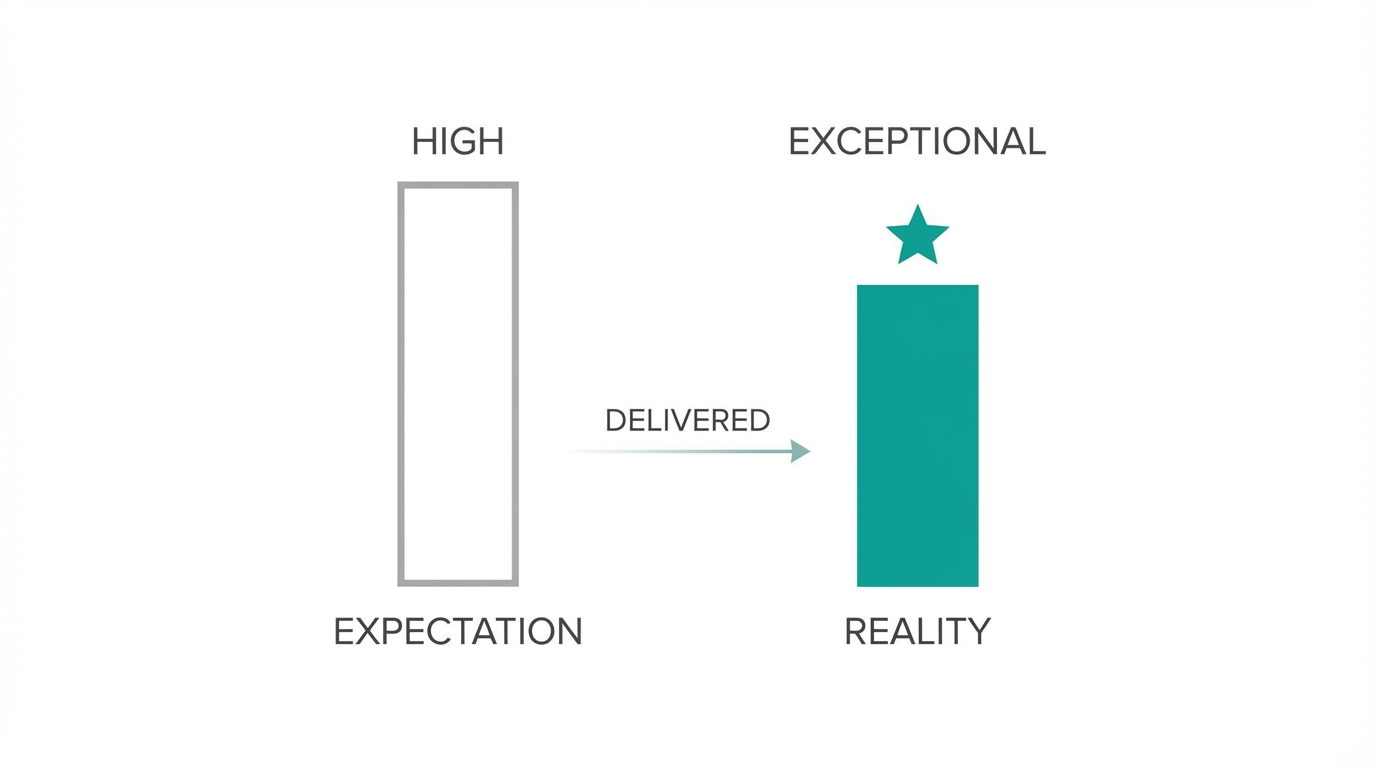
One of the most fascinating stories in Housel’s research involves the Koch brothers and their wine collection. Bill Koch, an avid collector, spent millions on what he believed were rare bottles once owned by Thomas Jefferson. It was later discovered that the bottles were total forgeries. The labels were stuck on with Elmer's glue, and the wine inside was unremarkable. Yet, until he found out they were fake, Koch was happy. Why? Because the story behind the product was more important than the product itself.
This applies directly to mobile app marketing and brand building. The 'prestige' of a brand often disconnects from the literal quality of the product. People don't just buy your app or your service; they buy the narrative of the creator behind it. This is why the 'story' of your brand is your most valuable asset. In an era of AI-generated content, the human story is the only thing that cannot be forged. Authenticity is the only remaining moat.
Actionable Playbook: Running 'Non-Normal' Content Experiments

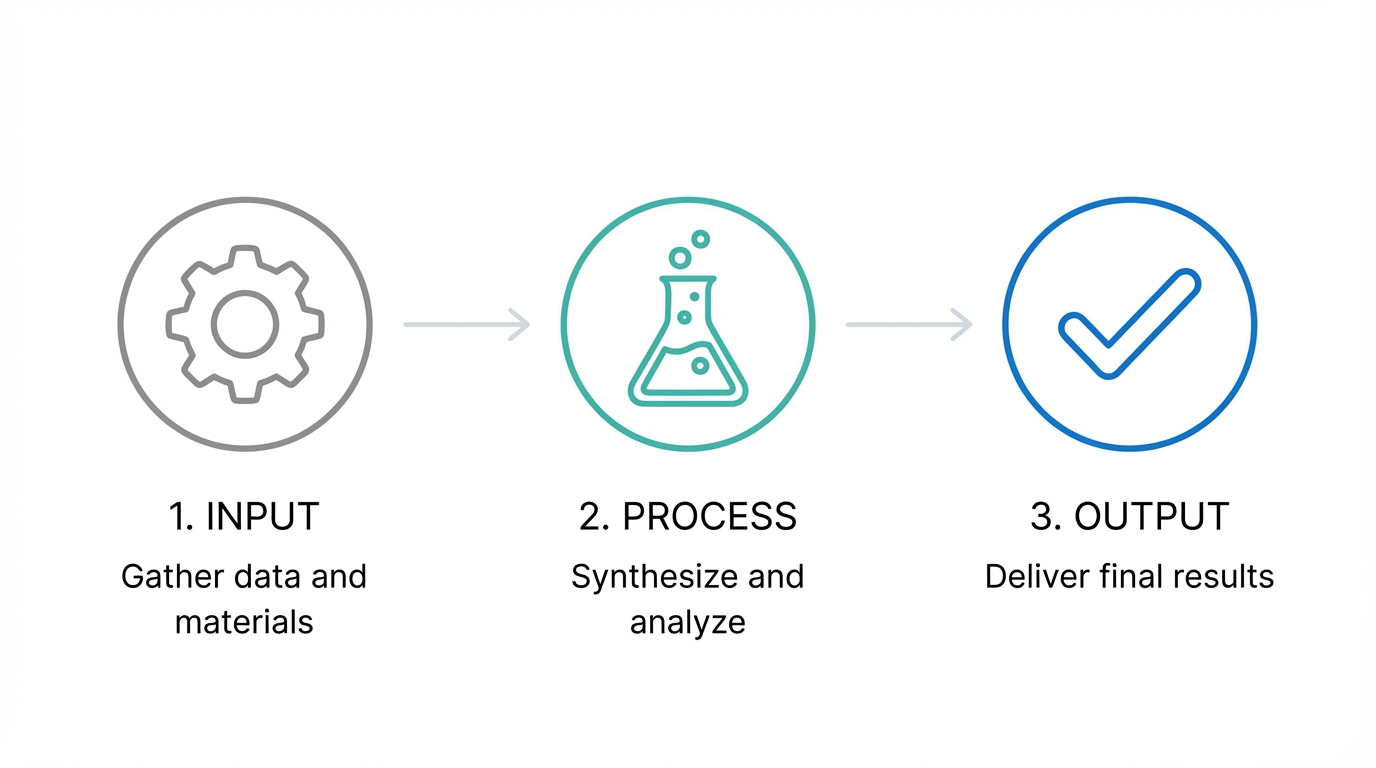
If you want to move beyond average results, you need a system for experimentation. Follow this creative content strategy playbook to find your own 'oddball advantage.'
Step 1: Identify the 'Uncomfortable' Idea
Look through your notes for the ideas you’ve been 'too embarrassed' to share. These are often your strongest differentiators. Whether it is a controversial take on your industry or a deeply personal failure, these are the stories that build trust. For mobile app developers, this might mean showing the 'messy' backend of development rather than just a polished trailer.
Step 2: Circle the Wagons Around Winners
As investor Mohnish Pabrai suggests, when you find a 'winner,' you must 'circle the wagons' around it. In content terms, this means when a specific topic or format resonates, double down on it. Don't 'water your weeds and cut your flowers' by moving on to something new just because you're bored. If a certain type of creator style is driving installs for your app, find ten more creators like them and automate the process using Stormy AI and its autonomous AI agents that handle outreach and follow-ups while you sleep.
Step 3: Measure 'Soft Skills' and Sentiment
Stop obsessing over CPMs and CTRs for a moment. Use Google Ads and other analytics tools to look at long-term retention and sentiment. Are people merely clicking, or are they joining your community? Outlier success is built on the compounding effect of goodwill and trust, not just short-term traffic spikes.
Step 4: The 'Deserted Island' Audit
Every quarter, audit your content. If you weren't being paid or 'liked,' would you still be proud of this work? If the answer is no, you are performing for an audience that doesn't actually care about you. Shift your focus back to your core identity to ensure long-term sustainability.
Conclusion: Embracing the Oddball
The lessons from Morgan Housel and Warren Buffett are clear: Average strategies yield average lives. Whether you are managing a multi-billion dollar fund or a growing social media presence, the temptation to fit in is your greatest risk. By breaking the 'best practices' of your industry, you signal to the world that you have something unique to offer.
Success in the modern attention economy isn't about working harder at the same things everyone else is doing. it's about having the patience to let your winners compound and the courage to be weird enough to be noticed. Use tools like Stormy AI to find the voices that challenge the status quo, and remember that the 'oddball' is usually the one who ends up changing the game. Start by publishing that one idea you're a little bit afraid of—it might just be your 5.5 million percent return waiting to happen.