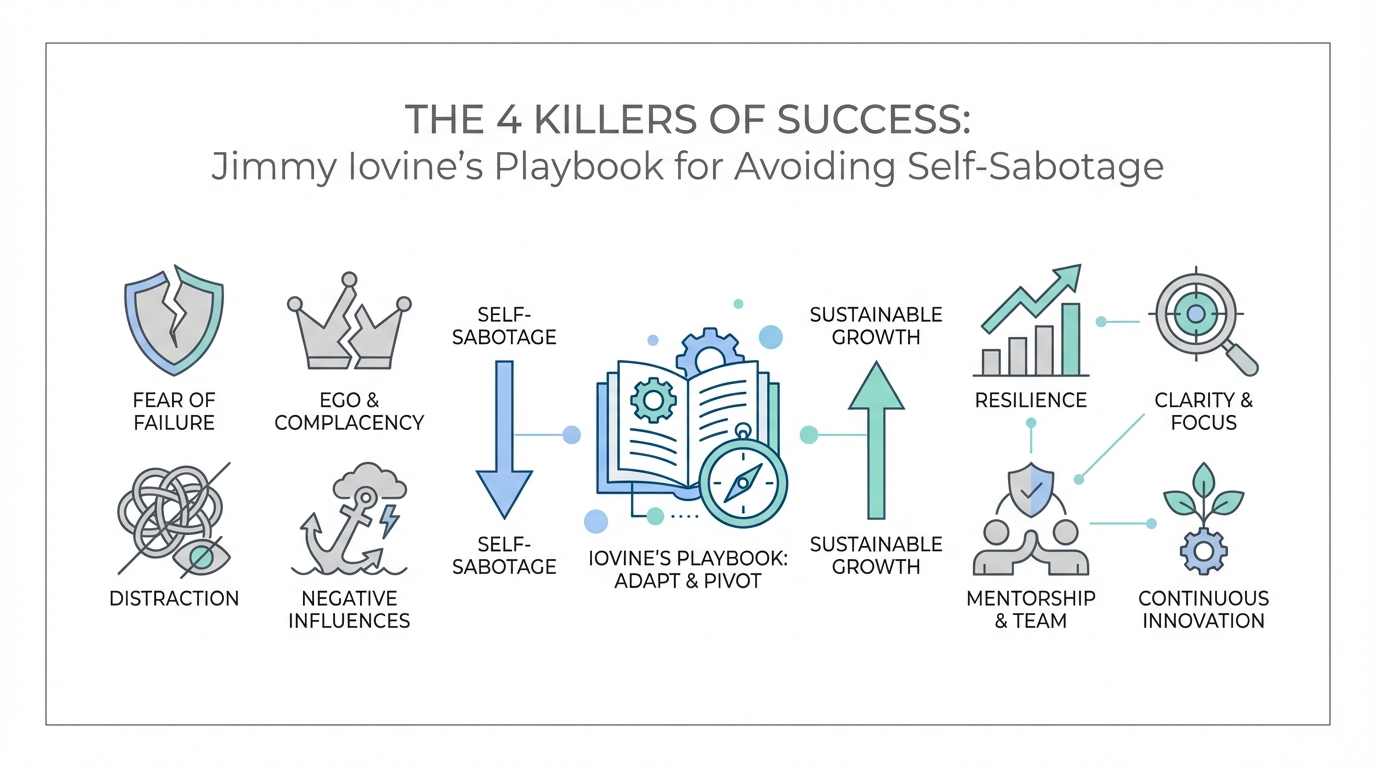
Success is a paradox. For most high-performers, the climb to the top is fueled by a specific kind of delusional self-confidence—the kind that allows a 19-year-old with $1,000 in a dorm room to believe they can compete with a hundred-billion-dollar giant like Apple or IBM. But once that peak is reached, the very traits that got you there can quickly turn into weapons of self-destruction. As Jimmy Iovine, the legendary co-founder of Interscope Records and Beats Electronics, often points out, most talented people aren’t taken out by their competitors; they are taken out by themselves. This is the core of the entrepreneurial mindset: realizing that your greatest adversary is rarely the person across the table, but the person in the mirror.
The Internal Adversary: Why Entrepreneurs Fail at the Peak
In the world of high-stakes business and creative output, the difference between being "pretty good" and being the best in the world is not a 20% margin. It is often a 1,000x difference. To reach that level, obsession is a prerequisite. However, obsession is a double-edged sword. David Senra, host of the Founders Podcast, has spent a decade studying over 400 of history’s greatest entrepreneurs, and the recurring theme is clear: success is fragile. When you are on the rise, you are sensitive to every mistake. When you arrive, you often become blind to them. This lack of sensitivity is one of the primary leadership pitfalls that leads to the downfall of otherwise brilliant founders. They stop practicing in private the skills that the public praises them for in the light. They go to sleep on a win and wake up with a loss.
Understanding why entrepreneurs fail requires a deep dive into the psychological shifts that occur when external validation begins to outweigh internal standards. Many high-performers, like Michael Dell or Kobe Bryant, maintained a level of intensity that many would call "crazy." But as Senra notes, mediocrity is invisible until passion shows up and exposes it. To avoid the trap of becoming casual about your work, you must adopt a playbook for constant refinement. This is particularly true in modern mobile app marketing and competitive digital spaces, where staying relevant requires the same day-one intensity that launched the company. Platforms like Stormy AI, an AI-powered platform for creator discovery, emphasize this need for authenticity, especially when brands are looking for UGC creators who haven't lost their edge to the comforts of success.
The 4 Killers: Jimmy Iovine’s Success Advice

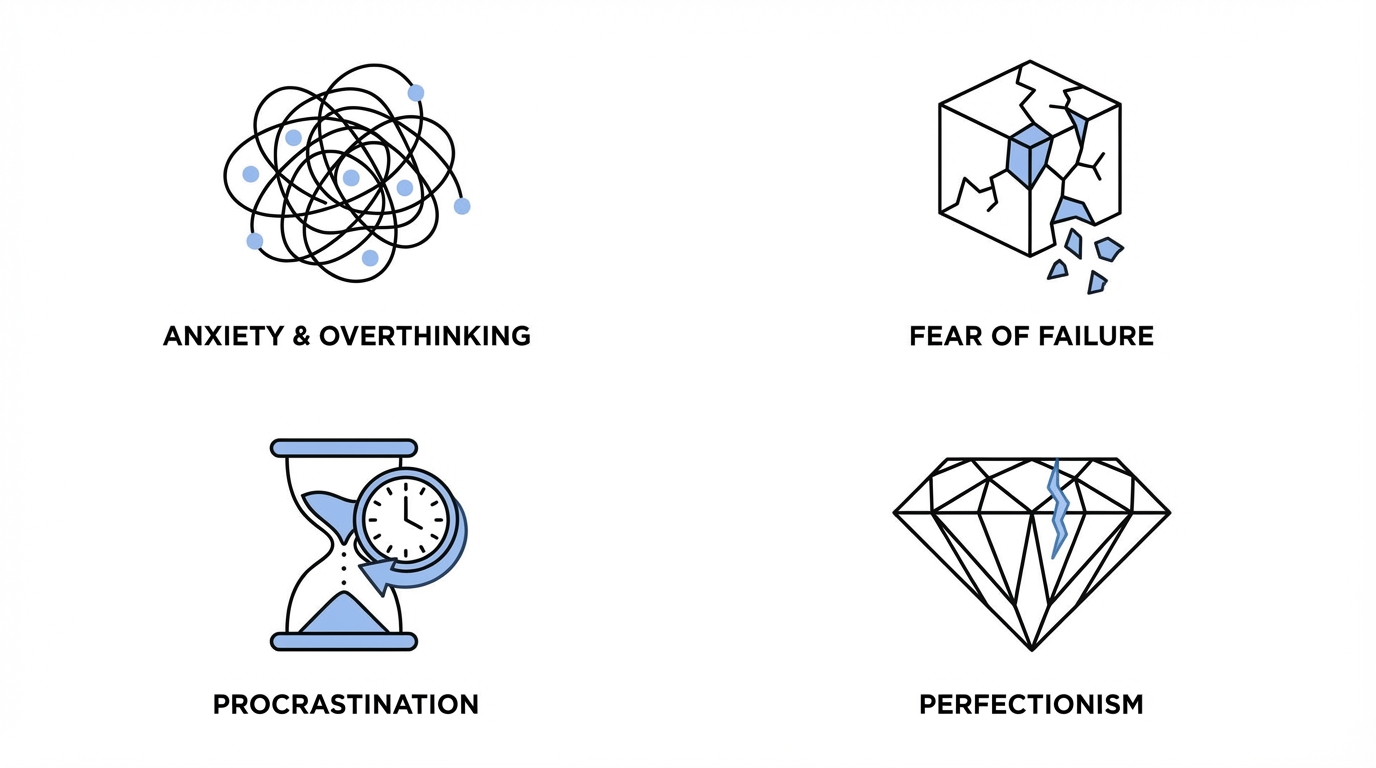
Jimmy Iovine has spent over 50 years in the room with geniuses—from Bruce Springsteen to Dr. Dre. In his Jimmy Iovine success advice, he identifies four specific "killers" that systematically destroy talented people once they achieve a modicum of success. These are not external market forces; they are internal erosions of character and discipline. The first two are common but no less deadly: drugs and alcohol. Addiction has the power to flatten the most vertical careers, turning a visionary into a ghost of their former self. Felix Dennis, the billionaire publisher behind Maxim, famously admitted in his book How to Get Rich [source], that he spent over $100 million on cocaine and high-living, a path that almost certainly shortened his life and clouded his potential for decades.
The third killer Iovine identifies is high-risk personal relationships. This is often overlooked in traditional business advice, but the people you let into your inner circle—especially romantic partners—dictate your emotional bandwidth. Iovine notes that many men and women attract the "wrong kind" of partners once they become wealthy, allowing people who do not share their values or work ethic to distract them from their mission. For founders, mental health for founders is inextricably linked to the stability of their home life. If your partner is "calling the shots" in a way that creates friction with your professional goals, you are effectively self-sabotaging. This is why a constant refinement of association is critical; you want high-quality people in every domain of your life, from your board of directors to your personal friends.
Megalomania: The Final Boss of Success
The fourth and most dangerous killer is megalomania. This is the moment you start to believe that success happened because of who you are rather than the work you put in. You begin to see yourself as a god, someone whose every touch turns to gold, and you stop practicing the fundamentals. You become disassociated from reality. You stop listening. This is a common theme in Stormy AI vetting reports and historical biographies: the founder who thinks they no longer need to test their assumptions is the founder who is about to be disrupted. In the context of app marketing campaigns, this often manifests as a brand believing their name alone will drive installs, ignoring the data-driven reality that Stormy AI for finding and analyzing UGC creators to tell authentic, relatable stories is what actually moves the needle in 2025.
Megalomania leads to a catastrophic loss of the "Inner Scorecard." Warren Buffett and Ed Thorp both championed the idea of the Inner Scorecard—living by a set of standards that you define for yourself, regardless of what the world thinks. A megalomaniac trades their Inner Scorecard for an external one, chasing praise and market caps while their internal foundation rots. They focus on being the "fastest company to a billion-dollar valuation" rather than building something they are genuinely proud of. As Senra explains, the most successful people are those who, like Todd Graves of Raising Cane’s, are obsessed with their "chicken finger dream" for 30 years without ever feeling the need to change the menu for the sake of external trends. They are motivated by an entrepreneurial mindset of craftsmanship, not just conquest.
The Inner Scorecard: Maintaining Your Mental Health

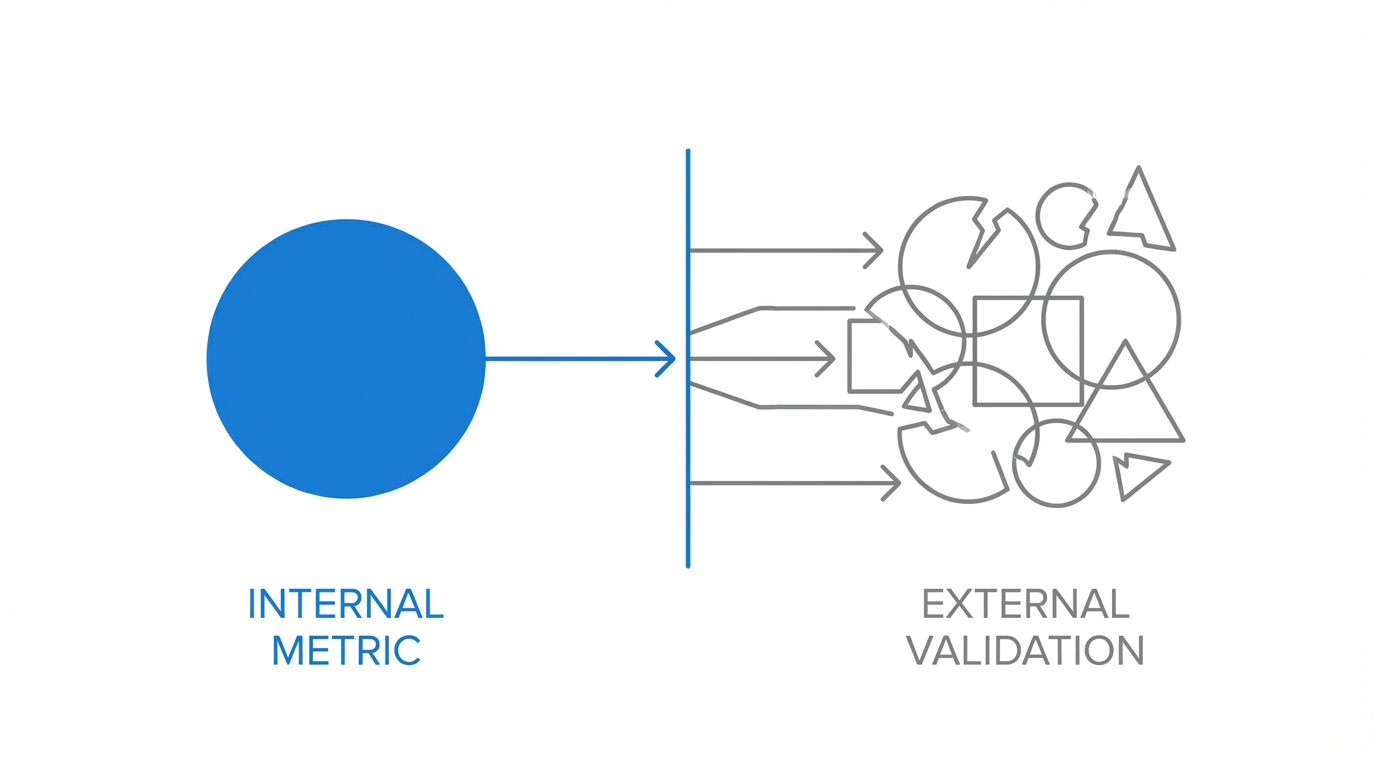
Maintaining mental health for founders requires a rigorous defense of one's internal reality. When the public starts to praise you, it is easy to become addicted to that validation. However, as the Inner Game of Tennis philosophy suggests, the mind is often split between "Self 1" (the critic) and "Self 2" (the doer). Self 1 is obsessed with the outcome and the praise; Self 2 is the one that actually hits the ball. High-performers who survive the peak learn to silence Self 1 and trust the body’s intuition and the constant refinement of association. They don’t overthink the shot; they just shoot. This is the "calmness" that Kobe Bryant observed in Steph Curry—a belief in the practice done in private that makes the public execution feel like a formality.
To keep the ego in check, one must be ruthlessly honest about the lies they tell themselves. For many, the lie is "I don’t need anyone else." This defense mechanism, often born from a tumultuous childhood or a need to prove oneself, can lead to isolation. Bruce Springsteen’s autobiography, Born to Run, details how he had to seek therapy to break the cycle of self-sabotage in his relationships. He realized that while his "revenge for being born" drove his work ethic, it was destroying his ability to have a full life. For a founder, this might mean admitting that while you have the vision, you need a platform like Meta Ads Manager or Apple Search Ads and a team of experts to scale that vision effectively. You cannot do it alone, and believing you can is the first step toward megalomania.
Playbook: The Brad Jacobs Method for Reframing
Brad Jacobs, a serial entrepreneur who has built five multi-billion dollar companies, offers a practical playbook for managing the leadership pitfalls of negative self-talk. Earlier in his career, Jacobs used negative reinforcement and self-criticism as a tool for drive. But he eventually realized that beating himself up made him less effective, not more. Here is the step-by-step method for reframing negative thoughts into effective leadership tools:
Step 1: Identify the Thought
Catch the negative inner monologue in real-time. Whether it’s "this campaign is failing" or "I’m not good enough," the first step is awareness. Use tools like Google Ads analytics to separate emotional feelings from hard data. If the numbers are down, it’s a problem to solve, not a reflection of your worth.
Step 2: Reframe for Action
Instead of saying "this is a disaster," ask "what is the data telling me to change?" Jacobs realized that negative energy creates friction, whereas objective reframing creates momentum. This is the difference between a megalomaniac who blames their team and a leader who iterates on the process.
Step 3: Test and Iterate
Apply the new perspective immediately. If a marketing strategy isn't working, don't double down out of ego. Change the behavior. As Senra notes, learning is not memorizing information; it is changing your behavior. If you are still doing the same thing that failed yesterday, you haven't learned anything.
Curating Your Board of Advisors

One of the most powerful ways to combat self-sabotage is to curate a "Board of Advisors"—a group of people, living or dead, whose wisdom you consult daily. This is not about a formal board meeting; it is about having a mental database of how the world’s best would handle your current struggle. For those looking to scale their impact, especially in creative fields like UGC for mobile app marketing, your board should include people who prioritize differentiation. As Edwin Land, the founder of Polaroid, famously said: "Don’t do anything someone else can do."
A typical high-performance board might include:
- John D. Rockefeller: For his discipline and ability to build an unshakeable foundation.
- Charlie Munger: For his mental models and insistence on being "consistently not stupid" [source: Daily Journal].
- Edwin Land: For his commitment to differentiation and his motto that anything worth doing is worth doing to excess.
- Steve Jobs: For his focus on the soul of the product and his ability to pattern his success after his heroes.
- Daniel Ek: For his modern perspective on optimizing for impact over happiness. Spotify succeeded because Ek was willing to change his behavior based on new information, such as the pivot to video and podcasts.
Conclusion: Protecting the Creative Spark

The journey of an entrepreneur is one of constant evolution. Whether you are finding UGC creators for mobile app ads or managing a global conglomerate, the risks remain the same. The four killers—drugs, alcohol, toxic relationships, and megalomania—are always waiting at the gate. To survive them, you must protect your curiosity and your willingness to be different. Don’t let the world’s definition of success replace your own. Stay obsessed, stay grounded, and never forget that the work is the reward. If you find yourself drifting toward the traps Iovine describes, it may be time to use tools like Stormy AI to reconnect with authentic voices and refocus on the impact you want to have. Success isn't just about reaching the top; it's about having the character to stay there.