In 2026, the gap between what a CEO thinks is happening in their company and what a customer actually experiences has reached a breaking point. As businesses scale and dashboards become more sophisticated, leadership often drifts into a "spreadsheet-induced blindness," where data points replace human reality. To combat this, elite organizations are returning to a foundational practice: the customer experience audit 2026 edition. This isn't just about reviewing support tickets; it’s about performing a manual "Mystery Shop" of your own brand to uncover the friction points that automated reports are designed to hide. By looking at market trends on Sensor Tower, it is clear that the companies winning the decade are those that prioritize ground-floor truth over filtered analytics.
The CEO Reality Gap: Why Scaling Often Means Losing Touch
 11:52
11:52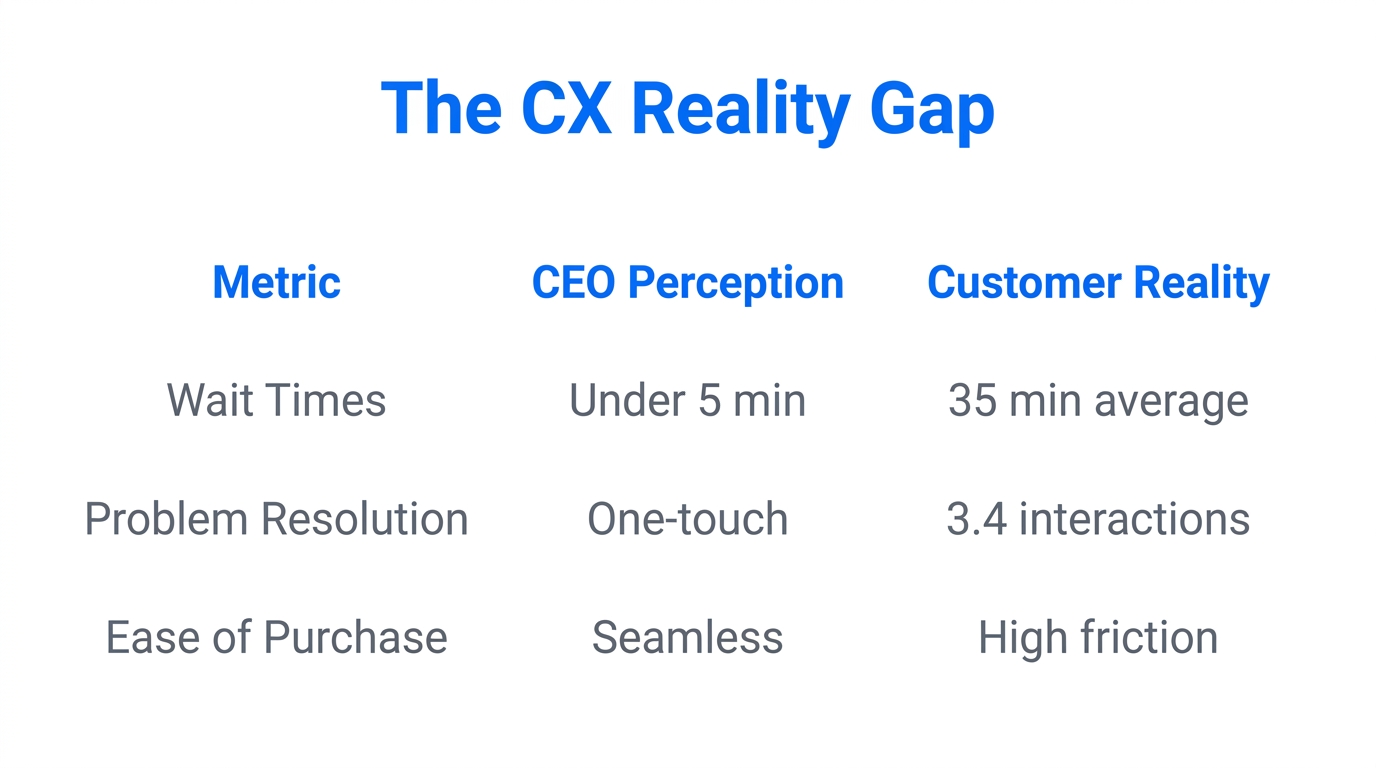
As a company grows from 4 to 40,000 employees, the distance between the executive suite and the factory floor—or the digital checkout line—expands exponentially. When Jon McNeill joined Tesla as President, he inherited a massive challenge: a promise to sell 12,000 cars in a quarter with only a handful of sales actually closed halfway through. The data suggested a "demand problem," but McNeill’s first move wasn't to look at a legacy CRM dashboard. Instead, he conducted a mystery shop. He visited eight different stores, test-drove cars under different email addresses, and realized the problem wasn't demand—it was execution. Despite the test drive being the "fulcrum of the sales funnel," he didn't receive a single follow-up call.
This disconnect happens because senior leadership often stops using the products they build. They rely on high-level reports from tools like Meta Ads Manager to judge performance, forgetting that a 2% conversion rate means 98% of people felt enough friction to leave. To perform a true audit, you must use your product in high-friction environments—the same way a bank executive should try to use their own consumer app while standing in a busy grocery line. If you can’t live for another day with how terrible the experience is, you finally have the leverage needed to fix it. Most brands fail because they optimize for the 'average' user while ignoring the 'struggling' user.
"Mystery shopping is the ultimate antidote to the spreadsheet-induced blindness that plagues modern leadership. If you aren't feeling the friction, you aren't leading the solution."
The 'Two Eyes, Two Ears' Principle: Manual Observation vs. Data
17:33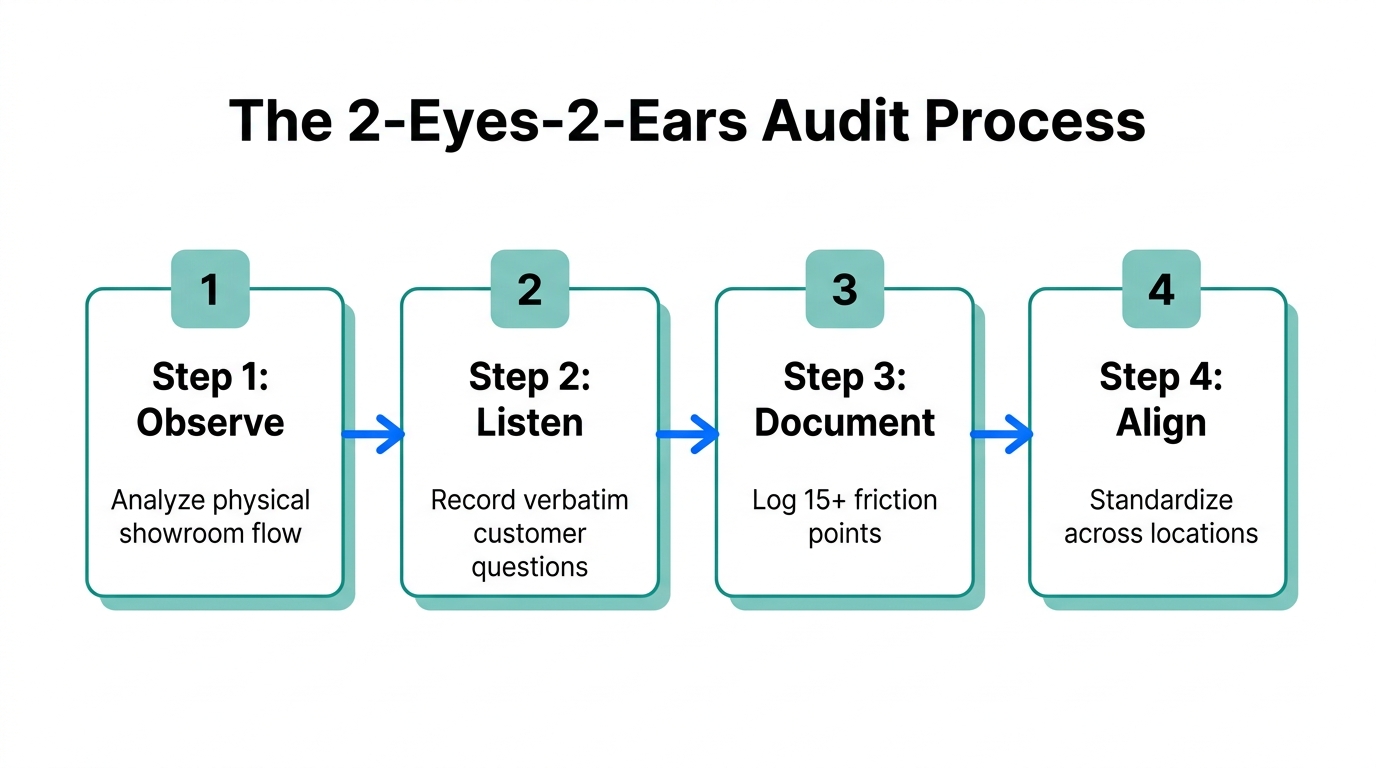
Data tells you what is happening; observation tells you why. McNeill often cites the "Two Eyes, Two Ears" principle—the idea that manual observation provides faster, more actionable insights than any analytics stack. At the Tesla factory, when Model X production was stalled due to doors not fitting correctly, the solution didn't come from a computer model. It came from standing on the factory floor and watching the technicians for an hour. After just ten minutes of manual observation, it became obvious: the technicians were threading bolts blind. They couldn't see the angle, leading to crooked doors. They didn't need more data; they needed a physical jig to guide the bolt.
This principle applies equally to digital brands. You can spend thousands on Google Ads to drive traffic, but if you don't watch a real person struggle to navigate your Shopify store, you'll never see the "blind bolts" in your UI. For teams looking to scale, platforms like Stormy AI allow you to discover and vet creators who can provide authentic UGC, which often serves as a proxy for how real people interact with your product in the wild. Watching a creator try to explain your product's value proposition on TikTok can be more revealing than any heat map.
Fixing the 'Hair Salon' Problem: From Silos to Assembly Lines
45:31In many service-heavy industries, workflows are structured like a "hair salon." In a salon, a technician (or stylist) owns a specific station and manages their own flow. While this feels personalized, it is incredibly inefficient for scaling. In the collision repair business, McNeill noticed that technicians were cherry-picking hours from multiple cars at once, causing a car that required only 6 hours of "touch time" to sit in the shop for 18 days of "cycle time." The solution was to transition from the siloed hair salon model to an assembly-line efficiency model where the team is incentivized by throughput, not individual billable hours.
This Tesla customer service framework of radical efficiency can be applied to any brand building strategy. If your customer support or marketing outreach is siloed, you create bottlenecks. For example, if you are managing influencer relationships manually through spreadsheets, you are in the "hair salon" phase. By moving to an automated Creator CRM, you transform your outreach into an assembly line where AI handles the personalized follow-ups, allowing your team to focus on high-level strategy.
| Metric | The "Hair Salon" Model | The Assembly Line Model (Tesla Style) |
|---|---|---|
| Focus | Individual Technician Output | Total System Throughput |
| Incentive | Billable Hours/Commission | Cycle Time & Quality Bonus |
| Structure | Siloed stations | Continuous Flow / Jigs |
| Outcome | High latency (18 days) | Rapid delivery (1-2 days) |
The 1-800-Flowers Effect: Anticipating Second-Order Labor Shifts
51:14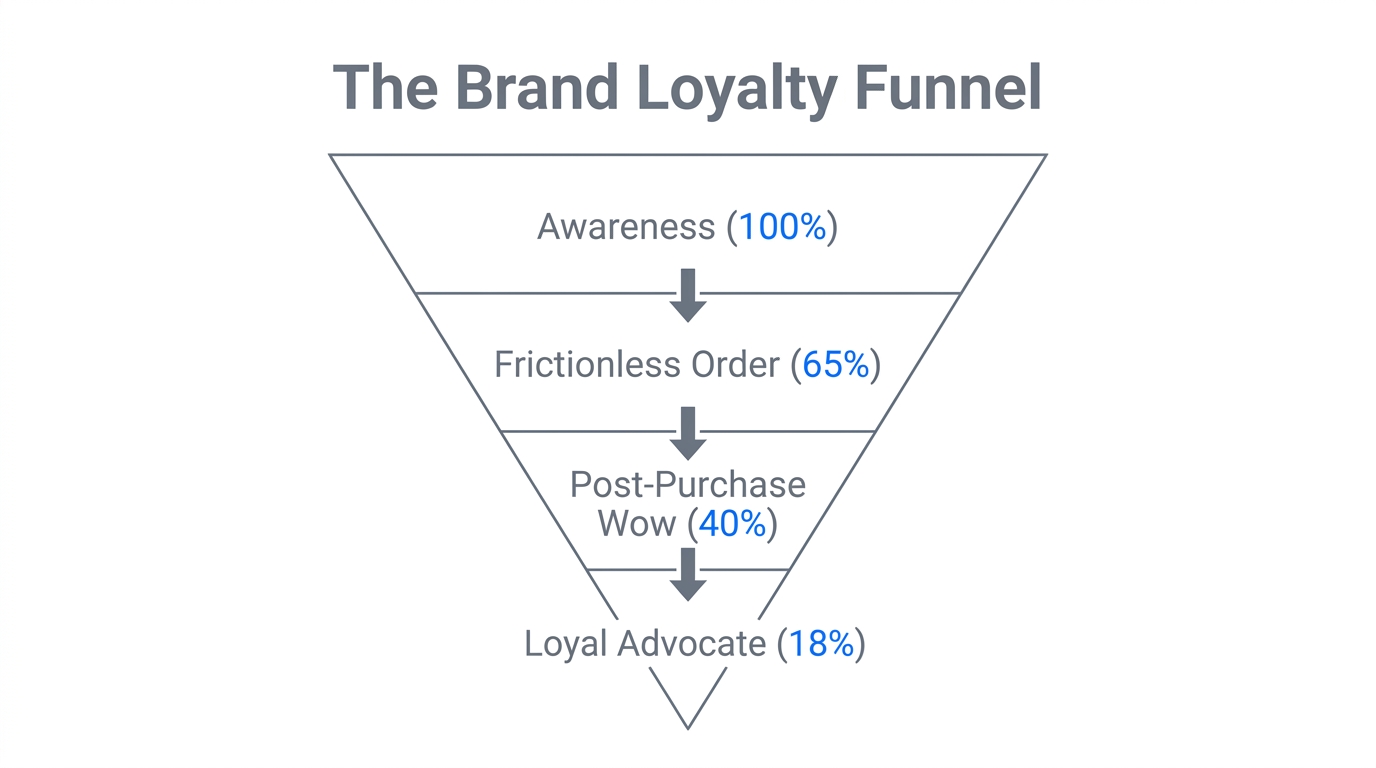
As we navigate the AI revolution in 2026, many fear that technology will simply destroy jobs. However, history suggests a different outcome—the "1-800-Flowers Second-Order Effect." When Bell Labs invented the electronic switch, it eliminated the need for human telephone operators. But that efficiency made long-distance calls free, which enabled entrepreneurs to create toll-free 1-800-Flowers numbers. This, in turn, created the multi-billion dollar call center industry, employing millions. The technology destroyed one job but created a much larger layer of labor on the other side.
Today, AI tools like ChatGPT and Claude are acting as the new "electronic switches." They are automating the rote tasks of coding, writing, and basic analysis. The second-order effect will be a massive surge in demand for "AI Mechanics"—people who can orchestrate these agents to solve complex problems. For brands, this means your next customer service hire won't be someone who answers emails; it will be someone who manages an automated outreach stack or an AI agent that handles discovery and follow-ups while the team sleeps. The winner isn't the one with the most AI, but the one who builds the best human-centric workflows around it.
"Every technical revolution in history has resulted in more GDP and more jobs. We just lack the creativity to see the second-order effect before it arrives."
Building a Culture of 'Epiphanies'
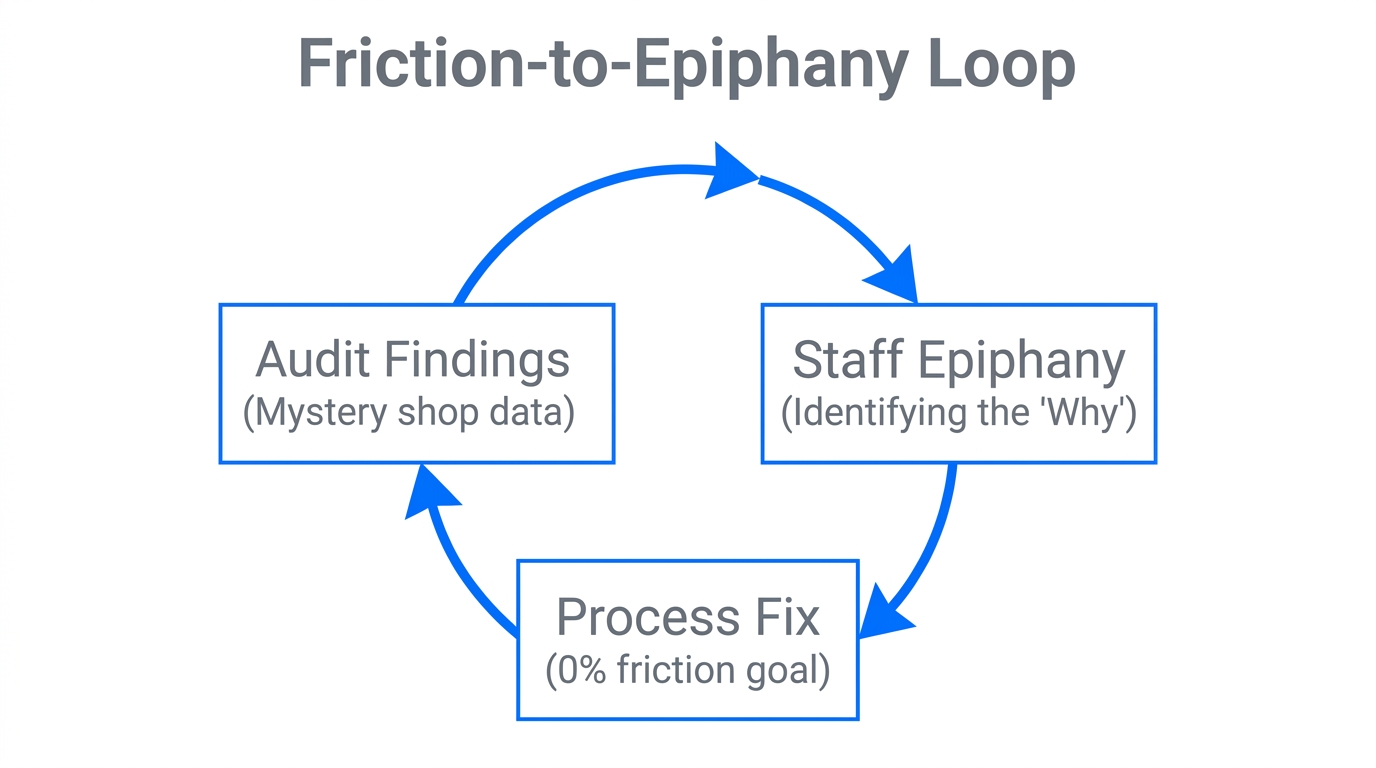
The ultimate goal of a mystery shopping for business growth strategy is to trigger an "epiphany." An epiphany is that sudden, jarring realization that your current business model is actually the primary obstacle to your success. Tesla had this when they realized their "religion" of custom-build-to-order cars was creating 360,000 combinations and 64 clicks to buy a car. By comparing themselves to a Domino’s Pizza app (which took only 10 taps), they had an epiphany: simplicity is the ultimate driver of digital sales. They slashed their configurations to just a few, simplified the factory, and 20x'ed their online growth.
To build this culture, you must force senior leadership to use the product in high-friction environments. Use the "Follow Me Home" technique pioneered by Intuit—literally watching customers use your software in their own living rooms or offices. If you are running an e-commerce brand, try to complete a purchase on your site using only a spotty 3G connection while walking down the street. Use tools like Canva to visualize these friction points and present them to your team. Epiphanies cannot be scheduled; they must be hunted.
The 2026 Customer Experience Playbook
Scaling brand loyalty in 2026 requires a return to first principles. You cannot automate empathy, and you cannot outsource the "Two Eyes, Two Ears" principle to an AI model. By performing a rigorous customer experience audit 2026, you bridge the reality gap, identify your "hair salon" bottlenecks, and prepare for the second-order effects of AI.
Whether you are managing a global auto manufacturer or a growing startup, the steps remain the same: mystery shop your own brand, watch your customers struggle, and don't be afraid to chuck your "religion" if it's getting in the way of a 10-tap experience. Start by auditing your current outreach and creator management on Stormy AI to ensure your growth engine is built for the assembly line, not the hair salon. The future belongs to the entrepreneurs who are willing to look into the abyss, chew glass, and fix the blind bolts before they become broken relationships.