The SaaS marketing landscape has undergone a tectonic shift. The era of generic brand awareness is fading, replaced by a ruthless focus on performance-driven growth. As we head into 2026, the global influencer marketing market is projected to reach $34.1 billion, and perhaps more importantly, 86% of B2B marketers are now integrating creators into their core media strategy. But for technical products—DevOps tools, CRM suites, and API-first platforms—the old rules of celebrity endorsements don't apply. Developers and technical decision-makers don't care about follower counts; they care about proof of work.
The B2B Trust Gap: Why Traditional Ads Are Failing
There is a growing "Trust Gap" in the enterprise software world. According to data from The Insight Collective, 75% of B2B buyers trust brands more when they are affiliated with industry experts rather than traditional ads. High-intent buyers are no longer swayed by polished corporate videos; they want to see the software in the hands of someone who actually understands the stack. This is why technical influencer marketing has become the primary lever for SaaS customer acquisition.
Jason Lemkin, founder of SaaStr, suggests that for SaaS, influence is built through consistent presence. It isn't a one-off shoutout; it's about becoming a staple in the practitioner's workflow. This is echoed by Chris Walker of Refine Labs, who advocates for "Dark Social" influence—where real CMOs and CTOs discuss products in gated Slack communities and private podcasts that traditional attribution often misses.
"The best B2B influencers are practitioners who actually use the tools they talk about in high-stakes environments."
Micro-Influencers vs. Celebrities: The Power of 10k-50k
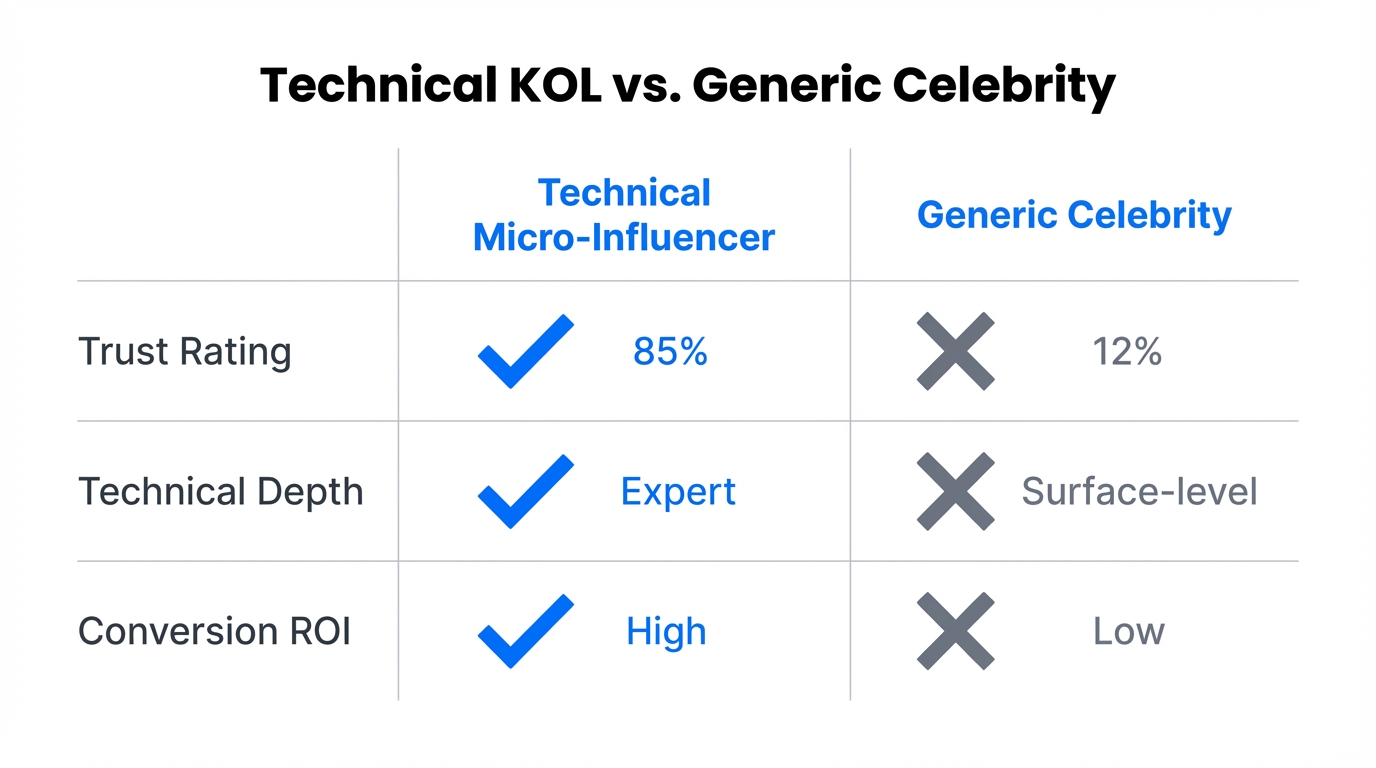
In the world of B2B Key Opinion Leaders (KOLs), bigger is rarely better. Data shows that creators with 10k–50k followers see 6.15% engagement rates, compared to just 1.2% for mega-influencers. For a SaaS company, 10,000 highly engaged Python developers are infinitely more valuable than a million general consumers. These micro-influencers occupy a sweet spot of high authority and niche relevance.
| Metric | Micro-Influencers (10k-50k) | Mega-Influencers (1M+) |
|---|---|---|
| Engagement Rate | 6.15% | 1.2% |
| Audience Trust | High (Practitioner-led) | Low (Aspirational) |
| Cost per Conversion | Lower | Higher |
| Technical Depth | Niche Expertise | Generalist |
When you partner with a micro-influencer, you aren't just buying reach; you are buying their hard-earned credibility. Content from personal profiles (whether through employee advocacy or influencers) generates 5–10x more reach than company page posts. This is why brands like Notion have pivoted toward building decentralized communities of power users rather than relying solely on top-down marketing.
Technical Discovery: Finding the Needle in the Haystack
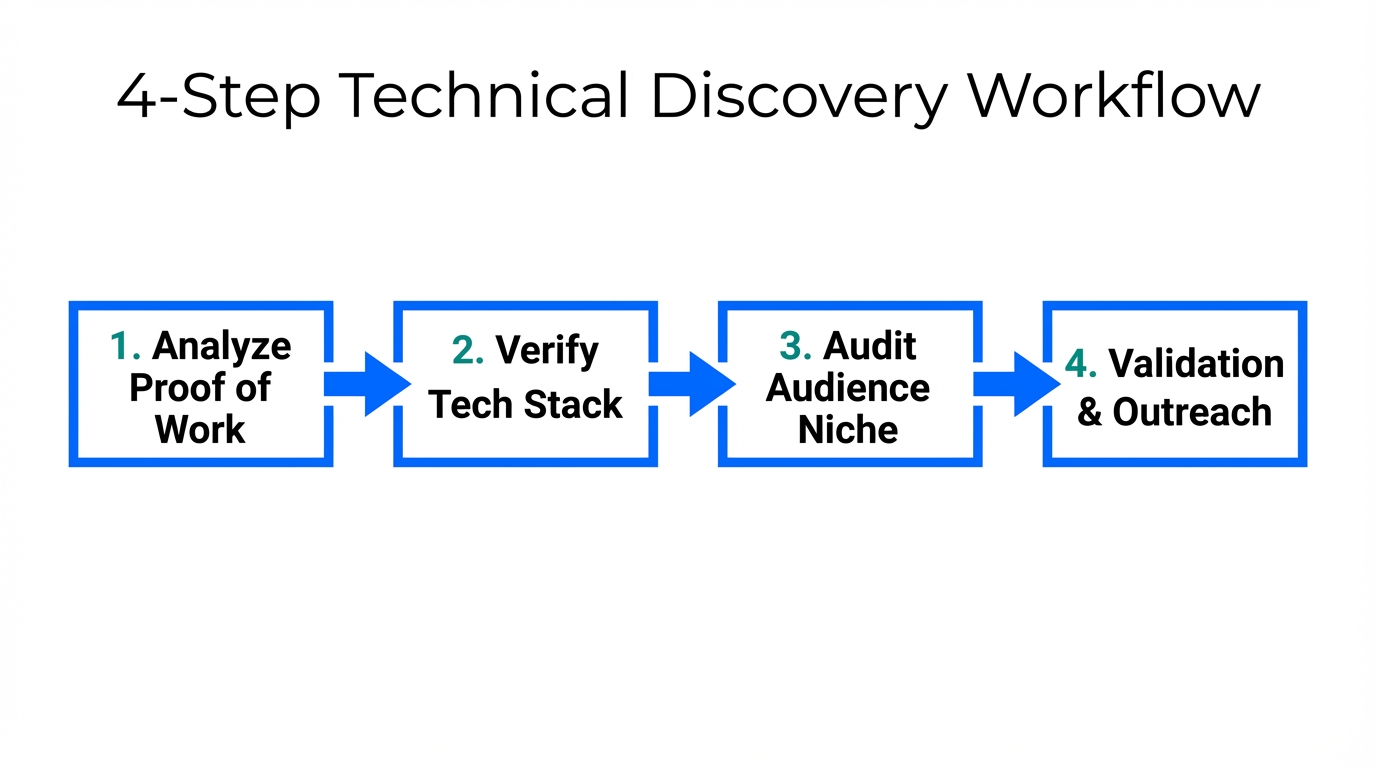
Finding a creator who can explain an API or a DevOps workflow requires more than a simple keyword search. You need to leverage AI-powered creator discovery platforms like Stormy AI that can scan millions of profiles to find specific technical skills like Python, SEO, or cloud architecture. Modern discovery tools allow you to bypass "opt-in" networks and search the entire social web, ensuring you find authentic practitioners who might not even consider themselves "influencers."
Once you've identified potential partners, the focus must shift to vetting. With high Customer Acquisition Costs (CAC) in the SaaS world, you cannot afford to waste budget on accounts with inflated numbers. Running a 35-point AI audit on audience authenticity is critical. This process helps identify bot-inflated followers and engagement fraud, ensuring that every dollar spent reaches a real human decision-maker.
"SaaS brands earn an average of $5.78 for every $1 spent on influencer marketing, but that ROI only exists if you filter out the noise."
The Shift to Product-Led Education
The days of high-production, overly scripted webinars are over. We are currently witnessing an "Informal Content Revolution." Conversational, "lo-fi" content—raw screencasts, home-office tutorials, and "build in public" updates—drives higher conversion rates by humanizing complex software. This trend, often called Product-Led Education, focuses on utility over aesthetics.
- Show, Don't Tell: Instead of a 30-second ad, ask an influencer to create a 3-minute raw screen-recording of them solving a real problem with your tool.
- Real-World Workflows: Lean into community-driven trends like #NotionFaces or #MondayComWorkflows on X (Twitter) to prove that your software has immediate utility.
- Whitelisting: Use the LinkedIn Campaign Manager to "boost" an influencer’s organic post. This allows you to scale their trust using your corporate ad budget, making it look like a peer recommendation rather than a brand ad.
Mastering the Technical Brief: Creative Freedom vs. Accuracy
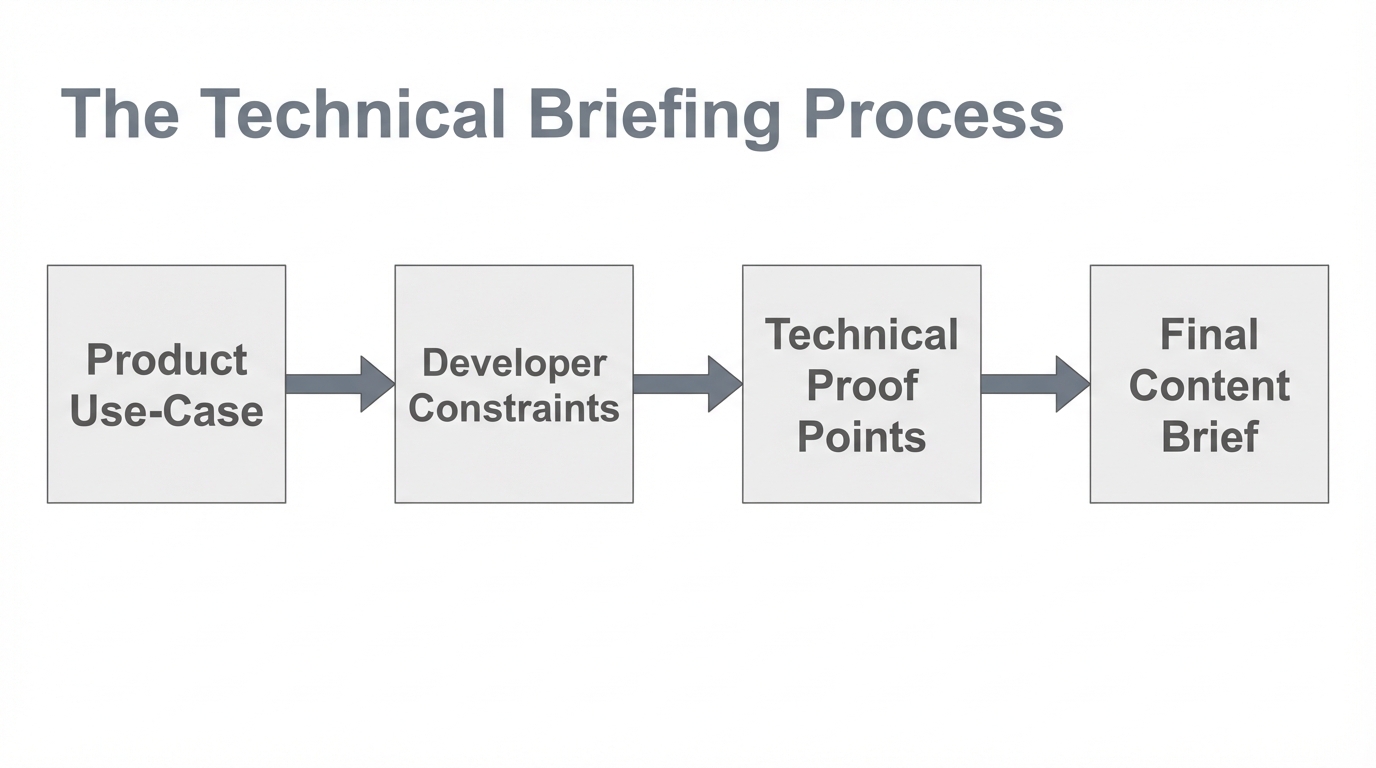
One of the biggest mistakes SaaS brands make is over-scripting their influencers. If you give a technical KOL a word-for-word script, their audience will immediately sniff out the lack of authenticity. Data from Talent Resources shows that 65% of creators prefer to be involved in the creative brief early on.
To get the best results, use this three-step framework:
- Define the "Job to be Done": Instead of listing features, explain the specific pain point the influencer should solve (e.g., "Show how to automate lead routing in under 5 minutes").
- Provide Technical Guardrails: List 2-3 mandatory technical terms or integrations that must be mentioned to ensure accuracy, but let the creator use their own voice.
- Encourage Rawness: Explicitly state that high-production value isn't the goal. A video recorded on a mobile phone or via a screen-sharing tool like Descript often performs better than a studio shoot.
Managing these relationships can quickly become a full-time job. Platforms like Stormy AI can help source and manage technical creators at scale, providing a centralized CRM to track outreach and deal stages so your team doesn't get buried in spreadsheets.
Measuring Success: Beyond Vanity Metrics
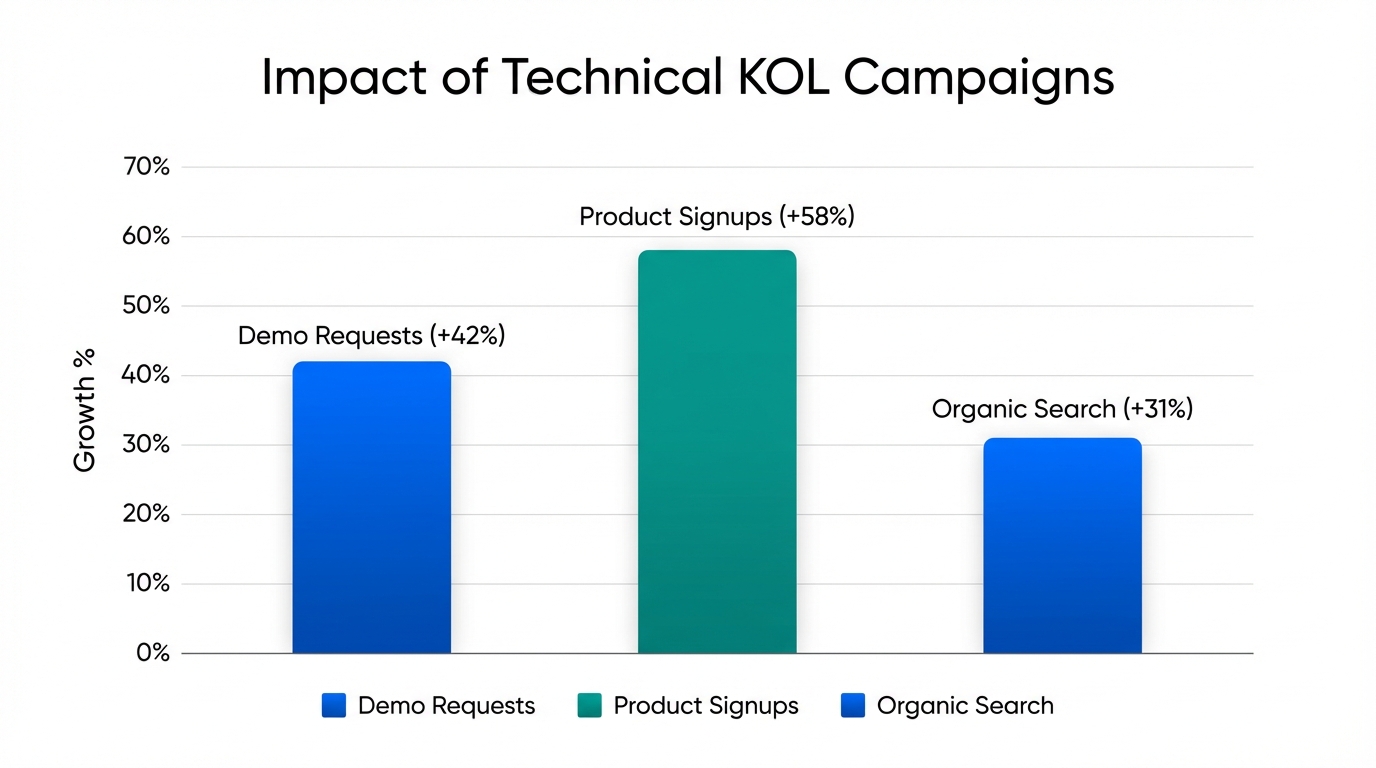
For SaaS customer acquisition, likes and comments are secondary. You must track Technical Competence (did they explain the API correctly?) and Audience Alignment (did the post reach decision-makers?). Attribution is the lifeblood of these campaigns. Always use unique UTM links and Google Analytics to measure long-term Customer Lifetime Value (LTV).
| Model | Best For | Typical Structure |
|---|---|---|
| Flat Fee | Brand Awareness | Fixed payment per post |
| Performance-Based | Direct Response | Commission per sign-up |
| Hybrid Model | SaaS Growth | Base Fee + Performance Bonus |
The hybrid model is becoming the gold standard for B2B KOL partnerships. It incentivizes the creator to drive real business results while providing them the security to invest time in creating high-quality, technical content. When you find a creator who delivers, move them into a 6–12 month ambassador role. In SaaS, consistency is what turns a viewer into a customer.
Conclusion: The Future is Human-Led
As AI-generated content floods the internet, the value of human "proof of work" will only increase. Finding the right technical influencers isn't just about discovery; it's about vetting for authenticity and building long-term relationships. By moving away from celebrity fluff and toward practitioner-led education, SaaS brands can bridge the trust gap and drive sustainable growth. If you are ready to start sourcing high-authority creators, tools like Stormy AI can streamline the entire discovery and outreach process, allowing your team to focus on building great software while AI handles the search.