It is 2026, and the honeymoon period for "AI-first" startups is officially over. We have entered the era of the great correction. For the past few years, the market was flooded with venture-backed apps that did little more than put a slick user interface over a Large Language Model (LLM). Today, those businesses are facing a zero-valuation crash as the underlying LLMs—the very engines they relied on—have absorbed their functionality. If your marketing strategy relies on tools that can be replaced by a single prompt from a foundational model, you don't have a business; you have a temporary lease on a feature.
As we navigate this sustainable growth strategy landscape, the question isn't whether AI is useful—it clearly is—but how to build a durable marketing moat that doesn't evaporate when OpenAI or Google releases an update. To survive the impending crash of the AI wrapper layer, marketers and founders must shift their focus from superficial automation to deep customer relationships, proprietary data, and high-level talent. This is the AI bubble survival guide for the modern era.
The 2026 Reckoning: Why 'App Layer' Valuations are Crashing
Exploring why many software companies in the application layer may see valuations hit zero.
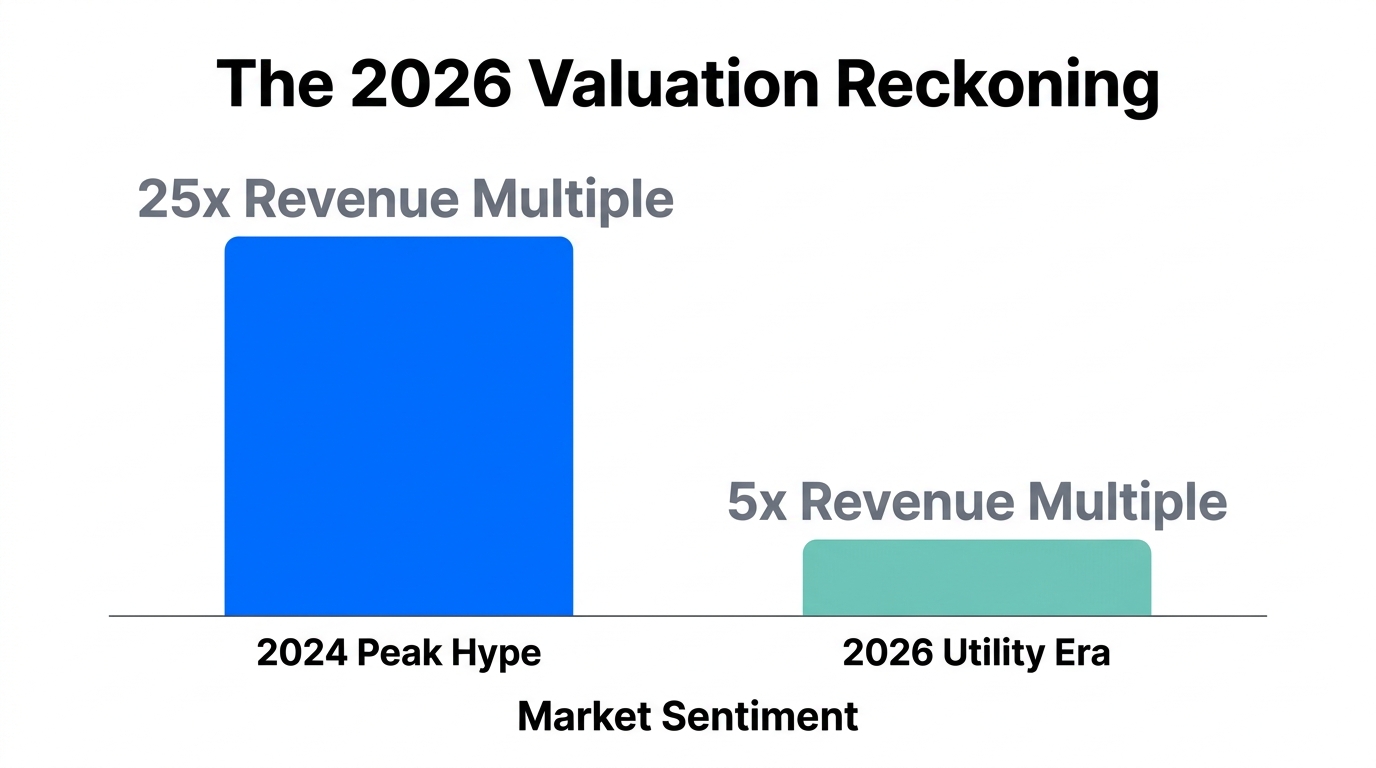
As Stanford Graduate School of Business professor and private equity leader Graham Weaver points out, the 2026 market looks hauntingly like the dot-com era of 1999. Back then, hundreds of companies went public with astronomical valuations and zero profits; most went to zero. In 2026, we see a similar trend in the "app layer" of AI. Venture-backed apps with $2 million in revenue and $500 million valuations are reaching their breaking point because they lack a fundamental barrier to entry.
"These venture-backed apps will have $2 million of revenue and a $500 million valuation—and they're going to go to zero. They are getting attacked by the LLMs who are introducing interfaces that take their business."The problem is "LLM absorption." When a startup builds a tool that simply summarizes emails or writes Google Ads copy, they are six months ahead of a native feature release from the LLM provider. Once the provider integrates that feature, the startup's "moat" vanishes. To build a sustainable growth strategy, you must identify if your business is a vendor or a partner. Vendors are easily swapped; partners are integrated into the plumbing of the customer's operation.
| Feature | Fragile AI Wrapper | Durable Marketing Moat |
|---|---|---|
| Source of Value | LLM API access | Proprietary data & workflows |
| Customer Relationship | Transactional/Tool-based | Deeply integrated/Partner-based |
| Retention Strategy | Feature updates | High switching costs & brand equity |
| Competitive Advantage | First-to-market speed | Cumulative network effects |
Building the Deep Interface Moat: From Tool to Infrastructure
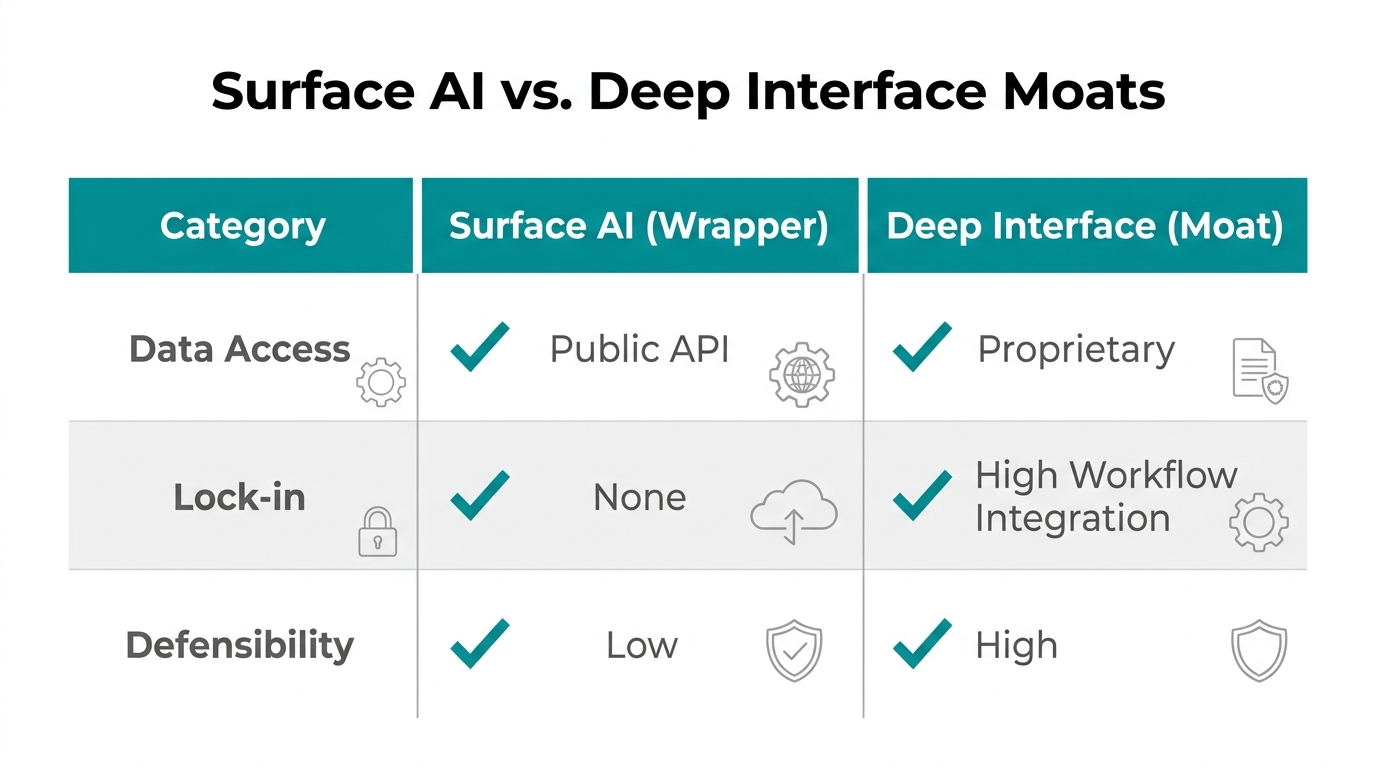
The most successful businesses in 2026 aren't just using AI; they are embedding themselves into the customer's daily workflow. This is what we call a "deep interface moat." If you are a call center software provider, your goal shouldn't just be to automate calls with AI. Your goal should be to become the system of record for every customer interaction, integrated with their HubSpot CRM and their Shopify backend.
When you provide a "deep interface," the switching cost becomes prohibitively high. It’s the difference between a hammer (a tool) and the electrical wiring in a house (infrastructure). You might replace a hammer easily, but you rarely rip out the wiring. For brands, this means moving beyond customer retention marketing that focuses on discounts and instead focusing on becoming a core part of the user's habit loop. Use tools like Klaviyo to build personalized, data-driven automation that feels like a service, not a sequence.
The Shift Back to 'Old-Fashioned' Moats: Brand Equity and Trust
Why physical service businesses like property management offer more durable competitive moats today.In a world where content can be generated in seconds for zero cost, the value of trust and brand equity has skyrocketed. If anyone can use AI to generate a professional-looking ad for TikTok or Instagram, the consumer's filter for "realness" becomes much sharper. This is why human-centric industries like wealth management and home services are thriving despite the AI boom.
As Graham Weaver notes, the moat in wealth management isn't just picking stocks—AI can do that. The moat is helping a client with their taxes, their estate planning, and their family's future. It’s deep, old-fashioned relationships. In the digital space, this translates to building brand equity 2026 through community and authenticity. Platforms like Stormy AI have become essential here because they allow brands to find and vet creators who have already built that trust with their audience, effectively "borrowing" that human-centric moat for their own products.
"The technology in many industries is going to be commoditized. The real differentiator is talent, culture, and deep relationships with your customers."AI as a Tailwind: Transitioning from Cost-Cutting to Retention
How artificial intelligence serves as a massive tailwind for specifically positioned service-based companies.Many companies view AI solely as a way to cut costs—firing staff to increase margins. This is a short-term strategy that often destroys long-term value. Durable companies use AI as a tailwind for customer retention. Instead of using AI to replace the person who talks to customers, use AI to give that person superpowers.
Consider a property management firm. If they use AI to handle maintenance requests faster and more accurately, they aren't just saving money; they are providing a better service that keeps tenants longer. This increases the lifetime value (LTV) of each customer. When you use AI to handle the mundane tasks, your team can focus on the high-leverage creative work that humans excel at. This is how you win in a sustainable growth strategy—by building things up rather than ripping them apart.
Strategy for Building Proprietary Data Sets
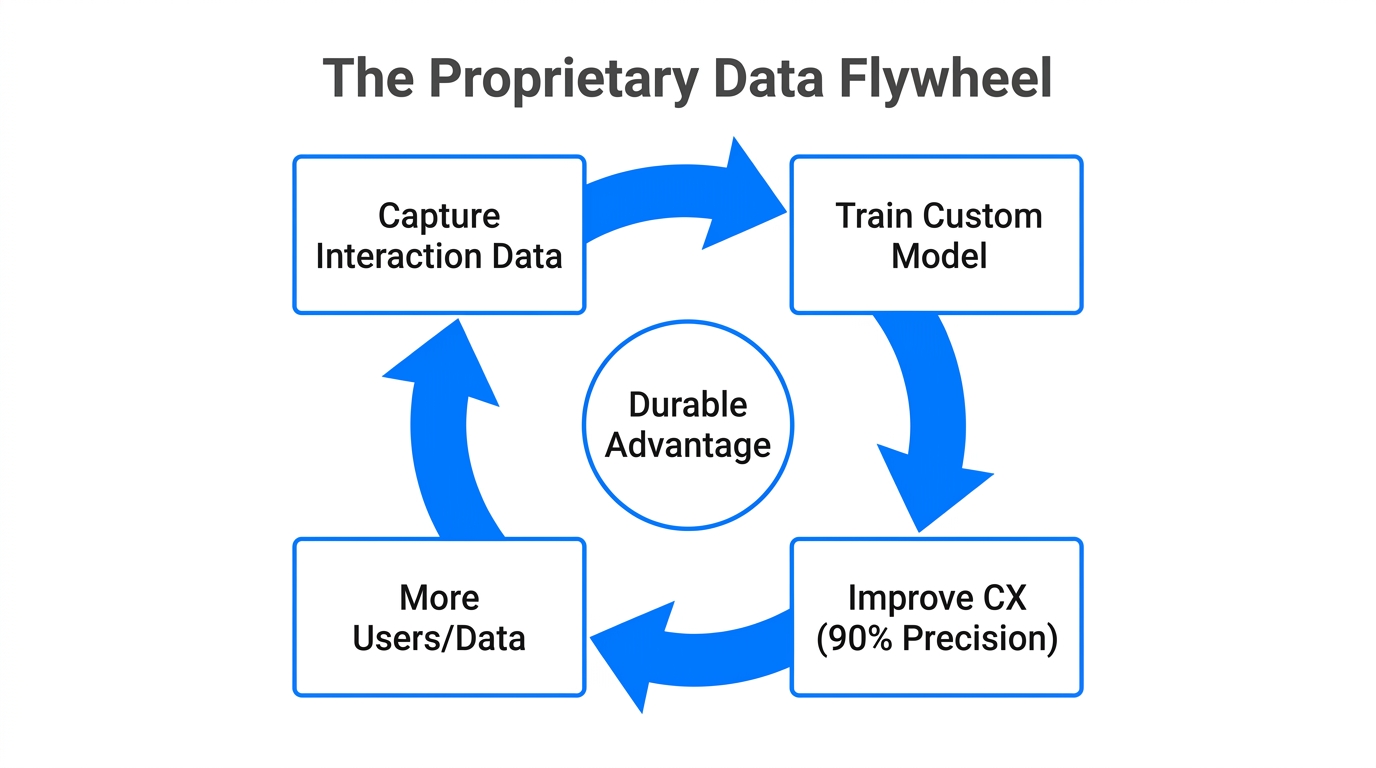
The most significant competitive advantage in 2026 is a proprietary data set. If you are training your models or making decisions based on the same public data as your competitors, you have no edge. You need data that AI cannot easily scrape or replicate.
- First-Party Interaction Data: Track how users interact with your specific interface. What do they click? Where do they hesitate?
- Feedback Loops: Create systems where human experts "grade" AI outputs, creating a specialized training set that improves over time.
- Closed-Loop Ecosystems: By managing the entire transaction (e.g., using Stripe for payments), you capture the final outcome of the marketing funnel, which is data LLMs don't have access to.
By layering this proprietary data into your marketing, you can create hyper-personalized experiences that feel magical. For instance, an AI agent that knows a customer's entire purchase history, communication style, and local weather patterns can send an outreach email that feels remarkably human and relevant.
The 'Navy Seal' Talent Strategy: Why Operators Outperform Algorithms
Finally, building a durable marketing moat requires elite talent. Graham Weaver’s firm, Alpine Investors, famously uses a strategy of putting high-attribute leaders—often military veterans or top-tier MBA grads—into "boring" service businesses like plumbing and HVAC. Why? Because while technology is a tool, execution is the moat.
In marketing, this means hiring people with a "white-hot will to win" and a growth mindset. In an automated world, the person who can look at the data, interpret the nuances of human emotion, and adjust the strategy is the most valuable asset. You aren't looking for someone to "run the AI"; you are looking for an operator who uses AI as one of many levers to grow the business. Follow the framework of Geoff Smart's 'Who' to ensure you are hiring for attributes over just experience.
"How do you do 5x in six years? You go get Navy Seals to run plumbing companies. Talent is the secret superpower that makes playbooks work."Conclusion: The Future of Durable Growth
As the AI bubble of 2026 continues to thin out the "wrapper" apps, the businesses left standing will be those that focused on building brand equity and proprietary marketing moats. Do not be seduced by the ease of thin automation. Instead, ask yourself the "Genie Question": What would you do if you knew you couldn't fail? Most likely, the answer involves building a business that solves deep, complex problems for humans through relationships and specialized knowledge.
Whether you are managing a services rollup or a SaaS platform, remember that AI is a language you must speak fluently, but it is not the story itself. The story is your brand, your data, and your people. By integrating AI as a tailwind rather than a crutch, and by using platforms like Stormy AI to maintain authentic creator relationships, you can build a marketing engine that is truly sustainable and durable for the years to come.