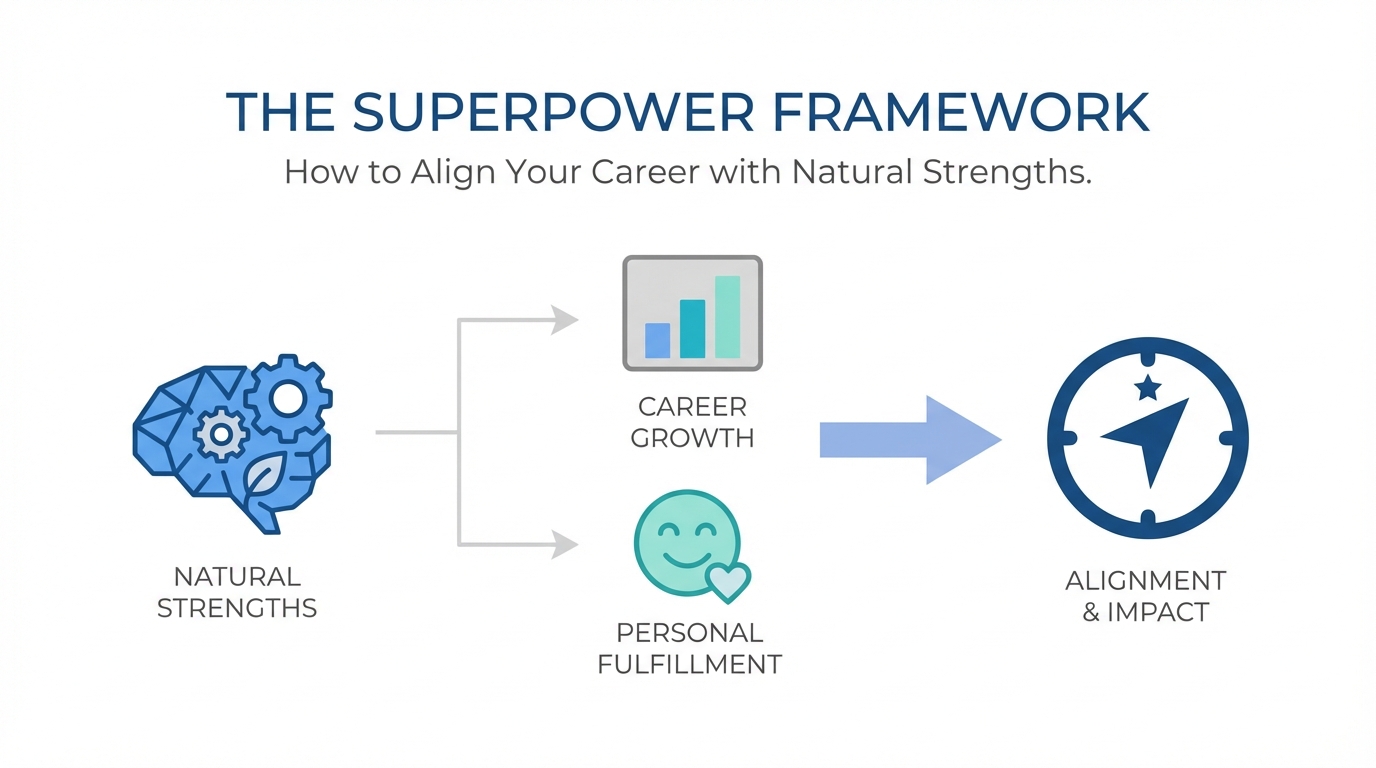
Imagine spending a full decade of your life grinding away, only to realize you were playing the wrong game entirely. You were working hard, perhaps even getting promoted, but you were fundamentally misaligned with your natural strengths. This is the quiet trap that catches high-potential individuals every day. It’s not the fear of failure that should keep you up at night; it’s the fear of doing a really good job at the wrong thing. According to entrepreneur and podcast host Shaan Puri, this is the ultimate career risk. In a world obsessed with 'hustle culture,' the most critical variable isn't how hard you work, but whether you have found a career alignment strategy that leverages your unique, innate abilities—your 'superpowers.'
The Danger of 'Idiocrity'

Most people view failure as the worst-case scenario. If a business goes bust or a project flopping, it’s painful, but it’s a quick pain. You bounce back, you keep your most precious asset—your time—and you try again. The far more dangerous path is what Puri calls 'Idiocrity.' This is the state of being stuck in a situation that is 'just okay.' It’s a job that pays well enough to keep you there but doesn't excite you. It’s a business that is growing just enough to justify the effort but will never reach the stratosphere.
Idiocrity is a silent killer of potential because it saps your will, your energy, and your belief in yourself over time. When you are in a state of idiocrity, you aren't failing fast enough to change course, but you aren't succeeding enough to justify the opportunity cost. As Puri notes, for anyone who is sufficiently smart, the biggest cost isn't taxes or expenses—it's opportunity cost. Every hour spent doing something 'okay' is an hour you aren't spending on something that could be a 'hell yes.'
The 'Play vs. Work' Litmus Test

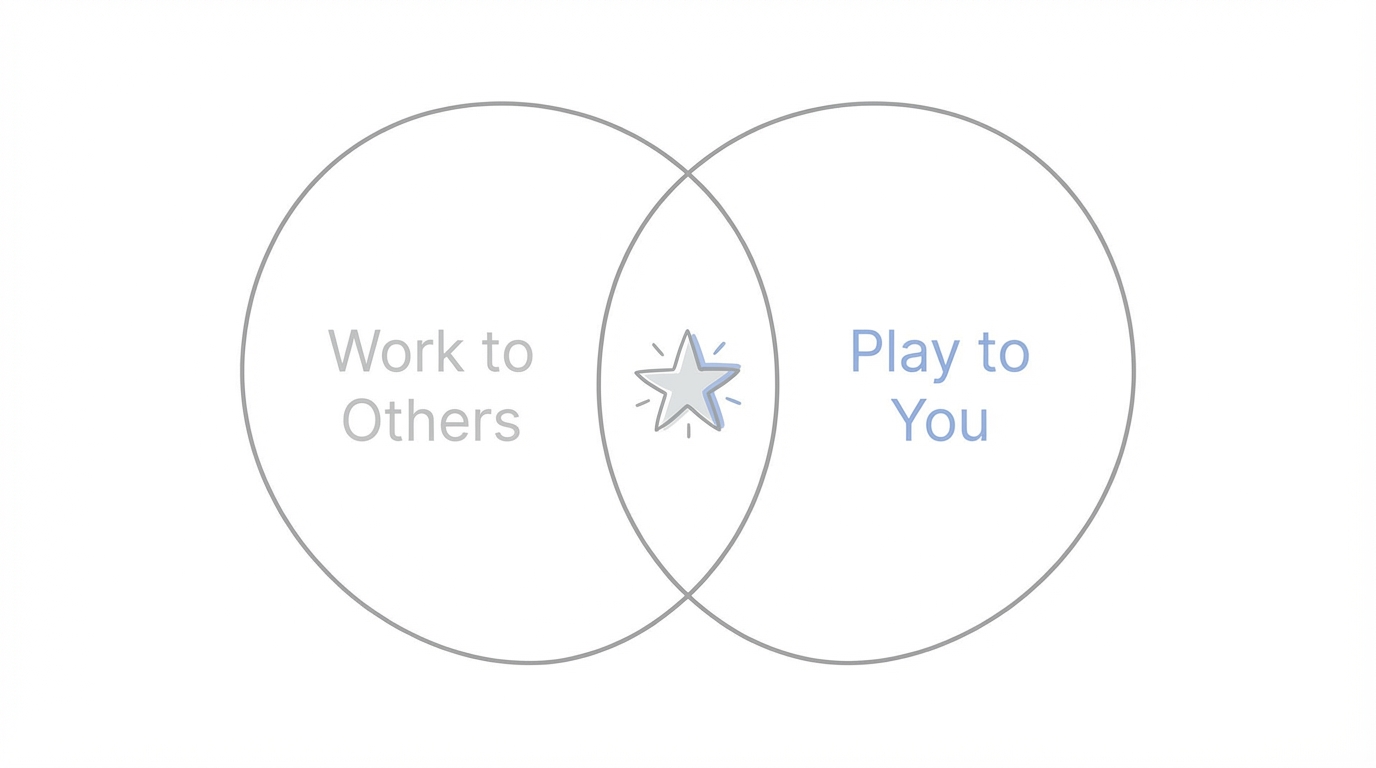
How do you identify if you are on the right path? Shaan Puri suggests a simple litmus test: What feels like play to you, but looks like work to others? This is the hallmark of a natural superpower. When you find a task where you have a natural obsession and a high tolerance for detail, you have found your edge. If you are struggling to find this, running your existing content through a Stormy AI analysis report can be a great starting point to identify where your audience sees the most value and where your natural curiosity naturally drifts when no one is watching.
Puri shares a personal example: he once found himself up at midnight, enthusiastically reading an annual report from the State of Nevada regarding casino revenues on the Las Vegas strip. He wasn't doing it for a boss or a grade; he was genuinely curious if casino data was a leading indicator of a recession. To most people, reading a dry financial PDF for fun sounds like a grind. To Puri, it was play. That innate curiosity eventually became the fuel for his massive success with My First Million, where he uses that mental library of factoids to create compelling content.
Another example involves his wife, who had a childhood obsession with arts and crafts and a high attention to detail. What started as 'bedazzling' phone cases for fun eventually led to celebrities reaching out for custom commissions. She was doing something that looked like a grind to others, but because it was play to her, she did it all the time. Because she did it all the time, she got really good at it. That is the flywheel of success.
The Success Flywheel
- Enjoyment: You do the task because you like it (it’s play).
- Repetition: Because you enjoy it, you do it more than anyone else.
- Mastery: Because you do it more, you naturally develop core skills that others lack.
- Results: Mastery leads to outcomes that the market values, which provides the results to keep the cycle going.
The Social Mirror: Asking the Right Questions
Sometimes we are too close to our own genius to see it. This is where Shaan Puri career advice often intersects with the philosophy of Naval Ravikant. Naval suggests that others are often better at spotting our superpowers than we are. One of the most effective ways to identifying core skills is to ask the people who know you best: "What do I do easily that others find difficult?"
Naval himself thought he wanted to be a physicist because he admired the intellect of scientists. However, his mother pointed out that even as a child, he was constantly analyzing the business models of the restaurants they walked past—how they could optimize their menus or increase their margins. He was a natural business person, even when he was trying to be something else. By asking friends and mentors for a natural strengths assessment, you can uncover these 'pushed out' traits that you might be hiding or ignoring.
In the world of modern marketing, finding these specialized strengths is the key to scaling. For instance, brands often struggle to find creators who genuinely resonate with their audience. Platforms like Stormy AI leverage AI to help companies find UGC creators who have a 'superpower' for authentic storytelling, specifically for mobile app ads and app install campaigns. Just as you seek your own superpower, finding partners who are operating in their 'play' zone is the secret to high-performing content.
The Internal Director: Prioritizing Your Inner Voice
A major hurdle in finding your superpower is external pressure. Society, parents, and peers often have a 'script' for what success looks like—usually a high-paying, stable job in a 'boring' industry. Puri famously quit a $120,000-a-year job after just six weeks because he realized he had made a 'lame' choice based on money rather than passion. He calls the voice in your head the 'Internal Director.'
Think of your life as a movie. Your internal voice is the director—whether it's Spielberg, Scorsese, or Tarantino—telling you where to stand and what to do next. Most people let society or fear be the director of their movie. To align your career with your strengths, you must decide that your opinion of yourself matters more than anyone else's opinion of you. Developing the 'muscle' of following your own taste, even when it’s uncomfortable, is essential for long-term fulfillment.
Proximity is Power: Choosing Your Network

Once you identify your superpower, you need to place yourself in an environment where that power can be multiplied. Puri credits Tony Robbins for the phrase 'Proximity is Power.' If you want to get good at startups, move to San Francisco. If you want to get good at poker, live in a house with five other obsessed poker players. You are the average of the people you spend the most time with, and it is far easier to be 'pulled' toward success by a community than to 'push' yourself toward it in isolation. Using automated tools like Stormy AI to handle creator outreach can also help you build proximity to high-level influencers and partners while you sleep.
Puri emphasizes that most people are not serious. They say they want to be successful on platforms like YouTube, but they aren't willing to follow the 'Rule of 100'—making 100 videos and improving one thing every single time. By simply deciding to be serious and moving into the right networks, you are already competing with a much smaller pool of people. Choosing the right city, the right colleagues, and even the right 'info diet' is a career alignment strategy that acts as a massive tailwind for your natural strengths.
The Playbook: How to Find Your Superpower

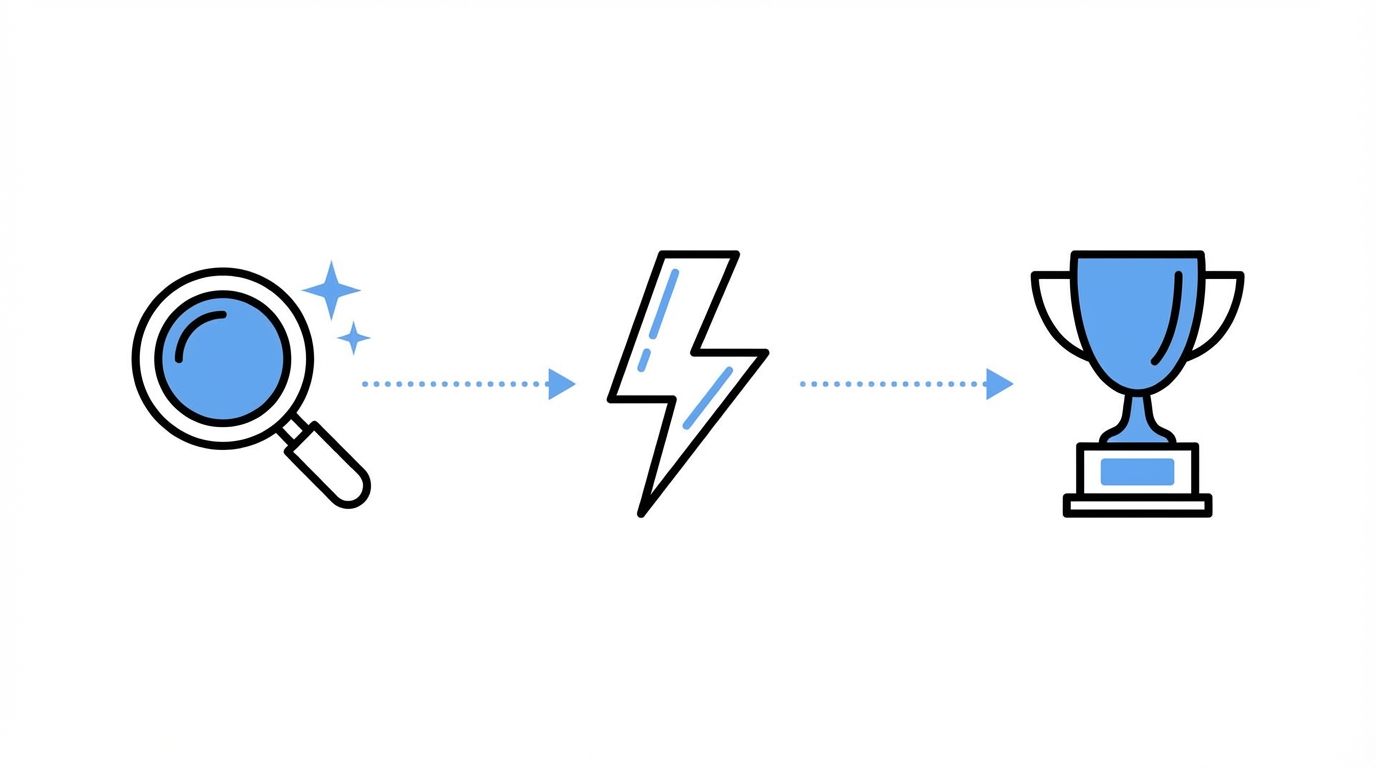
Identifying your core skills isn't a one-time event; it's a process of trial and error. Follow this playbook to move from 'idiocrity' to 'superpower alignment.'
Step 1: Audit Your '5 to 9'
Look at what you do outside of work hours. What are the topics you research for no reason? What are the tasks that make you lose track of time? If you spend hours optimizing your Meta Ads Manager campaigns or building intricate spreadsheets for your hobbies, that is a data point. Superpowers are often hidden in your 'inner nerd' interests.
Step 2: Apply the 'Rule of 100'
Pick a project that aligns with your interests and commit to doing it 100 times. Whether it's writing 100 blog posts, recording 100 podcast episodes, or creating 100 UGC videos for mobile apps, the goal is skill building. As Puri says, even if the project fails, the skills stick with you. If you discover you hate the process by video 20, you’ve successfully ruled out a path.
Step 3: Conduct a Social Mirror Assessment
Reach out to five people you trust and ask them the 'superpower question.' Don't ask what they think you should do for a job; ask what they think you do effortlessly. Look for patterns in their answers. This is often more accurate than any personality test.
Step 4: Optimize for Freedom and Learning Early
If you are young or in a career transition, optimize for learning-rich environments over money-rich ones. Puri's 'strategically broke' year—living on $8,000 while building a sushi business—taught him more about sales, marketing, and P&Ls than a decades-long corporate career ever could. Use tools like Stormy AI to find high-growth niches where you can apply your skills in real-time, such as the exploding UGC market for app developers.
Step 5: Master Project Selection
According to Elon Musk, the biggest waste of time is doing something well that shouldn't be done at all. Constantly ask yourself: "If I weren't already doing this, would I start doing it today?" If the answer is no, you are fighting inertia. Be quick to cut things off once you realize they aren't 'the one.' Reversing a bad decision is a superpower in itself.
Conclusion: The Work Must Be the Win
The ultimate goal of the superpower framework is to reach a point where the work itself is the reward. When you align your career with your natural strengths, you stop suffering today for a hypothetical payoff tomorrow. You win the moment you start working because you are engaged in 'play.'
By avoiding the trap of idiocrity, leveraging the 'Rule of 100' to build core skills, and surrounding yourself with the right network, you turn your career into a flywheel. Whether you are a developer, a marketer using Google Ads to scale a product, or a creator finding your voice, the secret is the same: stop trying to be 'good' at the wrong thing, use Stormy AI to track your progress and performance, and start being exceptional at the thing that comes naturally to you.