Stormy raises $1.7M to build the command layer for physical operations
Led by Kaya.vc, with Y Combinator and SMOK Ventures. Service businesses still run on a ringing phone, a paper ticket and one dispatcher’s memory. We are building the layer that runs the work — starting at the front desk, installed by engineers who stand in the shop.
Robert LukoshkaFounder, Stormy
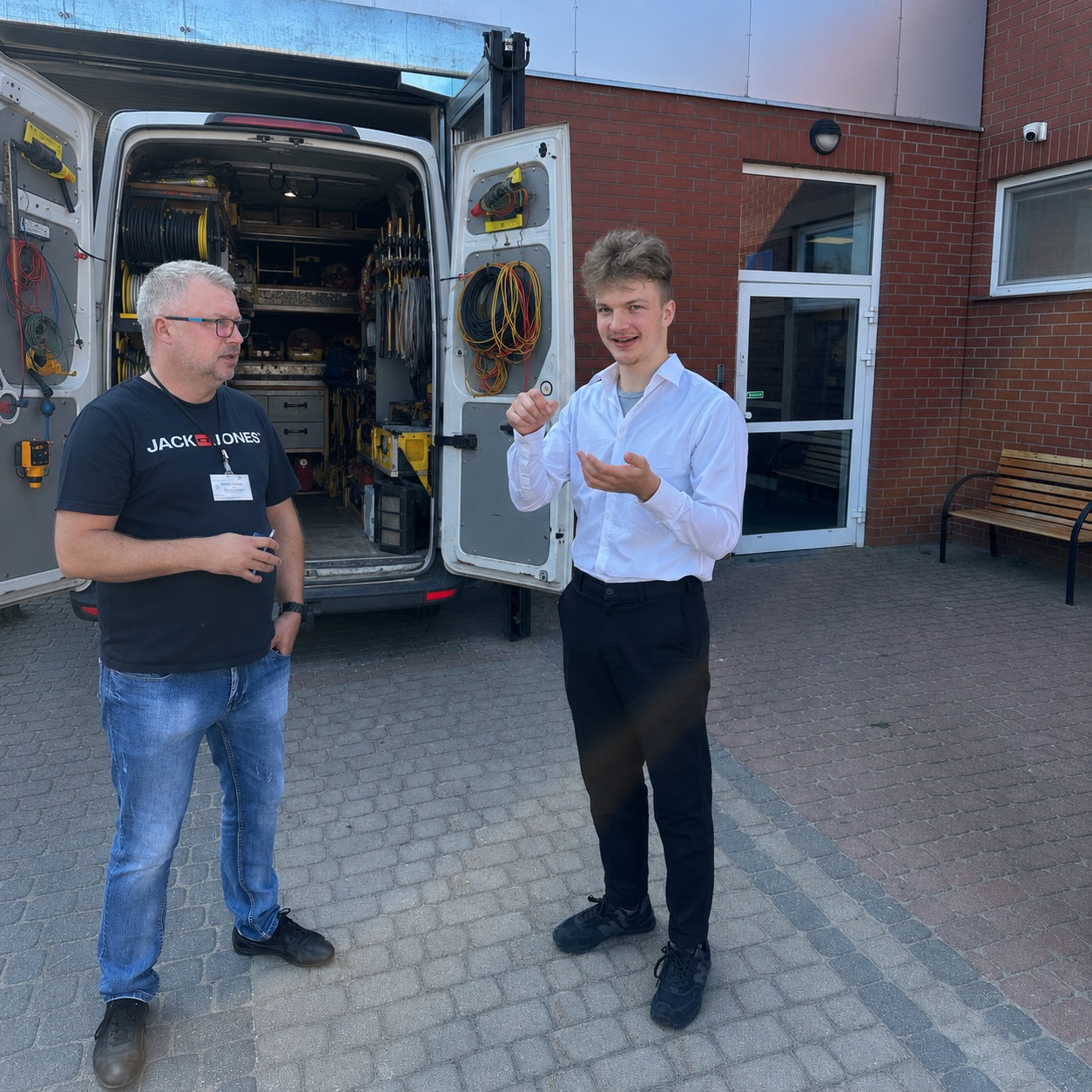
On site with a customer — the only place this product has ever been designed.
$1.7M, and exactly what it is for
Raised
$1.7M
Led by
Kaya.vc
With
Y Combinator · SMOK Ventures
Going into
Forward-deployed engineers
We raised $1.7M, led by Kaya.vc, with Y Combinator and SMOK Ventures. The round does not go into a growth team. It goes into engineers who get in a truck and install this thing inside real shops, one shop at a time, until the phone stops being the owner’s problem.
Our thesis: the command layer for physical operations
Software ate the office a long time ago. It never made it to the yard. The businesses that keep the physical world running — forklift fleets, HVAC crews, electricians, equipment dealers — still run on a ringing phone, a paper ticket and one dispatcher’s memory. Every piece of intelligence in the business lives in somebody’s head, and it goes home at six.
Physical operations need intelligence too. We are building for field work what Datadog is for software: one layer that sees every call, every truck, every part, every job and every invoice. And it does not stop at seeing. It answers, books, dispatches, orders and bills, with a person approving wherever it matters.
Build the API that runs physical-world operations.
Why now
Two things changed. Models can now hold a phone call, read a photo of a fault code and write an invoice that is right. And the physical world is filling with machines — fleets, equipment, and soon robots — that all need servicing. Keeping them running is a harder problem than building them, and it is an operations problem: people, parts, trucks, schedules and money. That is the work Stormy runs.
We start at the front desk because that is where the work comes in. We earn the back office because that is where it gets lost. And we stay, because the layer that runs both becomes the one the whole operation runs on.
How we work
Everything in a service business that can be run by AI will be. Everything that matters is approved by a person. We build toward that one shop at a time, by four rules.
01
Value lies in the extremes
We build for the shops with the heaviest operations, not the average one.
02
Act bold
A real customer call on day one, never a sandbox.
03
Run fast
What we fix in one shop ships to every shop that week.
04
Sell
It is real when a shop pays for it.
We are forward-deployed
Palantir proved a boring, unglamorous thing: the hardest software problems are not solved by shipping a login page and waiting. They are solved by putting engineers inside the operation, on the floor, with the people doing the work. We run the same model — for a twelve-truck forklift service company instead of an intelligence agency.
/01
We come to the shop
A day behind the counter with the dispatcher and a ride-along in the truck. We learn how your shop actually quotes, who gets which job, and what your techs write on the ticket.
/02
We install on one real job
Not a sandbox. A live inbound call, a real dispatch, real parts off the shelf, a real invoice to a real customer — with you watching every step and able to stop it.
/03
We stay until the loop closes
Call → book → dispatch → parts → invoice → paid, end to end, without anybody in the office retyping it. That is the bar. We do not leave before it is met.
/04
What we learn ships to everyone
Pages are data; the runtime is software. A fix we build standing in one forklift shop deploys to every shop on Stormy the same week.
A missed call at 6:40 PM is not a notification. It is a $1,850 job that just dialled your competitor.
Who this is for — by name
We do not build for “SMBs.” We build for shops with crews in the field, where the work is physical, the machines have serial numbers, and the money is lost between the ring and the invoice.
Stormy owns the front desk across every way a customer — or your own crew — reaches the shop, and it is the same Stormy reading the same board, so what it promises on a text is true on the schedule.
The phone number
Your existing line, answered on the second ring at 10:41 PM. It knows the machine, quotes the visit, holds a real window on a named tech’s truck.
SMS
Every text answered in seconds — reschedules, ETAs, “is it done yet”, the photo of the fault code, the approval for the extra part.
Your crew
Techs text Stormy from the truck — the photo of the plate, the part they used, “job done”. The ticket, the stock and the invoice follow from that one message.
Email
The inbox nobody has time for: quote requests dug out, POs acknowledged, invoices sent and chased until the money lands.
And then it does the paperwork
The front desk is half of it. The other half is the evening: closing out the work order, raising the invoice, chasing the payment, cutting the purchase order when a part crosses its reorder point, and loading next week so no truck drives past an empty slot. Parts come off the shelf as jobs consume them. Years of history come over from the old system with nothing retyped.
Your techs can keep the ticket book. The paper still works — it just stops being the last place the information lives.
If your phone rang out today, that is our problem to fix.